The single best woodworking tool under $100 is the Bosch ROS20VSC random-orbit sander, because it is the one tool on this list that replaces hours of work rather than a cheaper version of itself. Around it, seven more where the sub-$100 option is genuinely the right buy and not a stepping stone: a four-chisel Narex set, the King 1000/6000 waterstone that keeps it cutting, Irwin Quick-Grip clamps as the budget pick at under fifteen dollars, the Kreg 320 pocket-hole jig, an iGaging combination square set, a Gyokucho ryoba pull saw and a 3M 6502QL respirator. At the end of the page we are equally direct about the three jobs where no hundred-dollar tool exists.
Every price here was under $100 in our live price layer when this page was last checked November 23, 2026, and the prices beside each pick are read from that layer rather than typed into this article. Tools cross $100 on promotion in both directions; if one has moved, the number beside the pick is the truth and this sentence is the caveat.
What the cap is actually testing
"Under $100" is not a quality tier. It is a question about each category: does the expensive version of this tool do something different, or does it do the same thing more pleasantly? Those are two very different answers for a buyer.
For a random-orbit sander, the expensive version is quieter, better balanced and lasts longer in daily trade use. It does not sand flatter. For a chisel, the expensive version holds an edge longer — a real difference, but one that only shows up after you can sharpen, which is why the stone is on this list and the $200 chisel set is not. For a square, the expensive version is more certainly square, and that is the one category here where we would understand spending more.
And for a table saw, a planer or a dust collector, the expensive version does something the cheap one cannot do at all, because under $100 there is no version. Those three get their own section at the bottom rather than a bad pick in the list.
We ranked these eight on four things, in this order: whether the job can be done another way for free (if yes, the tool has to earn its place), whether the cheap version compromises accuracy or only comfort, whether it needs a consumable or a second purchase to work at all, and what a shop is left with after buying it. That last one is why a sharpening stone outranks a second chisel set.
The sander is the one to buy first
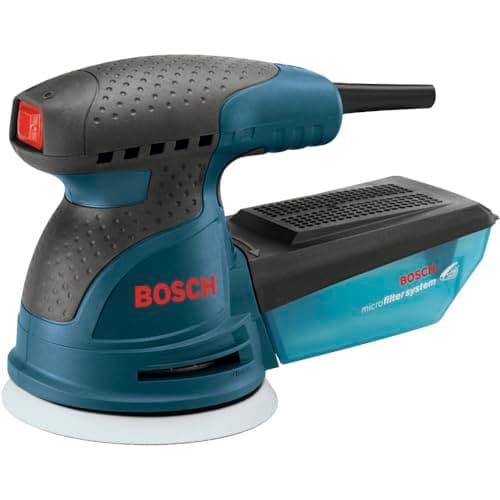
If you buy one thing off this page, buy the Bosch ROS20VSC. Bosch publishes a 5 in. pad, a 2.5 A motor, variable speed and a microfilter dust canister, and the two specifications that matter are the variable speed — you drop the pad speed for a final pass or an edge, where a fast pad rolls the corner over — and the canister, which keeps the air readable when there is no hose on it.
The reason it leads is arithmetic rather than enthusiasm. Hand-sanding a tabletop through three grits is most of an afternoon; this does it in twenty minutes and does it more evenly. No other tool here changes the clock that much. If you want the whole field rather than the price cap, our random orbital sander roundup ranks six machines, and best sander for woodworking explains which of the four sander types does which job.
What you give up against a $500 sander is weight, balance and bearing life, plus the dust extraction that a dedicated extractor port gives. For a shop that sands a project a month, none of that is the limiting factor. For a shop that sands all day, it is.
Four chisels and a stone beat eight chisels
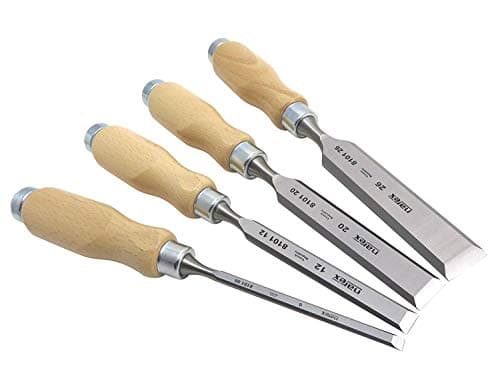
The Narex bevel-edge set of fouris the clearest example on this page of the cap costing you nothing important. Narex publishes chrome-manganese steel hardened to around 59 HRC with beech handles, and four widths cover almost all furniture work — which is the argument our what size chisels do I need page makes at length. A twelve-piece set is mostly sizes you will not reach for.
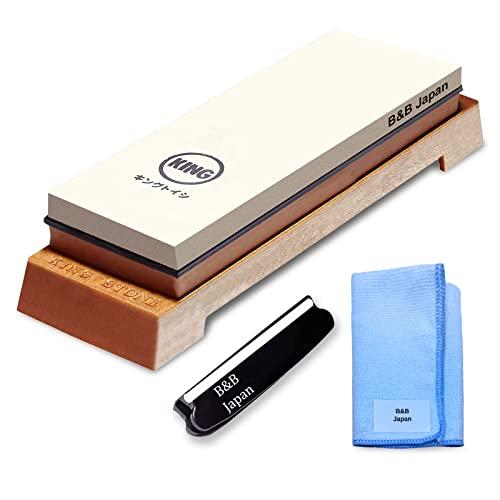
The pairing matters more than either tool alone. A chisel is only as good as its last sharpening, and the King 1000/6000 combination waterstone— 1000 grit for the working edge, 6000 for the polish, with a base and an angle holder in the box — is the cheapest complete route to an edge that cuts end grain cleanly. Buy both and you have a sharpening setup; buy a $230 chisel set alone and you have a tool that gets blunter every session. Our sharpening stone roundup covers the wider field, and how to sharpen chisels is the method.
The honest limit: softer steel than a premium set means more trips to the stone, and these arrive needing their backs flattened and a working bevel put on them. Budget half an hour before you cut anything. One job these are the wrong chisel for is chopping a mortise, where a thin bevel-edge blade flexes under levering — that is a different tool, and best mortise chisels ranks it.
Clamps are the one category where quantity beats quality
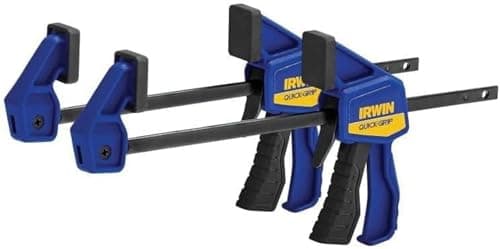
The Irwin Quick-Grip one-handed bar clamps are the budget pick of the page, and they are here on a different argument from everything else: for most glue-ups the constraint is how many clamps you own, not how good each one is. A trigger clamp you can close with one hand while the other holds the joint is worth more at a glue-up than a parallel clamp you had to put down to reach.
Where they stop being the answer is a cabinet carcase, which has to cure square as well as closed, and that needs parallel jaws. That is a different purchase and a different page — best clamps for cabinet making covers it, and Bessey clamp alternatives ranks the parallel-clamp field against the brand most people start from. Resin jaws also flex under heavy pressure, which is a real limitation and a reasonable price for the convenience.
The Kreg 320 is the cheapest way to make a strong joint quickly
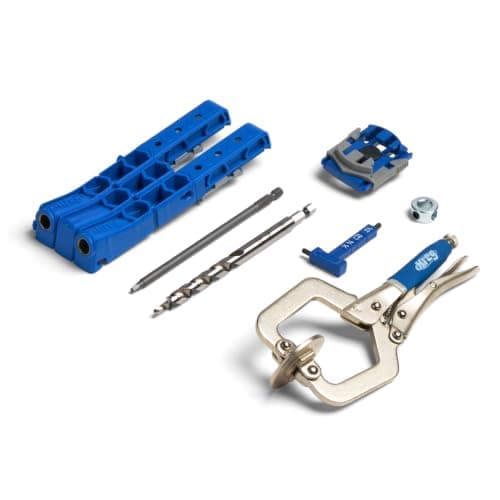
Kreg publishes a two-hole guide, a capacity of 1/2 to 1-1/2 in. stock and a face clamp in the box on the 320. What you get for that is a joint that needs no clamping time and no mortising, which for shop furniture, jigs and anything behind a face frame is exactly the right tool.
The compromise is the one Kreg itself does not hide: a two-hole guide has to be repositioned for a wide board, where the larger jigs index themselves. If you are drilling a hundred holes a week that matters. If you are building a bench and some shop cabinets, it does not. Our pocket-hole jig roundup ranks the full line, and pocket holes vs dowels is the page to read if you are deciding whether this is the joint you want at all.
The square is the pick we would least like to be wrong about
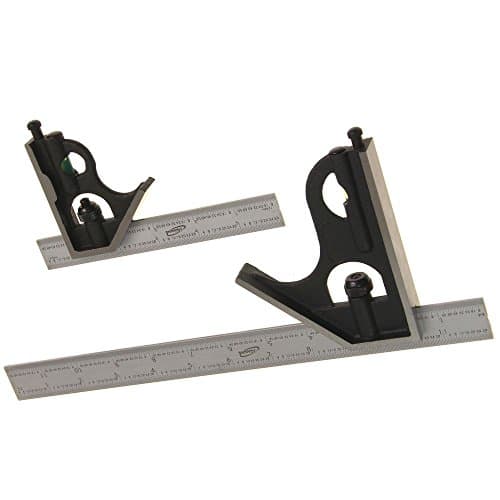
Accuracy tools are the category where cheap genuinely can be false economy, because a square that is not square puts an error into every joint you cut afterwards and you will blame the saw. The iGaging combination square setis here because it is two blades — 6 in. and 12 in. — with 4R graduations on hardened steel, and a combination square measures, sets an angle and gauges a depth, which a fixed square cannot.
Check it when it arrives: draw a line against one edge of a known-straight board, flip the square, draw again, and look at whether the two lines agree. Five minutes, and it is the one acceptance test on this page we would not skip. If you want the field including the reference machinist squares, the woodworking squares roundup covers it, and Woodpeckers alternatives is the page about what a premium layout tool actually sells you.
One hand saw, chosen on the pull stroke
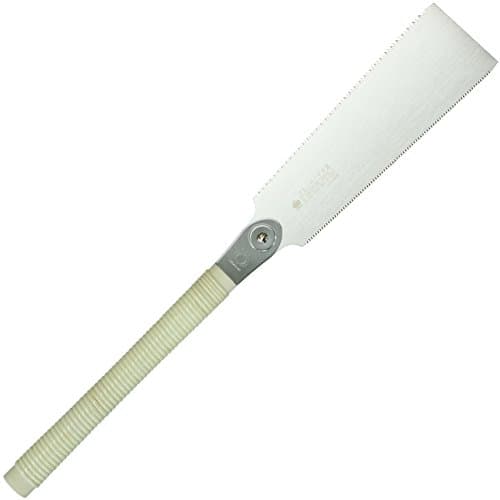
The Gyokucho Razorsaw 651 ryoba is two saws: Gyokucho publishes 22 tpi on the crosscut edge and 9 tpi on the rip edge, on a 0.018 in. plate, cutting on the pull stroke. A thin plate under tension from pulling rather than pushing is why a Japanese saw tracks a line with so little effort, and a double-edged ryoba means one tool handles both cuts.
The trade is that the teeth are hardened and not meant to be resharpened, so this is a saw with a service life rather than a lifetime. It also rewards a light hand — push on a pull saw and the plate kinks. For the full comparison, see best Japanese saws and best dovetail saws, which is where the Western push-saw argument gets its fair hearing.
The respirator is the cheapest thing here and the one not to skip
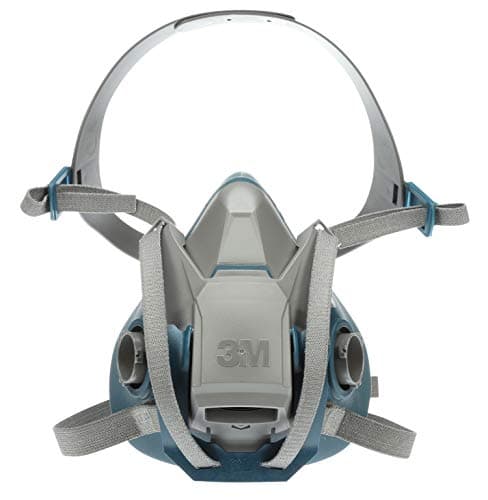
The 3M 6502QLis a reusable half-facepiece with 3M's Quick Latch, which drops the mask off your face without taking it off your head. That sounds like a luxury and is actually the feature that decides whether a respirator gets worn, because the alternative is taking it off and on twenty times an hour and eventually not bothering.
Filters are sold separately — budget for them, and treat the mask as the mount rather than the product. Wood dust is classified as a carcinogen by IARC, which our wood dust health risks page sets out with the sources, and our respirator roundup ranks the field including the cheaper disposables. Two more things worth having under $100 and not ranked here because they are consumables rather than tools: a bottle of Titebond III and a pair of anti-fog safety glasses.
Three jobs no tool under $100 does
This is the part most "best tools under $100" lists leave out, and it is the most useful part.
Ripping stock to width.There is no table saw under $100 and there is no honest substitute at that price. A circular saw and a clamped straightedge will break sheets down — see circular saws under $200— but ripping solid stock accurately needs a fence, which means a table saw or a bandsaw.
Flattening and thicknessing rough lumber. A sub-$100 tool cannot do this, but a hand plane under $100 can, slowly and well, which is the one place this cap buys a genuine capability rather than a convenience. Flattening a board without a jointer is how. The machine answer is a benchtop planer, and it costs several times this cap.
Collecting dust at the machine.Shop vacuums and separators start above this line for anything with real airflow — shop vacs under $200 is the realistic entry point, with a cyclone separator after it. The respirator above is what protects you in the meantime; it is not a substitute for extraction, it is the thing that works while you save for it.
What we would buy, in order
Sander, chisels and stone, clamps, square. That is four purchases, comfortably under $250 together at the prices beside the picks today, and it covers surface prep, joinery, glue-ups and layout — the four things every project needs. The pocket-hole jig comes next if you are building shop furniture, the saw if you want to cut joinery by hand, and the respirator before any of them if you are going to be making dust in an enclosed garage.
For the wider view of a first shop rather than a price cap, our beginner woodworking tool list sets out the full sequence, and the small shop setup guide covers where it all goes.