Skip to content
Dovetail & Dust

HUB 02 · Power Tools

Best Table Saw Blade for Plywood

Plywood does not need a better blade. It needs more teeth, a steeper bevel and a zero-clearance insert, and two of those three are nearly free.

By Stephen V.Updated How we research
#ad

We earn a commission when you buy through our Amazon links, at no extra cost to you. It never changes our rankings, and we say so when the cheaper tool is the better buy. How this works.

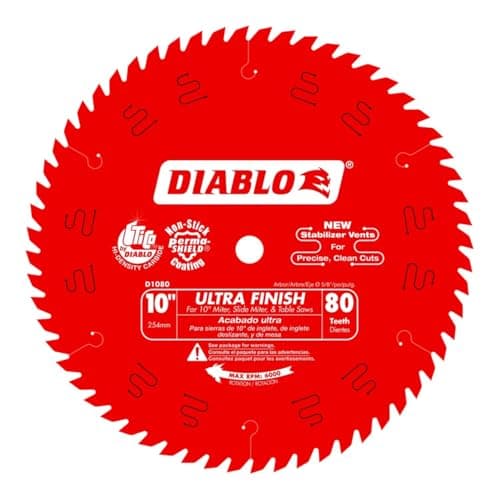
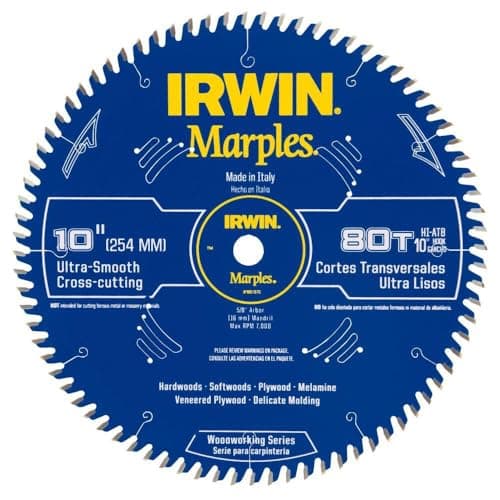
For plywood, the blade to fit is the Diablo D1080X — 80 teeth, a fine-finish alternate-top-bevel grind and a PermaShield coating. It is for anyone cutting veneered sheet goods, melamine or pre-finished plywood where the sawn edge is the finished edge. The budget pick is the Irwin Marples 10 in. 80T Hi-ATB: the same tooth count with a steeper alternate bevel, cheap enough that keeping a dedicated crosscut blade on the shelf stops being a luxury.

Before you buy either, know this: a zero-clearance insert costs almost nothing and does more for a plywood cut than the difference between any two blades on this page. Prices beside each pick come from our live price layer rather than from this article, last checked November 23, 2026.

Why plywood chips, and what actually stops it

Plywood chips on the face the teeth exit, not the face they enter. On a table saw the blade turns up and toward you, so the teeth enter through the top face and exit through the bottom one, and the bottom face is where tearout appears. On a circular saw it is the reverse, which is why a sheet gets cut good-face-down on a table saw and good-face-up with a handheld saw.

Three things reduce it, in order of how much they matter.

Tooth count.A 24-tooth rip blade takes a big bite and clears a big chip. In solid wood that is exactly what you want. In a 0.6 mm face veneer it means each tooth is levering a chunk of veneer off the ply beneath it. An 80-tooth blade takes eighty small bites per revolution instead of twenty-four large ones, so no single tooth has enough bite to lift a chip. The trade is that eighty small gullets cannot clear waste in a rip cut, so an 80T blade is slow and hot in thick solid stock — this is a crosscut and sheet-goods blade, not a blade to leave on the saw for everything.

Grind. ATB stands for alternate top bevel: the teeth are bevelled, left and right in turn, so the leading corner of each tooth slices the fibers at the edge of the cut rather than pushing them. Hi-ATB is the same idea with a steeper bevel angle, which shears veneer more cleanly still at the cost of a more fragile tooth corner. That is the whole argument for the Irwin blade and the reason it is not the blade to use on a sheet with a staple in it.

Support under the cut line.The standard throat plate on a table saw has a slot wide enough to clear a tilted blade, which means the plywood on either side of the cut is unsupported for a quarter-inch. Veneer breaks out into that gap. A zero-clearance insert — a blank plate you raise the blade through so the slot is exactly the width of the blade — removes the gap, and it is the cheapest improvement available to anyone cutting sheet goods. It is also mandatory if you want the 80-tooth blade to show what it can do.

Kerf, and the thing nobody tells you about thin blades

Kerf is the width of the slot the blade cuts. Diablo publishes 0.098 in. for the D1050X combination blade, which is a thin-kerf plate; Forrest publishes 0.125 in. for the Woodworker II, which is a full-kerf one. Thin kerf removes less material, so it asks less of the motor — which is why it is the right choice on a jobsite or contractor saw. Full kerf is a stiffer plate that deflects less under side load, which is why it runs steadier in a cabinet saw with the power to push it.

The relevance to plywood is this: deflection shows up as a cut that is not square to the table, and on a 3/4 in. sheet a few thousandths of wander is a visible gap in a cabinet joint. If your saw is a compact jobsite model, a thin-kerf 80-tooth blade is the right combination and a full-kerf premium blade is the wrong one. Our table saw roundup covers which saw you are working with, and best table saw under $1,000 is the field most readers of this page are shopping in.

Where the combination blade still wins

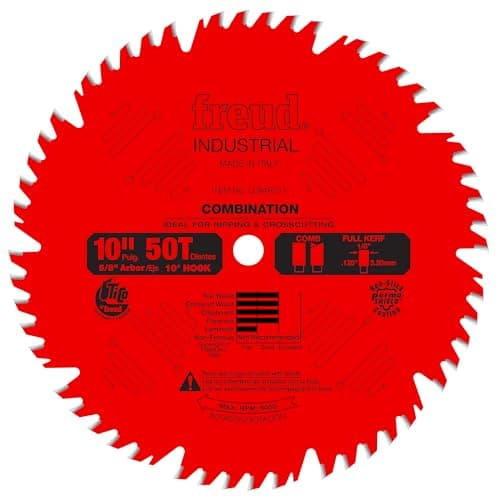
If you break down two sheets a year, the honest answer is that you do not need a dedicated plywood blade. A good 50-tooth combination blade cuts plywood acceptably well with a zero-clearance insert and a scoring pass, and it also rips. The Freud LU84R011 is on this page as that answer: an industrial-line 50-tooth combination grind with denser carbide than the consumer equivalent, aimed at a saw that runs every day. Our table saw blade roundup ranks that whole field, and it ranks a combination blade first for exactly this reason — it is the blade to leave on the saw.

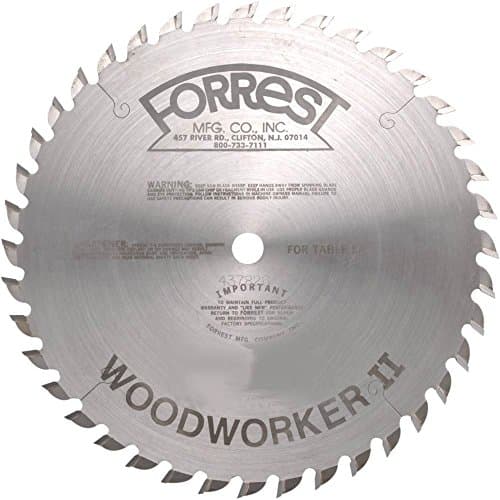
The Forrest Woodworker II is the premium option, and it is a 40-tooth blade, which seems wrong on a plywood page until you cut with one. Forrest grinds a 0.125 in. full-kerf plate with thick, resharpenable carbide and cut quality good enough that many shops glue up straight from the saw. It will not beat an 80-tooth blade on melamine. It will beat both 50-tooth blades on everything, and you send it away and get it back rather than replacing it.

Side by side, as published

BladeTeeth and grindPublished kerfArborUse it for
Diablo D1080X80T fine-finish ATBNot published for this model5/8 in.Veneered ply, melamine, clean crosscuts
Irwin Marples 80T80T Hi-ATBNot published5/8 in.The same jobs, for less money
Freud LU84R01150T combinationNot published5/8 in.Leave-on-the-saw blade that handles ply
Forrest Woodworker II40T ATB0.125 in. full kerf5/8 in.One premium blade for everything

Every figure above is the manufacturer's own published number for the exact SKU we link, and the blanks are blanks for a reason: Freud publishes a kerf figure for the D1050X combination blade but not for the D1080X we rank first, and Irwin publishes none at all. We are not going to estimate one. We also did not cut a test sheet, photograph an edge or measure a deflection — there is no lab here, which the methodology page states plainly.

What to buy, and what to do with it

Cabinets, built-ins, melamine or pre-finished ply as a regular diet: the Diablo D1080X, and make a zero-clearance insert the same afternoon. The same work on a tighter budget: the Irwin Marples 80T. A saw that runs every day and one blade on it: the Freud LU84R011. One blade for the next twenty years, on a saw with the power to swing a full-kerf plate: the Forrest.

Two more things that cost nothing. Raise the blade only slightly above the stock when cutting veneered sheet — a low blade attacks the face at a shallower angle and tears less. And score the cut line first if the material is unforgiving: run the sheet over the blade set about 1 mm high, then raise it and cut through. On melamine that single extra pass does more than any blade upgrade.

If the real problem is getting a full sheet onto the table saw at all, the blade is not your answer. Our best saw for cutting plywood page covers breaking sheets down before they reach the saw, which is how most small shops handle plywood, and table saw vs track saw compares the two routes head to head. For dados and grooves in sheet goods, best dado blade set is the page you want instead of this one.
The short answer

Quick picks

#ProductBest forScorePrice
01
Diablo (Freud) Diablo D1080X 10-in Fine Finish Blade (80T)
Diablo D1080X 10-in Fine Finish Blade (80T)

Eighty teeth is what you fit when the cut edge is the finished edge — veneered ply, melamine and crosscuts you do not want to sand.

Best for clean crosscuts
7.6
$65.79Amazon
02
Irwin Irwin Marples 10-in Hi-ATB Blade (80T)
Irwin Marples 10-in Hi-ATB Blade (80T)

A high-alternate-bevel 80-tooth blade at a price that makes keeping a dedicated crosscut blade an easy decision rather than a luxury.

Best value crosscut blade
7.2
$50.68Amazon
03
Freud Freud LU84R011 10-in Industrial Combination Blade (50T)
Freud LU84R011 10-in Industrial Combination Blade (50T)

Freud's industrial-line combination blade — the same 50-tooth idea as the Diablo with denser carbide, aimed at a saw that runs every day.

Best industrial combination
8.6
$76.19Amazon
04
Forrest Forrest WW10407125 Woodworker II 10-in Blade (40T)
Forrest WW10407125 Woodworker II 10-in Blade (40T)

The blade woodworkers talk about. A 40-tooth full-kerf grind that rips and crosscuts well enough that many shops genuinely never take it off.

Best premium
8.2
$205.99Amazon

#ad · Live prices from the Amazon Product API, as of November 23, 2026. Where we have no verified live price, we show none — we would rather leave a gap than print a number that has rotted.

In detail

The picks, in full

01
Diablo (Freud) Diablo D1080X 10-in Fine Finish Blade (80T)

Best for clean crosscuts

Diablo D1080X 10-in Fine Finish Blade (80T)

10 in / 80T ATB5/8 in arborPermaShield coatingFine finish grind
7.6/10

Eighty teeth is what you fit when the cut edge is the finished edge — veneered ply, melamine and crosscuts you do not want to sand.

Cut quality
10
Versatility
6
Carbide
8
Power draw
6
Value
8

Pros

  • Leaves veneer and melamine edges essentially chip-free with a decent zero-clearance insert
  • Turns a crosscut sled into a genuinely finish-quality tool
  • Makes miters close visibly better than a 40- or 50-tooth blade

Cons

  • Slow and hot in a rip cut — the small gullets cannot clear that much waste
  • More teeth means more carbide to dull if you hit a staple

Don't buy this if…

…you rip more than you crosscut. This blade will frustrate you and load your motor.

$65.79View on Amazon

Price as of November 23, 2026. Prices change — Amazon's is the one that counts.

#ad · we may earn a commission from this link to Diablo D1080X 10-in Fine Finish Blade (80T)

02
Irwin Irwin Marples 10-in Hi-ATB Blade (80T)

Best value crosscut blade

Irwin Marples 10-in Hi-ATB Blade (80T)

10 in / 80THi-ATB grind5/8 in arborCarbide tipped
7.2/10

A high-alternate-bevel 80-tooth blade at a price that makes keeping a dedicated crosscut blade an easy decision rather than a luxury.

Cut quality
9
Versatility
5
Carbide
7
Power draw
6
Value
9

Pros

  • The steep alternate bevel is the geometry that shears veneer cleanly instead of tearing it
  • Cheap enough to own alongside a combination blade rather than instead of one
  • Handles melamine and pre-finished ply far better than a general-purpose blade

Cons

  • Fine-toothed blades dull faster on abrasive sheet goods, and this one is no exception
  • Not a blade to rip with under any circumstances

Don't buy this if…

…you mostly cut solid stock to rough size. The tooth count buys you nothing there and costs you feed rate.

$50.68View on Amazon

Price as of November 23, 2026. Prices change — Amazon's is the one that counts.

#ad · we may earn a commission from this link to Irwin Marples 10-in Hi-ATB Blade (80T)

03
Freud Freud LU84R011 10-in Industrial Combination Blade (50T)

Best industrial combination

Freud LU84R011 10-in Industrial Combination Blade (50T)

10 in / 50TCombination grindHi-density carbide5/8 in arbor
8.6/10

Freud's industrial-line combination blade — the same 50-tooth idea as the Diablo with denser carbide, aimed at a saw that runs every day.

Cut quality
9
Versatility
10
Carbide
9
Power draw
8
Value
7

Pros

  • Denser carbide than the consumer line, so it stays sharp longer between sharpenings
  • Combination grind keeps it on the saw for both rips and crosscuts
  • Body damping and the industrial plate keep it running quiet and flat

Cons

  • Noticeably dearer than the Diablo equivalent for a difference most hobby shops will not notice
  • Still a compromise grind — beaten by dedicated rip and crosscut blades at their own jobs

Don't buy this if…

…you cut a few weekends a month. The consumer combination blade will outlast your patience for sharpening it.

$76.19View on Amazon

$89.3515% off

Price as of November 23, 2026. Prices change — Amazon's is the one that counts.

#ad · we may earn a commission from this link to Freud LU84R011 10-in Industrial Combination Blade (50T)

04
Forrest Forrest WW10407125 Woodworker II 10-in Blade (40T)

Best premium

Forrest WW10407125 Woodworker II 10-in Blade (40T)

10 in / 40T ATB0.125 in full kerf5/8 in arborResharpenable
8.2/10

The blade woodworkers talk about. A 40-tooth full-kerf grind that rips and crosscuts well enough that many shops genuinely never take it off.

Cut quality
10
Versatility
9
Carbide
10
Power draw
6
Value
6

Pros

  • Cut quality good enough that many users glue up straight from the saw
  • Thick, resharpenable carbide — this is a blade you send away and get back, not replace
  • Full kerf runs steadier in a cabinet saw than a thin-kerf plate

Cons

  • Full kerf removes more material and asks more of the motor — not ideal on a small jobsite saw
  • Costs several times a good Diablo, and the difference is real but not dramatic

Don't buy this if…

…your saw is a compact jobsite model. A thin-kerf blade suits its motor much better.

$205.99View on Amazon

Price as of November 23, 2026. Prices change — Amazon's is the one that counts.

#ad · we may earn a commission from this link to Forrest WW10407125 Woodworker II 10-in Blade (40T)

How we picked

We do not run a testing lab

We researched published manufacturer specifications, manuals and spec sheets, ran the arithmetic those specs support, and read owner reviews at volume, then scored each tool against a published rubric. The scores are judgments from documented research — they are not measurements we took, because we do not have a lab and we are not going to pretend we do. Where a number came from a manufacturer's document, we name it and link it in Sources.

Questions

Frequently asked

What is the best table saw blade for plywood?
An 80-tooth fine-finish blade, and of the ones we rank the Diablo D1080X. Eighty teeth take eighty small bites per revolution instead of twenty-four large ones, so no single tooth has enough bite to lift the face veneer. The Irwin Marples 80T Hi-ATB does the same job for less.
How many teeth should a plywood blade have?
80 on a 10 in. blade is the standard answer for veneered sheet goods, and 60 is a reasonable compromise if you also crosscut solid stock with the same blade. Below about 50 teeth the bite per tooth gets large enough to chip veneer no matter how good the blade is.
Why does my plywood chip even with a good blade?
Almost always because the throat plate slot leaves the material unsupported either side of the cut. A zero-clearance insert fixes that and costs almost nothing. Also check which face is up: a table saw exits through the bottom face, so plywood goes good-face-up on a table saw and good-face-down under a handheld circular saw.
Can I use an 80-tooth blade for ripping?
You can, and you should not. Eighty small gullets cannot clear the waste a rip cut produces, so the blade heats up, the cut burns and the motor works far harder than it needs to. Keep a 24- or 50-tooth blade for ripping and swap for sheet goods.
Is a thin-kerf or full-kerf blade better for plywood?
On a jobsite or contractor saw, thin kerf — it removes less material and asks less of the motor, and a labouring motor is what makes a cut wander. On a cabinet saw with the power to push it, a full-kerf plate deflects less under side load, which keeps the cut square to the table.
Do I need a different blade for melamine?
The same 80-tooth blade is the right choice, but melamine is the least forgiving material there is and it rewards a scoring pass: run the sheet over the blade set about 1 mm high, then raise it and cut through. That one extra pass helps more than changing blades.

Keep reading

Receipts

Sources

We do not run a testing lab, and we do not pretend to. Our picks come from published manufacturer specifications and manuals, the arithmetic those specs support, and owner reviews read at volume. Where we could not verify something, we say so on the page rather than quietly leaving it out. Read our full method.