Skip to content
Dovetail & Dust

HUB 04 · Joinery & Jigs

Best Router for a Dovetail Jig

Joint fit on a jig is set by bit height in thousandths of an inch. That makes depth adjustment, not horsepower, the specification that decides which router you should bolt to the job.

By Stephen V.Updated How we research
#ad

We earn a commission when you buy through our Amazon links, at no extra cost to you. It never changes our rankings, and we say so when the cheaper tool is the better buy. How this works.

Buy the Bosch 1617EVSPK if you want one router that runs a dovetail jig well and still does everything else; buy the Makita RT0701C if the jig is the main reason you are buying a router at all. The 1617 wins because it ships with both a fixed and a plunge base and both collet sizes, so it can take whatever dovetail bit your jig's instructions call for. The RT0701C wins on value and on handling — a compact router is easier to keep flat on a narrow jig template than a two-handed machine is.

This is not the general router ranking. If you are buying a router as your main shop tool, read best woodworking router and the router buying guide first. This page answers the narrower question people actually ask when a dovetail jig is already in the cart: which router will run it without fighting you.

Why depth adjustment is the specification that matters

On a hand-cut dovetail, fit is decided by where you saw and pare. On a jig, fit is decided by how far the dovetail bit projects below the base. Raise the bit and the joint gets tighter; lower it and it loosens. The whole adjustment range between “will not go together” and “falls apart” is a few hundredths of an inch, and you find it with test cuts.

Which means a router whose depth you set by loosening a clamp and sliding the motor is actively unpleasant on this job, and one with a fine-adjust screw is a relief. Every router on this page has a usable adjustment mechanism; the differences are in how fine it is and whether you can reach it with the router sitting on the jig. We walk through the test-cut sequence itself in how to cut dovetails with a router, which is the page to read alongside this one.

Fixed base, not plunge

A dovetail jig is a template-following operation at a constant depth. You set the bit once and make every cut at that height, which is exactly what a fixed base is for. A plunge base will do the job, but it adds height, adds weight at the top of the tool and gives you a depth setting that can drift if a lock is not snug.

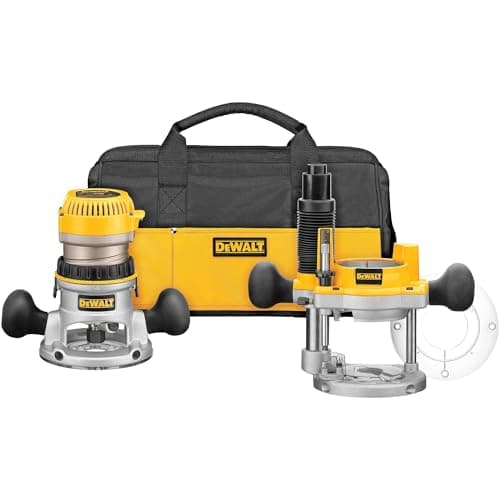
The practical answer is to own a combo kit and leave the fixed base on for jig work, which is what the Bosch 1617EVSPK and DeWalt DW618PK both offer. If you already own a plunge router, you do not need another one — lock it down and get on with it. The trade-offs in general are in plunge versus fixed base.

Collets, bits and bushings: check these three before you buy

The collet.Dovetail bits for jigs come in 1/4 in. and 1/2 in. shanks depending on the jig and the bit set, and a few jigs specify 8 mm. A 1/4 in.-only router cannot run a 1/2 in. shank bit, and there is no adapter worth using in that direction. If you do not yet know which bit your jig wants, a router with both collets removes the question — see router bit shank size for why the bigger shank is the better one where you have the choice.

The speed range. A dovetail bit is small in diameter, so it wants high RPM. Every router here publishes a variable-speed range that covers it; the compact routers reach higher, which is a genuine advantage with a 1/2 in. dovetail bit in hardwood. Our router bit speed chart gives the diameter-to-RPM relationship, and it is worth two minutes before the first cut.

The guide bushing.Most fixed-template jigs work by running a guide bushing (a template guide) against the comb. The bushing has to fit your router's sub-base, and bases differ between brands. Read your jig's instructions for the bushing size it requires, then confirm your router accepts that bushing — either natively or through an adapter sub-base. This is the single most common reason a jig arrives and does not get used that weekend.

Power is the one thing you can stop worrying about

A dovetail cut removes very little material. The bit is small, the pass is shallow, and the stock is usually 1/2 in. to 3/4 in. drawer material. A 1.25 HP compact router has more than enough for this job, which is why a compact router sits second on this page rather than last. Horsepower matters on a router table with a large panel-raising bit; on a dovetail jig it is close to irrelevant.

What does matter is weight and balance, because you are running a router across a narrow template with part of the base unsupported. A lighter router is easier to keep flat, and keeping it flat is what keeps the sockets a consistent depth.

The short answer

Quick picks

#ProductBest forScorePrice
01
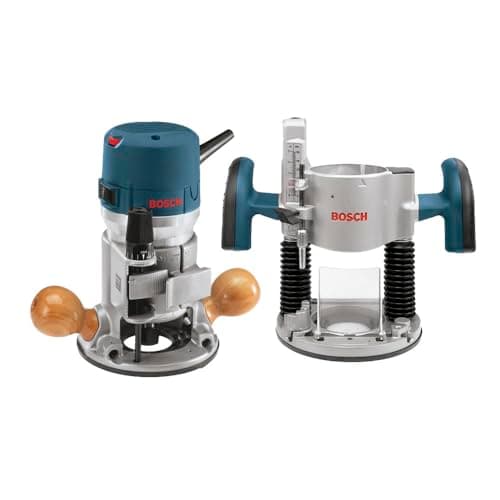
Bosch Bosch 1617EVSPK Router Combo
Bosch 1617EVSPK Router Combo

The default recommendation for a first serious router. Fixed and plunge bases in one kit, 2.25 HP, and a reputation for lasting decades.

Best overall
8.4
$230.15Amazon
02
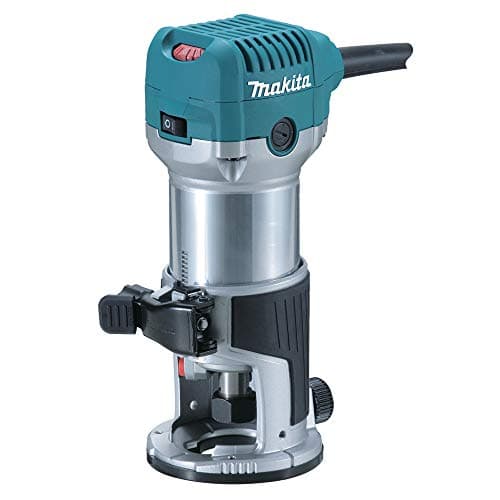
Makita Makita RT0701C Compact Router
Makita RT0701C Compact Router

The compact router's value champion. Smooth variable speed and a wide accessory ecosystem, usually a little cheaper than the DeWalt.

Best value compact
7.8
$159.00Amazon
03
DeWalt DeWalt DW618PK Router Combo
DeWalt DW618PK Router Combo

A solid mid-size alternative to the Bosch. 2.25 HP, soft start and both bases — a dependable do-most-things router.

Best mid-size alternative
8.0
$269.00Amazon
04
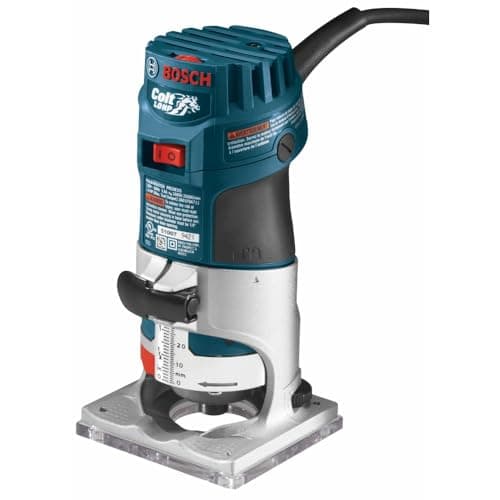
Bosch Bosch Colt PR20EVS Palm Router
Bosch Colt PR20EVS Palm Router

A true one-hand palm router for trim and rounding-over. The smallest, lightest way to break edges and run laminate.

Best for trim work
7.0
$113.54Amazon
05
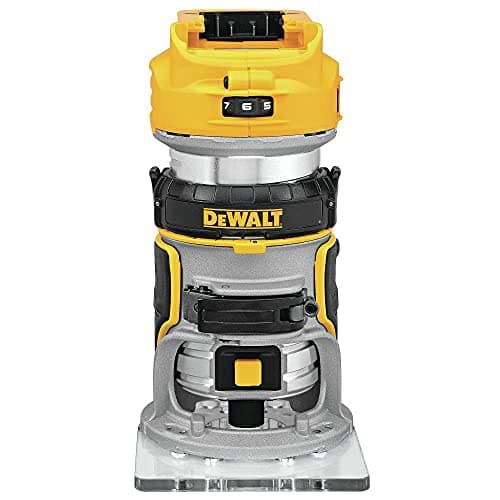
DeWalt DeWalt DCW600B 20V MAX XR Compact Router (Tool Only)
DeWalt DCW600B 20V MAX XR Compact Router (Tool Only)

DeWalt's current compact router, and the one that removes the cord from edge work. Dual LEDs, a depth-adjustment ring and a brushless motor — but it arrives as a bare tool on a fixed base.

Best cordless compact
7.4
$132.99Amazon

#ad · Live prices from the Amazon Product API, as of October 10, 2026. Where we have no verified live price, we show none — we would rather leave a gap than print a number that has rotted.

In detail

The picks, in full

01
Bosch Bosch 1617EVSPK Router Combo

Best overall

Bosch 1617EVSPK Router Combo

2.25 HP8k–25k RPMFixed + plunge bases1/4 & 1/2 in collets
8.4/10

The default recommendation for a first serious router. Fixed and plunge bases in one kit, 2.25 HP, and a reputation for lasting decades.

Power
8
Control
8
Versatility
9
Build
9
Value
8

Pros

  • Two bases cover handheld work and, with the fixed base, a router table
  • Accepts both collet sizes, so it runs the full range of bits
  • Long track record — a genuinely durable machine

Cons

  • Above-table height changes mean going under the table without a lift
  • No onboard LED work light

Don't buy this if…

…you only ever do light edge work and hate weight — a compact trim router is lighter and easier for one-handed rounding-over.

$230.15View on Amazon

$289.0020% off

Price as of October 10, 2026. Prices change — Amazon's is the one that counts.

#ad · we may earn a commission from this link to Bosch 1617EVSPK Router Combo

02
Makita Makita RT0701C Compact Router

Best value compact

Makita RT0701C Compact Router

1.25 HP10k–30k RPM1/4 in colletVariable speed
7.8/10

The compact router's value champion. Smooth variable speed and a wide accessory ecosystem, usually a little cheaper than the DeWalt.

Power
6
Control
8
Versatility
8
Build
8
Value
9

Pros

  • Very smooth speed control and a quiet, refined motor
  • Huge range of aftermarket bases and plates fit it
  • Often the cheapest way into a quality compact router

Cons

  • No onboard light
  • 1/4-inch collet only, like all compacts

Don't buy this if…

…you want the lit cut and the finest height micro-adjust out of the box — the DeWalt edges it on both.

$159.00View on Amazon

Price as of October 10, 2026. Prices change — Amazon's is the one that counts.

#ad · we may earn a commission from this link to Makita RT0701C Compact Router

03
DeWalt DeWalt DW618PK Router Combo

Best mid-size alternative

DeWalt DW618PK Router Combo

2.25 HP8k–24k RPMFixed + plungeSoft start
8.0/10

A solid mid-size alternative to the Bosch. 2.25 HP, soft start and both bases — a dependable do-most-things router.

Power
8
Control
8
Versatility
8
Build
8
Value
8

Pros

  • Soft start keeps it from jumping on power-up
  • Both bases and both collets, like the Bosch
  • Well-built DeWalt motor with a good service network

Cons

  • Below-table height adjustment without a lift
  • Nothing it does clearly beats the Bosch — often comes down to price

Don't buy this if…

…the Bosch 1617 is cheaper the day you buy — the two are close enough that price should decide.

$269.00View on Amazon

Price as of October 10, 2026. Prices change — Amazon's is the one that counts.

#ad · we may earn a commission from this link to DeWalt DW618PK Router Combo

04
Bosch Bosch Colt PR20EVS Palm Router

Best for trim work

Bosch Colt PR20EVS Palm Router

1.0 HP16k–35k RPMPalm grip5.6 A
7.0/10

A true one-hand palm router for trim and rounding-over. The smallest, lightest way to break edges and run laminate.

Power
5
Control
8
Versatility
6
Build
8
Value
8

Pros

  • Small and light — comfortable for long sessions of edge work
  • Fine depth adjustment for a palm router
  • Great for laminate trimming and small round-overs

Cons

  • Least powerful of the routers here — light cuts only
  • 1/4-inch collet, small bits

Don't buy this if…

…you want one router to do everything — a slightly larger compact like the DCW600B or the RT0701C does trim work and more.

$113.54View on Amazon

$145.0022% off

Price as of October 10, 2026. Prices change — Amazon's is the one that counts.

#ad · we may earn a commission from this link to Bosch Colt PR20EVS Palm Router

05
DeWalt DeWalt DCW600B 20V MAX XR Compact Router (Tool Only)

Best cordless compact

DeWalt DCW600B 20V MAX XR Compact Router (Tool Only)

16,000-25,500 RPM1/4 in. colletBrushless, 20V MAXFixed base, tool only
7.4/10

DeWalt's current compact router, and the one that removes the cord from edge work. Dual LEDs, a depth-adjustment ring and a brushless motor — but it arrives as a bare tool on a fixed base.

Power
6
Control
9
Versatility
7
Build
8
Value
7

Pros

  • No cord to drag across a workpiece, which is exactly where a trailing lead does the most damage
  • Dual LEDs light the bit and the depth-adjustment ring sets height without tools
  • Electronic brake stops the bit quickly when you release it

Cons

  • Bare tool — a 20V MAX battery and charger are extra unless you already run the platform
  • Fixed base only; DeWalt's plunge base for this router is a separate purchase
  • 1/4-inch collet only, so the big rail-and-stile and panel-raising bits are out

Don't buy this if…

…you have no DeWalt batteries and want the cheapest capable compact. A corded compact does the same work for less once the battery is priced in.

$132.99View on Amazon

Price as of October 10, 2026. Prices change — Amazon's is the one that counts.

#ad · we may earn a commission from this link to DeWalt DCW600B 20V MAX XR Compact Router (Tool Only)

The five side by side

Published listing specifications for the five routers ranked above. Read the collet column first: it is the only one of these specifications that can make a router unable to run the bit your jig specifies.

RouterPowerSpeed rangeCollets and bases
Bosch 1617EVSPK2.25 HP8,000–25,000 RPM1/4 and 1/2 in., fixed + plunge bases
Makita RT0701C1.25 HP10,000–30,000 RPM1/4 in., compact fixed base
DeWalt DW618PK2.25 HP8,000–24,000 RPMFixed + plunge bases, soft start
Bosch Colt PR20EVS1.0 HP, 5.6 A16,000–35,000 RPMPalm grip, fixed base
DeWalt DCW600B (20V MAX)Brushless, cordless16,000–25,500 RPM1/4 in., fixed base, tool only

The cordless question

A cordless compact router is a pleasant thing to use on a jig: no cord to drag across the template or catch on the clamp handles, and the cut is short enough that runtime never becomes the issue. The DeWalt DCW600B is listed as a bare tool, so the real price is the tool plus a battery and charger if you are not already on that platform — worth checking against the live prices in the table above before you decide it is the cheap option.

One caution that is specific to this job rather than to cordless tools in general: dust. Dovetail bits throw chips straight up into the jig, and a cordless router with no extraction port leaves you blowing chips off the template between cuts. Chips under a guide bushing are a real source of a joint that fits on one end of a drawer and not the other.

Bits: buy the one your jig specifies, then buy a spare

A fixed-template jig is designed around a specific dovetail bit angle and diameter, usually printed in the instructions and often supplied with the jig. Substituting a bit of a different angle changes the socket geometry and the joint will not fit, however carefully you set the depth. Buy the specified bit.

Then buy a second one. A dovetail bit has a narrow neck and it is the one profile most likely to snap if you take too much in a pass or feed into the cut rather than across it. Our router bit roundup covers the general question of bit quality, and router bit types explained describes where a dovetail profile sits among the rest.

What about a router table?

Through dovetails can be cut on a router table with a jig designed for it, and some people prefer it: the router is stationary, the workpiece moves, and there is no balancing act on a narrow template. It is a different workflow rather than a better one, and it needs a table and a fence you trust. If you are weighing that, start at best router table— and note that a table changes the horsepower calculation, because a table-mounted router gets used for big bits too.

Where these numbers come from

The horsepower ratings, amperages, speed ranges, collet sizes and base configurations above are the manufacturers' own published listing specifications, recorded when we researched each router and cited per router in Sources. Guide bushing compatibility is not in that data and we have not tested it — that one you check against your jig's instructions and your router's sub-base, which is why this page tells you to do so rather than claiming a fit. We do not run a lab; our methodology page says so. Prices come from the live price feed and carry the date they were pulled.
How we picked

We do not run a testing lab

We researched published manufacturer specifications, manuals and spec sheets, ran the arithmetic those specs support, and read owner reviews at volume, then scored each tool against a published rubric. The scores are judgments from documented research — they are not measurements we took, because we do not have a lab and we are not going to pretend we do. Where a number came from a manufacturer's document, we name it and link it in Sources.

Questions

Frequently asked

What size router do I need for a dovetail jig?
A 1.25 HP compact router is enough for drawer-stock dovetails, and a 2.25 HP mid-size router is enough for anything. The cut is small and shallow, so power is rarely the limit. What you should not compromise on is a fine depth adjustment and a collet that takes the bit your jig specifies.
Do I need a plunge router for dovetails?
No. A dovetail jig is a constant-depth, template-following cut, which is what a fixed base does best. A plunge base works if you lock it down, but it is taller, heavier at the top and gives you a setting that can creep. A combo kit lets you leave the fixed base fitted for jig work.
Can I use a trim or palm router with a dovetail jig?
Often yes, and they handle beautifully on a narrow template — but check two things: that the jig's specified bit has a 1/4 in. shank, and that your jig's guide bushing fits the palm router's sub-base. Some jigs expect a larger base than a palm router provides.
Why does my jig cut a joint that is too tight?
The bit is projecting too far. Lower it a few thousandths and cut another test joint in scrap of the same thickness. Tight-to-loose is a very small range of bit height, which is why every jig's instructions open with test cuts and why we repeat the point in how to cut dovetails with a router.
Is a dovetail jig worth it versus cutting them by hand?
If you need repeatable joints in quantity, yes, overwhelmingly. If you want to cut six drawers a year and enjoy the work, a saw and chisels cost less and take up no shelf space. We compare the two properly in jig versus hand-cut.

Keep reading

Receipts

Sources

We do not run a testing lab, and we do not pretend to. Our picks come from published manufacturer specifications and manuals, the arithmetic those specs support, and owner reviews read at volume. Where we could not verify something, we say so on the page rather than quietly leaving it out. Read our full method.