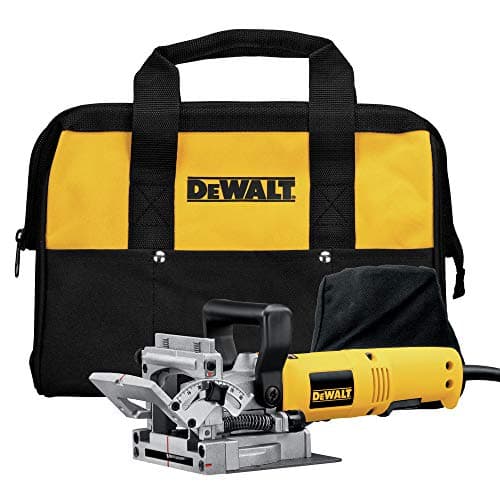
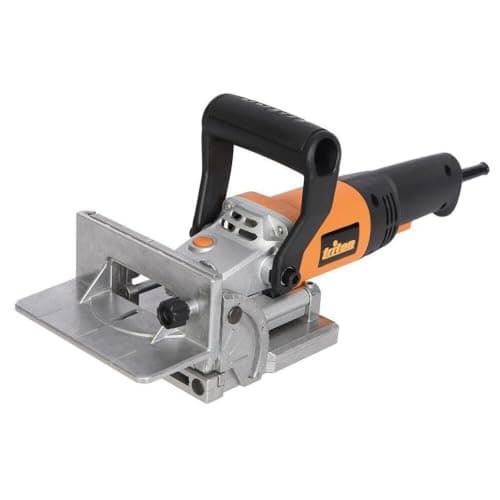
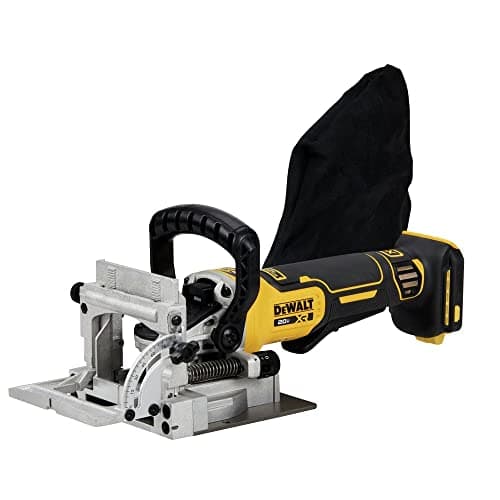
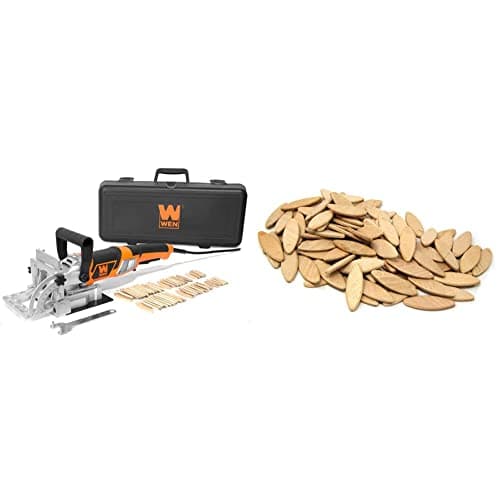
A biscuit joiner's greatest strength is not joint strength — it is alignment. Two panels being glued edge to edge want to slide out of plane the moment you tighten a clamp, and a row of biscuits stops that happening. Everything else the tool does is a bonus, and pretending otherwise is how people end up disappointed with an otherwise excellent machine.
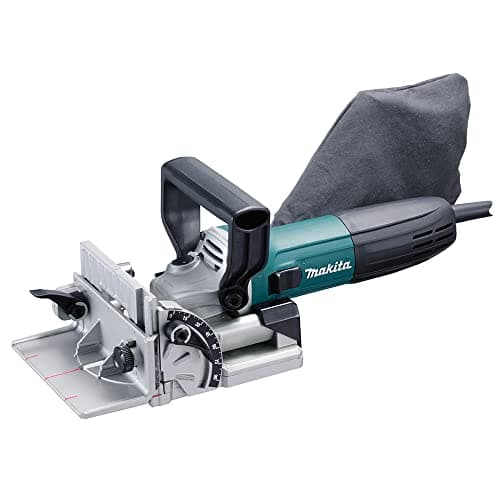
The mechanism is simple: a small circular blade plunges out of the fence into the edge of a board, cutting a crescent-shaped slot. A compressed beech biscuit goes in with glue, swells with the moisture, and locks the two halves in plane. The slot is deliberately a little longer than the biscuit, which gives you a few millimeters of side-to-side adjustment during assembly — a feature for panel glue-ups, and a limitation if you need the joint to register in one exact position.
Which means the specification that matters is the fence, not the motor. Every machine here has enough power. What separates them is whether the fence stays parallel to the blade across its travel, whether it returns to a setting reliably, and whether it locks without creeping. A fence that drifts by a degree puts the slot at a slight angle, and the joint then refuses to close flush — which is the exact problem you bought the tool to avoid.
Before you buy, be honest about whether you need one. If your joinery is cabinets and face frames, a pocket-hole jig is faster and stronger for those loads. If you need genuine mechanical strength, a mortise and tenon or a dowel joint does more. A biscuit joiner earns its place when you glue up wide panels, mitre cabinet carcasses, or want a fast invisible joint in sheet goods.
How to choose a plate joiner
The fence is the machine
Look for a fence with rack-and-pinion height adjustment rather than a slot and a knob, because rack-and-pinion keeps the fence parallel as it moves. Check that it tilts and locks positively for mitre work. And accept that on any machine you should verify the fence against the blade with a square before a run of important joints — it takes a minute and saves a panel.
Biscuit sizes and what they fit
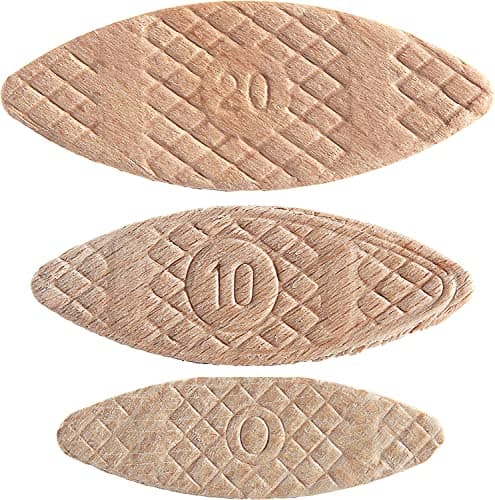
The standard sizes are 0, 10 and 20, in ascending size; 20 is the common one for 3/4-inch panel work. Every machine on this page cuts those three. A fourth size exists — the smaller face-frame biscuit, for stock too narrow to take a #0 — but the machines that cut it have left the US market, so if face frames are your main use, plan on pocket screws or dowels for the narrow rails rather than waiting for a plate joiner that fits them.
Plunge feel and depth stops
The plunge should be smooth and spring back cleanly. A gritty or uneven plunge translates into inconsistent slot depth, which shows up as biscuits that bottom out or float. Depth stops should be positive detents, not a friction setting that creeps as the machine warms up.
Anti-slip provisions
The most common failure is the machine walking sideways as you plunge, which puts the slot out of position. Manufacturers address this with rubber pads or retractable pins on the fence face. Pins grip better and mark the workpiece; rubber marks nothing and grips less. On finished surfaces, use rubber and clamp the workpiece properly.
Getting joints that actually close
Reference from the same face on both parts. Every slot cut with the fence on the show face will line up with every other slot cut the same way, even if the fence is not perfectly set — errors cancel. Reference one part off the fence and the other off the base, and any fence error doubles.
Do not over-glue. A biscuit swells with the moisture from the glue, which is what locks it in — but flooding the slot means the biscuit swells before you have the panel closed, and it also risks a visible bump telegraphing through a thin panel weeks later. A thin coat in the slot and on the biscuit is right.
Store biscuits sealed. They are compressed beech and they absorb humidity from the air; a biscuit that has already swollen on the shelf will not fit its slot. A screw-top jar solves this permanently.
Segmenting by shop and budget
Occasional panel glue-ups: a budget machine plus care with the fence. The slot it cuts is fine; you are trading setup time for money.
Regular cabinet work: a mid-range machine with a proper rack-and-pinion fence. This is where the tool stops being fiddly and starts being fast.
Face frames and narrow stock: not a biscuit joiner any more. With the face-frame-capable machines discontinued, a pocket-hole jig is the honest answer for rails too narrow to take a #0 biscuit.
Production work: the heavy-duty machines with the largest accessory ecosystems, because blades and parts availability matters more than the purchase price over a decade.
How we ranked these
From published manufacturer specifications (motor rating, biscuit sizes cut, fence adjustment type and range, blade size), the makers' manuals, and the pattern in owner feedback read at volume. We have not measured slot position accuracy or fence deflection — we do not run a lab, as our methodology page states plainly. Prices come from the live price feed.