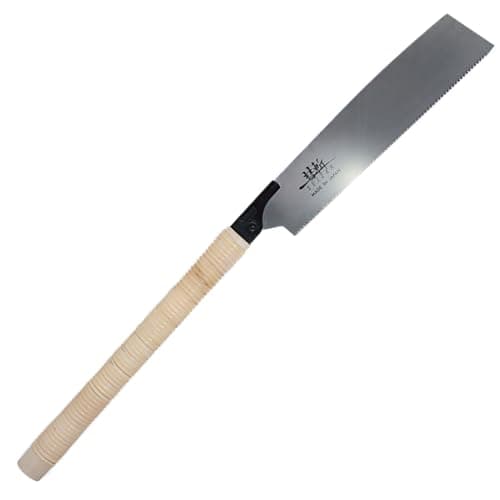
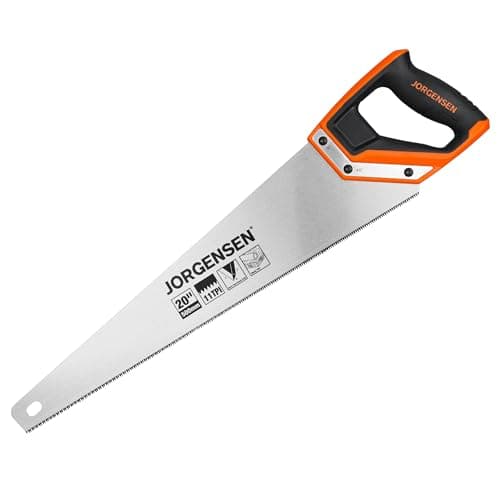
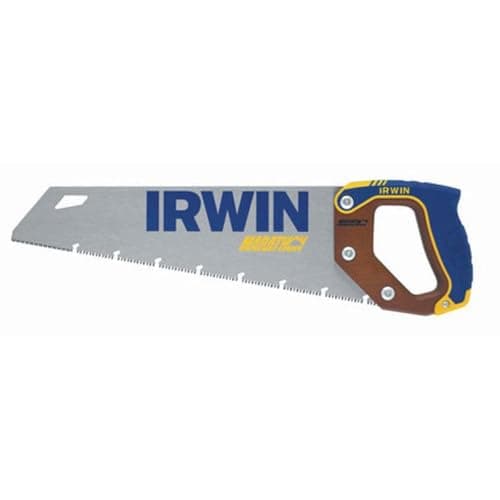
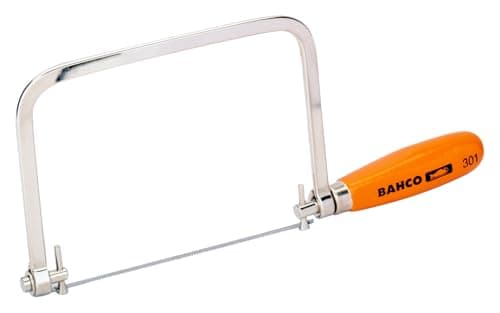
A hand saw is not a worse table saw. It is the tool that cuts the board the machine cannot reach, in the shop that does not have room for the machine, at the moment when dragging out the machine costs more than the cut is worth. That is a real and recurring job, and it is the one this page buys for.
It is also worth saying plainly what this page is not. If you are cutting dovetails, tenons or any other joint, you want a short saw with a stiffened spine over the blade, and we rank those separately on the best dovetail saw. Everything below is a saw for reducing a board — crossing it, ripping it, curving it or trimming something off it flush. The two families overlap in the shop and almost never overlap in the cut.
The decision nobody tells you about: push or pull
Western saws cut on the push stroke. Japanese saws cut on the pull. This is not a style preference, and it drives almost everything else about how the two feel.
A blade being pushed is a column under compression, and a thin column under compression buckles. The Western answer is to make the plate thick enough not to buckle, which means a wider kerf, more wood turned into dust per cut, and more effort per stroke. A blade being pulled is in tension, and a blade in tension cannot buckle no matter how thin it is. That is why the Japanese saws here run plates of eighteen and twenty-four thousandths of an inch, and the Western saw runs 0.85 mm — roughly three times thicker than the thinnest of them.
The practical consequences: a pull saw is easier for a beginner to start, removes less wood, and tires you less. A push saw puts your body weight behind the stroke, which is why a long Western saw still crosses a wide board faster than a short Japanese one. Neither is correct. The ranking below reflects that the pull saws win on cut quality and the push saw wins on stroke length, and both facts are in the scores.
What we ranked these on
Cut quality.How clean the sawn face is, which is mostly a function of tooth count and plate thickness. More teeth per inch leaves a smoother face and cuts more slowly; fewer teeth clear waste faster and leave a rougher one. The spread on this page is wide and deliberate, from a 22 tpi crosscut edge to a saw sold as “coarse cut”.
Ease of starting. The first half-inch is where hand sawing goes wrong. A saw that skates across the line, jumps out of the kerf or buckles on the first stroke will not get used, however good the rest of the cut is. Tension, tooth pitch at the heel and plate stiffness all feed into this.
Versatility. How many of the cuts a shop actually needs this one saw covers. A double-edge ryoba with rip teeth on one side and crosscut on the other scores high here by construction; a five-inch flush-cut saw scores low, and should, because it does exactly one thing.
Build.Steel quality, frame rigidity and whether the thing can be maintained. The single biggest divide on this page is hardpoint versus resharpenable: induction-hardened teeth are harder than a file and cannot be sharpened, so those saws are consumables by design. That is not automatically bad — it is simply a different ownership model, and it is priced accordingly.
Prices are pulled live from Amazon and stamped with the date, so what you see is today's number rather than one typed in months ago. Every saw on this page sits between roughly twenty and fifty dollars, which makes this one of the cheapest categories on the site and means the real decision is which saw, not how much.
How many saws do you actually need?
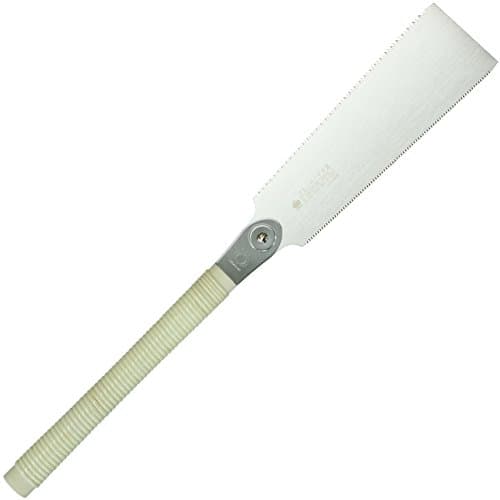
Two, for most shops. One saw that reduces boards — the ryoba at the top of this page is the single best answer if you are buying one thing — and one saw that turns, which means a coping saw. Those two cover straight cuts with or across the grain, and curves.
A third is worth it once you start using dowels, plugs or through-tenons, and that third is a flush-cut saw. It is a single-purpose tool and it is five minutes from being the most used thing in the drawer, because the alternative is a chisel and a careful afternoon.
Everything else here is a refinement: a longer Western saw if you break down a lot of long stock by hand, a kataba if you cut deeper than a backed saw reaches, a cheap toolbox saw if you want one you do not care about.
Reading a saw's specification
Teeth per inch
TPI (or ppi, points per inch — they differ by one and makers use both) is the single most useful number on a saw. Low counts cut fast and rough; high counts cut slow and clean. As a working rule, 7 to 11 TPI is a breakdown saw for construction stock, 12 to 15 is a general shop saw, and anything above 18 is a joinery saw. The Gyokucho ryoba on this page carries 9 tpi on its rip edge and 22 tpi on its crosscut edge for exactly this reason: the two cuts want different teeth.
Rip teeth and crosscut teeth are not the same tooth
A rip tooth is filed straight across, like a tiny chisel, and it works by paring the fibers off the end as it travels along the grain. A crosscut tooth is filed at an angle to a point, like a tiny knife, and it severs the fibers on each side of the kerf before lifting the waste between them. Use a rip saw across the grain and it tears; use a crosscut saw along the grain and it is simply slow. This is the main argument for a double-edge saw.
Kerf and plate thickness
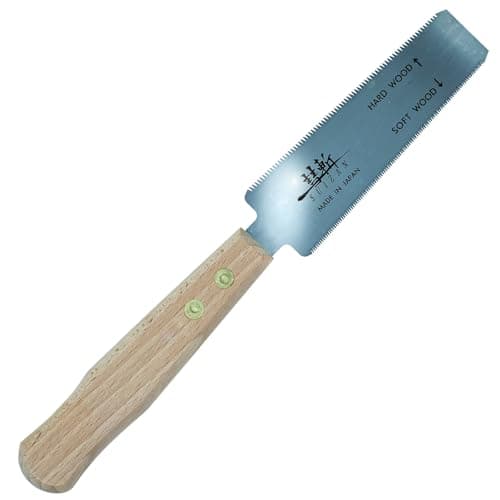
The kerf is the slot the saw leaves, and it is always wider than the plate because the teeth are set — bent alternately left and right — so the blade does not bind. Suizan publishes both numbers for the kataba here: a 0.024 in plate cutting an 0.03 in kerf. That matters when you are cutting to a line, because half the kerf is the amount you have to leave on the waste side.
Hardpoint versus resharpenable
Most inexpensive Western saws now have induction-hardened teeth, visible as a darkened band along the tooth line. They stay sharp considerably longer than a traditional saw and they cannot be sharpened at all, because the teeth are harder than a saw file. Both saws on this page with that construction are marked as such in their cons. If you want a saw to sharpen and hand on, you are shopping for traditional filed teeth, and that is a different and much more expensive market than Amazon serves well.
Technique, briefly, because it matters more than the saw
Starting the cut
Start on the waste side of the line, with the saw at a low angle and almost no downward pressure. Use your thumb knuckle as a fence against the plate for the first few strokes. On a pull saw, draw back gently three or four times before you do anything else — you are cutting a shallow groove that will steer every stroke after it. Pressing hard at the start is the single most common reason a cut wanders.
Letting the saw do it
The saw cuts on its own weight plus a little. If you are forcing it, either the teeth are dull, the kerf is binding or you are using a crosscut saw to rip. Forcing a thin Japanese plate is also how you kink it permanently, which is the one failure mode these saws have.
Supporting the work
Most bad hand-sawn cuts are a workholding problem wearing a saw costume. A board that flexes, rocks or pinches the blade cannot be cut straight by any saw at any price. Clamp it to a bench or put it across a pair of saw horses with the offcut supported, and half the difficulty disappears. The same logic that makes a bench vise worth having applies here.
When to stop reaching for a hand saw
Hand saws are genuinely better than machines for one-off cuts, cuts in awkward places, and quiet work. They are genuinely worse for repeatability and for volume. If you find yourself cutting the same length six times, that is a miter saw job, and if you are breaking down sheet goods, that is a track saw or a circular saw and a straight edge. Nothing on this page competes with either, and a page that pretended otherwise would be wasting your money for you.
What we could not verify
Two manufacturers' own websites refused connections from our network while this page was written: irwin.com returned HTTP 403 and bahco.com returned HTTP 403. Every figure on this page therefore comes from the makers' own current product listings, fetched through the Amazon Product API on the date stamped on the prices, rather than from a manufacturer spec sheet.
One consequence is specific and worth stating: Irwin publishes no tooth count for the 2011201 on its listing, and we could not reach irwin.com to find one, so we do not tell you its TPI. It is sold as a coarse-cut saw and we have ranked it as one. We would rather leave that number out than print a figure we cannot stand behind.
How we ranked these
From the manufacturers' published specifications — blade length, tooth count, plate thickness, kerf width, frame material — and from the mechanical consequences of those numbers, which is what the buyer's guide above is for. We have not measured kerf width, tooth hardness or cut speed. We do not run a lab, and our methodology page says so in those words. Prices come from the live price feed.