Skip to content
Dovetail & Dust

HUB 01 · Hand Tools

Best Measuring and Marking Tools for Woodworking

Every joint that does not fit was laid out before it was cut. A layout kit is three tools, not thirty, and the deciding question for each one is whether it is a reference you trust or a ruler you read.

By Stephen V.Updated How we research
#ad

We earn a commission when you buy through our Amazon links, at no extra cost to you. It never changes our rankings, and we say so when the cheaper tool is the better buy. How this works.

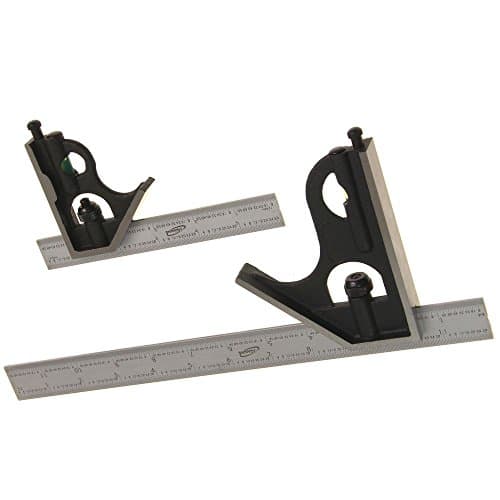
Buy the iGaging Combination Square Set first. Two blades, 6 and 12 in., hardened steel, 4R graduations — it squares a line, marks a depth, finds a 45, and acts as a straightedge, which is four of the five layout jobs a furniture shop has. Add the Taytools brass-head wheel marking gauge for the fifth, and the Narex marking knife so the lines you draw are cuts rather than pencil smudges. That is a complete layout kit. The budget pick is the Swanson S0101 speed square — the cheapest tool on this page and still the fastest way to square a line across a board. If you want one square you will hand to a grandchild, it is the Starrett C11H.

The distinction that organizes everything

Layout tools split into two kinds, and confusing them is the single most expensive habit in a hobby shop.

A measuring tool tells you a number. A tape measure, a rule, the graduated blade of a combination square. Numbers are necessary for cutting lists and for stock preparation, and they are also where error enters: you read a number, you transfer it to a second part, and you have now introduced two reading errors and a parallax error into a joint that only needed the two parts to match.

A reference tool tells you whether two things agree. A machinist square does not tell you an angle; it tells you whether the angle you have is 90 degrees. A marking gauge does not tell you a distance; it scribes the same distance onto every part until you move it. A story stick carries no number at all.

Good joinery uses references wherever it can and measurements only where it must. Set the gauge from the actual tenon, not from a number. Mark the shoulder off the actual mating part. The tools on this page are ranked with that in mind, which is why a $30 set of machinist squares that measures nothing is on it, and why the marking knife matters more than it looks like it should.

What a combination square really is

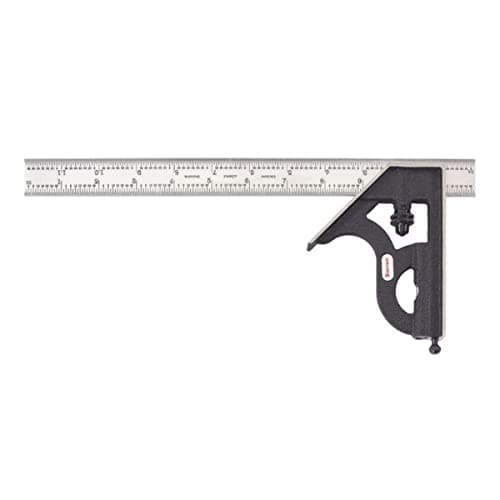
A combination square is four tools sharing a blade: a try square for marking across a face, a 45-degree miter square, a depth gauge, and — with the head off — a steel rule and straightedge. That is why it is the first layout tool anyone should buy and why it is worth spending real money on one eventually.

Two things separate a good one from a bad one. The first is whether the head is actually square to the blade, which you can check in thirty seconds against a jointed edge: mark a line, flip the square, mark again from the same point. Two lines that diverge mean the square is out by half the gap. The second is whether the head stays square once it is locked and knocked about — cast-iron heads on hardened blades, which is what the Starrett C11H publishes, hold that relationship for decades.

The 4R graduation pattern on the iGaging and Starrett blades is worth knowing about: it gives 8ths and 16ths on one edge and 32nds and 64ths on the other, which is the pattern American woodworking plans are written in. A blade graduated in something else is not worse; it is just a translation step you will perform a hundred times.

Why a knife beats a pencil

A sharp pencil line is somewhere between 0.01 and 0.02 in. wide. On a dovetail that is the difference between a joint that closes and a joint with a visible gap, because "cut to the line" has three meanings — on it, beside it, or through it — and a wide line makes all three legal.

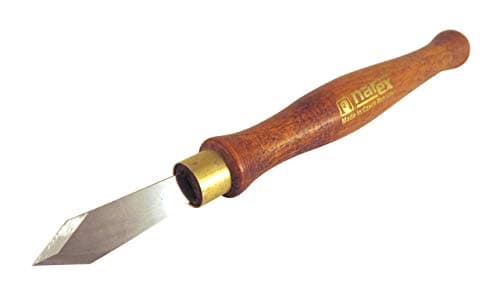
A knife line has no width. More usefully, it is a physical trench: a chisel dropped into it registers against the wall of the cut, which means the shoulder you pare is exactly where the knife was and not a thirty-second away. The Narex knife here publishes a double bevel in Mn-V steel at a claimed HRC 61, which is the useful shape — a double bevel marks against a square from either side, where a single-bevel knife has a handed face and has to be flipped.

Use the pencil for cutting lists, part labels and face marks. Use the knife for every line you intend to cut to.

The gauge is the tool people skip

A wheel marking gauge scribes a line parallel to an edge, at a distance you set once and do not read. It is how every tenon cheek, every dovetail baseline and every rebate shoulder on a hand-cut joint gets its position, and it is the clearest example of a reference tool beating a measurement: set it against the actual chisel or the actual board thickness and the number never enters the process.

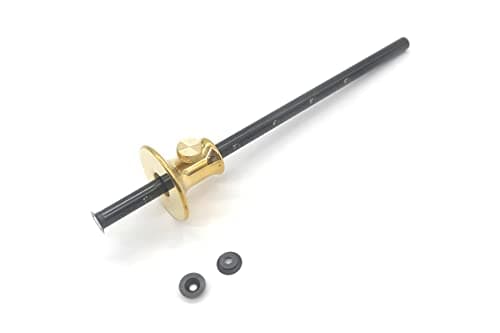
Wheel gauges — a round cutter rather than a pin — are the ones to buy. A pin tears when it crosses grain; a wheel slices. The Taytools gauge here publishes a machined brass head on a hardened beam with SAE and metric graduations, which is as much as this tool needs to be. We rank the category in full on best marking gauge, and the technique is on how to use a marking gauge.

Checking square, and checking the machine

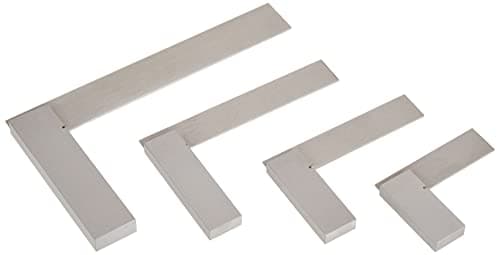
The Woodstock machinist square set is on this page for a job none of the others can do: telling you whether your other tools are lying. Four hardened steel squares — 2, 3, 4 and 6 in. — with a published tolerance claim of ±0.0006 in. give you a reference to check a table saw blade against its table, a fence against a miter slot, a jointer fence, a drill press table, and your own combination square.

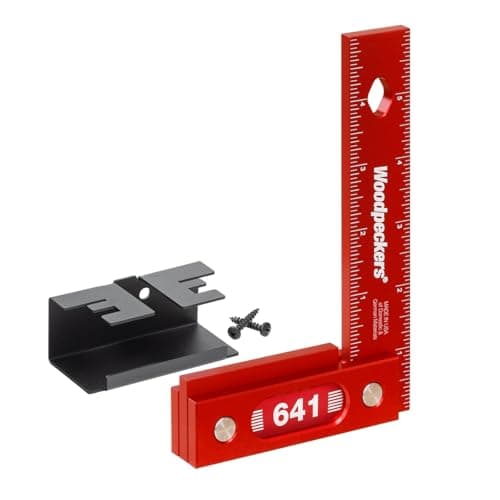
That matters because every one of those machines drifts, and a saw that is a degree out of square turns every case you build into a parallelogram. Check them when you set up, check them after anything gets knocked, and check them before a glue-up you cannot undo. The Woodpeckers 6 in. precision square is the same idea in one piece: machined aluminum, a claimed ±0.001 in., and self-standing so it stays put against a blade while you look at the light under it.

Side by side

ToolTypePublished sizePublished accuracy claim
iGaging Combination Square SetCombination square (2 blades)6 + 12 in., 4R graduationsNot published
Starrett C11H-12-4RCombination square12 in. blade, cast-iron headNot published
Woodpeckers Precision SquareFixed square6 in., machined aluminumClaimed ±0.001 in.
Woodstock D4089 setMachinist squares (4)2 / 3 / 4 / 6 in., hardened steelClaimed ±0.0006 in.
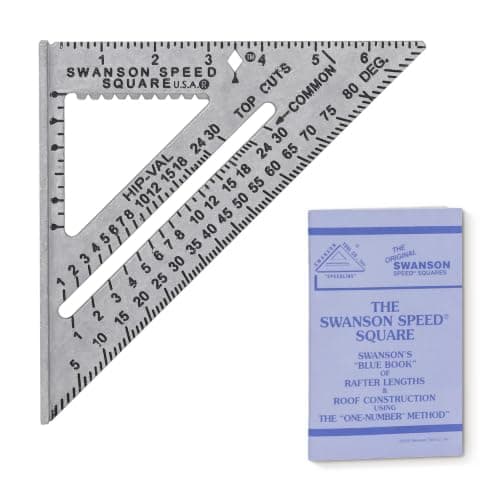
Swanson S0101 Speed SquareLayout square7 in., aluminum alloyNot published
Taytools 467603 gaugeWheel marking gauge8 in. beam, brass headNot published
Narex marking knifeMarking knifeDouble bevel, Mn-V steelClaimed HRC 61

Accuracy figures above are the manufacturers' own claims from the listings we link, not measurements we took — we do not own a surface plate and we do not run a lab. Where a maker publishes no tolerance, the cell says so rather than guessing one.

What to buy, in order

First purchase: the iGaging combination square set. Two blades cover both the small work and the wide panel, and the price is not the reason to hesitate.

Second: the Taytools wheel gauge. Nothing else positions a dovetail baseline or a tenon cheek.

Third: the Narex knife, because it is what makes the first two worth owning.

Then, if you want them: the Woodstock machinist set to audit your machines, the Woodpeckers square for fine joinery at the bench, the Swanson for rough work and sheet goods, and the Starrett when you want to stop replacing combination squares forever.

If you only want squares ranked against each other, that is best woodworking squares. If you are assembling a first kit from scratch, start with the beginner woodworking tool list.
The short answer

Quick picks

#ProductBest forScorePrice
01
iGaging iGaging Combination Square Set (6 + 12 in)
iGaging Combination Square Set (6 + 12 in)

An accurate combination square for a fraction of the premium price. The measuring tool every shop needs before it needs another machine.

Best value square
8.0
$56.36Amazon
02
Taytools Taytools 467603 Brass-Head Wheel Marking Gauge
Taytools 467603 Brass-Head Wheel Marking Gauge

A machined brass head on a hardened beam, with graduations you can actually read. The mass in the head is what keeps the wheel tracking instead of wandering off the reference face.

Best overall
8.6
$26.99Amazon
03
Narex Narex Dual Double-Bevel Marking Knife
Narex Dual Double-Bevel Marking Knife

The gauge marks parallel to an edge; the knife marks everything else. A thin double-bevel blade in Mn-V steel, hardened to a claimed 61 HRC, holds a point long enough to matter.

Best companion tool
8.2
$34.67Amazon
04
Woodpeckers Woodpeckers 6-in Precision Woodworking Square
Woodpeckers 6-in Precision Woodworking Square

A fixed, dead-square reference for joinery. CNC-machined aluminum with a shoulder that lets it stand on the stock, so you can check a shoulder or a saw cut without a third hand.

Best for fine joinery
8.0
$94.99Amazon
05
Starrett Starrett C11H-12-4R Combination Square
Starrett C11H-12-4R Combination Square

The reference standard. A hardened, photo-engraved blade in a ground cast-iron head — the square you buy once and check every other tool against for the rest of your shop life.

Best overall
8.5
$153.51Amazon
06
Woodstock Woodstock D4089 Machinist Square Set (4)
Woodstock D4089 Machinist Square Set (4)

Four small fixed squares for the jobs a combination square is clumsy at: checking a table-saw blade to the table, a fence to a miter slot, or an assembly for square.

Best for checking square
7.3
$29.99Amazon
07
Swanson Swanson S0101 7-in Speed Square
Swanson S0101 7-in Speed Square

The cheapest genuinely useful square you can own. Not a fine-joinery tool, but unbeatable as a fast 45/90 marker and a saw fence for crosscuts.

Best for speed and site work
7.8
$9.98Amazon

#ad · Live prices from the Amazon Product API, as of November 21, 2026. Where we have no verified live price, we show none — we would rather leave a gap than print a number that has rotted.

In detail

The picks, in full

01
iGaging iGaging Combination Square Set (6 + 12 in)

Best value square

iGaging Combination Square Set (6 + 12 in)

6 + 12 in blades4R graduationsHardened steelCombination square
8.0/10

An accurate combination square for a fraction of the premium price. The measuring tool every shop needs before it needs another machine.

Accuracy
8
Build
7
Value
9

Pros

  • Genuinely square and readable for the money
  • Two blade lengths cover most layout work
  • The tool that makes every joint you cut more accurate

Cons

  • Fit and finish trail a premium machinist's square
  • Check it for square on arrival, as with any budget square

Don't buy this if…

…you need certified machinist accuracy — a premium square is worth it, but overkill for most furniture work.

$56.36View on Amazon

$66.3115% off

Price as of November 21, 2026. Prices change — Amazon's is the one that counts.

#ad · we may earn a commission from this link to iGaging Combination Square Set (6 + 12 in)

02
Taytools Taytools 467603 Brass-Head Wheel Marking Gauge

Best overall

Taytools 467603 Brass-Head Wheel Marking Gauge

Machined brass headHardened beam8 in. beamSAE and metric graduations
8.6/10

A machined brass head on a hardened beam, with graduations you can actually read. The mass in the head is what keeps the wheel tracking instead of wandering off the reference face.

Line quality
9
Adjustment
8
Build
9
Readability
9
Value
8

Pros

  • Brass mass keeps the head pressed to the edge, which is what stops a wandering line
  • Readable SAE and metric scales let you set common dimensions without a rule
  • Ships with spare cutters, and a dull cutter is the usual reason a gauge stops scoring cleanly

Cons

  • Heavier than a wooden gauge, which some find tiring over a long marking session
  • The graduations are a convenience, not a calibration — set critical work off the actual part

Don't buy this if…

…you want a traditional pin gauge for rough layout. A wheel gauge cuts fibers; a pin gauge tears them, and there are jobs where that does not matter.

$26.99View on Amazon

$28.676% off

Price as of November 21, 2026. Prices change — Amazon's is the one that counts.

#ad · we may earn a commission from this link to Taytools 467603 Brass-Head Wheel Marking Gauge

03
Narex Narex Dual Double-Bevel Marking Knife

Best companion tool

Narex Dual Double-Bevel Marking Knife

Mn-V steelClaimed HRC 61Double bevelThin blade
8.2/10

The gauge marks parallel to an edge; the knife marks everything else. A thin double-bevel blade in Mn-V steel, hardened to a claimed 61 HRC, holds a point long enough to matter.

Line quality
9
Adjustment
7
Build
9
Readability
8
Value
8

Pros

  • A knife line gives the chisel a wall to drop into — the biggest single accuracy gain in hand joinery
  • Double bevel works off either face, so you are not swapping knives mid-layout
  • Thin blade reaches into a dovetail socket where a thick one binds

Cons

  • A double bevel does not register perfectly flat against a square — a single bevel is better for that one job
  • Sharp enough to be a genuine hazard loose in an apron pocket

Don't buy this if…

…you already own a marking knife you keep sharp. This is a good one, not a magic one.

$34.67View on Amazon

Price as of November 21, 2026. Prices change — Amazon's is the one that counts.

#ad · we may earn a commission from this link to Narex Dual Double-Bevel Marking Knife

04
Woodpeckers Woodpeckers 6-in Precision Woodworking Square

Best for fine joinery

Woodpeckers 6-in Precision Woodworking Square

6 inMachined aluminumClaimed +/-0.001 inSelf-standing
8.0/10

A fixed, dead-square reference for joinery. CNC-machined aluminum with a shoulder that lets it stand on the stock, so you can check a shoulder or a saw cut without a third hand.

Accuracy
9
Build
9
Versatility
7
Value
7

Pros

  • Maker rates it square to within a claimed 0.001 in over its length
  • Offset shoulder rests on the edge of the board so it stands up on its own
  • Laser-engraved scales and a light aluminum body that will not rust

Cons

  • A fixed square only — it does not measure depth or set a 45 like a combination square
  • Pricey for a 6-inch square if you only need a rough 90

Don't buy this if…

…you want one do-everything layout tool — a combination square measures, marks and sets angles the fixed square cannot, and should be your first square.

$94.99View on Amazon

Price as of November 21, 2026. Prices change — Amazon's is the one that counts.

#ad · we may earn a commission from this link to Woodpeckers 6-in Precision Woodworking Square

05
Starrett Starrett C11H-12-4R Combination Square

Best overall

Starrett C11H-12-4R Combination Square

12 in blade4R graduationsCast-iron headHardened steel
8.5/10

The reference standard. A hardened, photo-engraved blade in a ground cast-iron head — the square you buy once and check every other tool against for the rest of your shop life.

Accuracy
10
Build
9
Versatility
9
Value
6

Pros

  • Ground square and true out of the box — the tool other squares get checked against
  • Crisp, photo-engraved 4R graduations (1/64, 1/32, 1/16, 1/8) stay readable for decades
  • Reversible lock bolt, scriber and a real spirit level in one head

Cons

  • Costs many times what a serviceable combination square does
  • The satin-chrome blade shows handling marks; the head is heavy in the pocket

Don't buy this if…

…you are outfitting a first shop on a budget — a good mid-price combination square is square enough for furniture, and the Starrett money is better spent on chisels or a saw first.

$153.51View on Amazon

Price as of November 21, 2026. Prices change — Amazon's is the one that counts.

#ad · we may earn a commission from this link to Starrett C11H-12-4R Combination Square

06
Woodstock Woodstock D4089 Machinist Square Set (4)

Best for checking square

Woodstock D4089 Machinist Square Set (4)

2/3/4/6 in setHardened steelClaimed +/-0.0006 in90 deg reference
7.3/10

Four small fixed squares for the jobs a combination square is clumsy at: checking a table-saw blade to the table, a fence to a miter slot, or an assembly for square.

Accuracy
8
Build
7
Versatility
6
Value
8

Pros

  • Four sizes cover everything from a small setup to a cabinet corner
  • Maker rates the faces square to a claimed 0.0006 in — a tight machine-setup reference
  • Inside notch clears dust and chips so the square seats flush

Cons

  • Fixed 90 only — no measuring, marking or angle setting
  • Small steel squares want a wipe of oil or they will spot with rust

Don't buy this if…

…you only ever lay out by hand and never tune a machine — one good combination square will do most of what a beginner needs before this set earns its space.

$29.99View on Amazon

Price as of November 21, 2026. Prices change — Amazon's is the one that counts.

#ad · we may earn a commission from this link to Woodstock D4089 Machinist Square Set (4)

07
Swanson Swanson S0101 7-in Speed Square

Best for speed and site work

Swanson S0101 7-in Speed Square

7 inAluminum alloyTri/miter/protractorRafter scales
7.8/10

The cheapest genuinely useful square you can own. Not a fine-joinery tool, but unbeatable as a fast 45/90 marker and a saw fence for crosscuts.

Accuracy
6
Build
7
Versatility
9
Value
9

Pros

  • Doubles as a saw fence — run a circular saw base against it for a dead-square crosscut
  • Fast 45 and 90 marks, plus a protractor edge for any angle in between
  • Nearly indestructible cast aluminum for the price of lunch

Cons

  • Thick cast body is built for framing, not the fine graduations of layout work
  • Not precise enough to trust for tight hand-cut joinery

Don't buy this if…

…you need furniture-grade accuracy for dovetails and tenons — this is a carpentry and breakdown square, so pair it with a combination or machinist square for fine work.

$9.98View on Amazon

$13.9929% off

Price as of November 21, 2026. Prices change — Amazon's is the one that counts.

#ad · we may earn a commission from this link to Swanson S0101 7-in Speed Square

How we picked

We do not run a testing lab

We researched published manufacturer specifications, manuals and spec sheets, ran the arithmetic those specs support, and read owner reviews at volume, then scored each tool against a published rubric. The scores are judgments from documented research — they are not measurements we took, because we do not have a lab and we are not going to pretend we do. Where a number came from a manufacturer's document, we name it and link it in Sources.

Questions

Frequently asked

What measuring tools do I need for woodworking?
Three: a combination square, a wheel marking gauge and a marking knife. Those cover squaring a line, setting a parallel line from an edge, and cutting a line you can register a chisel into. A tape measure is a fourth, but it belongs to stock preparation and cutting lists rather than to joinery.
Is an expensive combination square worth it?
Eventually. What you buy with the money is a head that is square and stays square after being dropped, and a blade that is hardened rather than soft-stamped. A good inexpensive square like the iGaging set is genuinely accurate out of the box; a Starrett is accurate in twenty years. Check whichever you buy by marking a line, flipping the square and marking again from the same point.
Why use a marking knife instead of a pencil?
A pencil line is 0.01 to 0.02 in. wide and a knife line has no width at all. More importantly a knife line is a physical trench, so a chisel dropped into it registers against the wall of the cut and the shoulder lands exactly where you marked. Use a pencil for cutting lists; use a knife for anything you will cut to.
What is a marking gauge for?
Scribing a line parallel to an edge at a distance you set once. It positions dovetail baselines, tenon cheeks and rebate shoulders, and it does it without anyone reading a number — you set it against the actual part. Buy a wheel gauge rather than a pin gauge: a wheel slices across the grain where a pin tears.
How do I know if my square is actually square?
Put the head against a known-straight edge, mark a line along the blade, flip the square over so it references the same edge from the other side, and mark again from the same starting point. If the two lines diverge, the square is out by half the gap between them. A set of hardened machinist squares is the usual way to audit everything else in the shop.
Do I need a speed square for woodworking?
Not for joinery, but it is the fastest way to square a crosscut line across a board or to guide a circular saw, and it costs very little. It is a carpentry tool that earns its place in a woodworking shop whenever sheet goods or construction lumber are involved.

Keep reading

Receipts

Sources

We do not run a testing lab, and we do not pretend to. Our picks come from published manufacturer specifications and manuals, the arithmetic those specs support, and owner reviews read at volume. Where we could not verify something, we say so on the page rather than quietly leaving it out. Read our full method.