Skip to content
Dovetail & Dust

HUB 03 · Dust Collection

Festool Dust Extractor Alternatives

A Festool CT sells four things at once, and a shop vac sells none of them. Decide which of the four you are buying and the gap closes a lot faster than the price suggests.

By Stephen V.Updated How we research
#ad

We earn a commission when you buy through our Amazon links, at no extra cost to you. It never changes our rankings, and we say so when the cheaper tool is the better buy. How this works.

If you want what a Festool CT does and not the badge, buy the Fein Turbo II Set. Fein publishes 151 CFM, 98.4 in. of water lift, an 8.5 gal container, an autostart outlet and a 66 dB(A) running noise — the quietest published figure in the category — and at our last price check it cost appreciably less than the Bosch below it. If the parts of a CT you want are HEPA filtration and a filter that cleans itself, the Bosch VAC090AH is the pick instead. And if the budget is a fraction of either, the honest answer is a good wet/dry vac plus two upgrades: the DeWalt DXV06P is the one you carry to the tool, the Oneida Dust Deputy is the cyclone that stops the filter loading up, and a fine fleece bag is the third thing to buy. The Vacmaster VBV1210 is the mid-size pick and the Craftsman 16-gallon is the one for chips and floor cleanup rather than fine dust.

Prices beside each pick come from our live price layer rather than from this article, last checked November 21, 2026. Festool sells through its own dealer network rather than the retailer our links point at, so there is no price for a CT on this page — we would rather say that than quote a figure we cannot date.

What a Festool CT is known for

Four things, and they are separable, which is the whole reason this page can be useful. These are Festool's own published figures for the current CT 26 EI HEPA, read from its product page:

Filtration.The main filter is listed as a “HEPA-HF-CT26/36/48 PTFE” element with 979 in² of filter surface, behind a tear-resistant fleece bag. Filter area is the specification nobody shops on and everybody feels: a large pleated element loads up slowly, and a loaded filter is what kills suction halfway through a sanding session.

Automatic starting.The extractor runs when the tool runs, through a switched outlet for corded tools and Bluetooth for cordless ones. It sounds like a convenience. It is actually the feature that decides whether extraction gets used at all, because a vacuum you have to walk over and switch on is a vacuum that stays off for “just one cut”.

Controlled airflow.Festool publishes a max volume flow of 138 CFM (3,900 l/min) and a max vacuum of 96 in. of static water lift (24,000 Pa), across five adjustable suction levels, from a 350–1,200 W motor. Variable suction matters more than it sounds: full suction on a 5 in. sander pulls the pad into the work, and backing the dial off is how you stop fighting the tool.

Everything fitting everything. A hose that clicks onto the tool, antistatic so it stops shocking you, 25 ft of cable, a 30.64 lb body with a flat top that stacks. No adapters, no tape.

Now the uncomfortable part, which is the point of the page: a wet/dry shop vac does not do any of those four well. It has a smaller, coarser filter, no switched outlet, one suction level, and a 2-1/4 in. hose that fits nothing on a woodworking tool without an adapter. The price difference is not imaginary — it buys real engineering. What it does not buy is suction: shop vacs are not short of airflow. The gap is filtration, control and convenience.

Route one: another real extractor

Two machines here are extractors rather than vacuums, and they answer different parts of the CT.

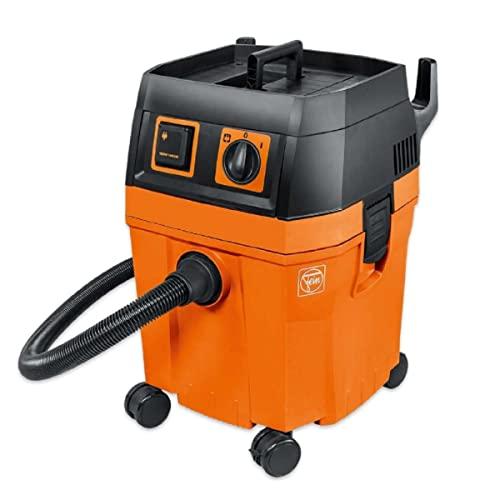
The Fein Turbo II Setis the one we rank first, because it is the closest thing on this page to a CT on the features most people are actually buying. Fein publishes 151 CFM (4,270 l/min), 98.4 in. of water lift, an 8.5 gal (32 l) container, a 1-3/8 in. by 13 ft hose, 1,100 W, 20.06 lb and a sound pressure level of 66 dB(A), with an autostart outlet that has a power-on delay to stop the current spike when both motors start at once. That noise figure is the number to beat in this category — no wet/dry brand on this page publishes one at all — and the autostart is the feature that decides whether extraction actually gets used.

One specification here has to be read rather than assumed: Fein's own page gives dust class Lfor this model, not HEPA. Fein fits a HEPA filter to its dearer Turbo II X AC PRO set, and an Amazon “HEPA Set” variant of this machine bundles one; the set we link does not. If HEPA filtration is specifically the part of a CT you want, that points at the Bosch below rather than at this machine. The other honest cons: 8.5 gallons is modest capacity for the money, and it still costs three to four times a comparable-capacity shop vac.

The Bosch VAC090AHis the pick if filtration and filter maintenance are the parts of a CT you care about. Its listing publishes power-tool activation, automatic filter cleaning and a HEPA filter system on a 9 gal tank; retailer spec listings add 150 CFM, 97.3 in. of static water lift, 9.5 A and a 2-1/4 in. hose. We label those last figures as retailer data rather than Bosch's own, because Bosch's product page was not reachable from our build machine on the day this page was written and the spec sheet it publishes is a graphics file rather than a readable table.

The feature worth paying for there is the automatic filter cleaning. Fine wood dust is the worst thing you can put through a pleated filter: it blinds the surface rather than filling the cavity, so suction falls off long before the drum is full. A machine that back-pulses its own filter on a timer holds its airflow through a whole session, and that is a genuinely different experience from stopping twice to bang a filter out in the driveway. The honest cons: owners report the cleaning cycle is loud when it fires, and it is a 28 lb machine that costs meaningfully more than the Fein.

Route two: a wet/dry vac plus the two upgrades that matter

This is what most woodworkers should actually do, and it is the route the price difference pays for.

A shop vac moves plenty of air. What it does badly is hold on to the fraction of wood dust that matters — the particles small enough to stay airborne for hours and reach deep into your lungs, which is the subject of wood dust health risks. Two purchases fix most of that gap:

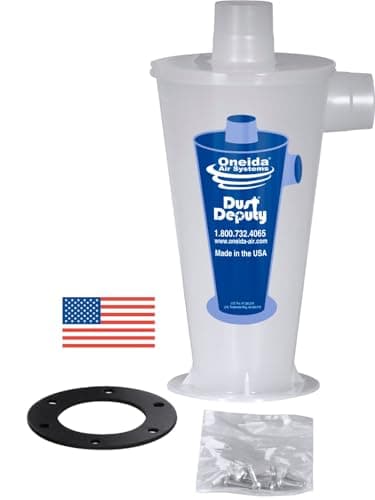
A cyclone separator ahead of the vac. The Oneida Dust Deputy spins the heavy fraction out into a bucket before it ever reaches the filter, which is why a cheap vac with a cyclone keeps its suction far longer than an expensive one without. It is the single highest-value thing you can bolt to a shop vac, and at its current price it costs less than a set of replacement filters. The field is ranked on best cyclone separator.

A fine filter and a fleece bag. The cartridge filter that ships with a wet/dry vac is specified for debris, not for sanding dust. Every major brand sells a finer cartridge and a dust bag for its own machines, and running both is what turns a vac into something you can use indoors. That is a consumable purchase rather than a product we rank, and it is the one line item people skip.

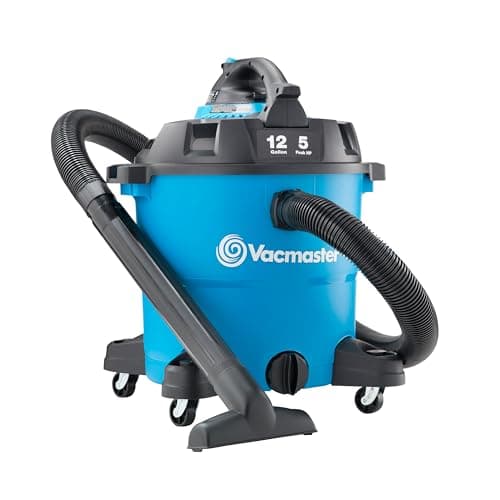
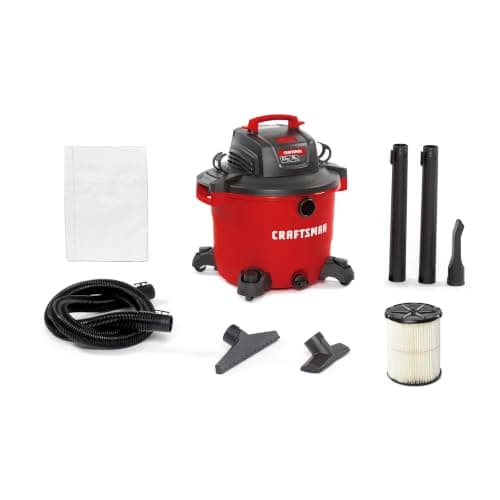
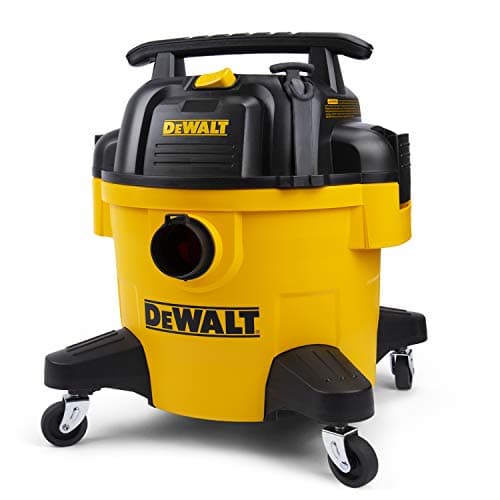
Which vac, then? The DeWalt DXV06Pis the pick if the vacuum follows the tool — 6 gal, light enough to carry one-handed, with a blower port. The Vacmaster VBV1210 is the pick for a vac that stays put and gets dragged around a two-car shop, at 12 gal with a detachable blower head. The Craftsman CMXEVBE17595 is the pick if what you are really collecting is chips, offcuts and the floor: 16 gal, which is a lot of planer shavings between emptyings.

One honest note on specifications. Wet/dry makers publish “peak HP” — 6.5, 5, 4 — and that figure is a marketing convention, not a measure of how much dust the machine moves. We reproduce it because it is what is published, not because we endorse it. The numbers that would let you compare these to a CT, airflow and sealed suction, are simply not published for most of them, so this page does not print them.

Route three: the hose and the fitting problem

The least glamorous reason people buy a CT is that the hose fits. A Festool hose clicks onto a Festool sander; a 2-1/4 in. shop vac hose fits a 1-1/4 in. sander port with tape and hope.

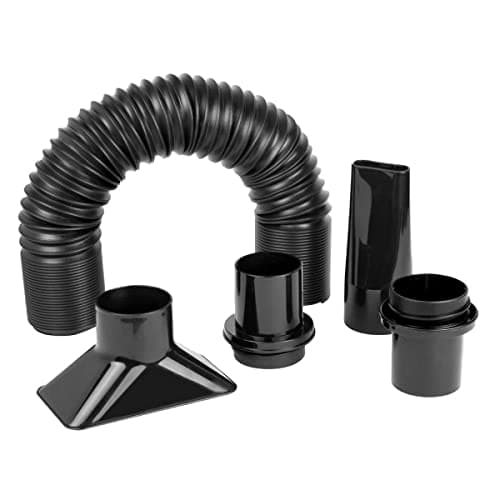
That is a solvable problem for the price of a pizza. The POWERTEC 2-1/4 in. hose kit is the small-port end of it, and our dust hose and fittings roundup covers the fittings in full. Antistatic hose is worth a word too: the shocks you get from a plastic hose on a dry winter day are unpleasant and will eventually bite you off a ladder, which is why Festool and Fein both make a point of it. The practical fix on a cheap hose is a bare copper wire run inside or spiralled around it to ground the static.

What you cannot buy cheaply is the auto-start. Some brands sell a switched outlet accessory for their own vacs, and generic tool-actuated switches exist, but we have not verified one we would put a buy link on, so we are not going to pretend otherwise. If automatic starting is the feature you want, that points at the Bosch rather than at an adapter.

Route four: the thing no extractor replaces

If your objection to a CT is the price, there is a real chance you are shopping in the wrong aisle entirely. An extractor is a fine dust at the tool machine: high suction, low volume, small hose, for sanders, routers, track saws and multi-tools. A table saw, a jointer, a planer or a bandsaw produces chip volume that no vacuum of any brand can keep up with, because the job needs airflow rather than suction.

For those machines you want a single-stage dust collector with a 4 in. port, which is a different purchase at a similar price — see best dust collector for a small shop and the arithmetic in shop vac vs dust collector. If a benchtop planer is what is filling your shop with shavings, our DW735 alternativespage explains why the machine with the chip-ejection fan is the one that gets along with a vacuum. A shop with one of each — a collector for the machines, a vac with a cyclone for the handheld tools — is better equipped than a shop with one expensive extractor.

Side by side, as published

MachineCapacityAirflow / suctionFiltrationAuto-start
Festool CT 26 EI HEPA (the original)6.9 gal (26 l)138 CFM; 96 in. static water lift; 5 levelsHEPA-HF PTFE, 979 in² + fleece bagYes (outlet + Bluetooth)
Fein Turbo II Set8.5 gal (32 l)151 CFM; 98.4 in. water lift; 66 dB(A)Dust class L (HEPA on Fein's X AC PRO set)Yes (autostart outlet)
Bosch VAC090AH9 gal150 CFM; 97.3 in. water lift (retailer data)HEPA filter system + auto filter cleanYes (power tool activation)
DeWalt DXV06P6 galPublished as 4 peak HP; CFM not publishedCartridge filter (finer filters sold separately)No
Vacmaster VBV121012 galPublished as 5 peak HP; CFM not publishedCartridge filter (finer filters sold separately)No
Craftsman CMXEVBE1759516 galPublished as 6.5 peak HP; CFM not publishedFilter + dust bag includedNo

The Festool and Fein rows are quoted from those makers' own product pages, read on 15 November 2026, and the Fein figures are for the exact set we link (Fein product number 92036236090). The Bosch row is split: the filtration and activation claims are from the live listing for the SKU we link, and the airflow and water-lift figures are retailer spec listings rather than Bosch's own publication, because Bosch's page was not reachable from our build machine. The three wet/dry vacs are described from their own listings, which publish peak horsepower and no airflow figure at all — so this table says so rather than converting a marketing number into a CFM we would be inventing. We did not measure airflow, water lift or noise; there is no lab here, which the methodology page states plainly.

What to buy, in order

One machine that does most of what a CT does for a fraction of the outlay: the Fein Turbo II Set. HEPA filtration and a filter that cleans itself: the Bosch VAC090AH. The cheapest arrangement that genuinely protects your lungs: the DeWalt DXV06P, an Oneida Dust Deputy and a fine fleece bag, which together cost a small fraction of any extractor on this page. A vacuum that lives in the middle of the shop: the Vacmaster VBV1210. Chips, offcuts and floors: the Craftsman 16-gallon. And if the hose is the only thing standing between your vac and your sander, the POWERTEC hose kit is a two-figure fix for a four-figure complaint.

The fair word on the original: a CT is expensive and it is not a con. Festool publishes its airflow, its water lift and its filter area, the hose fits its own tools without adapters, and the automatic start means extraction actually happens. If you own several Festool tools and you sand for a living, the system argument is real. This page is for the much larger group who own one sander, want the dust gone, and would rather spend the difference on wood.
The short answer

Quick picks

#ProductBest forScorePrice
01
Fein Fein Turbo II Set Wet/Dry Dust Extractor
Fein Turbo II Set Wet/Dry Dust Extractor

A dust extractor, not a shop vac — and the difference is the filter and the noise. Fein publishes 151 CFM, a dust class L filter and a 66 dB(A) running noise, which turns all-day sanding from a chore into background work.

Best overall
7.8
$389.95Amazon
02
Bosch Bosch VAC090AH 9-Gallon Dust Extractor
Bosch VAC090AH 9-Gallon Dust Extractor

The extractor with automatic filter cleaning, which is the feature that decides whether suction is still there at the end of a sanding session or gone by the middle of it.

Best filter handling
7.6
$649.00Amazon
03
DeWalt DeWalt DXV06P 6-Gallon Wet/Dry Vac
DeWalt DXV06P 6-Gallon Wet/Dry Vac

The one you carry to the tool rather than dragging the tool to it. Six gallons, a published 4 peak HP and a blower port, in a body light enough to lift one-handed.

Best portable
6.0
$109.99Amazon
04
Vacmaster Vacmaster VBV1210 12-Gallon Wet/Dry Vac
Vacmaster VBV1210 12-Gallon Wet/Dry Vac

Twelve gallons with a blower head that lifts off, so the same machine clears the shop floor and then blows the driveway down. A sensible middle capacity.

Best mid-size
6.8
$162.99Amazon
05
Craftsman Craftsman CMXEVBE17595 16-Gallon Wet/Dry Vac
Craftsman CMXEVBE17595 16-Gallon Wet/Dry Vac

The big drum. Sixteen gallons and a published 6.5 peak HP for roughly a fifth of an extractor's price — the shop vac to buy if the job is chips, offcuts and floor cleanup.

Best capacity for the money
7.2
$149.99Amazon
06
Oneida Oneida Dust Deputy DIY Cyclone Separator
Oneida Dust Deputy DIY Cyclone Separator

Not a collector — the upgrade that makes your shop vac one. A cyclone that drops nearly all the debris into a bin before it ever reaches the filter.

Best shop-vac upgrade
8.2
$39.95Amazon
07
POWERTEC POWERTEC 70208V 2-1/4-in Hose Kit (shop vac)
POWERTEC 70208V 2-1/4-in Hose Kit (shop vac)

The small-port side of the system. A 2-1/4-inch hose kit that connects a shop vac to the sanders, routers and track saws a 4-inch line is wasted on.

Best for hand tools
8.4
$24.99Amazon

#ad · Live prices from the Amazon Product API, as of November 21, 2026. Where we have no verified live price, we show none — we would rather leave a gap than print a number that has rotted.

In detail

The picks, in full

01
Fein Fein Turbo II Set Wet/Dry Dust Extractor

Best overall

Fein Turbo II Set Wet/Dry Dust Extractor

8.5 gal151 CFMDust class L66 dB(A)
7.8/10

A dust extractor, not a shop vac — and the difference is the filter and the noise. Fein publishes 151 CFM, a dust class L filter and a 66 dB(A) running noise, which turns all-day sanding from a chore into background work.

Filtration
10
Suction
8
Noise
9
Capacity
6
Value
6

Pros

  • Fine filtration holds on to the dust a standard shop vac filter blows straight back at you
  • A published 66 dB(A) noise level is quiet enough to hold a conversation next to
  • Anti-static system stops the hose shocking you every time you touch it

Cons

  • Costs three to four times a comparable-capacity shop vac
  • 8.5 gallons is modest capacity for the money
  • Dust class L rather than HEPA on this set — the HEPA filter comes on Fein's dearer X AC PRO version

Don't buy this if…

…the vac's main job is sucking up floor sweepings and the odd spill. That is not worth extractor money.

$389.95View on Amazon

Price as of November 21, 2026. Prices change — Amazon's is the one that counts.

#ad · we may earn a commission from this link to Fein Turbo II Set Wet/Dry Dust Extractor

02
Bosch Bosch VAC090AH 9-Gallon Dust Extractor

Best filter handling

Bosch VAC090AH 9-Gallon Dust Extractor

9 galAuto filter cleanDust extractorTool-triggered outlet
7.6/10

The extractor with automatic filter cleaning, which is the feature that decides whether suction is still there at the end of a sanding session or gone by the middle of it.

Filtration
9
Suction
9
Noise
6
Capacity
8
Value
6

Pros

  • Auto filter clean pulses the filter clear so suction does not fade as the drum fills
  • 9 gallons is real capacity for a machine of this class
  • Tool-triggered outlet starts the vac when the sander does

Cons

  • The filter-cleaning pulse is loud and startling the first few times
  • Priced alongside the Fein without matching its noise level

Don't buy this if…

…you mainly collect chips rather than fine dust. Filter loading is not your problem, so you are paying for a fix you do not need.

$649.00View on Amazon

Price as of November 21, 2026. Prices change — Amazon's is the one that counts.

#ad · we may earn a commission from this link to Bosch VAC090AH 9-Gallon Dust Extractor

03
DeWalt DeWalt DXV06P 6-Gallon Wet/Dry Vac

Best portable

DeWalt DXV06P 6-Gallon Wet/Dry Vac

6 gal4 peak HPPoly tankBlower port
6.0/10

The one you carry to the tool rather than dragging the tool to it. Six gallons, a published 4 peak HP and a blower port, in a body light enough to lift one-handed.

Filtration
5
Suction
7
Noise
5
Capacity
5
Value
8

Pros

  • Light enough to carry up stairs or set on a bench next to a sander
  • Small footprint suits a garage where floor space is the scarce resource
  • Poly tank will not dent or rust like a steel drum

Cons

  • 6 gallons fills fast under a planer
  • Short hose, like most compact vacs

Don't buy this if…

…it will sit under a chip-throwing machine. You will empty it constantly.

$109.99View on Amazon

Price as of November 21, 2026. Prices change — Amazon's is the one that counts.

#ad · we may earn a commission from this link to DeWalt DXV06P 6-Gallon Wet/Dry Vac

04
Vacmaster Vacmaster VBV1210 12-Gallon Wet/Dry Vac

Best mid-size

Vacmaster VBV1210 12-Gallon Wet/Dry Vac

12 gal5 peak HPDetachable blowerWet/dry
6.8/10

Twelve gallons with a blower head that lifts off, so the same machine clears the shop floor and then blows the driveway down. A sensible middle capacity.

Filtration
5
Suction
8
Noise
4
Capacity
8
Value
9

Pros

  • Detachable blower is genuinely useful for clearing a shop faster than sweeping
  • 12 gallons is enough drum for a planer session without being unwieldy
  • Priced below the 16-gallon machines while giving up little

Cons

  • Standard cartridge filter is not fine-dust rated out of the box
  • Hose is on the short side for reaching across a bench

Don't buy this if…

…you want a quiet vac to run beside you for hours. Nothing at this price is quiet.

$162.99View on Amazon

Price as of November 21, 2026. Prices change — Amazon's is the one that counts.

#ad · we may earn a commission from this link to Vacmaster VBV1210 12-Gallon Wet/Dry Vac

05
Craftsman Craftsman CMXEVBE17595 16-Gallon Wet/Dry Vac

Best capacity for the money

Craftsman CMXEVBE17595 16-Gallon Wet/Dry Vac

16 gal6.5 peak HPWet/dryCasters
7.2/10

The big drum. Sixteen gallons and a published 6.5 peak HP for roughly a fifth of an extractor's price — the shop vac to buy if the job is chips, offcuts and floor cleanup.

Filtration
5
Suction
8
Noise
4
Capacity
10
Value
9

Pros

  • 16 gallons means emptying it is a monthly job, not a daily one
  • Handles wet spills, which none of the fine-dust extractors here should be doing
  • Costs less than a set of decent chisels

Cons

  • Loud in the way every high-airflow shop vac is loud
  • Stock filter is not fine-dust rated — budget for a HEPA-grade cartridge and a bag

Don't buy this if…

…your main job is sanding dust and you care about shop air. Fit a fine filter or buy an extractor.

$149.99View on Amazon

Price as of November 21, 2026. Prices change — Amazon's is the one that counts.

#ad · we may earn a commission from this link to Craftsman CMXEVBE17595 16-Gallon Wet/Dry Vac

06
Oneida Oneida Dust Deputy DIY Cyclone Separator

Best shop-vac upgrade

Oneida Dust Deputy DIY Cyclone Separator

Cyclone separatorAnti-static bodyRetrofit kitPre-separator
8.2/10

Not a collector — the upgrade that makes your shop vac one. A cyclone that drops nearly all the debris into a bin before it ever reaches the filter.

Airflow
7
Filtration
9
Footprint
8
Noise
8
Value
9

Pros

  • Captures the vast majority of dust and chips before the vac filter
  • Keeps vac suction high and the filter clean for far longer
  • Cheapest big improvement you can make to a vac-based setup

Cons

  • Adds a second bin to find room for
  • You still need a shop vac — this only separates, it doesn't suck

Don't buy this if…

…you have already moved to a dedicated collector — a bigger single- or two-stage collector is the next step, not a vac cyclone.

$39.95View on Amazon

Price as of November 21, 2026. Prices change — Amazon's is the one that counts.

#ad · we may earn a commission from this link to Oneida Dust Deputy DIY Cyclone Separator

07
POWERTEC POWERTEC 70208V 2-1/4-in Hose Kit (shop vac)

Best for hand tools

POWERTEC 70208V 2-1/4-in Hose Kit (shop vac)

2-1/4 in diameterFlexible hoseAdapters includedShop-vac fit
8.4/10

The small-port side of the system. A 2-1/4-inch hose kit that connects a shop vac to the sanders, routers and track saws a 4-inch line is wasted on.

Airflow
7
Durability
8
Flexibility
9
Fit
9
Value
9

Pros

  • The right diameter for hand-tool ports, where a big hose kills the vac's suction
  • Adapters cover the mismatched port sizes tool makers insist on using
  • Light and manageable, which matters on a hose you drag around a bench

Cons

  • Far too small for a planer, jointer or table saw — do not use it as a collector line
  • Small hoses clog on shavings rather than dust

Don't buy this if…

…your machines are chip producers. This diameter is for hand tools on a vac, nothing more.

$24.99View on Amazon

Price as of November 21, 2026. Prices change — Amazon's is the one that counts.

#ad · we may earn a commission from this link to POWERTEC 70208V 2-1/4-in Hose Kit (shop vac)

How we picked

We do not run a testing lab

We researched published manufacturer specifications, manuals and spec sheets, ran the arithmetic those specs support, and read owner reviews at volume, then scored each tool against a published rubric. The scores are judgments from documented research — they are not measurements we took, because we do not have a lab and we are not going to pretend we do. Where a number came from a manufacturer's document, we name it and link it in Sources.

Questions

Frequently asked

What is the best alternative to a Festool dust extractor?
The Fein Turbo II Set, for most shops. Fein publishes 151 CFM, 98.4 in. of water lift, 8.5 gal, an autostart outlet and 66 dB(A) — the quietest published figure here — and it cost appreciably less than the Bosch at our last price check. If HEPA filtration and a self-cleaning filter are specifically what you want, the Bosch VAC090AH is the pick instead. If the price of either is still the problem, a 6 gal wet/dry vac with a cyclone separator and a fine fleece bag covers most of the health benefit for a small fraction of the money.
What is the difference between a dust extractor and a shop vac?
Filtration, control and convenience, not suction. An extractor carries a large fine or HEPA filter element, usually cleans it automatically, offers variable suction, and starts when the tool starts. A shop vac has a coarser filter specified for debris, one speed, no switched outlet, and a hose that needs an adapter to fit a sander. Shop vacs are not short of airflow.
Can I use a shop vac for fine sanding dust?
Yes, with two additions. Fit a cyclone separator ahead of it so the heavy fraction never reaches the filter, and run the finest cartridge filter and fleece bag your brand sells for the machine. Without those, the stock filter blinds over quickly and the vacuum blows the finest particles — the ones that matter — straight back into the room.
Is HEPA filtration necessary for woodworking?
It is the thing worth paying for if you sand indoors. The hazard in wood dust is the fraction small enough to stay airborne and reach the deep lung, and that is exactly the fraction a coarse filter passes. Note that makers label filtration differently: Festool lists a HEPA PTFE main filter, Fein publishes dust class L for the Turbo II, and wet/dry brands sell fine cartridges as an upgrade rather than as standard.
Do I need automatic tool start?
You need it more than you think, for a behavioral reason rather than a technical one: a vacuum that requires a second switch gets left off for the quick cut, and the quick cuts are most of the dust. Of the machines here only the Bosch offers it. We have not verified a generic add-on switch we would recommend, so we do not link one.
Will an extractor replace a dust collector?
No, and neither will any vacuum. An extractor is a high-suction, low-volume machine for handheld tools and small ports. A table saw, jointer, planer or bandsaw needs volume of air through a 4 in. port, which is a single-stage dust collector's job. A shop that runs both is properly equipped; a shop that owns only one extractor is not.

Keep reading

Receipts

Sources

We do not run a testing lab, and we do not pretend to. Our picks come from published manufacturer specifications and manuals, the arithmetic those specs support, and owner reviews read at volume. Where we could not verify something, we say so on the page rather than quietly leaving it out. Read our full method.