Skip to content
Dovetail & Dust

HUB 02 · Power Tools

Plunge vs Fixed Base Router

One drops the spinning bit into the middle of a board; the other holds a set depth rock steady. Here is which you actually need, and why most people should buy both.

By Stephen V.Updated How we research
#ad

We earn a commission when you buy through our Amazon links, at no extra cost to you. It never changes our rankings, and we say so when the cheaper tool is the better buy. How this works.

A fixed base holds the bit at one preset depth for the whole cut. A plunge base lets you switch the router on with the bit clear of the work and lower it into the wood mid-panel. That single difference decides everything else. If your work is edges — roundovers, chamfers, flush trimming, running a profile along a board — a fixed base is steadier and easier to control. If your work starts in the middle of a board — mortises, stopped dados, inlay recesses, hinge mortises — the plunge base does something the fixed base physically cannot do safely.

Which is why the router market settled on a compromise years ago: most routers worth buying are sold as a combo kit, one motor with two interchangeable bases. You buy the motor once and swap it between bases in about a minute. That is not a marketing gimmick; it is the correct answer to a genuine trade-off, and it is why our router roundup is dominated by combo kits rather than single-base machines.

So the practical question is rarely "plunge or fixed?" It is "which base will I reach for most, and is it worth paying for the second one?" For most home shops the answer is yes, because the second base costs far less bundled in a kit than bought later, and because the jobs it unlocks — mortising and stopped cuts — arrive sooner than beginners expect.

The short answer

Quick picks

#ProductBest forScorePrice
01
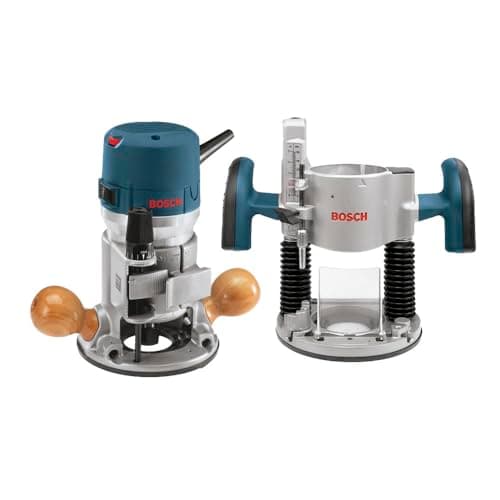
Bosch Bosch 1617EVSPK Router Combo
Bosch 1617EVSPK Router Combo

The default recommendation for a first serious router. Fixed and plunge bases in one kit, 2.25 HP, and a reputation for lasting decades.

Best overall
8.4
$256.69Amazon
02
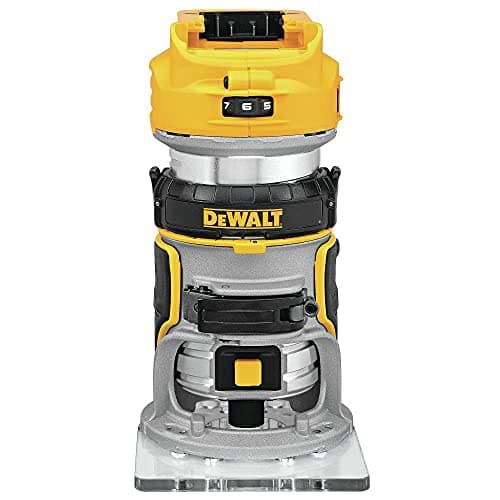
DeWalt DeWalt DCW600B 20V MAX XR Compact Router (Tool Only)
DeWalt DCW600B 20V MAX XR Compact Router (Tool Only)

DeWalt's current compact router, and the one that removes the cord from edge work. Dual LEDs, a depth-adjustment ring and a brushless motor — but it arrives as a bare tool on a fixed base.

Best cordless compact
7.4
$125.94Amazon
03
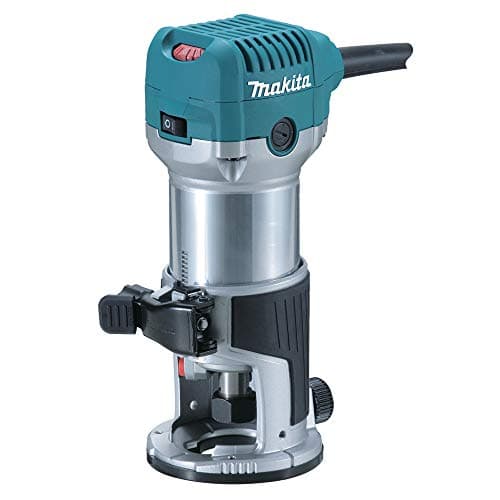
Makita Makita RT0701C Compact Router
Makita RT0701C Compact Router

The compact router's value champion. Smooth variable speed and a wide accessory ecosystem, usually a little cheaper than the DeWalt.

Best value compact
7.8
$140.48Amazon
04
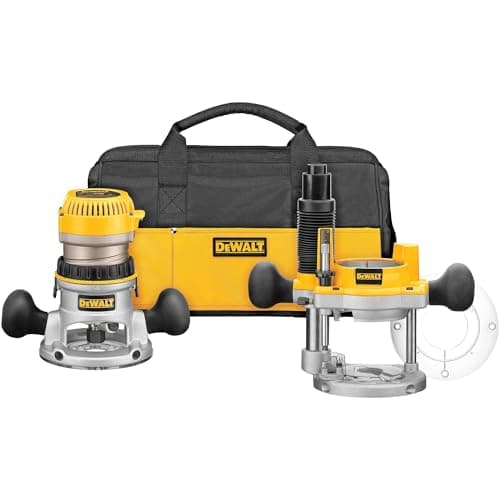
DeWalt DeWalt DW618PK Router Combo
DeWalt DW618PK Router Combo

A solid mid-size alternative to the Bosch. 2.25 HP, soft start and both bases — a dependable do-most-things router.

Best mid-size alternative
8.0
$229.00Amazon

#ad · Live prices from the Amazon Product API, as of Sep 1, 2026. Where we have no verified live price, we show none — we would rather leave a gap than print a number that has rotted.

In detail

The picks, in full

01
Bosch Bosch 1617EVSPK Router Combo

Best overall

Bosch 1617EVSPK Router Combo

2.25 HP8k–25k RPMFixed + plunge bases1/4 & 1/2 in collets
8.4/10

The default recommendation for a first serious router. Fixed and plunge bases in one kit, 2.25 HP, and a reputation for lasting decades.

Power
8
Control
8
Versatility
9
Build
9
Value
8

Pros

  • Two bases cover handheld work and, with the fixed base, a router table
  • Accepts both collet sizes, so it runs the full range of bits
  • Long track record — a genuinely durable machine

Cons

  • Above-table height changes mean going under the table without a lift
  • No onboard LED work light

Don't buy this if…

you only ever do light edge work and hate weight — a compact trim router is lighter and easier for one-handed rounding-over.

$256.69View on Amazon

$289.0011% off

Price as of Sep 1, 2026. Prices change — Amazon's is the one that counts.

#ad · we may earn a commission from this link to Bosch 1617EVSPK Router Combo

02
DeWalt DeWalt DCW600B 20V MAX XR Compact Router (Tool Only)

Best cordless compact

DeWalt DCW600B 20V MAX XR Compact Router (Tool Only)

16,000-25,500 RPM1/4 in. colletBrushless, 20V MAXFixed base, tool only
7.4/10

DeWalt's current compact router, and the one that removes the cord from edge work. Dual LEDs, a depth-adjustment ring and a brushless motor — but it arrives as a bare tool on a fixed base.

Power
6
Control
9
Versatility
7
Build
8
Value
7

Pros

  • No cord to drag across a workpiece, which is exactly where a trailing lead does the most damage
  • Dual LEDs light the bit and the depth-adjustment ring sets height without tools
  • Electronic brake stops the bit quickly when you release it

Cons

  • Bare tool — a 20V MAX battery and charger are extra unless you already run the platform
  • Fixed base only; DeWalt's plunge base for this router is a separate purchase
  • 1/4-inch collet only, so the big rail-and-stile and panel-raising bits are out

Don't buy this if…

you have no DeWalt batteries and want the cheapest capable compact. A corded compact does the same work for less once the battery is priced in.

$125.94View on Amazon

Price as of Sep 1, 2026. Prices change — Amazon's is the one that counts.

#ad · we may earn a commission from this link to DeWalt DCW600B 20V MAX XR Compact Router (Tool Only)

03
Makita Makita RT0701C Compact Router

Best value compact

Makita RT0701C Compact Router

1.25 HP10k–30k RPM1/4 in colletVariable speed
7.8/10

The compact router's value champion. Smooth variable speed and a wide accessory ecosystem, usually a little cheaper than the DeWalt.

Power
6
Control
8
Versatility
8
Build
8
Value
9

Pros

  • Very smooth speed control and a quiet, refined motor
  • Huge range of aftermarket bases and plates fit it
  • Often the cheapest way into a quality compact router

Cons

  • No onboard light
  • 1/4-inch collet only, like all compacts

Don't buy this if…

you want the lit cut and the finest height micro-adjust out of the box — the DeWalt edges it on both.

$140.48View on Amazon

$159.0012% off

Price as of Sep 1, 2026. Prices change — Amazon's is the one that counts.

#ad · we may earn a commission from this link to Makita RT0701C Compact Router

04
DeWalt DeWalt DW618PK Router Combo

Best mid-size alternative

DeWalt DW618PK Router Combo

2.25 HP8k–24k RPMFixed + plungeSoft start
8.0/10

A solid mid-size alternative to the Bosch. 2.25 HP, soft start and both bases — a dependable do-most-things router.

Power
8
Control
8
Versatility
8
Build
8
Value
8

Pros

  • Soft start keeps it from jumping on power-up
  • Both bases and both collets, like the Bosch
  • Well-built DeWalt motor with a good service network

Cons

  • Below-table height adjustment without a lift
  • Nothing it does clearly beats the Bosch — often comes down to price

Don't buy this if…

the Bosch 1617 is cheaper the day you buy — the two are close enough that price should decide.

$229.00View on Amazon

Price as of Sep 1, 2026. Prices change — Amazon's is the one that counts.

#ad · we may earn a commission from this link to DeWalt DW618PK Router Combo

What a fixed base is better at

A fixed base sets the motor at a depth and locks it. Because there are no springs and no vertical travel, the machine sits lower over the work and its center of gravity is closer to the base, which makes it noticeably easier to balance on an edge. For edge-forming work with a bearing-guided bit — the profiles described in our router bit guide— that stability is the whole game.

Fixed bases also make the better router-table motor. In a table the depth is set once and the adjustment is made from above or through the plate, so plunge travel is dead weight and, on some designs, a source of slop. Most dedicated table routers are either fixed-base motors or plunge routers with an above-table adjustment designed for the job. If a router table is in your plans, check how the motor mounts before you buy.

The third advantage is simple ergonomics. Fixed bases are lighter, shorter and easier to control one-handed on a trim router, which is why compact routers like the Makita RT0701C sell in enormous numbers with only a fixed base in the box.

What a plunge base is better at

A plunge base rides on two spring-loaded posts. You set a depth stop, rest the base flat on the work with the bit above the surface, switch on, then push the motor down into the cut and lock it. That sequence is what makes interior cuts safe and repeatable.

The jobs that need it: mortises for loose-tenon or traditional joinery, stopped dados that do not run out the far edge of a shelf, hinge and hardware recesses in the middle of a door, inlay and sign work, and any template routing where you cannot enter from an edge. Most plunge bases also carry a turret depth stop, which lets you take a deep cut in two or three preset passes without re-measuring — genuinely useful, because deep single passes burn bits and wood.

The cost is height and mass. A plunge router sits taller, so it feels tippier on a narrow edge, and the springs push back against you when you want fine control. Some people simply prefer the fixed base for everything it can do, and that is a reasonable preference rather than a mistake.

Which should your first router be?

Buy a mid-size combo kit if you can afford one. The Bosch 1617EVSPK and the DeWalt DW618PK are the standard answers here: one motor, both bases, enough power for most bits a home shop runs, and 1/2-inch collets so you can use the stiffer shanks. That combination covers edge work, interior work and a future router table without buying a second machine.

Buy a compact router instead if your work is small and your budget is tight. A trim router like the Makita RT0701C or the DeWalt DCW600B handles roundovers, chamfers, flush trimming and light dados with one hand, and both accept a small plunge base bought separately. What a compact will not do is drive large-diameter bits or hog deep mortises; the motor and the 1/4-inch collet are the limits.

The one thing we would not do is buy a plunge-only router as a first machine unless you already know your work is interior cuts. It is the less versatile half of the pair for most beginners, and it makes edge work harder than it needs to be.

Segmenting by shop size and budget

First shop, tight budget: one compact fixed-base router. It will do more of your first ten projects than you expect, and it is the router you keep forever even after you add a bigger one.

Hobbyist shop: a mid-size combo kit as the main machine, and a compact router added later so you stop swapping bits between jobs. This is the setup most people end up with, and it is a good one.

Furniture work / dedicated shop: a mid-size combo for handheld work plus a dedicated motor permanently mounted in a router table. At that point the plunge-versus-fixed question disappears entirely, because you have one of each doing what it is best at.

What we could not verify

We have not measured runout, base flatness or motor temperature on any of these machines — we do not run a lab. The behavior described above is how the two base types work mechanically, and the model-level notes come from manufacturer specifications, manuals and the pattern in owner feedback read at volume. Prices update automatically from the live price layer.
How we picked

We do not run a testing lab

We researched published manufacturer specifications, manuals and spec sheets, ran the arithmetic those specs support, and read owner reviews at volume, then scored each tool against a published rubric. The scores are judgments from documented research — they are not measurements we took, because we do not have a lab and we are not going to pretend we do. Where a number came from a manufacturer's document, we name it and link it in Sources.

Questions

Frequently asked

What is the difference between a plunge router and a fixed base router?
A fixed base locks the bit at one preset depth for the whole cut; a plunge base lets you start with the bit above the work, switch on, and lower it into the middle of a board. Fixed bases are steadier for edge work and router tables; plunge bases are what you need for mortises, stopped dados and hardware recesses.
Do I need both a plunge and a fixed base?
Most home shops end up wanting both, which is why combo kits with one motor and two bases are the default purchase. Buying the pair in a kit costs far less than adding the second base later. If you can only have one, a fixed base covers more of a beginner's work.
Can you use a plunge router in a router table?
Yes, and many people do, but check the model first. Some plunge routers are awkward to adjust from above the table and their springs have to be dealt with, while others are designed for it and offer above-table height adjustment. Fixed-base motors are generally the simpler table option.
Is a compact router enough for a beginner?
For roundovers, chamfers, flush trimming and light grooving, yes — a compact router is light, controllable and cheap enough to be a first machine. Its limits are motor power and the 1/4-inch collet, so large-diameter profile bits and deep mortising need a mid-size router.

Keep reading

Receipts

Sources

We do not run a testing lab, and we do not pretend to. Our picks come from published manufacturer specifications and manuals, the arithmetic those specs support, and owner reviews read at volume. Where we could not verify something, we say so on the page rather than quietly leaving it out. Read our full method.