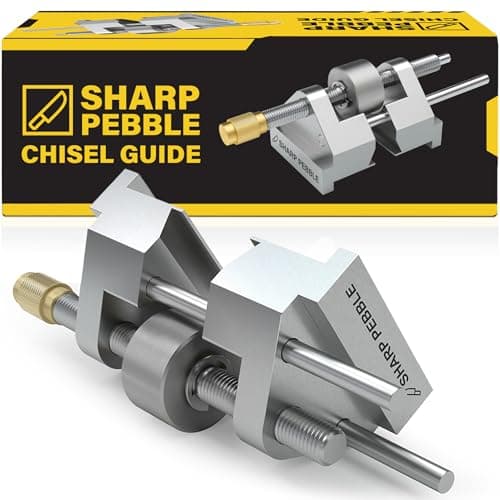
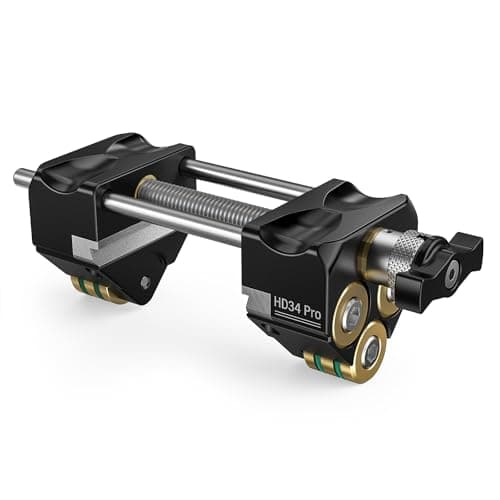
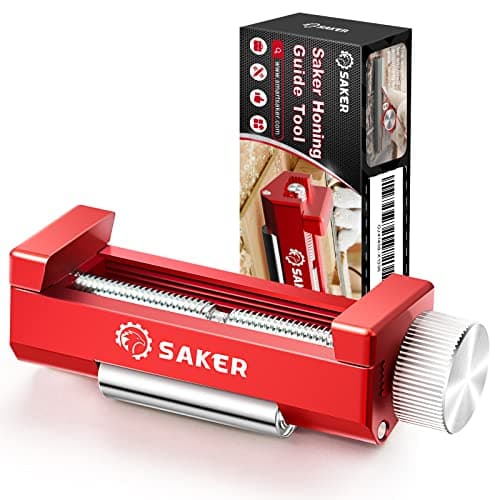
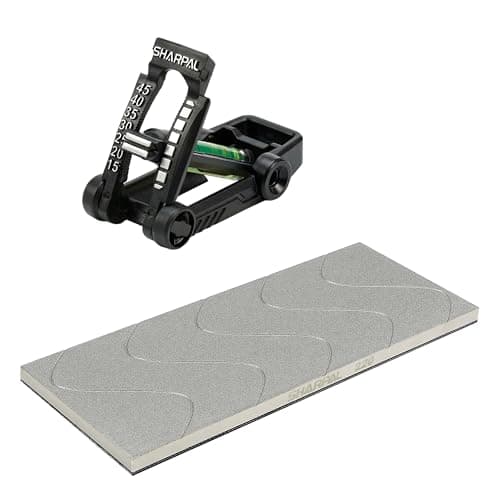
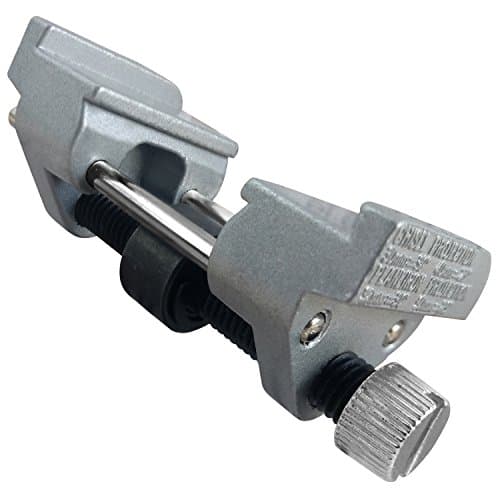
Sharpening is easy except for one thing: holding the blade at the same angle for every stroke. A honing guide does that one thing, which is why it turns a frustrating skill into a five-minute chore. If your edges are not sharp and you have blamed your stones, your steel or your technique, this is very often the actual answer.
Here is something the marketing will not tell you: most honing guides on the market are the same design. The side-clamping, single-roller pattern — jaws that grip the edges of the blade, a roller behind that rides the stone — has been made under dozens of brand names for decades. That is not a criticism. It is a good design, it is cheap, and it works. It does mean that the differences between the guides below are about execution: how parallel the jaws close, how wide the roller is, how much blade width they take, and whether the setting jig is any good.
The angle setting jig is the part people overlook. A guide holds an angle, but it does not know which angle. The setting jig is a small block with marked positions: you place the blade against it, project the right amount from the guide, tighten, and you have repeated yesterday's angle exactly. Without one you are measuring projection with a ruler every time, which is slower and less consistent. Every guide worth buying includes one.
A guide pairs with whatever abrasive you use — see sharpening stones and our waterstones versus diamond plates comparison. It is genuinely more important than which stones you buy, because a wandering angle will defeat any abrasive.
How to choose a honing guide
Blade width capacity
This is the specification that actually varies. A basic guide handles chisels from roughly a quarter inch to two inches and plane irons up to about two and a bit. If you own a narrow 1/8-inch chisel or a wide jack-plane iron, check the range — a blade that will not sit square in the jaws is worse than no guide at all, because it hones a skew into the edge.
Jaw type: side-clamping and its limits
Side-clamping guides grip the edges of the blade. That works well for parallel-sided bench chisels and plane irons, and badly for tapered blades, Japanese chisels with hollow sides, and anything with a rounded edge profile. If your tools are unusual in shape, buy a guide with a wider adjustable jaw range and test it before you rely on it.
Roller width
A wide roller resists twist, which is the thing that puts an unintended skew on a bevel. A narrow roller wears a groove in a waterstone if you always run in the same line. Neither is fatal — move about on the stone, and lap it regularly — but a wider roller is the more forgiving design.
What a guide will not do
It will not flatten the back of a chisel, which is done freehand on the stone and is a one-time job per tool. It will not fix a chipped edge — that needs a coarse abrasive and patience first. And it is slower than freehand once you have the skill, which is why plenty of experienced woodworkers put theirs away. Buy one to learn on; keep it if it still helps.
Using a guide well
Set the angle with the jig, tighten firmly and check the blade is square in the jaws by eye before you start — a blade sitting skewed will hone a skewed bevel with perfect consistency. Work through the grits in order, and finish by removing the burr on the flat back, which is done without the guide. Our chisel sharpening guide covers the whole sequence.
A useful habit: write your standard angle on a piece of tape stuck to the guide. Most bench chisels live happily at 25 to 30 degrees, and having one number you always use means the secondary bevel you honed last month lines up with the one you hone today — which is what makes touch-ups take thirty seconds instead of ten minutes.
Segmenting by budget and tools
First guide: the standard side-clamping pattern with a setting jig. It is cheap, it works, and it is the one most people should buy.
Frequent sharpening: a heavier guide with a wide roller. The extra rigidity shows over hundreds of honings, and it is less fiddly to set.
Unusual or very wide blades: a wide-capacity machined guide. Worth the money only if your tools genuinely fall outside the standard range.
Waterstone user: budget for a lapping plate as well as a guide. A dished stone will round your bevel no matter how well the guide holds the angle.
How we ranked these
From published manufacturer specifications (blade capacity, materials, included setting jigs), the makers' documentation and the pattern in owner feedback read at volume. Several of these are variations on the same long-standing pattern and we say so rather than pretending each is a distinct invention. We have not measured jaw parallelism or angle repeatability — we do not run a lab, as our methodology page states. Prices are live from the price feed.