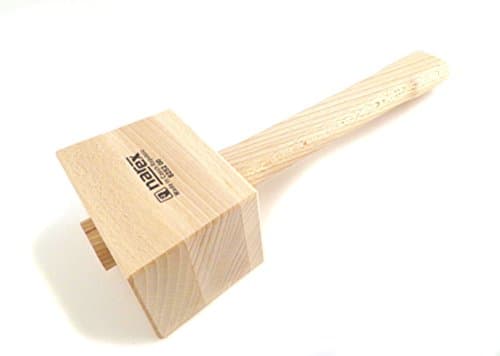
A mallet is not a cheap hammer. The point of it is that the head is softer than the thing you are hitting, so the energy goes into the cut instead of into destroying the handle of a chisel that costs ten times as much. That is why a woodworker owns one, and it is why hitting a wooden chisel handle with a steel claw hammer is such an expensive habit.
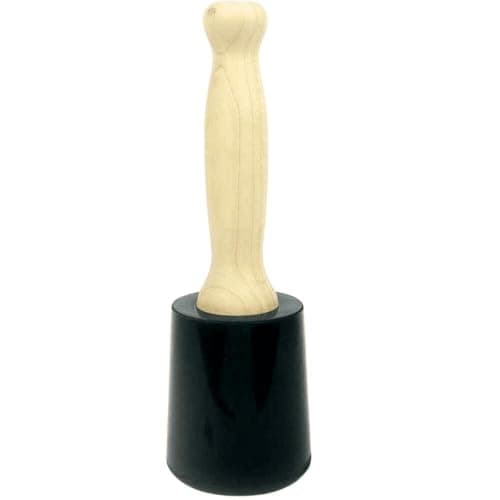
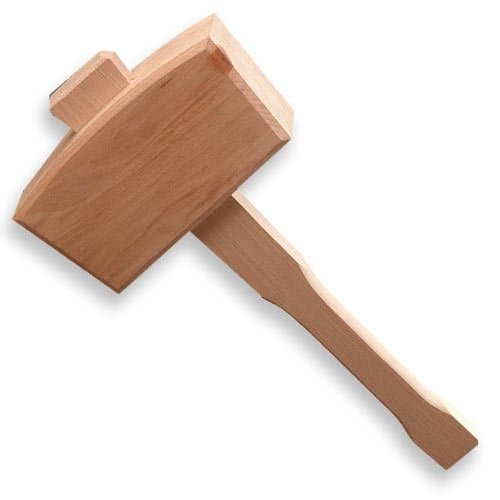
Two shapes dominate. A round head— the carver's pattern — can be struck at any rotation, because every part of the face is the same. That forgiveness is worth a lot when you are chopping a mortise and your wrist rolls slightly on the fifth blow. A flat-faced head— the English joiner's pattern, with faces angled slightly inward — presents more surface to the chisel handle, which means nothing skids, but you have to hold the mallet square to the work.
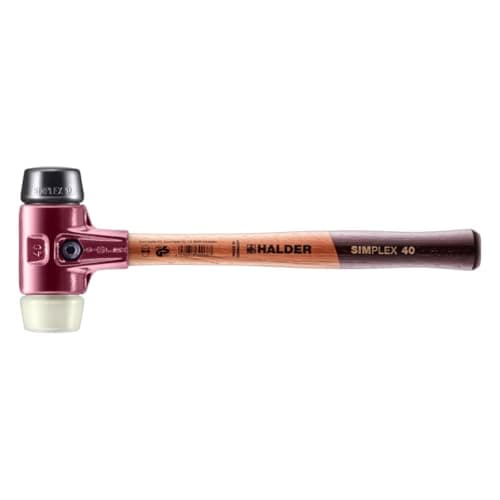
Then there is material. Beech and other dense hardwoods are the traditional answer, kind to wooden chisel handles and cheap enough to be consumable. Urethane and rubber heads have almost no rebound, which spares your elbow over a long carving or chopping session and makes them the choice for anything that must not be marked. Soft-face mallets with replaceable inserts split the difference and double as assembly tools for tapping a joint together without bruising it.
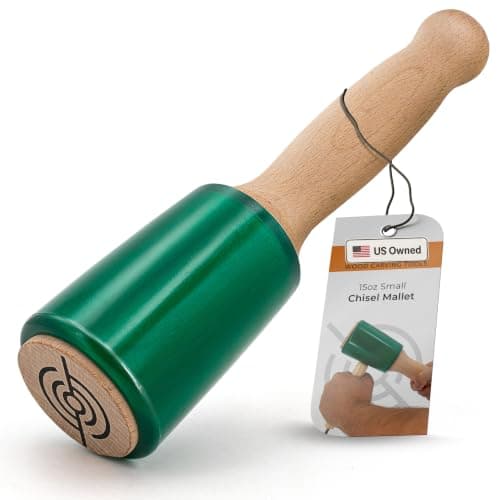
Weight is the specification that matters most and the one people get wrong. Roughly 12 to 16 ounces suits paring taps and general bench work. Twenty to 30 ounces is a chopping weight for mortises in hardwood. Heavier than that and you are into carving mallets for gouge work, where the mass does the job for you. If you can only own one, a 16-ounce round head is the honest answer for chisel work — it will chop a mortise if you are patient and pare accurately when you are not.
Head mass matters most on the one job that involves hundreds of blows in a row: chopping a mortise. We explain which of these mallets suits that work, and why the heavier urethane head earns its place in hardwood, in how to cut a mortise by hand.
How to choose a mallet
Match the mallet to your chisel handles
This is the rule that decides everything else. Modern impact-resistant plastic handles — the pattern on most budget and mid-price sets — are designed to be struck with a steel hammer and shrug it off. Traditional wooden handles are not: hit those with steel and the handle bruises, mushrooms and eventually splits. If your chisels have wooden handles, a wooden or urethane mallet is not a preference, it is maintenance. Our chisel roundup notes the handle type on every pick.
Round versus flat faces
Round heads forgive a rolled wrist and suit carving and general chopping. Flat faces give more contact area and a more positive strike, which some people find gives better control on a mortise. Neither is wrong. If you are buying your first mallet and are unsure, buy round — it is the more forgiving shape while you are still learning to strike consistently.
Rebound and the elbow test
A hard wooden mallet bounces off the chisel a little on every blow, and over an hour that rebound goes into your elbow. Urethane and shot-filled dead-blow heads absorb it, which is why carvers and people doing production mortising favor them. If you only chop a joint at a time, the difference is academic; if you are cutting eight mortises for a table, it is not.
Assembly use
A mallet also does the job of tapping a joint together during a dry fit and a glue-up, and here soft-face is the requirement, because a dent in a nearly finished surface is heartbreaking. A replaceable-insert mallet with a soft face on one end and a hard face on the other covers both chisel work and assembly — genuinely useful in a shop that also owns corner clamps and does a lot of dry fitting.
Care, and when to replace
A wooden mallet is meant to wear. The face will dent and eventually mushroom, and when it does you can plane or sand it flat again a few times before the head is finished. That is the tool working as intended — the mallet is the sacrificial part of the pair.
Two things shorten a wooden mallet's life unnecessarily: striking metal (a chisel's steel hoop, a plane iron, a bench dog) and leaving it in a damp shop where the head can shrink loose on the handle. Neither is a design flaw; both are avoidable. A soft-face mallet with replaceable inserts sidesteps the whole issue if the cost makes sense to you.
Segmenting by work and budget
First mallet: a 16-ounce round beech head. It is inexpensive, forgiving, kind to handles, and covers everything a first shop does with a chisel.
Mortising and long sessions: a 30-ounce urethane head. The extra mass does the chopping and the dead-blow action saves your arm.
Carving and paring: a lighter 15-ounce head, where control beats force and a heavy mallet is simply too blunt an instrument.
Assembly work as well: a replaceable-insert soft-face mallet, so one tool drives chisels and taps joints together without marking them.
How we ranked these
From published manufacturer specifications (head weight, head material, face geometry, handle material), the makers' own documentation and the pattern in owner feedback read at volume. We have not measured impact energy or rebound; we do not run a lab, and our methodology page says so. Prices come from the live price feed.