You do not buy a dust collection system. You build one in stages, and the first stage costs less than a router bit. Here is the order that wastes the least money.
We earn a commission when you buy through our Amazon links, at no extra cost to you. It never changes our rankings, and we say so when the cheaper tool is the better buy. How this works.
The cheapest dust collection that genuinely works is a separator in front of a shop vac you probably already own. It is not a compromise version of a real system — it is stage one of one, and every later stage keeps it. That is the whole argument of this page: buy in an order where nothing you buy gets thrown away later.
Most budget dust-collection advice fails in one of two ways. Either it tells you to save up for a 2 HP collector, which means breathing sawdust for a year while you save, or it sells you a cheap version of the big system — undersized collector, undersized hose — that you replace entirely the moment you outgrow it. Both waste money. Staging avoids both, because each stage solves a different problem and none of them cancels the last one.
A note on what this page will not do: it will not tell you that dust collection costs “about three hundred dollars” or quote you a total. Prices move weekly and a number typed into prose is wrong within a month. Every price below is pulled live from Amazon and stamped with the date it was fetched. Build your own total from the rows you actually need.
Stage one: a separator in front of the vac you own
A shop vac is a perfectly good dust collector for hand-held tools, a track saw, a random orbital sander and a small jobsite saw. Its problem is not suction — it is that the filter loads with fine dust in minutes and the suction collapses. A cyclone separator sits between the tool and the vac, spins the heavy material out into a bucket, and passes almost clean air to the filter. Suction stays constant, the filter lasts, and you empty a bucket instead of wrestling a clogged cartridge.
This is the single highest-value purchase in dust collection at any budget, and it is also close to the cheapest. If you own a vac already, it is the only thing you need to buy to go from “no dust collection” to “dust collection that works on half my tools.” We rank the full field in our cyclone separator roundup; the two entries below are the ones that make sense when the budget is the constraint.
Stage two: a vac, if you do not have one
If there is no shop vac in the garage yet, buy the vac before you buy anything with the word “collector” on the box. A vac earns its keep every single session — floor sweeping, cleaning the saw, wet spills, car interiors — and it is the only machine here that connects to a sander or a router. A dust collector does none of that.
Capacity matters less than you would think once a separator is in front of it, because the chips never reach the vac drum. What matters is hose fit and filter quality. Our shop vac roundup goes through the field properly.
Stage three: a starter dust collector, when a vac stops being enough
A vac and a collector are not competing products — they do opposite jobs. A vac moves a small volume of air at high pressure through a small hose, which is what a sander port wants. A collector moves a large volume at low pressure through a 4-inch hose, which is what a planer, a jointer or a cabinet-saw port wants. The moment you own a machine with a 4-inch port, a vac is the wrong tool and no amount of adapters fixes it. That split is worked through in shop vac vs dust collector.
This is the stage where budget buyers most often overspend or underspend, and both hurt. Buy too small and the collector cannot pull enough air through 4-inch pipe to keep chips moving. Buy on the free-air CFM number printed on the box and you have bought a rating measured with nothing attached. Our CFM chart gives the published airflow figures per machine and the arithmetic that converts duct diameter into deliverable CFM, so you can size this honestly rather than by horsepower.
On a budget the answer is usually a 1 to 1.5 HP portable unit, sited next to whichever machine is running, with a short hose. A short hose on a small collector beats a long duct run on a big one, every time.
Stage four: gates, then air
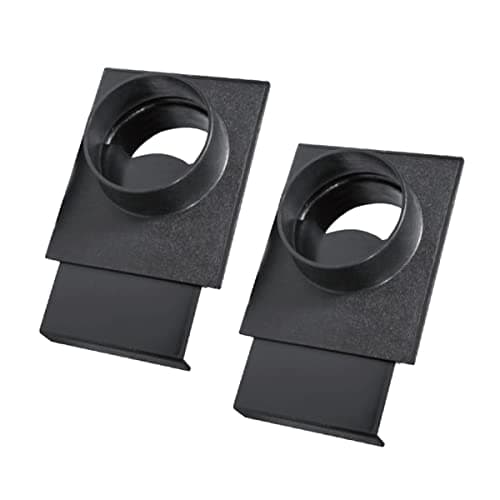
Blast gates are the cheapest performance upgrade in the entire hobby. One collector can serve three machines if every branch except the running one is closed; leave them open and the collector pulls air from the easiest path, which is never the machine you are using. A pair of gates costs less than a decent chisel.
Air filtration is last, and it is genuinely last — not because it does not matter but because it does nothing at the machine. An ambient filter scrubs the room after the fact. It is the right answer to the fine dust that got past everything else, which means it is worth buying only once everything else exists. If you are choosing between an air filter and a respirator on a tight budget, buy the respirator: it protects the one set of lungs you have, and it costs a fraction as much.
What we would not buy on a budget
A long permanent duct run. Rigid pipe, wyes and mounting hardware add up fast and cost airflow at every fitting. Roll the collector to the machine instead until the shop layout is settled.
2.5-inch hose on a 4-inch port.Airflow scales with the pipe's cross-sectional area, so the small hose sets the ceiling for the whole system. It is a false economy dressed as an adapter.
A bigger motor to fix a duct problem. Shorter, wider and smoother ducting is almost always cheaper than the next horsepower step and often works better. The ducting guide covers which fittings actually cost you.
A cheap collector with a 30-micron bag. A bag that passes fine dust is not collecting the dangerous fraction, it is redistributing it. Budget for a better filter before you budget for more horsepower.
What we could not verify
We have not measured airflow, capture rate or filtration efficiency on any of these machines — we do not have a lab. Filter ratings, CFM figures and capacities are the manufacturers' published claims. The staging argument is a reasoning framework about how the machines behave and where the money goes, not a test result. Prices are live from Amazon and stamped with the date they were fetched.
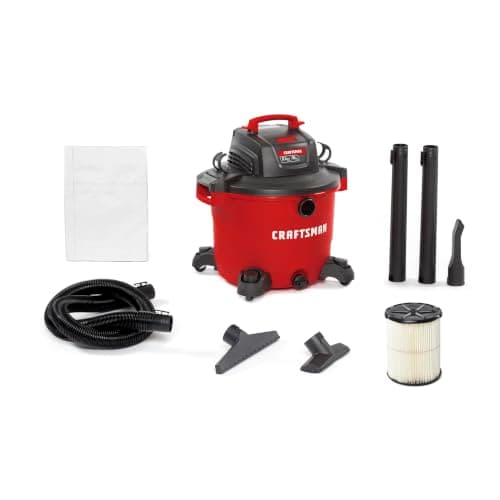
The big drum. Sixteen gallons and a published 6.5 peak HP for roughly a fifth of an extractor's price — the shop vac to buy if the job is chips, offcuts and floor cleanup.
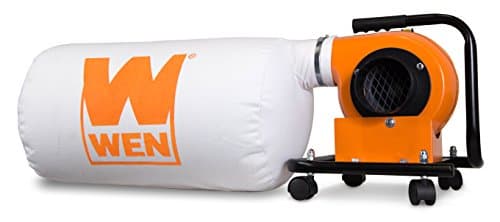
The cheapest real dust collector. A small, rollable single-stage unit that outmuscles a shop vac for chip-heavy tools without the price of a big collector.
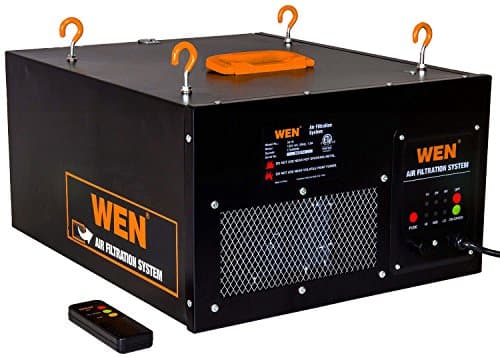
The one that makes air filtration affordable. Three published speeds from 300 to 400 CFM with an RF remote, which is enough to turn over the air in a single-car garage several times an hour.
#ad · Live prices from the Amazon Product API, as of Sep 19, 2026. Where we have no verified live price, we show none — we would rather leave a gap than print a number that has rotted.
In detail
The picks, in full
01
Best value
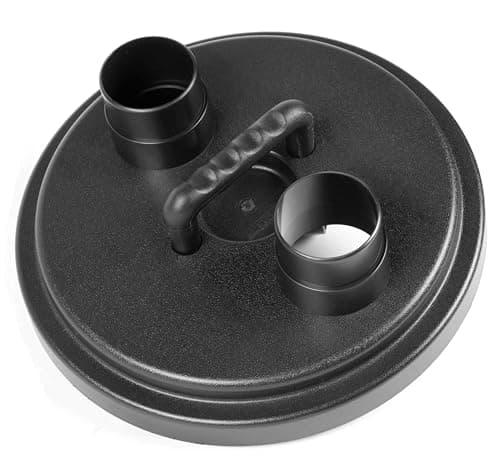
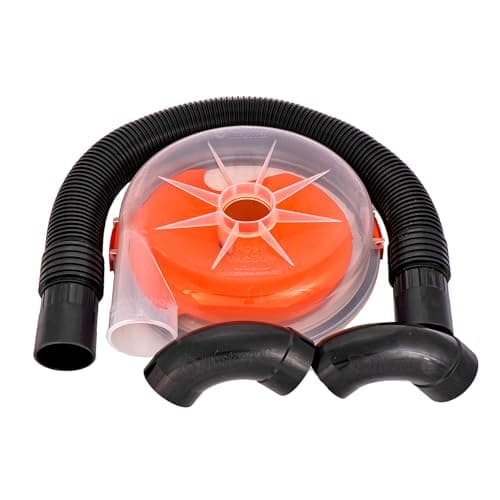
Dustopper PRO Low-Profile Dust Separator
Low profileFits standard bucketsFor 5 HP+ shop vacsFilter included
8.0/10
The cheap one that works. A low-profile cyclone lid that drops onto a bucket you probably already own and captures the bulk of the debris.
Separation
8
Filter protection
8
Capacity
7
Build
7
Value
10
Pros
+Costs a fraction of the full kits and does the same essential job
+Very low profile, so the assembly still fits under a workbench
+Uses a bucket you already have rather than shipping you another one
Cons
−Not quite the separation efficiency of the taller, better-shaped cyclones
−Bucket quality is now your problem — a flimsy one can collapse under suction
Don't buy this if…
…you are cutting MDF constantly. Spend up for the more efficient cyclone and protect the filter properly.
The big drum. Sixteen gallons and a published 6.5 peak HP for roughly a fifth of an extractor's price — the shop vac to buy if the job is chips, offcuts and floor cleanup.
Filtration
5
Suction
8
Noise
4
Capacity
10
Value
9
Pros
+16 gallons means emptying it is a monthly job, not a daily one
+Handles wet spills, which none of the fine-dust extractors here should be doing
+Costs less than a set of decent chisels
Cons
−Loud in the way every high-airflow shop vac is loud
−Stock filter is not fine-dust rated — budget for a HEPA-grade cartridge and a bag
Don't buy this if…
…your main job is sanding dust and you care about shop air. Fit a fine filter or buy an extractor.
The cheapest real dust collector. A small, rollable single-stage unit that outmuscles a shop vac for chip-heavy tools without the price of a big collector.
Airflow
6
Filtration
5
Footprint
9
Noise
6
Value
9
Pros
+Moves far more air than a shop vac for machines like a benchtop planer
+Compact and rolls where you need it
+The least expensive way into dedicated collection
Cons
−Smaller motor and drum than a full 1–1.5 HP collector
−Stock bag filtration is coarse — plan a finer bag or a separator
Don't buy this if…
…you run a big table saw or plan to duct a whole shop — you want a 1.5 HP unit with more airflow for that.
The one that makes air filtration affordable. Three published speeds from 300 to 400 CFM with an RF remote, which is enough to turn over the air in a single-car garage several times an hour.
Airflow
6
Filtration
7
Noise
7
Build
7
Value
10
Pros
+Costs a fraction of the shop-grade units and does the same basic job in a small space
+RF remote means you never climb to change the speed
+Light enough to hang from a garage ceiling joist without reinforcement
Cons
−400 CFM at top speed is too little for a two-car shop
−Filters are a consumable — factor replacements into the running cost
Don't buy this if…
…your shop is over about 400 square feet. Undersizing an air cleaner just moves dust around slowly.
The reason staging works is that the four stages fail differently, and they fail in a fixed sequence. Stage one fails when your suction dies mid-cut — a filter problem. Stage three fails when a 4-inch port produces a pile of chips on the floor — a volume problem. Stage four fails when the shop still smells of sawdust an hour after you stop — an airborne problem. If you buy the fix for a failure you have not had yet, the money sits idle.
How to know which stage you are on
Suction fades during a job. You need a separator. Stage one.
The tool has a port larger than about 2-1/2 in. and the vac barely moves anything through it. You need a collector, not a bigger vac. Stage three.
One collector, several machines, and none of them collects well. You need gates, not more horsepower. Stage four.
Visible haze in the light beam after you switch off. That is the fine fraction, and it is the one that matters for your lungs. Ambient filtration plus a respirator, and read wood dust health risks before you decide this one can wait.
Where the money is genuinely well spent
If you can only spend on one thing, spend it on the separator. If you can spend on two, add the respirator. Those two together cost less than most single power tools and cover the cheapest large share of the problem. Everything after that is a capability upgrade rather than a safety one — useful, but not urgent in the same way.
And when the budget does open up, size the next purchase off the CFM and duct chart rather than off horsepower. Horsepower is what the box advertises. Airflow at the tool is what actually clears the chips.
How we picked
We do not run a testing lab
We researched published manufacturer specifications, manuals and spec sheets, ran the arithmetic those specs support, and read owner reviews at volume, then scored each tool against a published rubric. The scores are judgments from documented research — they are not measurements we took, because we do not have a lab and we are not going to pretend we do. Where a number came from a manufacturer's document, we name it and link it in Sources.
Questions
Frequently asked
What is the cheapest dust collection that actually works?+
A cyclone separator in front of a shop vac you already own. It stops the vac's filter loading, which is the reason cheap setups lose suction, and it costs a fraction of any machine on this page. It handles sanders, routers, a track saw and a small jobsite saw.
Do I need a dust collector or is a shop vac enough?+
It depends entirely on the port. A vac is the right tool for ports around 2-1/2 in. and smaller — sanders, routers, track saws. A 4-inch port on a planer, jointer or cabinet saw needs the high air volume a collector delivers, and a vac cannot move enough air through that opening no matter how strong its suction feels.
How much does a dust collection system cost?+
There is no single figure, and any site quoting one is guessing. What we can tell you is the shape: the separator is the cheapest item, blast gates are next, a starter collector and an ambient filter are the two larger purchases, and the prices on this page are live from Amazon rather than typed in. Build the total from the stages you actually need.
Should I buy a bigger dust collector or better ducting first?+
Ducting, nearly always. Airflow scales with the cross-sectional area of the pipe, so a shorter, wider, smoother run recovers more CFM at the tool than the next horsepower step does — usually for less money. The CFM chart shows how much each diameter can actually carry.
Is an air filtration unit worth it on a tight budget?+
Last on the list. It does nothing at the machine — it cleans the room afterwards. On a tight budget a respirator protects you far more per dollar. Buy the ambient filter once the separator, the collector and the gates are in place.
We do not run a testing lab, and we do not pretend to. Our picks come from published manufacturer specifications and manuals, the arithmetic those specs support, and owner reviews read at volume. Where we could not verify something, we say so on the page rather than quietly leaving it out. Read our full method.