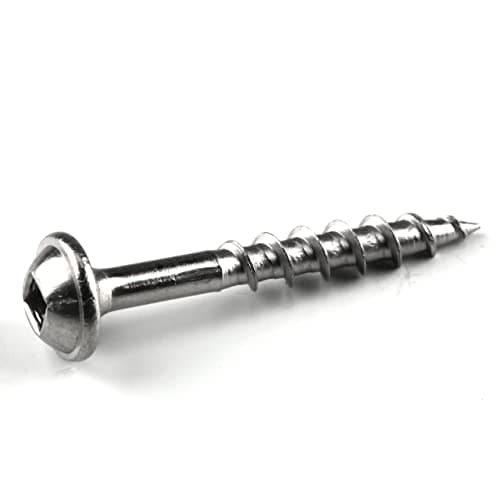
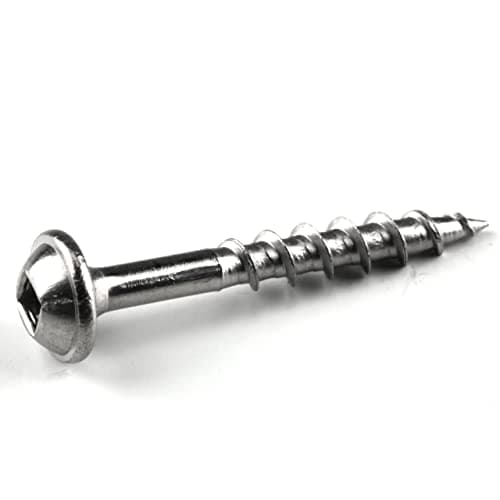
A pocket-hole screw is not an ordinary screw with a different name. The flat washer head is engineered to seat on the flat bottom of the pocket the jig drills, and that is what stops the joint splitting. Put a countersunk wood screw in a pocket hole and the tapered head acts as a wedge in the end grain, which is exactly what you do not want.
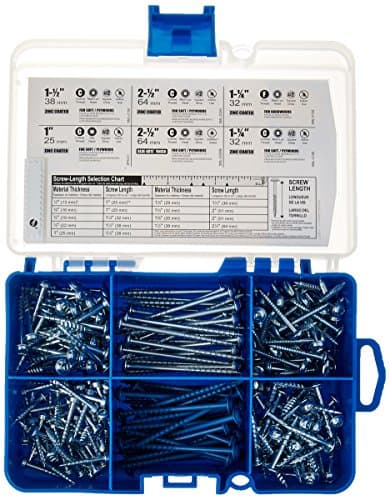
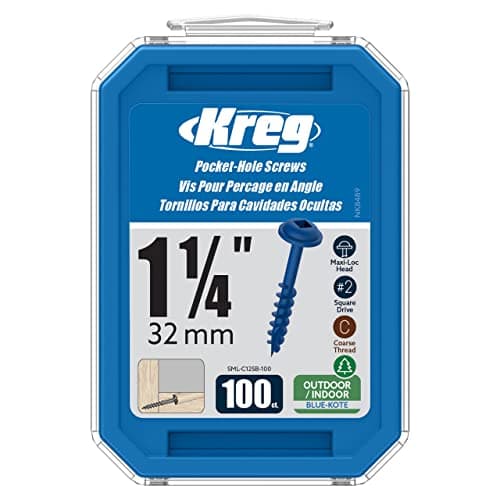
Three variables define what you need. Length: for 3/4-inch stock, 1-1/4 inch is the standard, and it is the size you will use for the overwhelming majority of cabinet and furniture work. Thicker stock steps up; thin stock steps down. Your jig has a stop collar setting for each thickness and the screw length pairs with it.
Thread: coarse thread for softwood, plywood and MDF, because the wide, deep thread bites into soft, open material. Fine thread for hardwood, because a coarse thread in dense oak or maple tends to strip or split rather than pull. Getting this wrong is the single most common cause of a pocket joint that will not tighten.
Coating: plain zinc for interior work, a weather-resistant coating for outdoor projects, and stainless for permanently wet conditions and for cedar and redwood, whose natural extractives corrode ordinary fasteners and leave black streaks around every screw.
Choosing screws for the joint
The length table, simplified
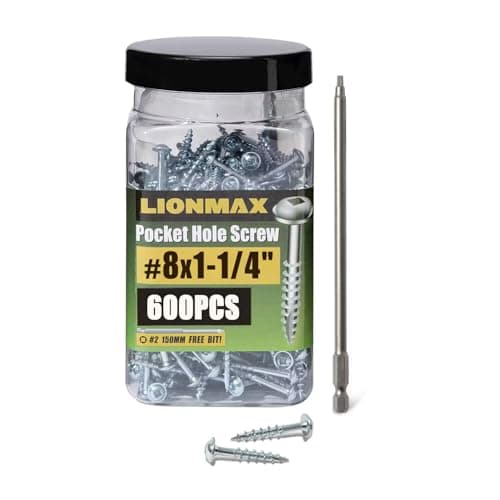
For 1/2-inch stock use 1-inch screws; for 3/4-inch stock use 1-1/4 inch; for 1-inch stock use 1-1/2 inch; for 1-1/2-inch stock use 2-1/2 inch. If you build almost anything from nominal 3/4-inch material — which most cabinets, shelves and shop furniture are — then one box of 1-1/4-inch coarse screws covers the great majority of your work, and buying it 500 at a time is far cheaper than buying it 100 at a time.
Coarse or fine, decided properly
The test is not "is it hardwood?" but "how dense is it?". Pine, poplar, plywood and MDF are soft and open: coarse threads bite. Oak, maple, ash and other dense hardwoods: fine threads. Where people go wrong is running coarse screws into maple, feeling the joint refuse to pull tight, and concluding the jig is at fault.
Washer head versus pan head
Kreg's Maxi-Loc-style head and its equivalents present a broad flat face that bears on the flat bottom of the pocket. That distributes the load and stops the head burying itself into the end grain. Any screw you buy for pocket joinery must have this geometry — it is the non-negotiable part, and it is the thing the cheap generic boxes usually get right even when they skimp elsewhere.
Self-tapping tips
A proper pocket screw has an auger or type-17 tip that cuts its own clearance in the mating part, which is why you do not pre-drill the second board. Cheap screws without a self-tapping tip will split a rail near its end. This is worth checking on a generic box before you commit.
Driving them without stripping anything
Use the square drive bit supplied with your jig, keep it seated fully, and drive at moderate speed. Most stripping is caused by a bit that is not seated or by a drill clutch set so high that it drives past the point where the joint is tight. If a screw spins without pulling, it has stripped the mating hole — move to a fresh position rather than trying to force it.
Clamp the joint while you drive. The screw pulls one part against the other, and if the parts can shift the joint closes offset. A face clamp is the standard answer and the reason every jig maker sells one.
And glue the joint as well, unless it needs to come apart. Glue plus screws is stronger than either alone, and the screws act as clamps while the glue cures — which is the real reason pocket-hole joinery is so fast. See our wood glue roundup for which to use.
Segmenting by project and budget
Shop furniture and jigs: the generic bulk box. The joint is hidden, the load is modest, and the money saved is real.
Cabinets and furniture: branded screws in the length you use most, bought in 500s. Consistent hardness and coating means fewer cam-outs and fewer snapped heads.
Learning: a starter kit assortment, so a project never stalls because you own one length and the joint wants another.
Outdoors: weather-resistant coated screws for garden furniture and planters, stainless for anything permanently wet or built from cedar.
How we ranked these
From published manufacturer specifications (length, gauge, thread type, head geometry, coating and count), the makers' documentation and the pattern in owner feedback read at volume. We have not pull-tested any of these screws and we do not publish holding figures — we do not run a lab, per our methodology page. Prices are live from the price feed.
The screw is half of a setting
Screw length, drill guide position and stop collar depth are one decision taken three times, and all three come from the measured thickness of the piece being drilled. Get the screw right and the collar wrong and the joint still splits. How to use a pocket hole jig puts the three together, with a thickness-to-length table.