Storage is not about tidiness. It is about how many seconds it takes to find a tool and, more importantly, how likely you are to put it back. A shop where everything has an obvious home stays organized by itself; a shop where returning a chisel means opening a box, lifting a tray and moving two other things will be a mess by the end of every session.
Which leads to a simple rule: frequency decides format. Tools you reach for every few minutes — a square, a tape, a marking knife, the three chisels you actually use — belong on a wall or a rack within arm's reach of the bench. Tools you use every session belong in shallow drawers. Tools you use monthly can be boxed. Tools that travel to a job or a friend's garage want a modular box system.
The second rule is that vertical space is free in a way floor space is not. A garage shop that has to make room for a car cannot afford a wall of cabinets, but it can afford a wall of pegboard and a rolling chest that parks under the bench. Most small-shop storage problems are actually layout problems — our garage layout guide covers the clearances you have to plan around first.
One thing worth saying about edge tools specifically: chisels, planes and saws want to be stored so the edges cannot touch anything else. A drawer with everything loose in it will dull a chisel faster than using it will. That is what tool rolls, blade guards and slotted racks are for, and it is one of the few genuine arguments for a purpose-made rack over a generic box.
Choosing a storage format
Wall storage: fastest access, no floor cost
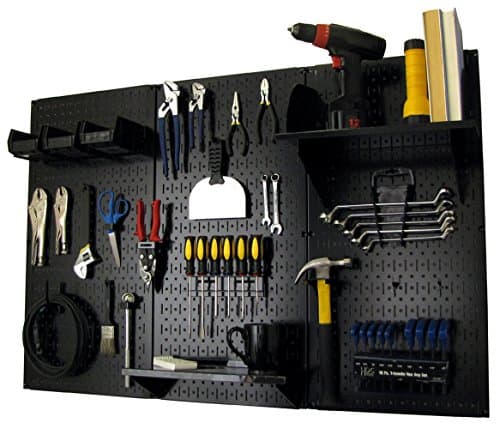
Pegboard or a French cleat wall puts tools in sight and in reach, which is exactly what you want for the twenty tools you use constantly. The classic complaint about hardboard pegboard is hooks that lift out with the tool; steel pegboard with locking hooks fixes that, and cleat systems sidestep it entirely by hanging purpose-made holders.
The limitation is depth. A wall holds flat things well and bulky things badly, and dust settles on everything hanging in the open — which in a wood shop means wiping tools down more often than you would in a closed cabinet.
Modular boxes: for tools that travel
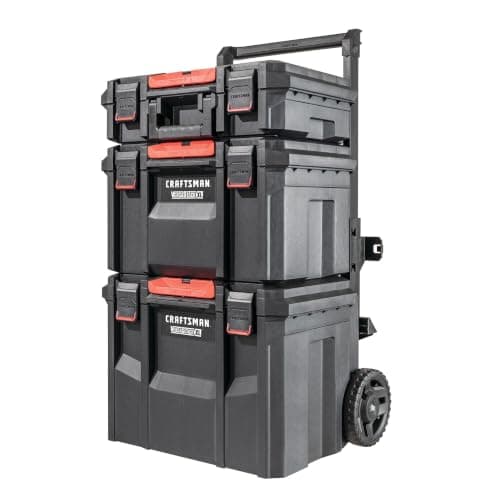
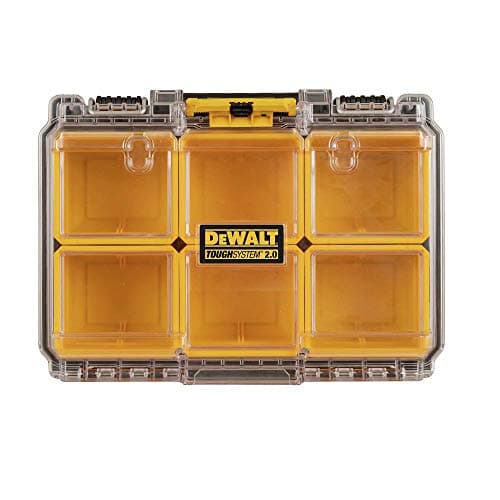
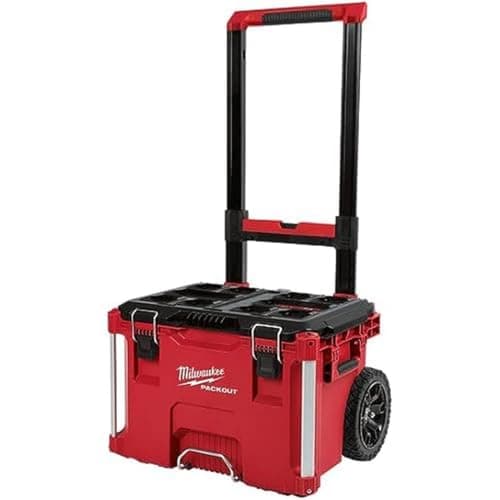
Stacking systems lock boxes together and, at the base, onto a wheeled unit. If your tools ever leave the shop, this is the format that makes it painless. In a shop that never moves, the stacking is less useful than drawers, because reaching a lower box means unstacking the ones above it.
Rolling systems: the compromise for shared garages
A stacked tower on wheels is the answer for a shop that has to be cleared. Everything moves at once, the tools stay with each other, and the whole lot parks against a wall or in a corner. The cost is that a tower is dead floor space when parked, and the tools inside are less immediately visible than on a wall.
Drawer chests: best access, most space
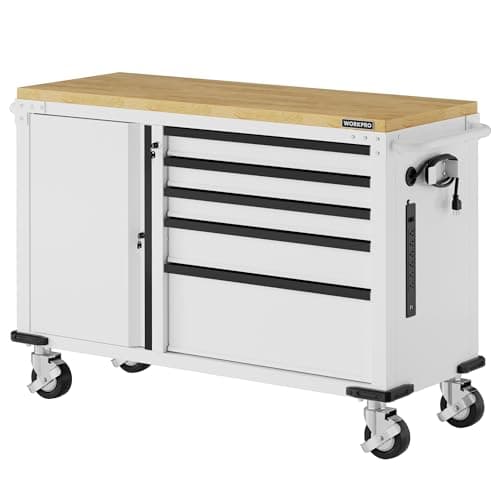
Nothing beats a shallow drawer for finding a tool. One pull, everything visible, nothing stacked on top of anything. A rolling chest also gives you a worktop, which in a small shop earns its own keep for assembly and layout. The cost is footprint and price — and a deep drawer with no dividers becomes exactly the jumble you were trying to avoid, so plan on foam, trays or shop-made dividers.
What most shops actually end up with
A wall above the bench for the constant tools, a small chest or a set of drawers for everything else, and one modular box for whatever leaves the building. That combination covers frequency properly and costs less than any single format scaled up to do all three jobs.
The best value addition to any of it is shop-made: a till or rack sized to your actual chisels, a saw till on the wall, a drawer insert cut to your planes. Purpose-made holders are the reason a traditional tool chest holds so much in so little space, and they cost offcuts and an afternoon.
Segmenting by shop and budget
Shared garage, car comes in: a rolling tower plus a wall panel that can be mounted high. Everything either moves or is above head height.
Dedicated small shop: wall storage over the bench and a rolling drawer chest. The chest doubles as assembly surface.
Tools that travel: a modular stacking system, and standardize on it. Mixing two incompatible systems is the expensive mistake in this category.
Damp or unheated shop: favor closed storage for edge tools and keep a rust preventative to hand. An open pegboard in a cold garage will spot your plane irons over a winter.
How we ranked these
From published manufacturer specifications (dimensions, drawer counts, load ratings, materials, sealing and system compatibility) plus the pattern in owner feedback read at volume. We have not load-tested drawers or sprayed anything with a hose — we do not run a lab, per our methodology page. Prices come from the live price feed.