Every pair on this page will stop a chip. The variable that actually decides whether you keep your sight is whether you are wearing them, and that comes down to comfort and fogging. Protection you take off because it pinches or steams up is protection you do not have.
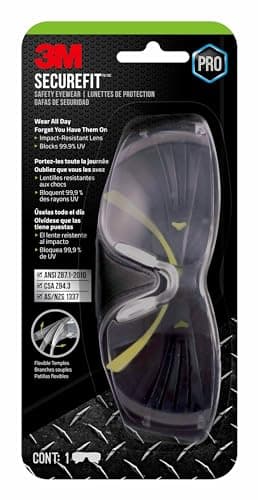
The standard to look for is ANSI Z87.1, marked on the frame or lens. It is the American National Standards Institute specification for occupational eye protection, and it covers impact resistance among other things. Ordinary prescription or sunglasses lenses are not rated to it, which is why “I wear glasses anyway” is not eye protection — an unrated lens can shatter into the eye it was supposed to protect.
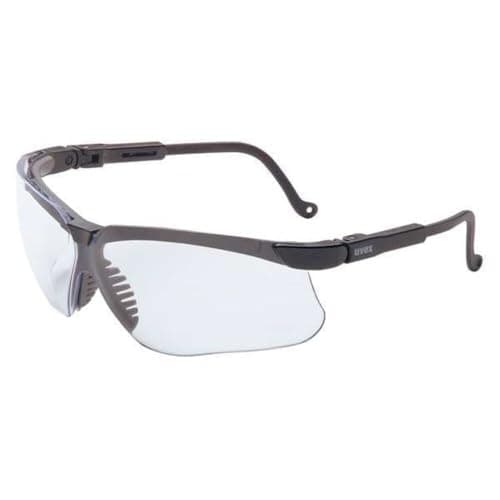
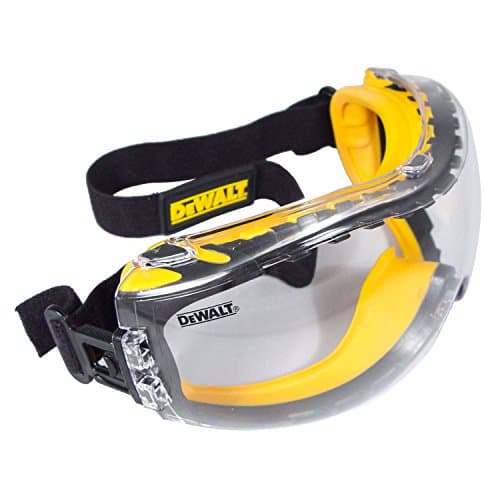
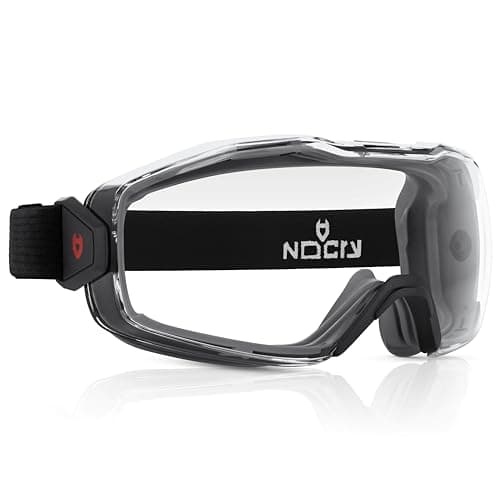
The second decision is glasses or goggles. Open glasses are more comfortable, cooler and fine for the majority of bench and machine work, where debris comes from in front. A sealed goggle keeps out fine airborne dust and anything traveling upward — which is what routing overhead, using a router on its back in a table, and turning throw at you. Most shops want one of each.
Eye protection is one leg of a three-part kit. The other two are hearing protection, because machine noise damage is cumulative and permanent, and a respirator, because fine wood dust is the hazard you cannot see. All three have to be comfortable enough to wear together.
What actually matters
Fogging is the real failure mode
Fogging happens when warm, moist air meets a cool lens — which describes a cold garage, a respirator directing your breath upward, and any physical work. There are two defenses. Anti-fog coatings work chemically and wear off, especially if you dry-wipe the lens with a shop rag. Dual-pane lenses work structurally, exactly like double glazing, and do not wear out. If your shop is unheated, a dual-pane lens is worth the premium.
The maintenance point is worth repeating because it is the most common way people ruin a good pair: rinse, do not wipe. Running water and air-drying preserves an anti-fog coating that a dry rag will scrub off within weeks.
Temple design decides all-day comfort
Cheap glasses have rigid temples that clamp the sides of your head at a single pressure point. After an hour that becomes a headache, and the glasses come off. Better designs distribute that pressure or self-adjust their angle as you put them on. It is the single biggest difference between a pair you tolerate and a pair you forget you are wearing.
Coverage and the gap at the brow
Open glasses leave a gap above the lens. For chips flying forward off a blade that is irrelevant. For dust settling from above, or for anything thrown upward, it is the route in. Wraparound frames with a brow guard close most of it; only a sealed goggle closes it all.
If you wear prescription glasses
Three honest options, in ascending order of cost. Over-glasses safety goggles are designed with the internal clearance to fit around your frames — bulky, but they work and they cost very little. Prescription safety glasses from an optician are comfortable and expensive. Wearing nothing is what most people actually do, and it is why over-glasses designs matter more than their comfort rating suggests.
What does not work is a standard pair of safety glasses jammed over prescription frames. They sit crooked, they press the arms into your temples, and they come off within ten minutes.
Wearing all three at once
The order matters. Put the respirator on first, then the glasses over its straps, then the ear muffs last — muff cushions sealing over glasses arms is the most common cause of a bad acoustic seal. If you use a goggle with a head strap, that goes on before the muffs too. If the combination is uncomfortable, consider ear plugs instead of muffs, which remove the conflict entirely.
How many pairs
More than one. The reason people work without eye protection is almost never a decision — it is that the glasses are on the other side of the shop. A pair at the table saw, a pair at the bench and a pair in the apron costs very little and removes the excuse.
What we could not verify
We have not impact-tested these lenses or run controlled fogging comparisons. Standards markings, coatings and lens construction are taken from the manufacturers' current listings; the reasoning about comfort, fogging and coverage is how the products work in use.