Skip to content
Dovetail & Dust

HUB 01 · Hand Tools

What Size Chisels Do I Need?

Four widths do almost everything, and three of them do most of it. Here is which width earns its place, why the ten-piece set is mostly packaging, and the one size people buy last and use first.

By Stephen V.Updated How we research
#ad

We earn a commission when you buy through our Amazon links, at no extra cost to you. It never changes our rankings, and we say so when the cheaper tool is the better buy. How this works.

Buy four bevel-edge widths: 1/4 in., 1/2 in., 3/4 in. and 1 in. If you can only start with two, make them 1/4 in. and 1/2 in. — those two will cut your first dozen projects on their own. Everything past four widths is refinement, and a lot of what gets sold as a “set” is padding around those four.

That is the short answer. The longer one is worth reading because it changes how you shop: the number on the box is the least useful specification a chisel set publishes, and it is the one the price is set by.

What each width is genuinely for

1/4 in. — the dovetail and detail chisel

The width that fits between dovetail pins, cleans small mortises, and gets into corners nothing wider reaches. If you cut joints by hand this is the chisel that wears out first, which tells you how much work it does. A narrow chisel is also the easiest to steer, because there is less edge to keep registered against the wood.

1/2 in. — the one you reach for without thinking

The default. Wide enough to pare a tenon shoulder in a couple of passes, narrow enough to chop a hinge mortise, and the size that fits most of the mortises a small piece of furniture contains. If you own one chisel, own this one.

3/4 in. — the paring width

This is where a chisel starts behaving like a small plane. A wider edge spans more of the surface you are flattening, so it bridges low spots instead of following them, which is exactly what you want when truing a tenon cheek or a half-lap. It is also the width that starts to need two hands.

1 in. — the one bought last and used immediately

The width most people leave out of their first purchase and then wish they had. One inch cleans glue squeeze-out off a panel in single strokes, flattens the bottom of a wide housing, and trims a proud through-tenon flush without leaving steps. It does the jobs you did badly with a 1/2 in. chisel before you owned it.

Why set count is the wrong thing to shop on

A ten-piece set at the price of a four-piece set is not better value — it is a signal about the steel. Chisel cost is dominated by the steel and the grinding, so if the price per chisel falls by half, something in the steel or the heat treatment has given way. A chisel that will not hold an edge is not a bargain at any count, because the time you spend at the stone is the real cost of owning it.

The sets worth buying tend to publish two things: the steel alloy and a hardness figure. Those two numbers tell you more about how the chisel will behave than the number of chisels in the box ever will, and we rank the field on them in the best woodworking chisels.

Bevel-edge, mortise or paring?

Width is only half the specification. The other half is the pattern, and three patterns cover the market.

  • Bevel-edge bench chiselshave the long sides of the blade ground away to a narrow land, so the blade can get into an acute corner — a dovetail socket, for instance. This is the pattern you want for a first set, and it is what every chisel ranked below is.
  • Mortise chisels are thick, square in section and designed to be levered against the walls of a mortise while being struck hard. They chop deep mortises far better and cannot reach into a corner at all.
  • Paring chiselsare long, thin, flexible and never struck — hand pressure only. Lovely for fitting work and a mistake as a first purchase.

Buy bevel-edge first, in the four widths above. Add a mortise chisel if you find yourself chopping mortises by hand regularly, which our mortise and tenon guide covers, and add a paring chisel when fitting rather than cutting is where your time goes.

Metric or imperial, and whether it matters

It does not, with one exception. Chisels are not measuring tools — you are registering the edge against a line you already marked, not using the chisel to set the dimension. A 6 mm chisel does everything a 1/4 in. chisel does.

The exception is a chisel that has to match a cut made by something else: a mortise chisel used to chop a mortise sized to a router bit, or a chisel squaring the corners of a machine-cut mortise. Then the width wants to match the bit, and mixing systems makes that arithmetic annoying.

The number that matters more than any of this

A sharp cheap chisel beats a dull expensive one at every width, every time. Steel quality buys you time between sharpenings, not sharpness — the edge you get is the edge you put on it. If you are choosing between a better set and a sharpening setup, buy the sharpening setup.

We walk through the routine in how to sharpen chisels, and the kit choices are in sharpening stones and honing guides. One of the sets ranked below includes a stone and a guide in the box for exactly this reason.

The short answer

Quick picks

#ProductBest forScorePrice
01
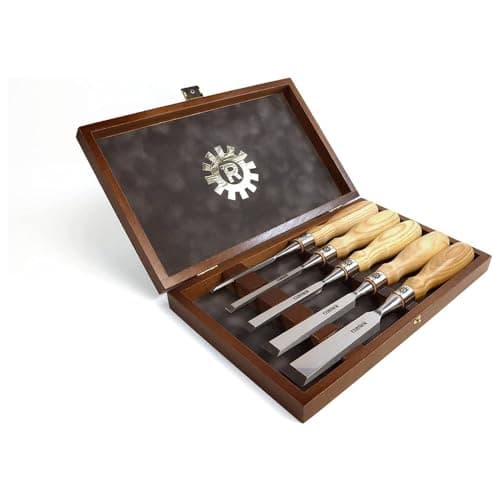
Narex Narex Richter Bevel-Edge Chisel Set (5)
Narex Richter Bevel-Edge Chisel Set (5)

The most edge you can buy at this price. Cryo-treated Cr-V hardened to a claimed 62 HRC holds a keen edge far longer than the mid-price field.

Best overall
8.4
$228.99Amazon
02
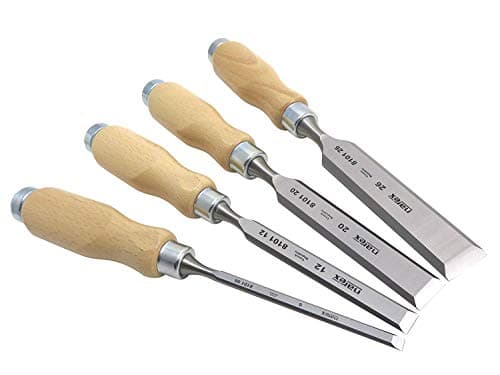
Narex Narex Bevel-Edge Chisel Set (4)
Narex Bevel-Edge Chisel Set (4)

The value pick nobody regrets. Genuinely good Cr-Mn steel and comfortable beech handles for roughly the price of a fast-food week.

Best value
8.0
$48.91Amazon
03
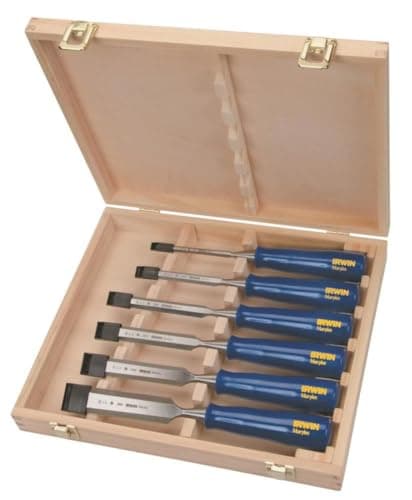
Irwin Irwin Marples M444 Bevel-Edge Chisels (6)
Irwin Marples M444 Bevel-Edge Chisels (6)

The tough, do-anything set. Six bevel-edge sizes in a wooden box, hardened to a published 58-61 HRC, at a price that makes owning the whole range easy.

Best all-rounder
7.0
$60.99Amazon
04
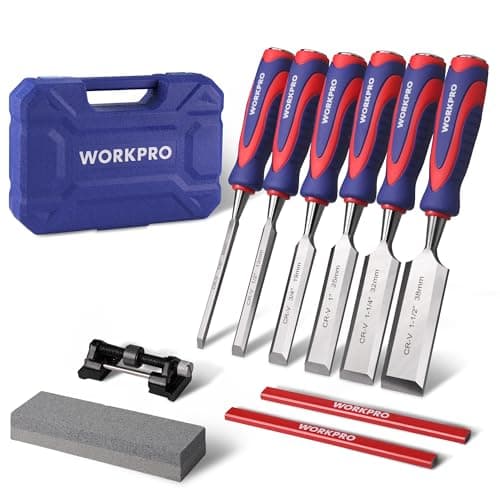
WORKPRO WORKPRO Wood Chisel Set (10)
WORKPRO Wood Chisel Set (10)

The cheapest honest way in. Cr-V blades, a honing guide and a stone in the box — enough to learn to sharpen, which matters more than the chisels.

Best budget starter
6.0
$27.24Amazon

#ad · Live prices from the Amazon Product API, as of October 5, 2026. Where we have no verified live price, we show none — we would rather leave a gap than print a number that has rotted.

In detail

The picks, in full

01
Narex Narex Richter Bevel-Edge Chisel Set (5)

Best overall

Narex Richter Bevel-Edge Chisel Set (5)

Cr-V steelClaimed 62 HRCSet of 5Ash handles
8.4/10

The most edge you can buy at this price. Cryo-treated Cr-V hardened to a claimed 62 HRC holds a keen edge far longer than the mid-price field.

Edge retention
9
Steel quality
9
Ergonomics
8
Out-of-box
8
Value
8

Pros

  • Manufacturer rates the steel at HRC 62 — high for a bench chisel, and it shows in edge retention
  • Backs and bevels arrive flatter and closer to ready than most sets in the range
  • Fine bevel-edge sides get into dovetail corners cleanly

Cons

  • Costs meaningfully more than a serviceable beginner set
  • Harder steel is a little more work to bring back on a stone once it does dull

Don't buy this if…

…you are cutting your first joint and not sure the hobby will stick — a cheaper set will teach you everything, and you can graduate to these later without regret.

$228.99View on Amazon

Price as of October 5, 2026. Prices change — Amazon's is the one that counts.

#ad · we may earn a commission from this link to Narex Richter Bevel-Edge Chisel Set (5)

02
Narex Narex Bevel-Edge Chisel Set (4)

Best value

Narex Bevel-Edge Chisel Set (4)

Cr-Mn steel~59 HRCSet of 4Beech handles
8.0/10

The value pick nobody regrets. Genuinely good Cr-Mn steel and comfortable beech handles for roughly the price of a fast-food week.

Edge retention
7
Steel quality
8
Ergonomics
8
Out-of-box
7
Value
10

Pros

  • Punches far above its price — the steel takes and holds a real edge
  • Four sizes cover the great majority of joinery a first shop does
  • A great first set that you will keep using even after you upgrade

Cons

  • Backs need a proper flattening session before first use
  • Softer than the Richter line, so it dulls a little sooner

Don't buy this if…

…you already sharpen well and want maximum edge life — the Richter set holds longer and is worth the jump for someone chopping mortises daily.

$48.91View on Amazon

Price as of October 5, 2026. Prices change — Amazon's is the one that counts.

#ad · we may earn a commission from this link to Narex Bevel-Edge Chisel Set (4)

03
Irwin Irwin Marples M444 Bevel-Edge Chisels (6)

Best all-rounder

Irwin Marples M444 Bevel-Edge Chisels (6)

High-carbon steel58-61 HRC (published)Set of 6, 1/4-1 in.Wooden box
7.0/10

The tough, do-anything set. Six bevel-edge sizes in a wooden box, hardened to a published 58-61 HRC, at a price that makes owning the whole range easy.

Edge retention
6
Steel quality
6
Ergonomics
8
Out-of-box
7
Value
8

Pros

  • Six sizes from 1/4 to 1 in. out of one box, so there are fewer gaps to fill later
  • Contoured polypropylene handles take a mallet and shrug off shop abuse
  • Widely stocked, so replacements and singles are easy to find

Cons

  • A published 58-61 HRC is a step below the harder Czech steel above it, and the edge shows it
  • Bevel sides are a touch thick for the tightest dovetail corners

Don't buy this if…

…your work is fine dovetails and delicate paring — a thinner-sided, harder chisel will serve that better than this general-purpose set.

$60.99View on Amazon

Price as of October 5, 2026. Prices change — Amazon's is the one that counts.

#ad · we may earn a commission from this link to Irwin Marples M444 Bevel-Edge Chisels (6)

04
WORKPRO WORKPRO Wood Chisel Set (10)

Best budget starter

WORKPRO Wood Chisel Set (10)

Cr-V steelSet of 10Honing guide incl.Sharpening stone incl.
6.0/10

The cheapest honest way in. Cr-V blades, a honing guide and a stone in the box — enough to learn to sharpen, which matters more than the chisels.

Edge retention
4
Steel quality
4
Ergonomics
6
Out-of-box
8
Value
8

Pros

  • Includes a honing guide and stone — a real starting kit, not just blades
  • Enough sizes that you are never missing one while you learn
  • Cheap enough that mistakes on it do not hurt

Cons

  • Soft steel dulls quickly — you will sharpen often
  • Fit and finish are basic; some prep needed to get them cutting well

Don't buy this if…

…you already own a sharpening setup and know you are committed — spend the same money on a Narex set and skip the throwaway steel.

$27.24View on Amazon

Price as of October 5, 2026. Prices change — Amazon's is the one that counts.

#ad · we may earn a commission from this link to WORKPRO Wood Chisel Set (10)

What each set actually contains

Published listing specifications for the four sets above. Read the piece count against the widths: a six-piece set spanning 1/4 to 1 in. covers the four widths this page recommends and two more besides, while a ten-piece set at a quarter of the price is telling you something about the steel rather than the coverage.

SetPiecesSteelPublished hardness
Narex Richter bevel-edge5Cr-V, cryo-treatedClaimed 62 HRC
Narex bevel-edge (Woodline)4Cr-Mn~59 HRC
Irwin Marples M4446 (1/4–1 in.)High-carbon58–61 HRC (published)
WORKPRO wood chisel set10Cr-VNot published

Reading a hardness figure

HRC is the Rockwell C hardness scale, and for woodworking chisels the usable band runs roughly from the high 50s to the low 60s. Harder steel holds an edge longer and is more brittle — it will chip rather than roll if you lever it sideways or hit a nail. Softer steel dulls sooner and is more forgiving, and it sharpens faster.

So a published 62 HRC is not simply “better” than a published 59. It is a different trade: longer between sharpenings, less tolerance for abuse. A beginner chopping mortises in construction lumber is better served by the softer, tougher chisel, and that is not a consolation prize.

Note that the budget set above publishes no hardness figure at all. That absence is itself information, and it is written into that product's cons rather than filled in with a guess.

How many chisels does a first shop need? Honestly, two

If money is tight, buy a 1/4 in. and a 1/2 in. in good steel rather than ten chisels in poor steel. You will cut dovetails, hinge mortises, tenon shoulders and housings with those two, and you will do it with edges that stay sharp long enough to finish a cut.

Add 3/4 in. and 1 in. the first time a job makes you wish for them — which for most people is the first wide panel they clean up or the first through-tenon they trim. Buying the whole range up front is not wrong; it is just not necessary, and it is how people end up with eight chisels and no stone.

What to check when the chisels arrive

Three things, in this order. First, lay the back of each blade on a flat reference and look for light under the edge: the back has to be flat for the last inch or so, and flattening it is your job on any chisel at any price. Second, check the edge is square across the width, because a skewed edge cuts a skewed line and it takes real grinding to fix. Third, check the handle is seated and the ferrule tight — a loose handle on a struck chisel gets worse, not better.

None of these is a defect to return the set over. All three are the normal condition of a new chisel, and the reason a sharpening setup is a prerequisite rather than an upgrade.

Where these numbers come from

Piece counts, steel alloys, hardness figures and handle materials above are the manufacturers' own published listing specifications, cited per set in Sources. Where a maker publishes no hardness figure, we say so rather than estimating one. We have not tested edge retention — we do not run a lab, and our methodology page says so in those words. Prices come from the live price feed.
How we picked

We do not run a testing lab

We researched published manufacturer specifications, manuals and spec sheets, ran the arithmetic those specs support, and read owner reviews at volume, then scored each tool against a published rubric. The scores are judgments from documented research — they are not measurements we took, because we do not have a lab and we are not going to pretend we do. Where a number came from a manufacturer's document, we name it and link it in Sources.

Questions

Frequently asked

What chisel sizes should a beginner buy?
A 1/4 in. and a 1/2 in. bevel-edge chisel will cut your first dozen projects between them. Add 3/4 in. and 1 in. when a job makes you want them. Four widths is a complete working set for furniture; anything beyond that is refinement rather than capability.
Is a ten-piece chisel set better value than a four-piece?
Usually not. Chisel cost is dominated by steel and grinding, so a set that halves the price per chisel has given something up in one of those. Four chisels that hold an edge are worth more than ten that do not, because time at the sharpening stone is the real cost of ownership.
Do I need metric or imperial chisels?
It makes no practical difference for bench work — a chisel registers against a line you already marked, it does not set the dimension. The one case where it matters is a chisel that has to match a machine cut, such as squaring a router-cut mortise, where you want the chisel width to match the bit.
What is the difference between bevel-edge and mortise chisels?
A bevel-edge chisel has its long sides ground away so the blade reaches into an acute corner, which is what dovetails need. A mortise chisel is thick and square in section so it can be levered against the walls of a deep mortise and struck hard. Buy bevel-edge first; add a mortise chisel if you chop mortises by hand often.
Should I spend more on chisels or on sharpening?
Sharpening, without hesitation. Better steel buys time between sharpenings, not sharpness — the edge you get is the edge you put on. A sharp inexpensive chisel outperforms a dull premium one every time, at every width.

Keep reading

Receipts

Sources

We do not run a testing lab, and we do not pretend to. Our picks come from published manufacturer specifications and manuals, the arithmetic those specs support, and owner reviews read at volume. Where we could not verify something, we say so on the page rather than quietly leaving it out. Read our full method.