Skip to content
Dovetail & Dust

HUB 01 · Hand Tools

The Best Woodworking Squares

Buy one accurate square before any machine — every cut and joint in the shop is only as square as the tool you check it with.

By Stephen V.Updated How we research
#ad

We earn a commission when you buy through our Amazon links, at no extra cost to you. It never changes our rankings, and we say so when the cheaper tool is the better buy. How this works.

The best woodworking square for almost everyone is a good combination square, because it measures, marks, sets a 45 and checks a 90 with one tool — and every other cut in the shop is only as square as the tool you test it against. Our top pick is the Starrett C11H-12-4R, the ground cast-iron reference the rest of the field gets compared to, but the honest truth is that a mid-price combination square is square enough for furniture and leaves money for chisels. We ranked these by accuracy and the job each one actually does, and told you where each earns its place.

Squares split by task, not by price. A combination square is the workhorse: a sliding blade in a head that reads a 90 and a 45, gauges depth, marks a line parallel to an edge and doubles as a small level. It is the first square to buy and the one you will reach for most. A fixed precision square — a one-piece machined try square like the Woodpeckers — does nothing but hold a dead-true 90, which is exactly what you want when you are checking a tenon shoulder or a saw cut and cannot spare a hand. A speed square is a fast, rugged 45/90 marker and a saw fence, brilliant for breaking down stock and rough carpentry but too coarse for fine joinery. And a machinist square set is for tuning the shop itself: checking a table-saw blade to the table, a fence to a slot, an assembly for square.

So the honest first buy is not four squares — it is one good combination square, then the others as the work demands them. Layout is where accuracy is won or lost: a joint marked off a square that is a hair out will never close, no matter how well you saw to the line. If you are still assembling a first kit, our essential woodworking tools guide shows where a square sits among the accuracy tools, and our how to cut dovetails guide is where a square you can trust actually pays off.

The short answer

Quick picks

#ProductBest forScorePrice
01
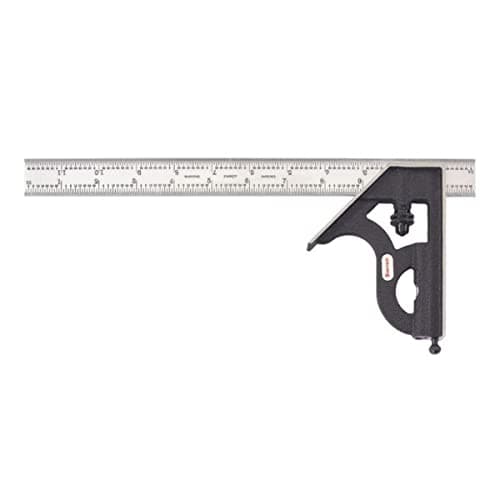
Starrett Starrett C11H-12-4R Combination Square
Starrett C11H-12-4R Combination Square

The reference standard. A hardened, photo-engraved blade in a ground cast-iron head — the square you buy once and check every other tool against for the rest of your shop life.

Best overall
8.5
$153.51Amazon
02
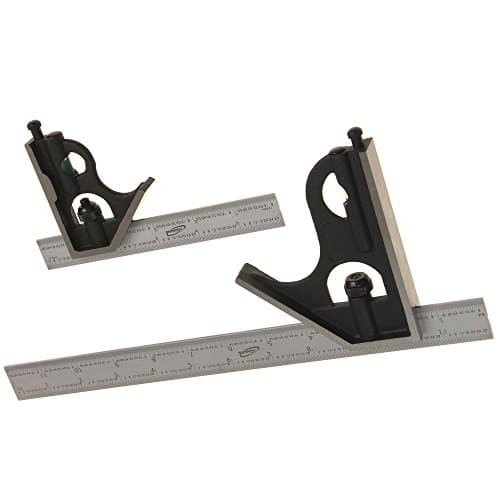
iGaging iGaging Combination Square Set (6 + 12 in)
iGaging Combination Square Set (6 + 12 in)

An accurate combination square for a fraction of the premium price. The measuring tool every shop needs before it needs another machine.

Best value square
8.0
$66.31Amazon
03
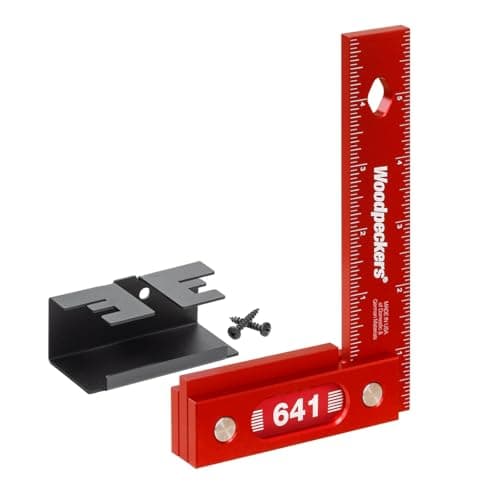
Woodpeckers Woodpeckers 6-in Precision Woodworking Square
Woodpeckers 6-in Precision Woodworking Square

A fixed, dead-square reference for joinery. CNC-machined aluminum with a shoulder that lets it stand on the stock, so you can check a shoulder or a saw cut without a third hand.

Best for fine joinery
8.0
$94.99Amazon
04
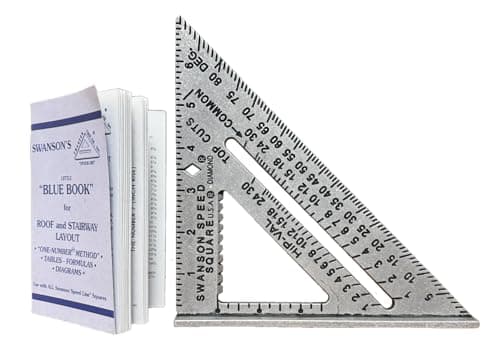
Swanson Swanson S0101 7-in Speed Square
Swanson S0101 7-in Speed Square

The cheapest genuinely useful square you can own. Not a fine-joinery tool, but unbeatable as a fast 45/90 marker and a saw fence for crosscuts.

Best for speed and site work
7.8
$9.98Amazon
05
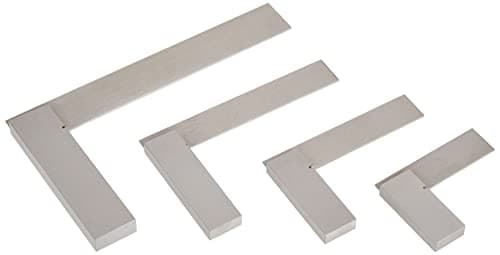
Woodstock Woodstock D4089 Machinist Square Set (4)
Woodstock D4089 Machinist Square Set (4)

Four small fixed squares for the jobs a combination square is clumsy at: checking a table-saw blade to the table, a fence to a miter slot, or an assembly for square.

Best for checking square
7.3
$34.99Amazon

#ad · Live prices from the Amazon Product API, as of Jul 28, 2026. Where we have no verified live price, we show none — we would rather leave a gap than print a number that has rotted.

In detail

The picks, in full

01
Starrett Starrett C11H-12-4R Combination Square

Best overall

Starrett C11H-12-4R Combination Square

12 in blade4R graduationsCast-iron headHardened steel
8.5/10

The reference standard. A hardened, photo-engraved blade in a ground cast-iron head — the square you buy once and check every other tool against for the rest of your shop life.

Accuracy
10
Build
9
Versatility
9
Value
6

Pros

  • Ground square and true out of the box — the tool other squares get checked against
  • Crisp, photo-engraved 4R graduations (1/64, 1/32, 1/16, 1/8) stay readable for decades
  • Reversible lock bolt, scriber and a real spirit level in one head

Cons

  • Costs many times what a serviceable combination square does
  • The satin-chrome blade shows handling marks; the head is heavy in the pocket

Don't buy this if…

you are outfitting a first shop on a budget — a good mid-price combination square is square enough for furniture, and the Starrett money is better spent on chisels or a saw first.

$153.51View on Amazon

Price as of Jul 28, 2026. Prices change — Amazon's is the one that counts.

#ad · we may earn a commission from this link to Starrett C11H-12-4R Combination Square

02
iGaging iGaging Combination Square Set (6 + 12 in)

Best value square

iGaging Combination Square Set (6 + 12 in)

6 + 12 in blades4R graduationsHardened steelCombination square
8.0/10

An accurate combination square for a fraction of the premium price. The measuring tool every shop needs before it needs another machine.

Accuracy
8
Build
7
Value
9

Pros

  • Genuinely square and readable for the money
  • Two blade lengths cover most layout work
  • The tool that makes every joint you cut more accurate

Cons

  • Fit and finish trail a premium machinist's square
  • Check it for square on arrival, as with any budget square

Don't buy this if…

you need certified machinist accuracy — a premium square is worth it, but overkill for most furniture work.

$66.31View on Amazon

Price as of Jul 28, 2026. Prices change — Amazon's is the one that counts.

#ad · we may earn a commission from this link to iGaging Combination Square Set (6 + 12 in)

03
Woodpeckers Woodpeckers 6-in Precision Woodworking Square

Best for fine joinery

Woodpeckers 6-in Precision Woodworking Square

6 inMachined aluminumClaimed +/-0.001 inSelf-standing
8.0/10

A fixed, dead-square reference for joinery. CNC-machined aluminum with a shoulder that lets it stand on the stock, so you can check a shoulder or a saw cut without a third hand.

Accuracy
9
Build
9
Versatility
7
Value
7

Pros

  • Maker rates it square to within a claimed 0.001 in over its length
  • Offset shoulder rests on the edge of the board so it stands up on its own
  • Laser-engraved scales and a light aluminum body that will not rust

Cons

  • A fixed square only — it does not measure depth or set a 45 like a combination square
  • Pricey for a 6-inch square if you only need a rough 90

Don't buy this if…

you want one do-everything layout tool — a combination square measures, marks and sets angles the fixed square cannot, and should be your first square.

$94.99View on Amazon

Price as of Jul 28, 2026. Prices change — Amazon's is the one that counts.

#ad · we may earn a commission from this link to Woodpeckers 6-in Precision Woodworking Square

04
Swanson Swanson S0101 7-in Speed Square

Best for speed and site work

Swanson S0101 7-in Speed Square

7 inAluminum alloyTri/miter/protractorRafter scales
7.8/10

The cheapest genuinely useful square you can own. Not a fine-joinery tool, but unbeatable as a fast 45/90 marker and a saw fence for crosscuts.

Accuracy
6
Build
7
Versatility
9
Value
9

Pros

  • Doubles as a saw fence — run a circular saw base against it for a dead-square crosscut
  • Fast 45 and 90 marks, plus a protractor edge for any angle in between
  • Nearly indestructible cast aluminum for the price of lunch

Cons

  • Thick cast body is built for framing, not the fine graduations of layout work
  • Not precise enough to trust for tight hand-cut joinery

Don't buy this if…

you need furniture-grade accuracy for dovetails and tenons — this is a carpentry and breakdown square, so pair it with a combination or machinist square for fine work.

$9.98View on Amazon

Price as of Jul 28, 2026. Prices change — Amazon's is the one that counts.

#ad · we may earn a commission from this link to Swanson S0101 7-in Speed Square

05
Woodstock Woodstock D4089 Machinist Square Set (4)

Best for checking square

Woodstock D4089 Machinist Square Set (4)

2/3/4/6 in setHardened steelClaimed +/-0.0006 in90 deg reference
7.3/10

Four small fixed squares for the jobs a combination square is clumsy at: checking a table-saw blade to the table, a fence to a miter slot, or an assembly for square.

Accuracy
8
Build
7
Versatility
6
Value
8

Pros

  • Four sizes cover everything from a small setup to a cabinet corner
  • Maker rates the faces square to a claimed 0.0006 in — a tight machine-setup reference
  • Inside notch clears dust and chips so the square seats flush

Cons

  • Fixed 90 only — no measuring, marking or angle setting
  • Small steel squares want a wipe of oil or they will spot with rust

Don't buy this if…

you only ever lay out by hand and never tune a machine — one good combination square will do most of what a beginner needs before this set earns its space.

$34.99View on Amazon

Price as of Jul 28, 2026. Prices change — Amazon's is the one that counts.

#ad · we may earn a commission from this link to Woodstock D4089 Machinist Square Set (4)

How to choose a woodworking square

Start from the work, not the brand. If you own no square at all, buy a combination square first — it is the only one that measures, marks, gauges depth and sets both a 90 and a 45, so it does the most jobs for the money. Add a fixed precision square when your joinery gets tight enough that you want a dead-true reference you can stand on the wood, a speed square when you are breaking down sheet goods or framing, and a machinist set when you start tuning machines. Most first shops need exactly one square; a busy shop slowly collects the rest.

Combination vs fixed vs speed vs machinist

A combination square is the do-everything layout tool — the Starrett and the value-priced iGaging both live here, and one of them should be your first square. A fixed precision square like the Woodpeckers trades that versatility for a single, uncompromising 90 and a body stiff enough to check a cut without flexing. A speed square is the rugged, cheap 45/90 marker and saw guide — fast and tough, but its cast body is built for framing, not fine graduations. A machinist square set gives you small, hardened fixed squares in graduated sizes for checking tool setups and assemblies, where a bulky combination-square head gets in the way.

The trade-off: accuracy vs versatility vs cost

No single square wins on all three. The combination square is the most versatile but not the most rigid; a fixed precision square is stiffer and truer but does only one thing; a speed square is the cheapest and toughest but the least accurate; a machinist set is precise but narrow in use. The premium names buy you a blade that arrives dead-square and stays readable for decades, which matters if you check every other tool against it — but a careful mid-price square is square enough for furniture, and the difference between it and a Starrett is smaller than the difference between a sharp and a dull chisel. Spend where the work rewards it.

Practical tip: check any new square for square

Every square, cheap or premium, deserves a check on arrival, because a square that is out is worse than no square — it puts the same error into every joint you cut. The test costs nothing: set the head against a straight, jointed edge, scribe a fine line along the blade, flip the square over and scribe again from the same point. If the two lines coincide, the square is true; if they splay apart, the error is half the gap and the tool goes back. Keep steel squares wiped with a little oil so they do not spot with rust, and store them where they will not get knocked. Then pair your square with sharp chisels and good clamps — accurate layout, clean paring and square glue-ups are the three things that make a joint fit.

How we picked

We do not run a testing lab

We researched published manufacturer specifications, manuals and spec sheets, ran the arithmetic those specs support, and read owner reviews at volume, then scored each tool against a published rubric. The scores are judgments from documented research — they are notmeasurements we took, because we do not have a lab and we are not going to pretend we do. Where a number came from a manufacturer's document, we name it and link it in Sources.
Questions

Frequently asked

What is the best type of square for woodworking?
For most people, a combination square. It measures, marks a line parallel to an edge, gauges depth, sets a 45 and checks a 90 — more jobs than any other single square — which is why it is the one to buy first. Add a fixed precision square for tight joinery, a speed square for breakdown and site work, and a machinist set for tuning machines, but start with a good combination square.
Is an expensive square like a Starrett worth it?
It depends on the work. A Starrett arrives dead-square and stays readable for decades, and if you check every other tool in the shop against it, that reference accuracy is worth paying for. But a careful mid-price combination square is square enough for furniture, so a beginner is better off spending the difference on chisels or a saw and upgrading to the Starrett later, once the hobby has stuck.
How do I know if my square is actually square?
Set the head against a straight, jointed edge and scribe a fine line along the blade, then flip the square over and scribe again from the exact same point. If the two lines land on top of each other, the square is true. If they splay apart, the square is out by half the gap between them — return it. Do this with any new square before you trust a joint to it.
Do I need a combination square and a speed square?
Not to start. A combination square handles layout and a speed square handles fast breakdown and acts as a saw fence, so they do different jobs — but a first shop only needs the combination square. Add the speed square once you are cutting sheet goods or framing, where its rugged body and saw-guide edge earn their keep. It costs about as much as lunch, so it is an easy add later rather than a first-day necessity.

Keep reading

Receipts

Sources

We do not run a testing lab, and we do not pretend to. Our picks come from published manufacturer specifications and manuals, the arithmetic those specs support, and owner reviews read at volume. Where we could not verify something, we say so on the page rather than quietly leaving it out. Read our full method.