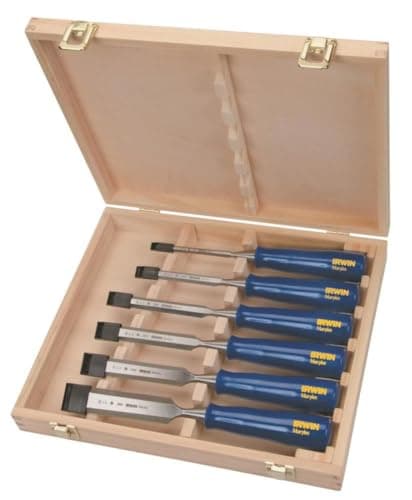
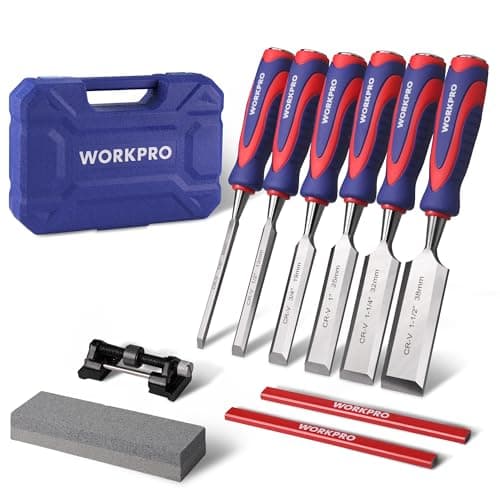
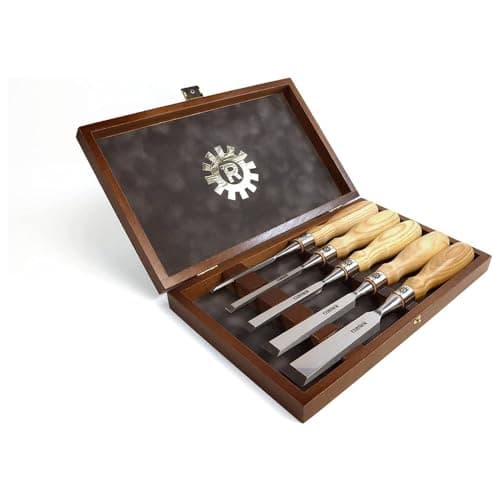
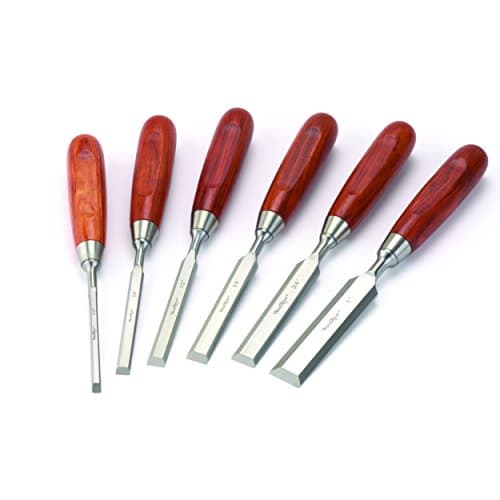
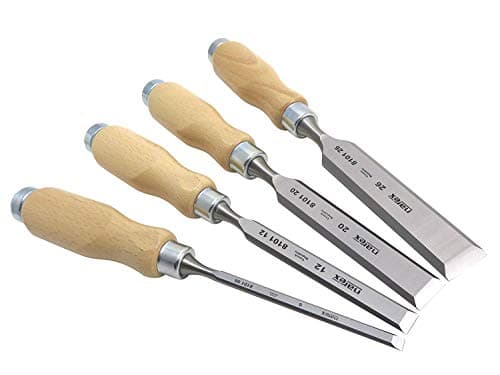
The most useful thing we can tell a first-time chisel buyer is that you need three chisels and a sharpening setup, not twelve chisels. A 1/4-inch, a 1/2-inch and a 3/4-inch or 1-inch bench chisel will cut every joint in your first two years of projects. The 1/8-inch and the 1 1/4-inch in a big boxed set will sit in the roll, unused, while the money they cost would have bought a stone that makes the other three cut twice as well.
The second thing: every chisel, at every price, arrives needing work. Cheap ones arrive blunt with an unflattened back; good ones arrive sharp-ish and still want honing. Nobody selling chisels leads with that, but it changes the shopping list, because a set at half the price plus a combination waterstone and a honing guide will out-cut a premium set you never learned to sharpen. Our sharpening guide is the companion to this page and honestly the more important read.
With that said, sets do differ in ways that matter to a beginner. Softer steel dulls faster, which means more sharpening sessions while you are still learning to sharpen — a real frustration tax. Thick, clumsy bevel sides will not fit into a dovetail socket. Handles that mushroom or split under a mallet turn a cheap set into a false economy. So we have ranked the field below with the beginner's question in mind: which set gets you cutting joints soonest without wasting money you will want later for a plane or a saw.
Our main chisel roundup ranks the same field on outright quality. This page ranks it on suitability for someone buying their first set — which produces a different order, because the best chisel and the best first chisel are not the same thing.
How to buy your first chisels
Buy three sizes, not a big set
A 1/2-inch chisel does most of the work in most shops: chopping waste, paring a tenon cheek, cleaning a shoulder. A 1/4-inch gets into dovetail sockets and narrow mortises. A 3/4-inch or 1-inch pares wide surfaces and levels a tenon fast. Everything else is a refinement. Most four- to six-piece sets include exactly these plus one or two extras, which is why a small set is usually better value than buying singles — but a ten- or twelve-piece set is nearly always paying for chisels you will not reach for.
Bench chisels first, specialist chisels never (yet)
Beginners are often sold mortise chisels, paring chisels or corner chisels alongside a bench set. Skip them. A bevel-edge bench chisel does a competent job of all three tasks at this stage, and by the time a specialist chisel would genuinely help, you will know exactly which one you want and why.
Split the budget with sharpening
If you have a fixed amount to spend, we would put roughly half of it into the chisels and half into a way to sharpen them — a 1000/6000 combination waterstone or a double-sided diamond plate, plus a honing guide while your freehand technique is unreliable. That split produces sharper chisels than spending all of it on steel. It is the single highest-return decision on this page.
Handles: what a mallet does to them
Beginner chisel work involves a mallet, and handles vary in how well they take it. Modern impact-resistant plastic handles (the Irwin Marples pattern is the archetype) shrug off a steel hammer and are essentially indestructible — genuinely the right answer for rough learning. Traditional wooden handles feel better in the hand and take a wooden mallet happily, but do not enjoy being struck with a metal hammer. Neither is wrong; just match your striking tool to your handles.
What the steel specs actually mean for you
Chisel makers quote a steel type — chrome-vanadium, high-carbon — and often a hardness figure in HRC. As a manufacturer claim, higher hardness generally means the edge lasts longer between honings but takes a little longer to bring back when it does dull, and it can be slightly more brittle if you lever with it. For a beginner, the practical translation is: harder steel means fewer trips to the stone, which is welcome while sharpening is still a chore. It is not worth paying a large premium for on a first set, because you will be sharpening often anyway as you learn.
High-carbon steel rusts if you leave it damp; stainless-ish alloys and coated chisels are more forgiving in a garage shop with swings in humidity. If your shop is unheated, a wipe of oil after use matters more than which set you bought.
Segmenting by budget
Lowest possible spend: a budget multi-piece set plus a cheap double-sided stone. You will sharpen more often and the chisels will not last a career, but you will learn the technique on tools you are not frightened of, and that is worth a great deal. If the hobby does not stick, you have lost very little.
Committed beginner: a good four- or five-piece set from a maker known for bench chisels, plus a 1000/6000 waterstone and a honing guide. This is the recommendation for most people reading this page — it is enough tool to never be the limiting factor, and cheap enough that a mistake is not painful.
Buy once: a premium set with harder steel and better out-of-box preparation. Worth it only if you already know you are staying, because the difference shows up in edge life and fit and finish, not in whether your first dovetail closes.
What a beginner should not buy
Skip the 12-piece bargain roll with a decorative wooden box: the extra sizes are filler and the steel in the cheapest of them dulls in minutes. Skip chisels sold as "wood carving sets" if what you want is joinery — carving gouges are a different tool for a different job. And skip any chisel sold without a way to sharpen it, unless you already own stones, because a chisel you cannot sharpen is a chisel that gets steadily worse from the day you buy it.
How we ranked these
We are a research site, not a test lab, and we say so on our methodology page. These rankings come from published manufacturer specifications (steel type, stated hardness, set contents, handle material), makers' own documentation, and the consistent patterns in owner feedback read at volume — weighted here for what matters to a first set rather than for outright quality. Every price on this page comes from the live price feed, not from a number we typed.
How many, and which widths
Two is a genuine answer for a first shop: a 1/4 in. and a 1/2 in. in decent steel will cut your first dozen projects, and they will do it with edges that stay sharp long enough to finish a cut. Add 3/4 in. and 1 in. the first time a job makes you want them. What size chisels do I need goes through what each width is for before you commit to a set size.