Here is the difference in one line: a jointer makes a board flat and straight, and a planer makes it an even thickness. They look alike and do opposite jobs. For most home shops the planer is the smarter first purchase — you can flatten a face with a hand plane, a sled or a router jig, but nothing else in a small shop brings rough stock to a consistent thickness the way a planer does. So we rank the planer first, not because it is the "better" machine, but because it is the more useful first buy.
The confusion is fair, because the machines look similar and both shave wood. The difference is what they reference. A jointer has a flat bed split over a spinning cutterhead; you push a board across it and it takes a flat, straight surface off whatever high spots touch first, giving you a true reference face and, turned on edge, a square edge. A planer holds the cutter above a flat bed and feeds the board through, cutting the top face exactly parallel to whatever is resting on the bed. That is the catch: a planer copies the bottom face, so it can make a board a perfectly even thickness but it cannot make a twisted board flat.
This is why the planer is usually the better first machine for a home shop. You have several cheap ways to create a flat reference face without a jointer — a hand plane, a router planing sled, or a shop-made planer sled that shims a board flat as it passes through — but there is no substitute for what a planer does, which is bring rough stock to a consistent thickness quickly. A jointer becomes worth it once you are milling rough lumber in volume and want that flat face fast. If you are deciding which planer to add, our benchtop planer roundup covers the models worth buying.
The short answer
#ad · Live prices from the Amazon Product API, as of Sep 19, 2026. Where we have no verified live price, we show none — we would rather leave a gap than print a number that has rotted.
In detail
Best overall
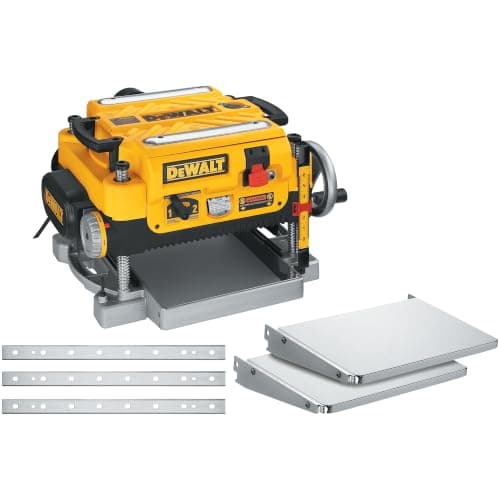
DeWalt DW735X 13-in Thickness Planer
13 in width2 speeds (96/179 CPI)3-knife headFan chip ejection
The benchtop planer standard. A three-knife head, two feed speeds and a real chip-ejection fan make it the cleanest-cutting unit in the class.
- Cut quality
- 9
- Snipe control
- 8
- Dust handling
- 9
- Noise
- 5
- Value
- 8
Pros
- +Two feed speeds let you trade speed for a finer finish on the last pass
- +Powered fan actually blows chips out — pairs beautifully with dust collection
- +The X kit adds infeed/outfeed tables and spare knives
Cons
- −Heavy and loud, like all benchtop planers
- −Straight knives cost more to replace than carbide inserts over time
Don't buy this if…
…figured or curly wood is your staple — a spiral/helical insert head tears out less on wild grain than any straight-knife planer.
Best value jointer
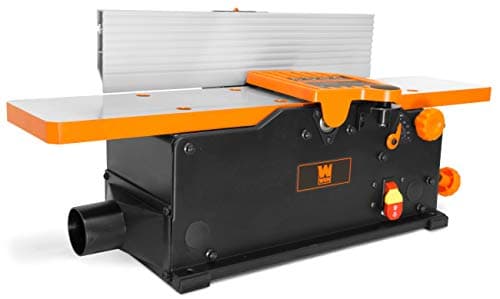
WEN JT630H 6-in Spiral Benchtop Jointer
6 in widthSpiral cutterhead10 ABenchtop
The cheapest way to flatten a face and straighten an edge with a spiral head. A benchtop jointer that makes rough lumber usable in a small shop.
- Cut quality
- 7
- Bed length
- 5
- Footprint
- 8
- Build
- 7
- Value
- 9
Pros
- +Spiral insert head cuts cleaner than straight knives on figured stock
- +Benchtop size fits a small shop and stores away
- +A real jointer function for well under the price of a floor unit
Cons
- −Short beds limit how long a board you can flatten well
- −6-inch width won't face-joint wide boards
Don't buy this if…
…you work mostly with wide boards or long stock — a longer-bed floor jointer handles those far better.
Jointer vs planer: what each one does
Milling rough lumber flat, square and to thickness normally takes both machines in sequence — joint a face, joint an edge, then plane the opposite face parallel and rip to width. But most first shops buy them one at a time, so it helps to be clear on exactly what each tool can and cannot do before you spend.
What a jointer does
A jointer flattens one face of a board and straightens one edge, creating the true, flat reference surface every other operation depends on. It cannot bring a board to a target thickness, because it references only the surface you are cutting — run a board through twice and both faces are flat but not necessarily parallel. Benchtop jointers like the WEN JT630H are limited by width and by short beds, so they flatten narrow, shorter stock well and struggle with wide or long boards.
What a planer does
A planer takes a board that already has one flat face and cuts the opposite face parallel to it, bringing the whole board to an even thickness pass after pass. It is the fastest way to dimension stock and to take a stack of boards to exactly the same thickness. What it cannot do is flatten — feed in a twisted board and you get a thinner twisted board, because the machine faithfully copies whatever face is riding on the bed.
Which should you buy first?
For most home shops, buy the planer first. You can create a flat reference face several ways without a jointer — a hand plane, or a planer sled that shims the board flat as it feeds through — but only a planer thicknesses stock efficiently. Add a jointer later, once you are milling enough rough lumber that flattening by hand or sled is the bottleneck. If you are assembling a first shop from scratch, our essential woodworking tools guide puts both machines in context.
How we picked
We do not run a testing lab
We researched published manufacturer specifications, manuals and spec sheets, ran the arithmetic those specs support, and read owner reviews at volume, then scored each tool against a published rubric. The scores are judgments from documented research — they are not measurements we took, because we do not have a lab and we are not going to pretend we do. Where a number came from a manufacturer's document, we name it and link it in Sources.
Questions
Do I need a jointer if I have a planer?+
Not necessarily. A planer thicknesses stock but references the bottom face, so you first need a flat face — which you can get from a hand plane, a planer sled, or a table-saw-and-router routine without owning a jointer. A jointer just makes that flat reference face faster, so it is an upgrade for volume milling rather than a strict requirement.
Jointer or planer first?+
For most home shops, buy the planer first. Nothing else in a small shop brings rough lumber to a consistent thickness the way a planer does, whereas you can flatten a face several other ways. Add a jointer later, once you are milling enough rough stock that flattening by hand or sled becomes the bottleneck.
What's the difference between a jointer and a planer?+
A jointer flattens a face and straightens an edge to create a true reference surface; a planer takes a board with one flat face and cuts the opposite face parallel to bring it to an even thickness. In short, a jointer makes wood flat and straight, and a planer makes it a uniform thickness. They do opposite, complementary jobs.
Can you use a planer as a jointer?+
Not on its own, because a planer copies the bottom face and leaves any twist or cup in place. You can get a jointer-like result by building a planer sled that shims and holds a board flat as it feeds through, which flattens the top face; flip it and plane normally after that. It is slower than a jointer but works well in a small shop.
Receipts
We do not run a testing lab, and we do not pretend to. Our picks come from published manufacturer specifications and manuals, the arithmetic those specs support, and owner reviews read at volume. Where we could not verify something, we say so on the page rather than quietly leaving it out. Read our full method.