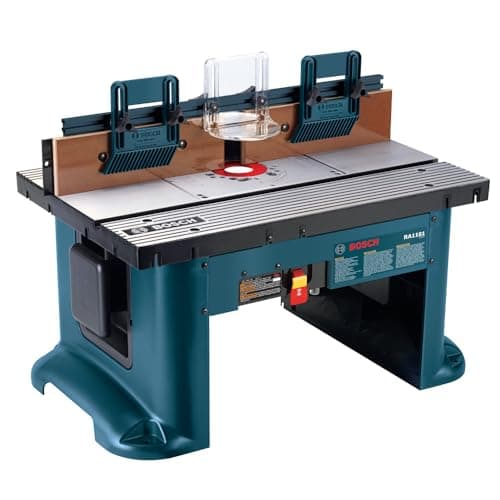
Mounting a router upside down under a table changes what it can do more than any bit you could buy. Small parts become safe, repeat cuts become identical, and profiles you cannot steer freehand become routine. A router table is the cheapest large capability upgrade in a woodworking shop.
Three things decide whether a router table is a pleasure or a fight. The top must be flat, because a dished top makes the bit height vary across the cut. The fence must stay parallel and adjust finely, because a router table fence is the depth-of-cut control for most operations. And the dust port must be above and behind the bit, because a router table generates chips faster than almost anything else in the shop and there is nowhere for them to go but up.
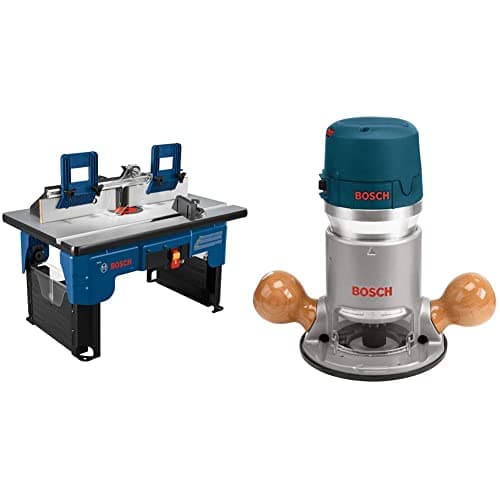
Everything else — the number of accessories in the box, the miter slot, the bit storage — is secondary. Which is why the Bosch RA1181 leads this list: an aluminum top that stays flat, a two-piece adjustable fence that closes down near the bit, and the featherboards and guard included rather than upsold.
A note about routers. A router table wants a bigger router than handheld work does — ideally a fixed-base motor with 2 HP or more and above-table height adjustment. Trim routers can be mounted and will handle small profiles, but they lack the mass and the collet capacity for large bits. Our router roundup covers which model suits which job; the short version is that a big fixed base lives in the table and a compact router lives in your hand.
Finally, the honest note about lifts. A router lift is a precision mechanism that raises and lowers the router from above the table, and it is genuinely lovely. It also costs as much as most of the tables here. It is an upgrade for someone who already routes constantly, not a first purchase — and none of the tables in this roundup requires one to be useful.
And if the phrase “small shaper” has you wondering about the real thing: a shaper runs bigger cutters on a heavier spindle, driven by an induction motor built for a full day's work, and it costs several times what any table here does. We rank the machines and set out who genuinely needs one in the best wood shapers— the short version being that for most home shops the answer is the table, not the shaper.
How to judge a router table
Top flatness and insert plate fit
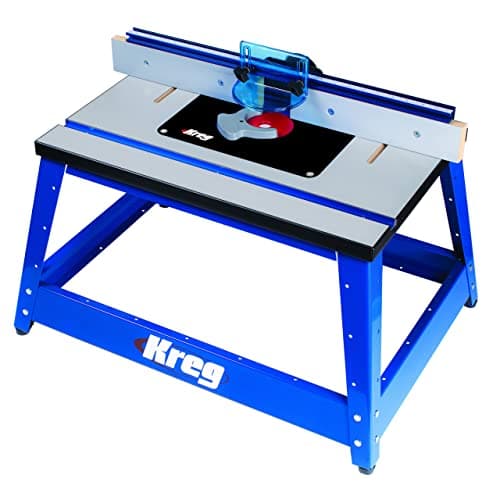
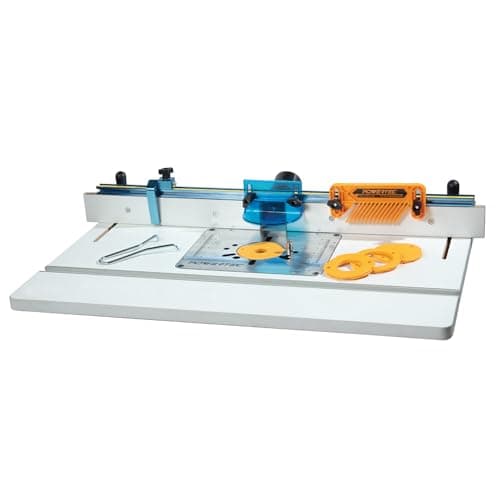
The top has to be flat and the insert plate has to sit exactly flush with it. A plate sitting a hair proud catches the workpiece; a plate sitting low lets it dip as it passes. Leveling screws around the plate are what make this fixable rather than permanent, and their presence or absence is a genuine buying criterion. Aluminum tops (Bosch) hold flat regardless of humidity; laminated MDF tops (POWERTEC, Kreg) are flat when new and want a dry shop.
The fence is the tool
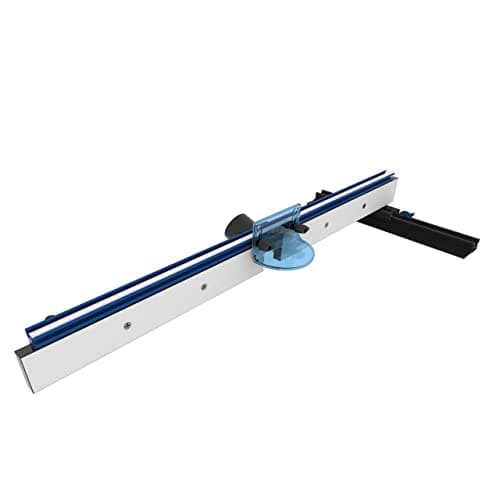
A router table fence does two jobs: it sets the depth of cut for edge work, and it supports the workpiece on both sides of the bit. That is why two-piece fences that close in around the bit matter — the gap either side of the bit is where a narrow workpiece dives in and ruins the cut. Micro-adjustment is the other half: moving a fence 1/64 inch by tapping it is a skill; doing it with a knob is a feature. The Kreg fences are the best here on both counts.
Dust capture, above and below
A router table needs two collection points to work properly: a port on the fence, which catches most of the chips from edge work, and a port in the enclosure under the table, which catches what falls. Tables with an enclosed cabinet do far better than open frames. Connect both to a shop vac and a router table becomes one of the cleanest machines in the shop; leave them and it becomes the dirtiest.
Benchtop or full-size?
A benchtop table clamps to a bench, stores on a shelf and covers everything a home shop routinely does — edge profiles, rabbets, dados, small joinery. A full-size system with its own stand adds support length for long stock, a heavier top and room for a lift. If your parts are furniture-scale and your shop is a garage, benchtop is the right answer and the money saved buys bits. If you are routing 8-foot moldings, you want the length.
Bits: where the money actually goes
Buy 1/2-inch shank bits wherever the option exists. A 1/2-inch shank is four times stiffer in bending than a 1/4-inch shank of the same length, which means less chatter, less deflection and a genuinely better cut. Start with a straight bit, a round-over, a rabbeting bit and a flush-trim bit — that set covers the great majority of table work, and it will cost about what a mid-price table does.
By shop and budget
No router yet: the Bosch RA1141 kit, which arrives as a working table and router in one box. Router in hand, want the best value table: the Bosch RA1181. Fence precision is what you are buying: the Kreg PRS2100. Long stock and a big top: the POWERTEC 72374. Building a permanent router station: the Kreg PRS1015 fence on a full-size top.
What we could not verify
We have not measured top flatness or fence deflection on these five. Dimensions, materials and included accessories above are the manufacturers' published specifications. The rest is design reasoning — two-piece fences, enclosed dust boxes and leveling screws are documented features, not judgments — plus owner reviews read at volume.