Skip to content
Dovetail & Dust

HUB 03 · Dust Collection

The Best Dust Collection Hose and Fittings

The unglamorous half of dust collection, and the half that decides how much airflow actually reaches your tool.

By Stephen V.Updated How we research
#ad

We earn a commission when you buy through our Amazon links, at no extra cost to you. It never changes our rankings, and we say so when the cheaper tool is the better buy. How this works.

Your collector delivers what the hose lets it deliver. A long, narrow, ribbed run will strangle a machine that performed perfectly on a two-foot test hose. Hose and fittings are not accessories to a dust collection system — they are half of it, and they are where most of the disappointment in this category originates.

Two numbers decide almost everything. Diameter: resistance to airflow rises very steeply as a pipe narrows, so a 4-inch run and a 2-1/2-inch run are not slightly different, they are enormously different. Length and shape: every foot of ribbed flex, and every elbow, subtracts. The reasoning is worked through in our ducting guide.

From that, the shopping list follows. Chip-producing machines — planer, jointer, table saw, bandsaw — want 4-inch hose and the shortest flex tail you can live with. Hand-held tools on a shop vac want 2 to 2-1/2-inch, because a vac is a high-suction, low-volume machine and a big hose kills its velocity. Do not run one system into the other and expect either to behave.

Then there are the parts that make a shared collector usable: blast gates, so only the machine you are using is open; adapters, because tool makers use wildly inconsistent port sizes; and quick-connects, if moving one hose between machines is the thing stopping you from connecting the collector at all.

The short answer

Quick picks

#ProductBest forScorePrice
01
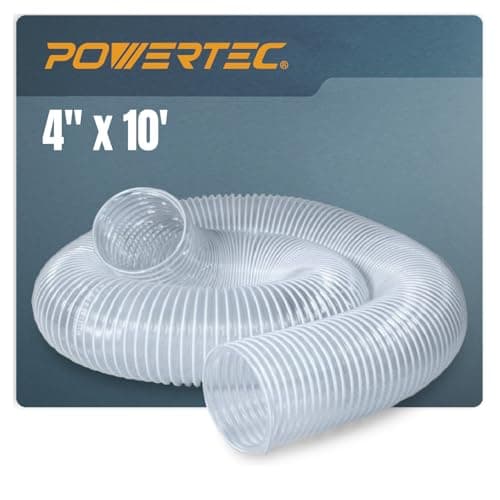
POWERTEC POWERTEC 4-in × 10-ft Dust Collection Hose
POWERTEC 4-in × 10-ft Dust Collection Hose

The standard 4-inch flexible tail. Ten feet is the right length for a machine drop — long enough to reach, short enough not to waste airflow.

Best 4-in hose
8.4
$30.99Amazon
02
Big Horn Big Horn 11436 Aluminum Blast Gate (4 in)
Big Horn 11436 Aluminum Blast Gate (4 in)

The metal gate for a permanent duct. It seals better than plastic, does not flex, and can be mounted and forgotten for a decade.

Best for permanent ducting
8.8
$14.26Amazon
03
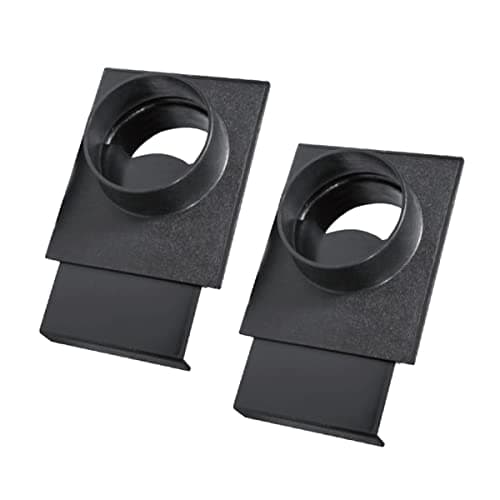
POWERTEC POWERTEC 70108-P2 4-in Blast Gates (2-pack)
POWERTEC 70108-P2 4-in Blast Gates (2-pack)

One gate per drop is what makes a single-stage collector work. This is the cheap plastic pair that gets most shops there.

Best value gates
7.8
$16.99Amazon
04
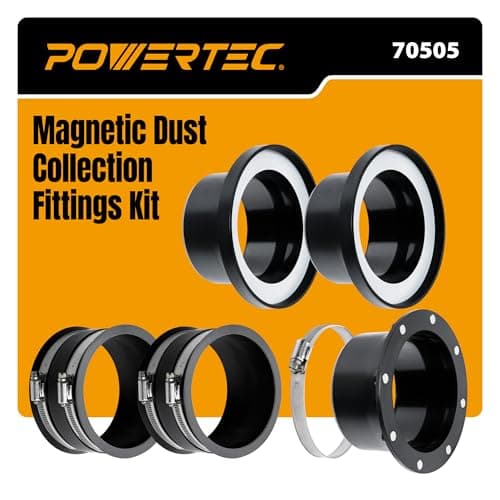
POWERTEC POWERTEC 4-in Magnetic Dust Fitting Starter Kit (2 machines)
POWERTEC 4-in Magnetic Dust Fitting Starter Kit (2 machines)

Magnetic couplers so you can move one hose between two machines in a second. The fix for the shop that only has one collector and three tools.

Best quick-connect
8.2
$54.99Amazon
05
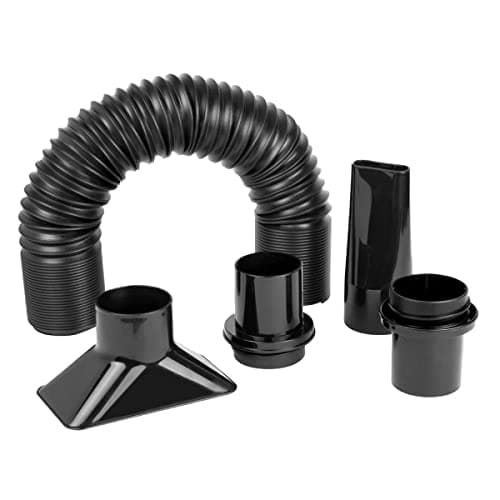
POWERTEC POWERTEC 70208V 2-1/4-in Hose Kit (shop vac)
POWERTEC 70208V 2-1/4-in Hose Kit (shop vac)

The small-port side of the system. A 2-1/4-inch hose kit that connects a shop vac to the sanders, routers and track saws a 4-inch line is wasted on.

Best for hand tools
8.4
$24.99Amazon

#ad · Live prices from the Amazon Product API, as of Sep 1, 2026. Where we have no verified live price, we show none — we would rather leave a gap than print a number that has rotted.

In detail

The picks, in full

01
POWERTEC POWERTEC 4-in × 10-ft Dust Collection Hose

Best 4-in hose

POWERTEC 4-in × 10-ft Dust Collection Hose

4 in diameter10 ft lengthFlexible PVCClear wall
8.4/10

The standard 4-inch flexible tail. Ten feet is the right length for a machine drop — long enough to reach, short enough not to waste airflow.

Airflow
8
Durability
8
Flexibility
9
Fit
8
Value
9

Pros

  • Full 4-inch bore is what a planer, jointer or table saw actually needs to clear chips
  • Clear wall lets you see a blockage instead of guessing where it is
  • Ten-foot length discourages the twenty-foot flex runs that strangle collectors

Cons

  • Ribbed flex has far more internal drag than smooth rigid pipe — keep the run short
  • Needs clamps and fittings, which are not included

Don't buy this if…

you are ducting a whole shop. Use rigid pipe for the mains and keep flex for the last few feet.

$30.99View on Amazon

Price as of Sep 1, 2026. Prices change — Amazon's is the one that counts.

#ad · we may earn a commission from this link to POWERTEC 4-in × 10-ft Dust Collection Hose

02
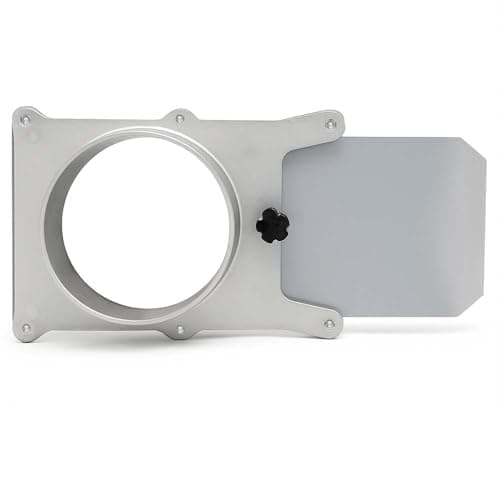
Big Horn Big Horn 11436 Aluminum Blast Gate (4 in)

Best for permanent ducting

Big Horn 11436 Aluminum Blast Gate (4 in)

4 in portCast aluminumMounting holesMachined slide
8.8/10

The metal gate for a permanent duct. It seals better than plastic, does not flex, and can be mounted and forgotten for a decade.

Sealing
9
Durability
10
Ease of use
8
Fit
9
Value
8

Pros

  • Rigid body means the gate stays square and seals against the duct properly
  • Mounting holes let it be screwed to a wall or machine rather than hung on the hose
  • Will outlast several plastic gates in the same position

Cons

  • Costs more per gate, which adds up across a whole shop
  • Heavier, so it needs supporting rather than hanging in a flex run

Don't buy this if…

you are gating a temporary bench setup. Plastic gates are lighter and cheaper for that.

$14.26View on Amazon

$14.975% off

Price as of Sep 1, 2026. Prices change — Amazon's is the one that counts.

#ad · we may earn a commission from this link to Big Horn 11436 Aluminum Blast Gate (4 in)

03
POWERTEC POWERTEC 70108-P2 4-in Blast Gates (2-pack)

Best value gates

POWERTEC 70108-P2 4-in Blast Gates (2-pack)

4 in port2 per packSelf-cleaning slotABS body
7.8/10

One gate per drop is what makes a single-stage collector work. This is the cheap plastic pair that gets most shops there.

Sealing
7
Durability
6
Ease of use
8
Fit
8
Value
10

Pros

  • Cheap enough to fit a gate at every drop, which is the whole point
  • Open-bottom slot design lets trapped dust fall out instead of jamming the slide
  • Light — they hang off a hose without needing their own support

Cons

  • Plastic gates flex under a firm push and will not last like aluminum
  • The slide can still stick if the shop is dusty and the gate is neglected

Don't buy this if…

the gate is going in a permanent duct you will never want to service. Fit metal there.

$16.99View on Amazon

Price as of Sep 1, 2026. Prices change — Amazon's is the one that counts.

#ad · we may earn a commission from this link to POWERTEC 70108-P2 4-in Blast Gates (2-pack)

04
POWERTEC POWERTEC 4-in Magnetic Dust Fitting Starter Kit (2 machines)

Best quick-connect

POWERTEC 4-in Magnetic Dust Fitting Starter Kit (2 machines)

4 in fittingsMagnetic couplers2-machine setIncludes adapters
8.2/10

Magnetic couplers so you can move one hose between two machines in a second. The fix for the shop that only has one collector and three tools.

Sealing
7
Durability
8
Ease of use
10
Fit
9
Value
7

Pros

  • Swapping the hose stops being a chore, which means you actually connect the collector every time
  • No clamps to loosen and re-tighten, so nothing gets cross-threaded or lost
  • Sized for full 4-inch ducting rather than the vac-hose fittings most kits use

Cons

  • Costs several times a handful of plain fittings and hose clamps
  • A magnetic joint is not as airtight as a clamped one — expect a small leak

Don't buy this if…

each machine already has its own gated drop. Quick-connects solve a problem you do not have.

$54.99View on Amazon

Price as of Sep 1, 2026. Prices change — Amazon's is the one that counts.

#ad · we may earn a commission from this link to POWERTEC 4-in Magnetic Dust Fitting Starter Kit (2 machines)

05
POWERTEC POWERTEC 70208V 2-1/4-in Hose Kit (shop vac)

Best for hand tools

POWERTEC 70208V 2-1/4-in Hose Kit (shop vac)

2-1/4 in diameterFlexible hoseAdapters includedShop-vac fit
8.4/10

The small-port side of the system. A 2-1/4-inch hose kit that connects a shop vac to the sanders, routers and track saws a 4-inch line is wasted on.

Airflow
7
Durability
8
Flexibility
9
Fit
9
Value
9

Pros

  • The right diameter for hand-tool ports, where a big hose kills the vac's suction
  • Adapters cover the mismatched port sizes tool makers insist on using
  • Light and manageable, which matters on a hose you drag around a bench

Cons

  • Far too small for a planer, jointer or table saw — do not use it as a collector line
  • Small hoses clog on shavings rather than dust

Don't buy this if…

your machines are chip producers. This diameter is for hand tools on a vac, nothing more.

$24.99View on Amazon

Price as of Sep 1, 2026. Prices change — Amazon's is the one that counts.

#ad · we may earn a commission from this link to POWERTEC 70208V 2-1/4-in Hose Kit (shop vac)

Choosing hose and fittings

Get the diameter right first

Four inches for machines that throw chips; 2 to 2-1/2 inches for hand tools on a vac. If a machine has a smaller port than 4 inches but produces real chips — some benchtop planers do — connect it with the largest hose it will take and keep the run short, because that port is already the bottleneck.

Flex hose is for the last few feet

Corrugated flex has ribs on the inside and every rib disturbs the flow, so a long flex run has far more drag than smooth rigid pipe of the same diameter. Use rigid pipe for the permanent runs along a wall and keep flex for the machine tail, where you need the movement. Ten feet of flex is a generous tail; twenty feet is a mistake.

Blast gates: plastic or metal

Plastic gates are cheap enough to fit one at every drop, which matters more than any individual gate's quality — a system with gates everywhere beats a system with two good gates and four open branches. Metal gates seal better and survive being knocked, so they belong in permanent ducting and at the machines you use daily. Either way, look for a self-clearing slot design, because a gate packed with dust will not close fully and a gate that does not close is a permanent leak.

Adapters and the port-size problem

Tool manufacturers use an extraordinary range of port sizes, several of which fit nothing else on earth. A small kit of stepped adapters and a roll of good tape solves more dust-collection problems than any single purchase. Where a tool port is genuinely odd, a tapered universal adapter cut to fit is the standard fix and is not cheating.

Clamps and seals

Every joint leaks a little, and leaks upstream of a machine steal suction from it. Hose clamps at every connection, and a wrap of tape on the joints you do not open, is a five-minute job that measurably improves the system. Quick-connect fittings trade a small permanent leak for convenience, which is usually a good trade if it means you connect the collector every time.

Building it in the right order

Start at the machine that makes the most mess and work back. Give that machine a proper 4-inch tail and a gate. Add the second machine when you can, on a wye rather than a tee. Only then consider a full rigid main line — most small shops get 80 per cent of the benefit from two good drops and a separator, and a permanent duct network is a project to be planned once rather than improvised twice. Our garage layout guide covers where the collector should sit before you start gluing pipe.

Segmenting by shop and budget

Vac-only shop: a 2-1/2-inch hose kit with adapters, plus a cyclone separator. That is a complete, genuinely effective system for hand tools.

One collector, one machine: a 4-inch flex tail, a clamp at each end, and nothing else. Do not over-buy fittings you have no branch for.

Two or three machines: gates at every drop, a wye or two, and either quick connects or a second hose. This is the point at which gates stop being optional.

Permanent installation: rigid pipe main line, metal gates, short flex tails. Buy the gates once and mount them where you can reach them.

How we ranked these

From published manufacturer specifications (diameter, length, material, port compatibility) and the pattern in owner feedback read at volume. We have not measured airflow through any of these components — we do not run a lab, per our methodology page— and the general relationships described here are standard fluid behavior, consistent with what dust collection manufacturers publish. Prices are live from the price feed.
How we picked

We do not run a testing lab

We researched published manufacturer specifications, manuals and spec sheets, ran the arithmetic those specs support, and read owner reviews at volume, then scored each tool against a published rubric. The scores are judgments from documented research — they are not measurements we took, because we do not have a lab and we are not going to pretend we do. Where a number came from a manufacturer's document, we name it and link it in Sources.

Questions

Frequently asked

What size dust collection hose should I use?
Four inches for machines that produce chips — planers, jointers, table saws, bandsaws — because resistance rises sharply as a pipe narrows. Two to 2-1/2 inches for hand-held tools on a shop vac, which is designed for high suction through a small port.
Is flexible hose bad for dust collection?
Not bad, but costly over distance. Corrugated flex has far more internal drag than smooth rigid pipe, so a long flex run wastes airflow. Use it for the last few feet at the machine, where you need movement, and rigid pipe for the permanent runs.
Do I need blast gates for each machine?
If more than one machine is connected, yes. A single-stage collector serves one tool at a time, and an open branch elsewhere splits the airflow so nothing gets enough. Fit a gate at every drop and open only the one you are using.
How do I connect a tool with an odd-sized dust port?
A stepped or tapered universal adapter, trimmed to fit, plus a hose clamp and tape on the joint. Tool makers use inconsistent port sizes, so a small kit of adapters is one of the more useful things to keep in a dust collection drawer.

Keep reading

Receipts

Sources

We do not run a testing lab, and we do not pretend to. Our picks come from published manufacturer specifications and manuals, the arithmetic those specs support, and owner reviews read at volume. Where we could not verify something, we say so on the page rather than quietly leaving it out. Read our full method.