Skip to content
Dovetail & Dust

HUB 03 · Dust Collection

The Best Cyclone Dust Separators

The cheapest upgrade in dust collection: a separator that drops the chips into a bin before they ever reach your filter.

By Stephen V.Updated How we research
#ad

We earn a commission when you buy through our Amazon links, at no extra cost to you. It never changes our rankings, and we say so when the cheaper tool is the better buy. How this works.

A cyclone separator does not make your vacuum more powerful. It stops your vacuum getting weaker — which, over a session, amounts to the same thing. Debris spins around the cone, loses speed, and falls into a bin. Only the finest dust carries on to the machine, so the filter stays clean instead of loading up and steadily throttling everything.

That is the whole case, and it is stronger than it sounds. A shop vac with a clean filter and a vac with a half-loaded filter behave like different machines. Anyone who has cleaned a filter mid-project and noticed the suction return knows the feeling; a separator means you never have to. It also means far fewer filter replacements, which is where a cheap separator pays for itself.

There are two scales of separator and they are not interchangeable. Vac-scale units use 2 to 2-1/2-inch ports and sit on a bucket, serving a shop vac. Collector-scale cyclones use 4 to 6-inch ports and go in front of a real dust collector, turning a single-stage machine into a two-stage one. Fitting a vac-scale cyclone to a collector throttles it badly; fitting a collector-scale one to a vac wastes your money.

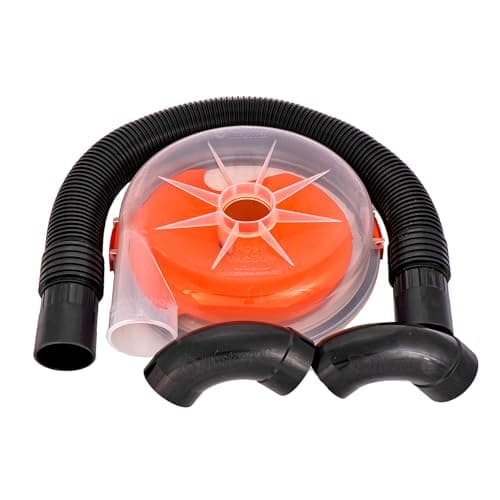
Within vac scale there is a further split: lid-only designs that you drop onto a bucket you supply, and complete kits with the cyclone, bucket, hoses and fittings in the box. Lid-only is cheaper and assumes you have a sound bucket; a thin one will deform under strong suction, which is the usual complaint. Kits cost more and remove all the guesswork about which fitting connects to what.

The short answer

Quick picks

#ProductBest forScorePrice
01
Oneida Air Systems Oneida Dust Deputy Low-Pro Deluxe Separator Kit (5 gal)
Oneida Dust Deputy Low-Pro Deluxe Separator Kit (5 gal)

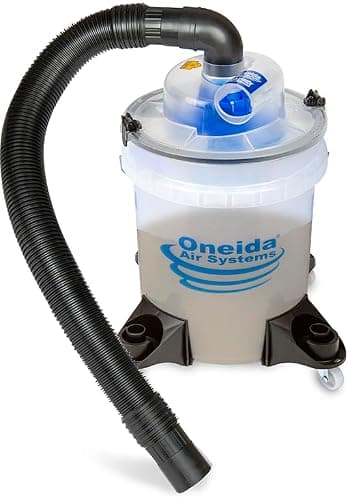
The complete kit from the company that made cyclone separators a home-shop item — lid, bucket and hoses, in a low profile that fits under a bench.

Best overall
8.6
$134.95Amazon
02
POWERTEC POWERTEC 70293 Cyclone Separator Kit (6 gal)
POWERTEC 70293 Cyclone Separator Kit (6 gal)

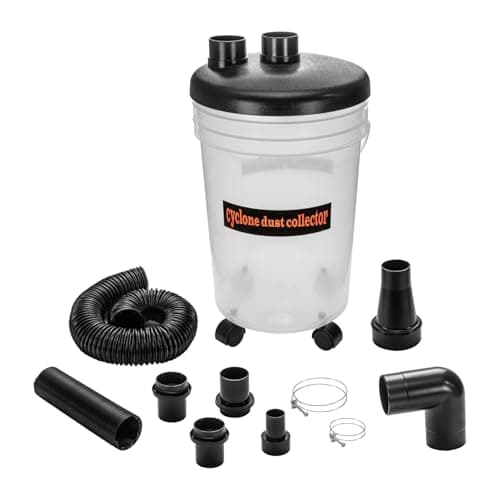
Everything in one box: cyclone, clear 6-gallon bucket, hoses and reducers. The kit to buy if you do not want to work out which fitting goes where.

Best complete kit
8.8
$86.99Amazon
03
Dustopper Dustopper PRO Low-Profile Dust Separator
Dustopper PRO Low-Profile Dust Separator

The cheap one that works. A low-profile cyclone lid that drops onto a bucket you probably already own and captures the bulk of the debris.

Best value
8.0
$66.98Amazon
04
WEN WEN DCA021 Cyclone Separator Lid (12 in)
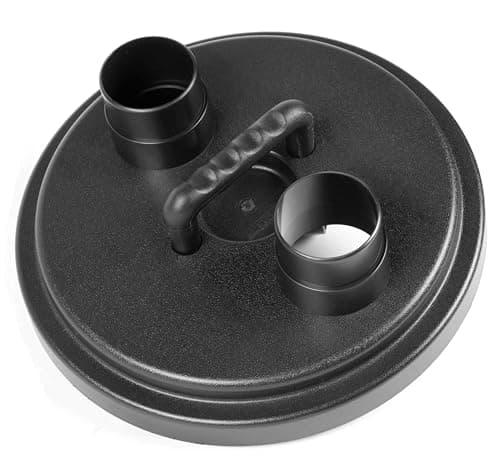
WEN DCA021 Cyclone Separator Lid (12 in)

A lid, a cyclone and nothing else, for about the price of a decent hose. The cheapest possible way to stop killing shop vac filters.

Best budget
7.4
$21.86Amazon
05
Oneida Air Systems Oneida Super Dust Deputy XL Cyclone (6 in)
Oneida Super Dust Deputy XL Cyclone (6 in)

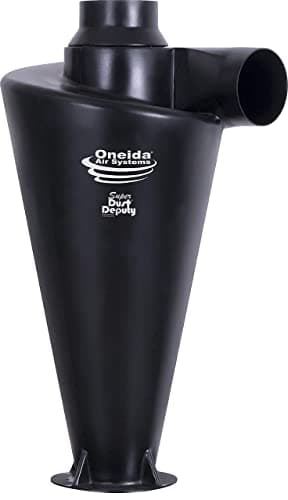
The one that goes in front of a real dust collector, not a vac. A 6-inch cyclone body sized for 3 to 5 HP single-stage machines and DIY conversions.

Best for a dust collector
9.0
$239.95Amazon

#ad · Live prices from the Amazon Product API, as of Sep 1, 2026. Where we have no verified live price, we show none — we would rather leave a gap than print a number that has rotted.

In detail

The picks, in full

01
Oneida Air Systems Oneida Dust Deputy Low-Pro Deluxe Separator Kit (5 gal)

Best overall

Oneida Dust Deputy Low-Pro Deluxe Separator Kit (5 gal)

5 gal collection bucketLow-profile cycloneHoses includedFor shop vacs
8.6/10

The complete kit from the company that made cyclone separators a home-shop item — lid, bucket and hoses, in a low profile that fits under a bench.

Separation
10
Filter protection
10
Capacity
7
Build
9
Value
7

Pros

  • Drops the great majority of chips and dust into the bucket before they ever reach the vac filter
  • Low-profile design fits where the tall cyclones will not — under a bench, beside a cabinet
  • Complete kit: no separate hose, fitting and bucket order to work out

Cons

  • Costs more than the vac it will be attached to on a budget setup
  • A 5-gallon bucket fills fast when planing or thicknessing

Don't buy this if…

you want a separator for a full dust collector. This is sized for a shop vac.

$134.95View on Amazon

Price as of Sep 1, 2026. Prices change — Amazon's is the one that counts.

#ad · we may earn a commission from this link to Oneida Dust Deputy Low-Pro Deluxe Separator Kit (5 gal)

02
POWERTEC POWERTEC 70293 Cyclone Separator Kit (6 gal)

Best complete kit

POWERTEC 70293 Cyclone Separator Kit (6 gal)

6 gal clear bucketCyclone separatorHoses + reducersCasters
8.8/10

Everything in one box: cyclone, clear 6-gallon bucket, hoses and reducers. The kit to buy if you do not want to work out which fitting goes where.

Separation
9
Filter protection
9
Capacity
9
Build
8
Value
9

Pros

  • Clear bucket means you can see the fill level instead of discovering it the hard way
  • Reducers included, so it connects to the mixed hose sizes a real shop actually has
  • Bigger bucket than most vac-scale kits, so fewer interruptions

Cons

  • Taller assembly than the low-profile designs — it needs floor space beside the vac
  • Supplied hose is the usual ribbed flex, which is a restriction on a long run

Don't buy this if…

space under the bench is the whole reason you are buying a separator. Buy a low-profile one.

$86.99View on Amazon

Price as of Sep 1, 2026. Prices change — Amazon's is the one that counts.

#ad · we may earn a commission from this link to POWERTEC 70293 Cyclone Separator Kit (6 gal)

03
Dustopper Dustopper PRO Low-Profile Dust Separator

Best value

Dustopper PRO Low-Profile Dust Separator

Low profileFits standard bucketsFor 5 HP+ shop vacsFilter included
8.0/10

The cheap one that works. A low-profile cyclone lid that drops onto a bucket you probably already own and captures the bulk of the debris.

Separation
8
Filter protection
8
Capacity
7
Build
7
Value
10

Pros

  • Costs a fraction of the full kits and does the same essential job
  • Very low profile, so the assembly still fits under a workbench
  • Uses a bucket you already have rather than shipping you another one

Cons

  • Not quite the separation efficiency of the taller, better-shaped cyclones
  • Bucket quality is now your problem — a flimsy one can collapse under suction

Don't buy this if…

you are cutting MDF constantly. Spend up for the more efficient cyclone and protect the filter properly.

$66.98View on Amazon

Price as of Sep 1, 2026. Prices change — Amazon's is the one that counts.

#ad · we may earn a commission from this link to Dustopper PRO Low-Profile Dust Separator

04
WEN WEN DCA021 Cyclone Separator Lid (12 in)

Best budget

WEN DCA021 Cyclone Separator Lid (12 in)

12 in lid2-1/2 in portsCyclone styleFits standard buckets
7.4/10

A lid, a cyclone and nothing else, for about the price of a decent hose. The cheapest possible way to stop killing shop vac filters.

Separation
7
Filter protection
7
Capacity
7
Build
6
Value
10

Pros

  • So cheap that not owning one is hard to justify if you use a shop vac at all
  • Standard 2-1/2-inch ports match most vac hoses without adapters
  • Nothing to go wrong — it is a molded lid with no moving parts

Cons

  • Separation is decent rather than excellent; fine dust still reaches the filter
  • You supply the bucket, and a thin one will deform under strong suction

Don't buy this if…

you make a lot of very fine dust. A better cyclone protects the filter properly and pays for itself in filters.

$21.86View on Amazon

Price as of Sep 1, 2026. Prices change — Amazon's is the one that counts.

#ad · we may earn a commission from this link to WEN DCA021 Cyclone Separator Lid (12 in)

05
Oneida Air Systems Oneida Super Dust Deputy XL Cyclone (6 in)

Best for a dust collector

Oneida Super Dust Deputy XL Cyclone (6 in)

6 in inlet/outletFor 3–5 HP collectorsMolded bodyDIY conversion
9.0/10

The one that goes in front of a real dust collector, not a vac. A 6-inch cyclone body sized for 3 to 5 HP single-stage machines and DIY conversions.

Separation
10
Filter protection
10
Capacity
10
Build
9
Value
6

Pros

  • Turns a single-stage collector into a two-stage one, which is the real fix for filter loading
  • Sized for full-size ducting rather than vac hose, so it does not throttle the system
  • Light molded body is far easier to mount overhead than a steel cyclone

Cons

  • Needs a mount, a drum and ducting that you supply and build
  • Considerably more expensive than the vac-scale separators

Don't buy this if…

your dust collection is a shop vac. This is oversized and you would be throttling it with adapters.

$239.95View on Amazon

Price as of Sep 1, 2026. Prices change — Amazon's is the one that counts.

#ad · we may earn a commission from this link to Oneida Super Dust Deputy XL Cyclone (6 in)

How to choose a separator

Match the scale to the machine

Look at the port size on your dust machine. A shop vac has 1-7/8 to 2-1/2-inch ports and wants a vac-scale cyclone. A dust collector has a 4-inch or larger inlet and wants a collector-scale cyclone with matching ports. Adapters that step a 4-inch collector down to a 2-1/2-inch cyclone will cost you most of the airflow the collector was bought for — the reasoning is in our ducting guide.

Height matters in a small shop

A cyclone on a bucket is a tall assembly, and taller cones generally separate better. Low-profile designs trade a little efficiency for the ability to fit under a bench or beside a cabinet. If the assembly cannot live where you need it, its efficiency is academic — measure the space before you buy.

Bucket capacity and visibility

A 5-gallon bucket fills faster than you expect when planing or thicknessing. Bigger is better if you have the room, and a clear bucket is genuinely useful because you can see the level instead of discovering it when the cyclone starts passing debris through. An overfull separator stops separating.

Seals and static

The lid must seal to the bucket or the cyclone loses its swirl and passes debris straight through. Check the gasket arrangement and, on a lid-only design, that your bucket's rim actually matches. Static is the other nuisance: dry dust through plastic builds a charge that shocks you and makes fine dust cling to the walls. Some kits include an anti-static provision; otherwise a bare wire run along the hose and grounded solves it cheaply.

What a separator does not do

It does not replace a filter. Fine dust — the particles small enough to reach your lungs and stay airborne for hours — is exactly what a cyclone is worst at capturing, because it is too light to be flung out of the airstream. That fraction still reaches your machine's filter, which is why filter quality still matters and why an ambient air filter and a respirator are still part of the setup.

It also does not add suction. It adds a small amount of resistance of its own. The reason it is worth having anyway is that the resistance it adds is constant, while the resistance of a loading filter grows without limit.

Segmenting by shop and budget

Cheapest useful upgrade: a cyclone lid on a bucket you already own. It costs about the same as a couple of replacement filters and saves you many more than that.

Small shop, shop vac based: a complete low-profile kit. Everything fits, it tucks under a bench, and there is no adapter puzzle.

Machine shop with a collector: a collector-scale cyclone in front of a single-stage collector, mounted over a drum. This is the setup that stops filter cleaning being a weekly job.

Heavy MDF or sanding work: prioritize separation efficiency over price. The finer your dust, the more the filter needs protecting.

How we ranked these

From published manufacturer specifications (port sizes, bucket capacity, cyclone dimensions, rated machine size), the makers' documentation and the pattern in owner feedback read at volume. We have not measured separation efficiency — that requires equipment we do not have, and our methodology page is explicit that we do not run a lab. Prices come from the live price feed.
How we picked

We do not run a testing lab

We researched published manufacturer specifications, manuals and spec sheets, ran the arithmetic those specs support, and read owner reviews at volume, then scored each tool against a published rubric. The scores are judgments from documented research — they are not measurements we took, because we do not have a lab and we are not going to pretend we do. Where a number came from a manufacturer's document, we name it and link it in Sources.

Questions

Frequently asked

Do cyclone separators actually work?
Yes, for what they are designed to do: they drop the great majority of chips and coarse dust into a bin before it reaches your machine, which keeps the filter clean and the suction consistent. They do not capture the finest airborne dust — that still reaches the filter, which is why filtration still matters.
Does a dust separator reduce suction?
It adds a small, constant amount of resistance. In practice the system performs better over a session, because the alternative is a filter that loads up and restricts flow more and more. Constant small loss beats growing large loss.
What size cyclone do I need?
Match it to your machine's ports. A shop vac with 2 to 2-1/2-inch ports needs a vac-scale cyclone; a dust collector with a 4-inch or larger inlet needs a collector-scale one. Stepping a collector down to vac-sized ports throws away most of its airflow.
Can I use any bucket with a cyclone lid?
It must be rigid enough not to collapse under suction and its rim must seal against the lid. A thin promotional bucket will deform, and a poor seal lets the cyclone lose its swirl and pass debris through. A heavy-duty pail or a kit with a matched bucket avoids the problem.

Keep reading

Receipts

Sources

We do not run a testing lab, and we do not pretend to. Our picks come from published manufacturer specifications and manuals, the arithmetic those specs support, and owner reviews read at volume. Where we could not verify something, we say so on the page rather than quietly leaving it out. Read our full method.