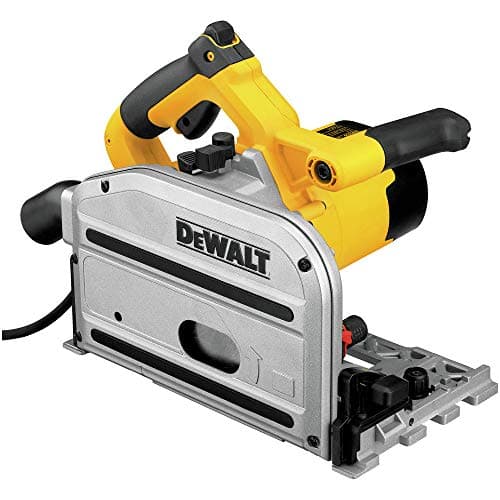
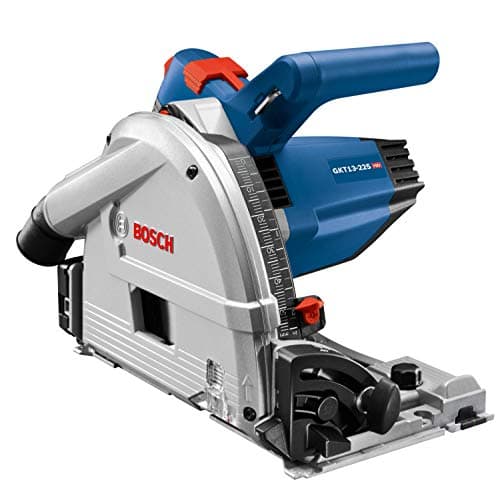
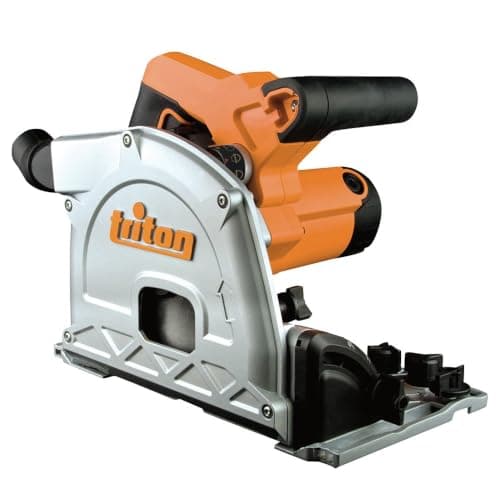
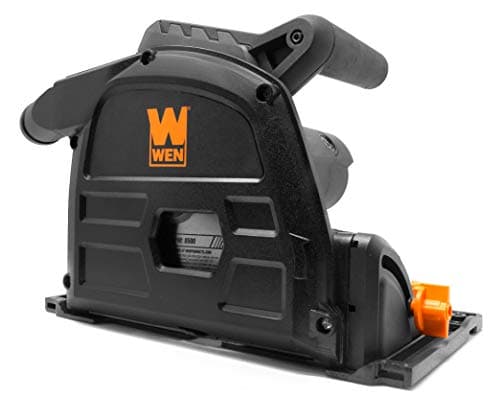
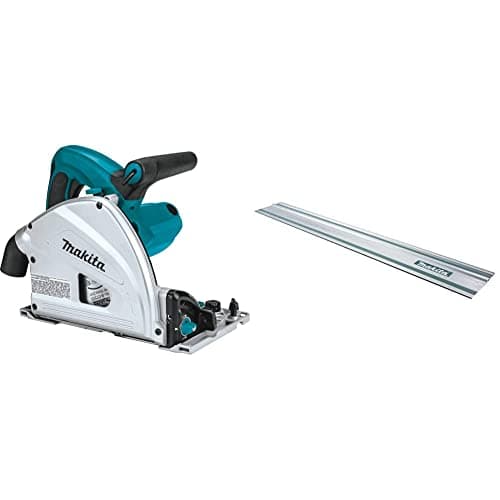
Buy the Makita SP6000J. It is the closest thing to a Festool TS 55 that is not one: a 6-1/2 in. plunge saw on a 12 A motor, supplied with a 55 in. rail, and it splits a sheet of plywood with a cut edge you can glue straight off the saw. The budget pick is the WEN CT1065, which costs a fraction of anything else here and includes rails. Buy the DEWALT DWS520K if your shop is already on DEWALT, the Bosch GKT13-225L if you want the premium alternative, the Triton TTS1400 for the best value in a full-size corded saw, and the Kreg Adaptive Cutting System if what you actually want is a whole track-and-table system rather than a saw.
What the Festool is known for
Being precise about this is the point of the page, because each alternative below matches some of it and not all of it.
The Festool TS 55 FEQ-F publishes a plunge-cut action, a riving knife, a 1400 mm (55 in.) guide rail in the Plus-FS package and a Systainer case. Around those published specifications sits the reputation: a rail with a replaceable rubber splinter strip that marks the exact cut line, a saw that rides the rail with adjustable cams so there is no slop, a plunge mechanism that is smooth and repeatable, a riving knife that follows the blade into the cut, and dust extraction that genuinely captures most of the dust when paired with the matching extractor. It is also the center of an ecosystem — rails, clamps, connectors, a multifunction table — that fits together without adapters.
That is a real list and we are not going to pretend otherwise. What follows is which parts of it you can buy separately, and which you cannot.
The things every track saw on this page does
The core trick is not proprietary. A track saw is a circular saw whose baseplate is captured by an extruded aluminum rail. The rail has a rubber splinter strip along its edge; on first use the saw trims that strip to the exact line of its own blade, and from then on the edge of the strip is the cut line. You put the strip on your pencil mark and cut. There is no measuring offsets, no edge guide, no clamped straightedge, no hoping.
Every saw here does that, and every one of them therefore gives you the main reason to own a track saw: breaking a full sheet of plywood down safely and accurately by yourself, on the floor or on a sheet of foam, without wrestling it across a table saw. That is a genuine safety improvement and it is the argument for buying one at all — laid out against the alternative on table saw vs track saw and track saw vs circular saw.
They also all plunge, which matters for two things: starting a cut in the middle of a panel, and keeping the blade covered until it is in the work.
Where the alternatives differ — and where it matters
Rail compatibility. This is the real decision. Makita and Festool rails share a profile, which is why the Makita is the standard recommendation for anyone who may later buy Festool rails or works alongside someone who has them. DEWALT and Bosch use their own profiles; the Triton and WEN come with their own. None of this affects cut quality — it affects whether you can borrow, extend or join rails later.
Rail length in the box. A 55 in. rail crosses a 4 ft sheet with a run-on and run-off. Anything shorter means joining two rails for a full 8 ft rip, and joined rails need careful alignment or they put a step in the cut. Check what is actually included before you compare prices: a cheap saw with a short rail is not cheap once you add a long one.
Dust extraction.Festool's reputation here is partly the saw and partly the extractor it is designed around. Every saw on this page has a dust port and all of them work well with a shop vac; none of them match a matched saw-and-extractor pairing out of the box. Our shop vacs under $200 page is sized for this job, and a 1-1/4 in. hose on the saw port is the normal arrangement.
The things you cannot buy cheaply. Honest list: the fit and finish, the repair-parts network, the resale value, and the ecosystem. If you are a professional whose tools pay for themselves, those are real reasons to buy the original, and we would not argue with you.
Side by side
| Saw | Blade | Rail included | Plunge | Published note |
|---|
| Festool TS 55 FEQ-F (the original) | Not published in this listing | 55 in. (1400 mm), Plus-FS | Yes | Riving knife, Systainer case |
| Makita SP6000J | 6-1/2 in. | 55 in. | Yes | 12 A |
| DEWALT DWS520K | 6-1/2 in. | Not published (kit with case) | Yes | Corded |
| Bosch GKT13-225L | 6-1/2 in. | Not published (carrying case) | Yes | Corded |
| Triton TTS1400 | 6-1/2 in. | Not published | Yes | 1400 W, corded |
| Kreg Adaptive Cutting System | Not published | ACS track system | Yes | Corded, dust port |
| WEN CT1065 | 6-1/2 in. | Rails included | Yes | 10 A |
Every entry is the maker's published specification for the listing we link, and where a listing does not publish a figure the cell says so rather than carrying a guess. We have not run these saws against a TS 55 and do not claim to have: there is no lab here, which the methodology page states plainly.
The blade is the other half of the cut
A track saw's famously clean edge is a product of three things: the rail, the splinter strip, and a high-tooth-count blade with a thin kerf. The blade in the box is usually adequate rather than good, and a dedicated plywood or fine-finish blade is the first upgrade — it costs a small fraction of any saw here and makes more visible difference than moving one model up. The same logic applies on any saw; the reasoning is laid out on best table saw blade.
What to buy, in order
Closest to the original, with Festool-profile rails: the Makita SP6000J. Already on DEWALT: the DWS520K. Premium alternative with a different flavor: the Bosch GKT13-225L. Best value in a full-size corded saw: the Triton TTS1400. A track-and-table system rather than a saw: the Kreg ACS. Smallest possible outlay to find out whether you even want one: the WEN CT1065.
The whole category ranked without reference to Festool is on best track saw.