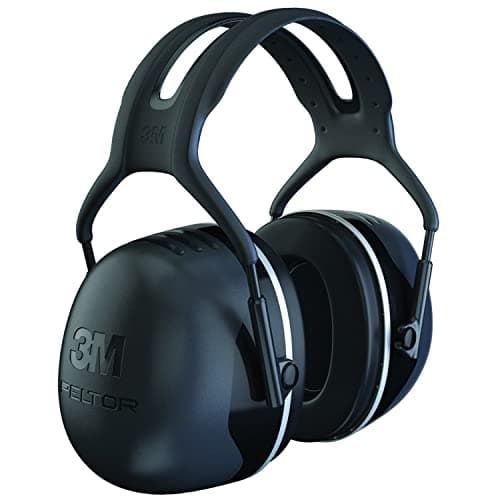
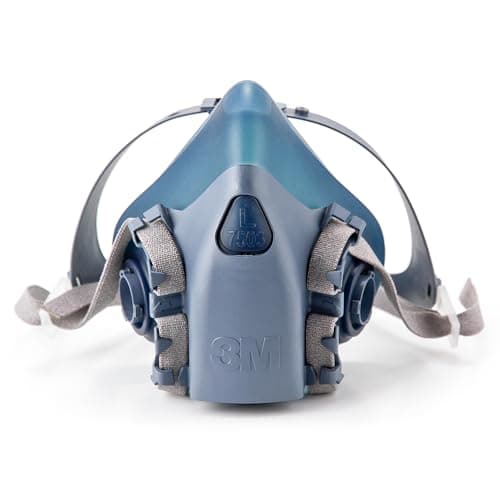
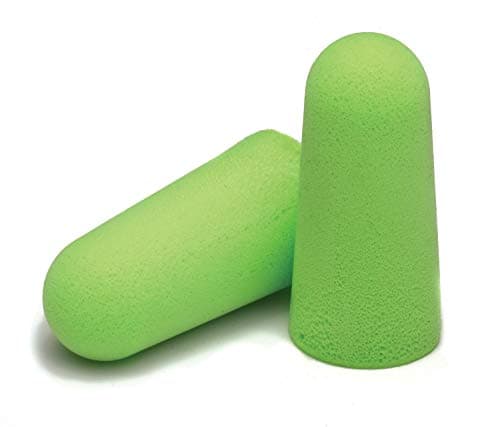
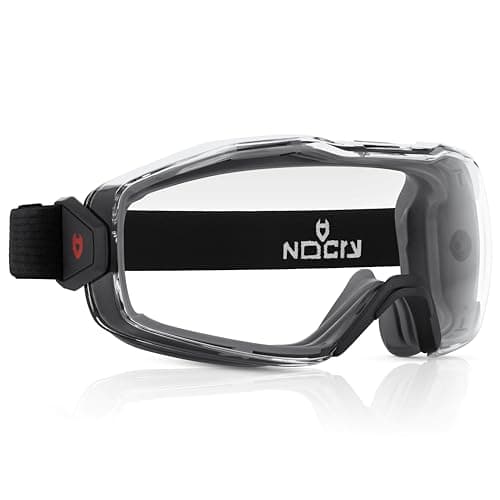
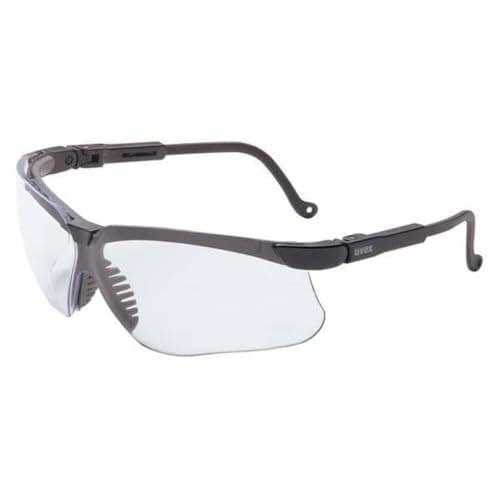
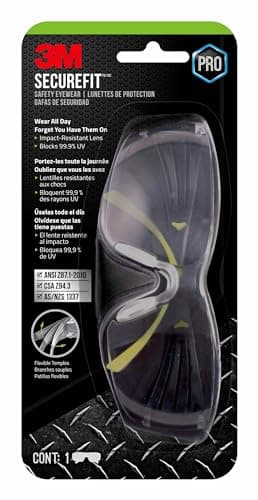
Buy three things: the 3M SecureFit 400 for your eyes, the 3M Peltor X5A for your ears at a published NRR of 31 dB, and the 3M 7502 half-facepiece respirator for your lungs. Together they cost about what one good saw blade costs, and they cover every way a wood shop does permanent damage. The budget pick is the Uvex Genesis, the cheapest item on this page and still a wraparound safety glass with a real anti-fog coating. If you wear prescription glasses, the NoCry Over-Glasses goggle is the one that actually fits over them. If you want hearing protection you can put in a pocket, the Moldex Pura-Fit earplugs publish the highest number here at NRR 33.
Three systems, three timescales
Shop injuries are not one category. They happen on completely different clocks, and that is why people under-buy two of the three.
Eyes fail instantly. A chip off a chisel, a knot thrown by a table saw, a bit fragment from a router: one event, permanent. This is the one everybody takes seriously, and it is also the cheapest to solve completely.
Hearing fails over years, and you do not notice. Noise-induced hearing loss is cumulative and painless. By the time a shop owner notices the high frequencies have gone, they have gone. Every stationary machine in a woodworking shop — table saw, planer, router, shop vac, dust collector — is loud enough that protection is the default, not the exception.
Lungs fail over decades. Wood dust is classified as a human carcinogen, and the particles that do the most damage are the ones too small to see hanging in the air long after the machine stopped. We lay out what is actually known, and who says it, on wood dust health risks.
Eyes: the only question is whether you will wear them
Every safety glass sold in the United States for this purpose is rated to the same impact standard, so the specification sheet is not where the decision lives. The decision is comfort and fog, because a glass that is uncomfortable ends up on the bench and a glass that fogs ends up pushed onto your forehead, and both of those are the same as owning nothing.
That is why the 3M SecureFit 400 is the top pick: self-adjusting temples mean it sits properly on a range of faces without a strap, and the anti-fog coating survives being wiped. The Uvex Genesis is the budget answer and its Uvextreme coating is the thing it is known for. The NoCry over-glasses goggle exists because a safety glass worn over prescription lenses is uncomfortable, sits badly, and leaves a gap at the temple — a sealed goggle that fits over frames solves it properly.
One honest note: a goggle seals, and a sealed goggle fogs more readily than an open glass. If you only occasionally need protection over prescription lenses, that trade is fine. If you wear glasses every day in the shop, prescription safety glasses from an optician are the better long-term answer and we do not sell those.
Ears: read the NRR, then subtract
Hearing protectors carry a published Noise Reduction Rating, and bigger is better, but the number on the box is a laboratory figure achieved with a perfect fit. Real-world attenuation is substantially lower, and the gap is almost entirely about fit rather than product.
Two consequences follow. First, a well-fitted cheap plug beats a badly fitted expensive muff — the Moldex Pura-Fit publishes NRR 33, the highest figure on this page, and it costs less than anything else here. Second, the protector you will actually put on is the one that works, which is the argument for a muff: it goes on and off in a second, where a foam plug has to be rolled, inserted and given time to expand every single time.
The 3M Peltor X5A publishes NRR 31 in an over-the-head muff, which is at the top of what passive muffs achieve, and it is the pick for anyone running a planer or a dust collector in an enclosed space. The X4A is the slimmer, lighter option for machines you use in short bursts, and it is easier to wear with eye protection because the cup is shallower. We rank the category in full on best hearing protection.
Lungs: a mask is the last line, not the first
The order of operations matters here and most shops get it backwards. Capture the dust at the machine first, filter what escapes second, and wear a mask third. A respirator protects one person for the minutes it is on their face; a dust collector protects everyone in the building all day, including after you have left. Our small-shop dust collector roundup and the air filtration page are the first two steps; this page is the third.
With that said, there are jobs where a mask is the only answer: sanding, sweeping, emptying a collector bag, and any hand work that makes fine dust away from a hood. For those, the 3M 7502 half-facepiece is the pick — a NIOSH-approved reusable mask that seals properly and takes the filter cartridge appropriate to the job. Note the one specification buyers miss: the 7502's filters are sold separately. The mask on its own filters nothing.
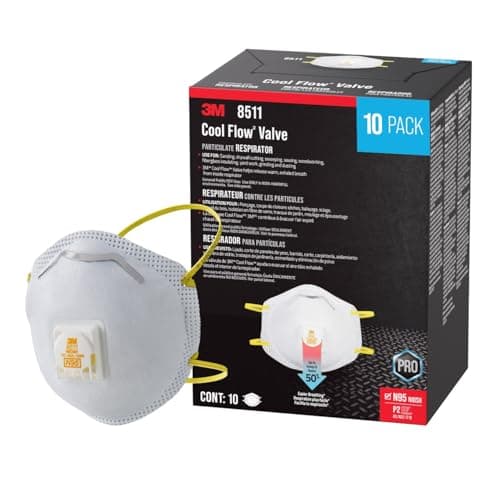
The 3M 8511 is the disposable alternative: an N95 with an exhalation valve, sold ten to a box. It is the right thing to keep near the door for a visitor, a ten-minute sweep-up or a helper, and the wrong thing to rely on daily — a disposable gets its seal from a strap and a nose clip rather than from a fitted facepiece.
Side by side
| Item | Protects | Published rating | Note |
|---|
| 3M SecureFit 400 | Eyes | Anti-fog coated, wraparound | Self-adjusting temples |
| Uvex Genesis | Eyes | Uvextreme anti-fog coating | Cheapest item on this page |
| NoCry Over-Glasses Goggle | Eyes | ANSI Z87.1 rated | Fits over prescription frames |
| 3M Peltor X5A | Hearing | NRR 31 dB | Over-the-head, replaceable cushions |
| Moldex 6800 Pura-Fit | Hearing | NRR 33 dB | Foam plugs, 50 pairs |
| 3M 7502 | Lungs | NIOSH approved, half facepiece | Filters sold separately |
| 3M 8511 | Lungs | N95 | Disposable, valved, 10-pack |
Every rating above is the manufacturer's published figure for the exact listing we link. We did not test attenuation, impact resistance or filtration — we do not run a lab, and on safety equipment that distinction matters more than it does anywhere else on this site. Buy to the published rating and the certification mark, not to our opinion.
What to buy, in order
Day one: glasses and muffs. Those two are in use from the first cut and cost very little.
Before the first sanding session: the half-mask and its cartridges, or a box of N95s if the shop time is occasional.
Then stop buying PPE and buy extraction. The honest hierarchy is capture, filter, mask — in that order — and every dollar spent on the first two protects you on the days you forget the third. Both of those live in the dust collection hub.
One last thing, which is free: keep a second pair of glasses by the door. The reason people cut without eye protection is almost never conviction. It is that the glasses are on the other side of the shop.