Skip to content
Dovetail & Dust

HUB 04 · Joinery & Jigs

Tools Needed for Mortise and Tenon Joints

The strongest joint in furniture asks for less equipment than almost anything else in the shop. What it asks for instead is a way to mark both halves from the same setting.

By Stephen V.Updated How we research
#ad

We earn a commission when you buy through our Amazon links, at no extra cost to you. It never changes our rankings, and we say so when the cheaper tool is the better buy. How this works.

Four tools cut a mortise and tenon: a mortise gauge to mark both halves, a chisel, a mallet and a backsaw. If you buy one thing first, buy the chisel set — the Narex Richter is the one we rank highest — and if you buy one thing to make the joint fit, buy the mortise gauge. That is the honest list for anyone building a table, a chair, a door or a frame-and-panel anything.

Everything else on this page is a speed upgrade, not a capability upgrade. A drill press and a Forstner bit remove mortise waste faster than a chisel. A dado stack cuts tenon cheeks faster than a saw. A dedicated mortiser does the whole mortise in one operation. None of them makes the joint better; they make it quicker, and they matter once you need twelve of them instead of two.

Why the gauge is the tool that decides the fit

A mortise and tenon fits when the tenon's cheeks and the mortise's walls are the same distance apart. The way to guarantee that is not to measure twice — it is to mark both parts with the same tool at the same setting. A mortise gauge has two cutters on one beam; you set the spacing once, to the width of your chisel, and scribe the mortise on the stile and the tenon on the rail without ever touching the adjustment.

Marked that way, a joint that fits is the default rather than a good day. Marked with a rule and a pencil, you are relying on reading the same number twice on two different pieces, which is where the slop comes from. This is the same principle we lay out in how to use a marking gauge, applied to the one joint where it pays most.

The chisel does the work, and its width sets the joint

Mortise width is conventionally about one third of the stock thickness, but the number that actually governs it is the width of the chisel you own. Cut the mortise to a chisel width and the walls can be pared straight with that same chisel; cut it to an arbitrary dimension and every wall is freehand.

A bench chisel set covers this. A dedicated mortise chisel — thick, square in section, made to be levered in a deep cut — is a genuinely better tool for deep mortises in hard timber, and we will say plainly that our registry does not currently carry one; the bench chisels below are what we rank and what most shops use. Take light cuts, do not lever hard against a bench chisel's side, and the joint comes out the same.

The seven tools on this page, and what each is for

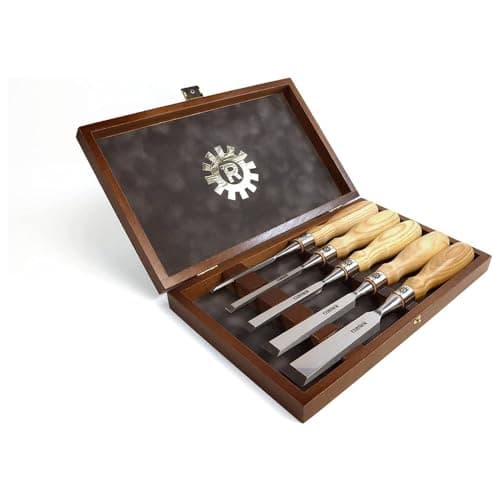
  • The chisel set: Narex Richter bevel-edge chisels. Chopping the mortise, paring the walls, trimming the tenon shoulders.
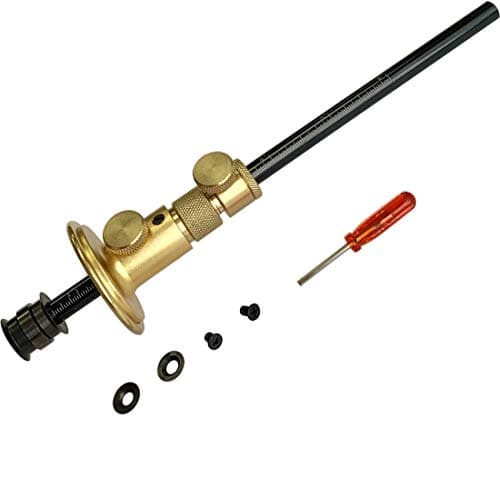
  • The gauge:the iGaging mortise gauge, with twin cutters and micro-adjust — the tool that makes both halves agree.
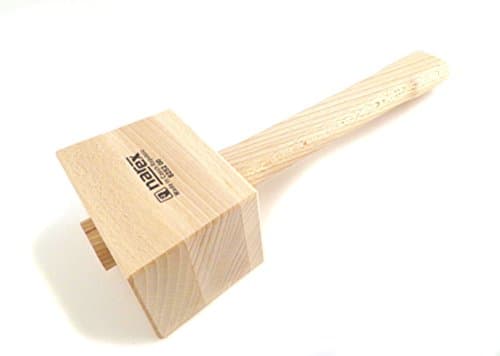
  • The mallet: the Narex 16 oz beech mallet. A hammer on a chisel handle splits it; a mallet does not.
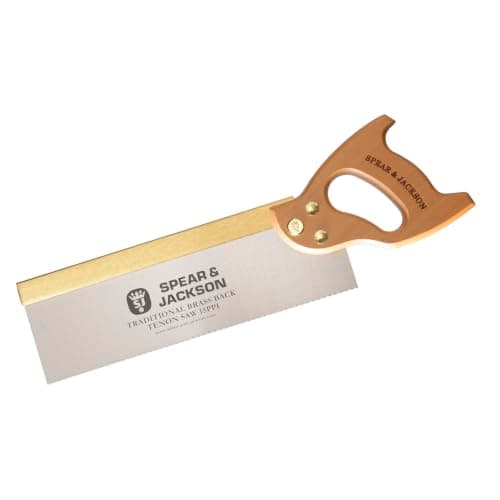
  • The saw:the Spear & Jackson 12 in. tenon saw at 15 ppi — a backed saw, because the stiff spine is what keeps a cheek cut flat.
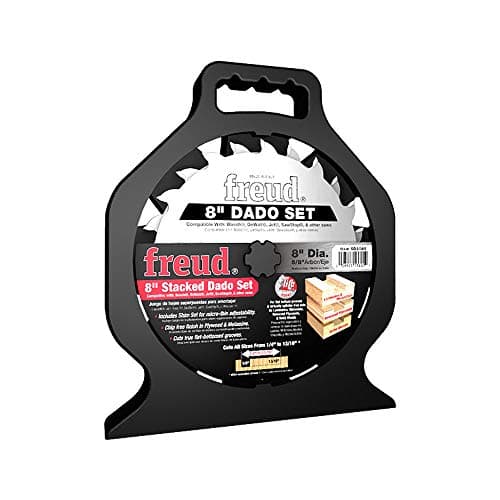
  • The tenon shortcut: a Freud SD208S dado stack, which cuts tenon cheeks and shoulders on a table saw in four passes.
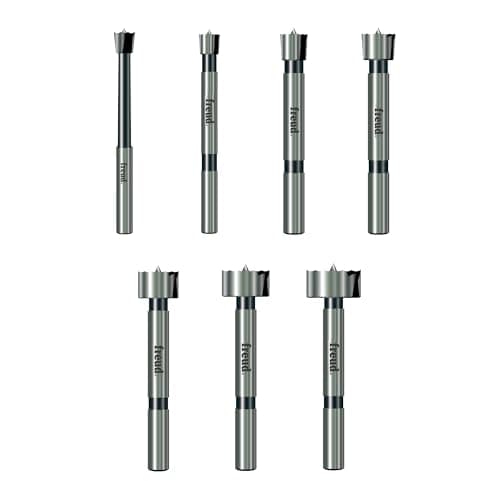
  • The mortise shortcut: a Freud Forstner set, for drilling out the waste before you chisel the walls clean.
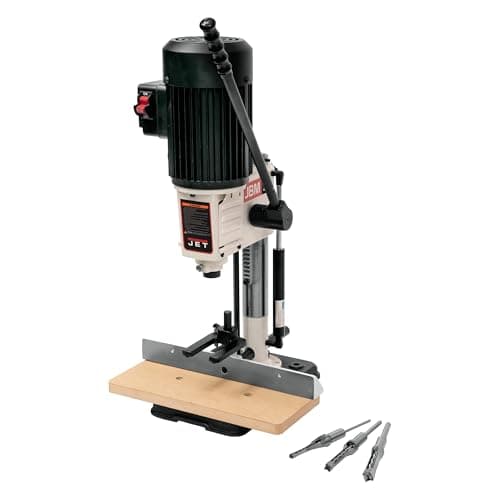
  • The machine answer: the JET JBM-5 benchtop mortiser, which cuts a square hole directly and earns its bench space only in volume.

If what you want is the joint itself rather than the kit — proportions, the mortise-first rule, how to rescue a loose tenon — that is our mortise and tenon guide, and the hand-tool method is in how to cut a mortise by hand. Prices below come from our live price feed and carry the date they were pulled.

The short answer

Quick picks

#ProductBest forScorePrice
01
Narex Narex Richter Bevel-Edge Chisel Set (5)
Narex Richter Bevel-Edge Chisel Set (5)

The most edge you can buy at this price. Cryo-treated Cr-V hardened to a claimed 62 HRC holds a keen edge far longer than the mid-price field.

Best overall
8.4
$228.80Amazon
02
iGaging iGaging Mortise Gauge and Wheel Marking Gauge
iGaging Mortise Gauge and Wheel Marking Gauge

Two cutters set independently, so you mark both walls of a mortise in one pass off one reference face. That single feature removes the most common source of a sloppy mortise.

Best for mortise and tenon
8.6
$29.79Amazon
03
Narex Narex 460 g Beech Carving Mallet (16 oz)
Narex 460 g Beech Carving Mallet (16 oz)

The default chisel mallet. Round beech head, 16 ounces, and no need to aim — a round face strikes true whatever angle your wrist is at.

Best overall
8.6
$26.67Amazon
04
Spear & Jackson Spear & Jackson 12-in Tenon Saw (15 ppi)
Spear & Jackson 12-in Tenon Saw (15 ppi)

The bigger brother. A 12-inch, 15-ppi backsaw is too coarse for fine dovetails but exactly right for tenon cheeks and shoulders — the second saw a joinery bench wants.

Best for tenons
6.8
$31.36Amazon
05
Freud Freud SD208S 8-in Pro Dado Set (12T)
Freud SD208S 8-in Pro Dado Set (12T)

The set most shops should buy. Two negative-hook 12-tooth outside blades, three chippers, spacers and a shim set, cutting a published 1/4 to 7/8 in groove with a flat bottom in solid wood, plywood and melamine.

Best overall
8.4
$96.88Amazon
06
Freud Freud PB-107B Forstner Bit Set (7 pc, 1/4–1 in)
Freud PB-107B Forstner Bit Set (7 pc, 1/4–1 in)

Seven sizes from 1/4 to 1 in, forged rather than cast, with the serrated shear rim that makes a Forstner bit cut instead of scrape. The set that covers the holes a furniture maker actually drills.

Best overall
8.4
$92.97Amazon
07
JET JET JBM-5 Benchtop Mortiser
JET JBM-5 Benchtop Mortiser

The mortiser most small shops end up with. A 1/2-inch chisel capacity and a 4-3/4-inch stroke covers furniture-scale mortises without the price of the cast-iron machines.

Best overall
7.6
$582.99Amazon

#ad · Live prices from the Amazon Product API, as of October 17, 2026. Where we have no verified live price, we show none — we would rather leave a gap than print a number that has rotted.

In detail

The picks, in full

01
Narex Narex Richter Bevel-Edge Chisel Set (5)

Best overall

Narex Richter Bevel-Edge Chisel Set (5)

Cr-V steelClaimed 62 HRCSet of 5Ash handles
8.4/10

The most edge you can buy at this price. Cryo-treated Cr-V hardened to a claimed 62 HRC holds a keen edge far longer than the mid-price field.

Edge retention
9
Steel quality
9
Ergonomics
8
Out-of-box
8
Value
8

Pros

  • Manufacturer rates the steel at HRC 62 — high for a bench chisel, and it shows in edge retention
  • Backs and bevels arrive flatter and closer to ready than most sets in the range
  • Fine bevel-edge sides get into dovetail corners cleanly

Cons

  • Costs meaningfully more than a serviceable beginner set
  • Harder steel is a little more work to bring back on a stone once it does dull

Don't buy this if…

…you are cutting your first joint and not sure the hobby will stick — a cheaper set will teach you everything, and you can graduate to these later without regret.

$228.80View on Amazon

Price as of October 17, 2026. Prices change — Amazon's is the one that counts.

#ad · we may earn a commission from this link to Narex Richter Bevel-Edge Chisel Set (5)

02
iGaging iGaging Mortise Gauge and Wheel Marking Gauge

Best for mortise and tenon

iGaging Mortise Gauge and Wheel Marking Gauge

Twin cuttersMicro-adjust1/32 in. and 1 mm scalesDoubles as a single gauge
8.6/10

Two cutters set independently, so you mark both walls of a mortise in one pass off one reference face. That single feature removes the most common source of a sloppy mortise.

Line quality
9
Adjustment
9
Build
8
Readability
8
Value
9

Pros

  • Marking both mortise walls in one pass guarantees they are parallel and correctly spaced
  • Set the cutters off the actual chisel and the mortise fits the chisel, not the ruler
  • Retracts to work as an ordinary single-wheel gauge

Cons

  • Setting two cutters takes longer than setting one — not the gauge for quick marking
  • More mechanism means more to knock out of adjustment in a drawer

Don't buy this if…

…you cut mortises on a machine with a fixed chisel. The machine already sets the width; you only need one line.

$29.79View on Amazon

Price as of October 17, 2026. Prices change — Amazon's is the one that counts.

#ad · we may earn a commission from this link to iGaging Mortise Gauge and Wheel Marking Gauge

03
Narex Narex 460 g Beech Carving Mallet (16 oz)

Best overall

Narex 460 g Beech Carving Mallet (16 oz)

460 g / 16 ozBeech headRound faceOne-piece turned
8.6/10

The default chisel mallet. Round beech head, 16 ounces, and no need to aim — a round face strikes true whatever angle your wrist is at.

Control
9
Weight balance
9
Handle comfort
8
Durability
8
Value
9

Pros

  • Round head means any part of the face lands square — you stop thinking about the strike
  • Beech on a wooden chisel handle transmits a controlled blow without bruising the handle
  • Weight is right for bench chisel work: enough to chop, light enough to pare accurately

Cons

  • Wood on wood will eventually dent the mallet face — that is the mallet doing its job
  • Too light for heavy mortising in dense hardwood

Don't buy this if…

…your chisels have impact-resistant plastic handles and you already own a hammer. They are designed to be struck with steel.

$26.67View on Amazon

Price as of October 17, 2026. Prices change — Amazon's is the one that counts.

#ad · we may earn a commission from this link to Narex 460 g Beech Carving Mallet (16 oz)

04
Spear & Jackson Spear & Jackson 12-in Tenon Saw (15 ppi)

Best for tenons

Spear & Jackson 12-in Tenon Saw (15 ppi)

12 in blade15 ppiBack sawPush stroke
6.8/10

The bigger brother. A 12-inch, 15-ppi backsaw is too coarse for fine dovetails but exactly right for tenon cheeks and shoulders — the second saw a joinery bench wants.

Cut quality
7
Ease of starting
6
Kerf
5
Build
7
Value
9

Pros

  • Length and tooth count suit tenon cheeks, where a dovetail saw is slow and shallow
  • Stiff back keeps a long shoulder cut square across a wide rail
  • Resharpenable, and cheap enough to learn saw filing on

Cons

  • 15 ppi is too coarse for fine dovetails in thin stock
  • Handle finish is basic at this price

Don't buy this if…

…you only cut dovetails. This is the wrong tooth pitch for that job.

$31.36View on Amazon

$45.9932% off

Price as of October 17, 2026. Prices change — Amazon's is the one that counts.

#ad · we may earn a commission from this link to Spear & Jackson 12-in Tenon Saw (15 ppi)

05
Freud Freud SD208S 8-in Pro Dado Set (12T)

Best overall

Freud SD208S 8-in Pro Dado Set (12T)

8 in / 12T1/4–7/8 in range3 chippers + shims6,000 max RPM
8.4/10

The set most shops should buy. Two negative-hook 12-tooth outside blades, three chippers, spacers and a shim set, cutting a published 1/4 to 7/8 in groove with a flat bottom in solid wood, plywood and melamine.

Cut quality
9
Flat bottom
9
Width range
7
Setup speed
8
Value
9

Pros

  • Negative hook on the outside blades is what keeps the shoulders of a dado clean instead of chipped out
  • The shim set is the part beginners skip and then miss — it is how a 23/32 in plywood groove gets to actually be 23/32 in
  • Freud's TiCo carbide and I.C.E. coating are the same materials as its industrial saw blades, so edge life is not the compromise here
  • Cuts a usable groove in melamine, which is the material that exposes a cheap dado stack fastest

Cons

  • 12 teeth per outside blade is half what the Oshlun carries, and in cross-grain cuts on veneered ply the difference shows at the shoulder
  • 1/4 to 7/8 in is a narrower published range than the 29/32 in sets, so a full 1 in groove needs two passes
  • Three chippers means more shimming to hit odd widths than a six-chipper set needs

Don't buy this if…

…your saw is a benchtop model with a short arbor. Measure the usable arbor thread before buying any 8 in stack — a full-width stack needs more thread than some saws have.

$96.88View on Amazon

$115.7816% off

Price as of October 17, 2026. Prices change — Amazon's is the one that counts.

#ad · we may earn a commission from this link to Freud SD208S 8-in Pro Dado Set (12T)

06
Freud Freud PB-107B Forstner Bit Set (7 pc, 1/4–1 in)

Best overall

Freud PB-107B Forstner Bit Set (7 pc, 1/4–1 in)

7 bits, 1/4–1 inSerrated shear rim3-1/2 in overall length1/4–3/8 in shanks
8.4/10

Seven sizes from 1/4 to 1 in, forged rather than cast, with the serrated shear rim that makes a Forstner bit cut instead of scrape. The set that covers the holes a furniture maker actually drills.

Hole quality
10
Edge retention
9
Size range
6
Build
9
Value
8

Pros

  • The double-ground serrated rim slices the circumference ahead of the cutters, which is what keeps the edge of the hole crisp in face grain
  • Freud states the bits are forged from hardened steel rather than cast, and that is the difference you feel after a hundred holes
  • Covers 1/4, 3/8, 1/2, 5/8, 3/4, 7/8 and 1 in — the sizes that come up in joinery, plugs, dowels and hardware
  • Shanks step from 1/4 to 3/8 in with diameter, so the small bits still run true in a hand drill

Cons

  • Stops at 1 in, so hole saws or a separate large bit are still needed for anything above that
  • No case in this configuration, and loose Forstner bits blunt each other in a drawer
  • Costs more than 14- and 16-piece sets that look like better value on a size count alone

Don't buy this if…

…the job is a few big through-holes in construction lumber. A hole saw or an auger bit is the cheaper and faster tool there.

$92.97View on Amazon

Price as of October 17, 2026. Prices change — Amazon's is the one that counts.

#ad · we may earn a commission from this link to Freud PB-107B Forstner Bit Set (7 pc, 1/4–1 in)

07
JET JET JBM-5 Benchtop Mortiser

Best overall

JET JBM-5 Benchtop Mortiser

1/2 in. chisel capacity4-3/4 in. stroke115V, 1-phaseBenchtop
7.6/10

The mortiser most small shops end up with. A 1/2-inch chisel capacity and a 4-3/4-inch stroke covers furniture-scale mortises without the price of the cast-iron machines.

Capacity
8
Rigidity
7
Workholding
7
Build
8
Value
8

Pros

  • Half-inch capacity covers the mortise sizes furniture actually uses
  • Stroke is long enough for a deep mortise in a table leg without re-clamping
  • Runs on a normal circuit and bolts to a bench, not a floor stand

Cons

  • Chisels are sold separately, and the chisels are what determine cut quality
  • The head casting flexes more than the heavier machines on a hard cut

Don't buy this if…

…you cut two mortises a year. A mortising attachment on the drill press you already own does the same job slower.

$582.99View on Amazon

Price as of October 17, 2026. Prices change — Amazon's is the one that counts.

#ad · we may earn a commission from this link to JET JBM-5 Benchtop Mortiser

The seven side by side

Published listing specifications for the seven tools above, grouped by the part of the joint they serve. The "route" column is the one to read first: the first four tools are a complete kit on their own.

ToolPart of the jointRoutePublished specifications
Narex Richter chisels (5)Mortise walls, tenon shouldersHandCr-V steel, claimed 62 HRC, ash handles
iGaging mortise gaugeMarking both halvesBothTwin cutters, micro-adjust, 1/32 in. and 1 mm scales
Narex beech malletDriving the chiselHand460 g / 16 oz, beech head, one-piece turned
Spear & Jackson tenon sawTenon cheeks and shouldersHand12 in. blade, 15 ppi, backed, push stroke
Freud SD208S dado setTenon cheeksTable saw8 in. / 12T, 1/4–7/8 in. range, 3 chippers + shims
Freud PB-107B Forstner setMortise wasteDrill press7 bits, 1/4–1 in., serrated shear rim
JET JBM-5 mortiserWhole mortiseMachine1/2 in. chisel capacity, 4-3/4 in. stroke, 115V

Mortise first, tenon second — always

A mortise is a hole with fixed walls; once it is cut, its width is whatever the chisel made it. A tenon is a projection you can keep shaving. Cut the mortise first and you can fit the tenon to it with a shoulder plane, a chisel or a few saw strokes. Cut the tenon first and your only adjustment is to widen the mortise, which is the harder of the two operations and the one where a slip shows.

The same logic governs depth. Make the mortise about 1/8 in. deeper than the tenon is long, so the tenon seats on its shoulders rather than bottoming out, and so there is somewhere for excess glue to go rather than hydraulically holding the joint open.

Proportions, in one paragraph

The conventional proportions are a tenon about one third the thickness of the rail, as wide as the rail allows minus a shoulder at each edge, and long enough to reach two thirds to three quarters of the way through the stile. A haunch — a short stub of full-width tenon at the top — stops a rail twisting in a frame and fills the groove in a frame-and-panel door. None of this is arbitrary: it keeps enough meat either side of the mortise that the stile does not split.

Which shortcut to buy first, if you buy one

If you already own a drill press, the Forstner set is the cheapest real speed-up on this page: drill a line of overlapping holes to depth inside your gauge lines, then pare the walls with a chisel. You are chiselling air instead of wood, and the wall accuracy is still yours.

If you already own a table saw, the dado stack is the better buy, because tenon cheeks are the fiddly half of the joint by hand. A stack set to the shoulder depth, with the rail flat on the table and a miter gauge behind it, cuts both cheeks and both edge shoulders in four passes with identical setups. Our dado blade set roundup covers the family, and best miter gauge covers the thing that actually holds the rail square while you do it.

The benchtop mortiser is last for a reason. It is a real machine that does one job well, it wants bench space and a dedicated chisel per width, and it stops being a luxury somewhere around the point where you are cutting a dozen mortises for a set of chairs. Below that, the chisel wins on every axis except speed.

Where these numbers come from

The steel grades, hardness claims, blade lengths, tooth counts, bit diameters, capacities and strokes above are the manufacturers' own published listing specifications, recorded when we researched each tool and cited per product in Sources. We have not measured edge retention, joint strength or cut accuracy in a lab — we do not have one, and our methodology page says so plainly. Prices come from the live price feed and carry the date they were pulled.
How we picked

We do not run a testing lab

We researched published manufacturer specifications, manuals and spec sheets, ran the arithmetic those specs support, and read owner reviews at volume, then scored each tool against a published rubric. The scores are judgments from documented research — they are not measurements we took, because we do not have a lab and we are not going to pretend we do. Where a number came from a manufacturer's document, we name it and link it in Sources.

Questions

Frequently asked

What tools do I need to cut a mortise and tenon by hand?
A mortise gauge, a chisel the width you want the mortise, a mallet and a backsaw. That is the complete list. A square and a marking knife make the shoulder lines cleaner, and a shoulder plane or a wide chisel helps you fit the tenon, but the four tools above cut the joint.
Do I need a dedicated mortise chisel?
No, though it is a better tool for deep mortises in hard timber — thicker in section, made to be levered. A bench chisel works if you take lighter cuts and do not lever hard against its side. Our registry does not currently carry a dedicated mortise chisel, so the sets we rank here are bench chisels and we say so rather than pretending otherwise.
Should I cut the mortise or the tenon first?
The mortise, every time. A mortise is fixed once cut; a tenon can be shaved down to fit it. Doing it the other way round leaves you widening a mortise to chase a tenon, which is the harder operation and the one that shows when it goes wrong.
Is a benchtop mortiser worth buying?
Only on volume. It cuts a square hole directly and repeatably, which is a real advantage when you have a dozen mortises to cut for a set of chairs. For two or three joints in a project, a chisel and a mallet get there in about the same time and take up no bench space.
Can I cut tenons on a table saw?
Yes, and it is the fastest reliable method if you own one. A dado stack set to the shoulder depth cuts both cheeks and both edge shoulders in four passes, with the rail held flat and square by a miter gauge. Set the depth from the joint itself rather than from a number, and cut a test piece in scrap first.

Keep reading

Receipts

Sources

We do not run a testing lab, and we do not pretend to. Our picks come from published manufacturer specifications and manuals, the arithmetic those specs support, and owner reviews read at volume. Where we could not verify something, we say so on the page rather than quietly leaving it out. Read our full method.