Skip to content
Dovetail & Dust

HUB 02 · Power Tools

The Best Cordless Drill for Woodworking

Ranked for wood, not for framing. The chuck that holds a Forstner bit and the clutch that stops a screw stripping matter far more than the torque number on the box.

By Stephen V.Updated How we research
#ad

We earn a commission when you buy through our Amazon links, at no extra cost to you. It never changes our rankings, and we say so when the cheaper tool is the better buy. How this works.

A cordless drill is the one power tool that appears on every list of woodworking essentials, including ours — and it is the one nobody writes a buying guide for, because the guides are all written for people hanging drywall. Our own beginner tool list names a cordless drill/driver alongside chisels, a block plane and clamps. This page is the part we owed you: which one.

The reason a woodworking drill is a different question is that you are asking it to do two jobs a contractor never asks. The first is boring clean, flat-bottomed holes with brad-point and Forstner bits — bits with smooth round shanks that a mediocre chuck lets slip the instant the spurs bite. The second is seating screws in hardwood without stripping the head, splitting the stock or burying the screw a sixteenth below where you wanted it. Neither job cares about the biggest number on the box.

So the specification that sells drills — peak torque — is close to irrelevant here. A drill making 400 in.-lb. has more grunt than a 2 in. Forstner bit through hard maple needs, and it is far more likely to twist the tool out of your hand than to stall. What actually decides whether a drill is pleasant in a wood shop is the chuck, the clutch and how slowly first gear will turn.

What we ranked these on

Chuck and bit grip.This is the difference that costs money. Nearly every woodworking bit — brad point, Forstner, spade, hole-saw arbor, countersink — has a smooth round shank, and a round shank is held by friction alone. An all-metal chuck grips harder and stays gripping; a plastic-bodied single-sleeve chuck is fine on a hex driver bit and is the first thing to let go when a 1 in. Forstner bit hits dense latewood. Milwaukee goes as far as putting carbide teeth in its jaws, which tells you the manufacturers know exactly where this fails.

Clutch control. The numbered collar behind the chuck slips the drive at a set resistance so the screw stops turning before the head strips or the wood splits. What matters is resolution: the difference between poplar and white oak is a couple of clutch numbers, and a drill with a dozen settings jumps straight over the one you wanted. Twenty settings is not marketing on a woodworking drill. It is a finer adjustment on the only control that protects your workpiece.

Low-speed torque.Wood is heat-limited, not power-limited. A large Forstner bit run fast burns the rim of the hole, blues the cutting edge and packs the flutes with scorched chips — the same physics we cover on the drill press page, where a machine can be geared down properly. In a handheld drill the equivalent control is a low gear with a slow top speed and real torque behind it, so you can hold the trigger down without the bit racing. The published first-gear ceilings on this page run from 450 RPM to 500 RPM; the lower the number, the more usefully you can lean on the trigger.

Size and handling.Cabinet work happens inside boxes. Head length — the distance from the back of the tool to the tip of the chuck — decides whether you can drive a hinge screw inside an assembled carcase or have to take it apart first. Weight decides whether the last twenty screws go in as accurately as the first twenty. Published figures on this page span 1.83 lb to roughly 3.2 lb, which is a bigger practical spread than any torque difference.

Value.Not sticker price — the cost of having a working drill. A bare tool is not cheap once a battery and a charger are added, and a battery platform is a ten-year commitment you make on the day you buy the drill. We score what you end up spending, and what that spend commits you to.

Prices below pull live from Amazon, so what you see is today's number rather than one we typed in months ago. The realistic spread runs from under a hundred dollars for a complete brushless kit to roughly double that for a bare professional tool before you have bought a single battery.

The short answer

Quick picks

#ProductBest forScorePrice
01
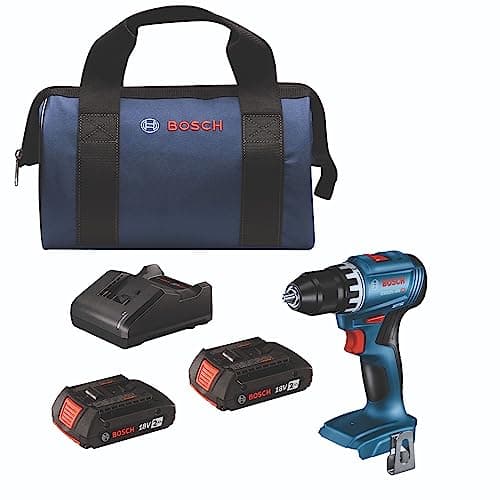
Bosch Bosch GSR18V-400B22 18V Compact Brushless 1/2 in. Drill/Driver Kit
Bosch GSR18V-400B22 18V Compact Brushless 1/2 in. Drill/Driver Kit

An all-metal chuck and a 20-position clutch in a complete two-battery kit. Those are the two specifications that decide how a drill behaves in wood, and this is the cheapest tool here that gets both right.

Best overall
8.6
$142.99Amazon
02
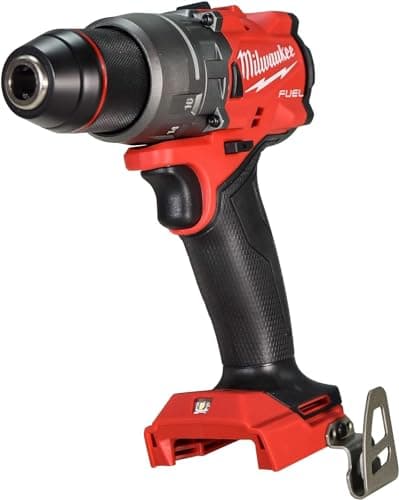
Milwaukee Milwaukee 2903-20 M18 FUEL 1/2 in. Drill/Driver (Tool Only)
Milwaukee 2903-20 M18 FUEL 1/2 in. Drill/Driver (Tool Only)

A carbide-toothed all-metal chuck, a published 1,400 in.-lb. and a side handle in the box. This is the drill you want the day a 2 in. Forstner bit decides to take your wrist with it.

Best for big bits and augers
8.0
$167.99Amazon
03
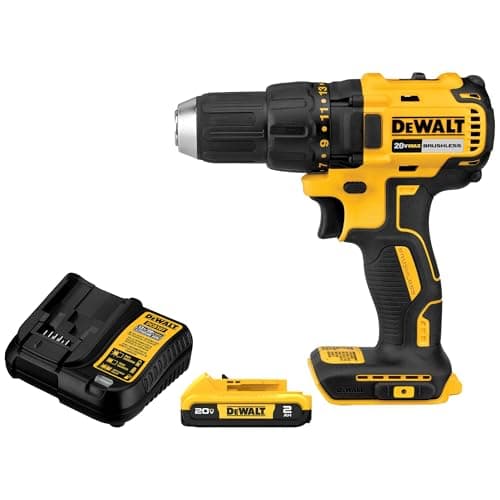
DEWALT DEWALT DCD777D1 20V MAX Brushless Compact Drill/Driver Kit
DEWALT DCD777D1 20V MAX Brushless Compact Drill/Driver Kit

The safe answer. A brushless drill on the battery platform half the tool aisle already runs, and that is worth more over ten years than any single specification on this page.

Best on the platform most shops already own
7.6
$123.00Amazon
04
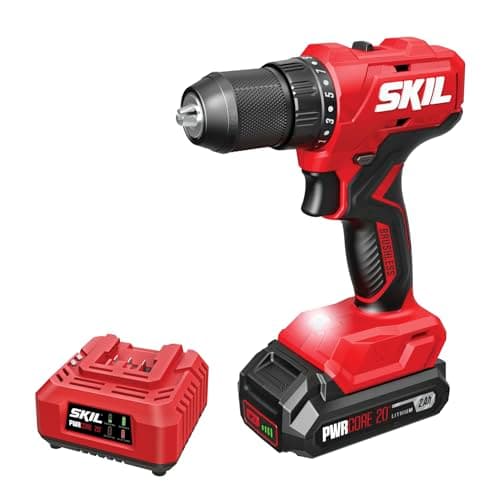
SKIL SKIL PWR CORE 20 DL6280B-10 Brushless 20V 1/2 in. Drill/Driver Kit
SKIL PWR CORE 20 DL6280B-10 Brushless 20V 1/2 in. Drill/Driver Kit

Brushless, a published 400 in.-lb., the slowest low gear on this page and a battery in the box — for less than the Milwaukee costs with no battery at all.

Best budget
8.4
$89.99Amazon
05
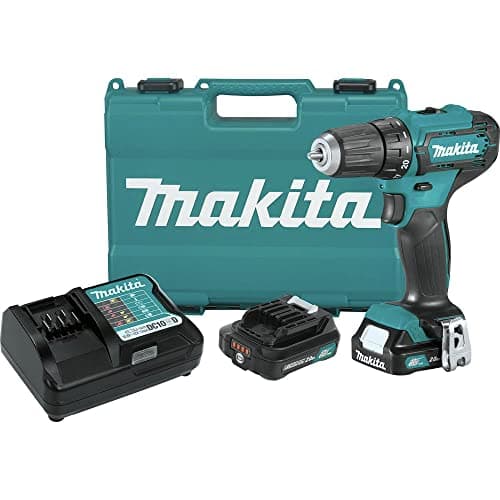
Makita Makita FD09R1 12V max CXT 3/8 in. Driver-Drill Kit (2.0Ah)
Makita FD09R1 12V max CXT 3/8 in. Driver-Drill Kit (2.0Ah)

Seven inches long and 2.4 lb with the battery on. This is the drill that drives a hinge screw inside a finished cabinet without taking the door off first — a complement to a 1/2 in. drill, not a substitute.

Best compact for cabinet work
7.4
$149.41Amazon

#ad · Live prices from the Amazon Product API, as of Sep 19, 2026. Where we have no verified live price, we show none — we would rather leave a gap than print a number that has rotted.

In detail

The picks, in full

01
Bosch Bosch GSR18V-400B22 18V Compact Brushless 1/2 in. Drill/Driver Kit

Best overall

Bosch GSR18V-400B22 18V Compact Brushless 1/2 in. Drill/Driver Kit

400 in.-lb. max torque0-500 / 0-1,900 RPM1/2 in. all-metal chuck20 clutch settings
8.6/10

An all-metal chuck and a 20-position clutch in a complete two-battery kit. Those are the two specifications that decide how a drill behaves in wood, and this is the cheapest tool here that gets both right.

Chuck and bit grip
9
Clutch control
9
Low-speed torque
7
Size and handling
9
Value
9

Pros

  • All-metal chuck at a kit price — the joint that stops a smooth round-shank brad point spinning in the jaws the moment the spurs bite
  • 20 clutch positions plus drill mode is enough resolution to find one setting that seats a screw in poplar and a different one for white oak
  • Bosch publishes 1.95 lb bare and a 6.3 in. head length, so it works inside a half-built carcase and overhead without wrecking your forearm
  • The kit is genuinely complete: two 2 Ah batteries, a charger, a belt clip and a carrying bag

Cons

  • 0-500 RPM in first gear is the highest low-gear floor on this page, and large Forstner bits want the slowest speed you can give them
  • 400 in.-lb. is under a third of what the Milwaukee publishes — you feel that in a big auger or a long structural screw
  • Bosch does not list a side handle in the published kit contents, so there is nothing to brace against when a large bit grabs
  • The 2 Ah batteries are the small ones: fine for a drill, thin if you meant to share them with a circular saw

Don't buy this if…

you bore a lot of large holes freehand. Between the published kit contents and a 1.95 lb body there is very little to brace against when a 1 in. spade bit catches.

$142.99View on Amazon

$209.0032% off

Price as of Sep 19, 2026. Prices change — Amazon's is the one that counts.

#ad · we may earn a commission from this link to Bosch GSR18V-400B22 18V Compact Brushless 1/2 in. Drill/Driver Kit

02
Milwaukee Milwaukee 2903-20 M18 FUEL 1/2 in. Drill/Driver (Tool Only)

Best for big bits and augers

Milwaukee 2903-20 M18 FUEL 1/2 in. Drill/Driver (Tool Only)

1,400 in.-lb. peak torque1/2 in. all-metal chuck, carbide teeth6.9 in. longSide handle in the box
8.0/10

A carbide-toothed all-metal chuck, a published 1,400 in.-lb. and a side handle in the box. This is the drill you want the day a 2 in. Forstner bit decides to take your wrist with it.

Chuck and bit grip
10
Clutch control
7
Low-speed torque
10
Size and handling
7
Value
6

Pros

  • Milwaukee publishes 1,400 in.-lb. of peak torque — more than three times the Bosch, and the headroom a self-feed or large Forstner bit actually asks for
  • The all-metal chuck has carbide teeth, which is Milwaukee's answer to the exact failure that annoys woodworkers most: a smooth-shank bit slipping under load
  • AutoStop Control Mode cuts the motor when the tool senses it is about to rotate instead of the bit, and a side handle ships with it to brace against
  • 6.9 in. front to back — shorter than the DEWALT kit here, despite making four times the torque

Cons

  • Bare tool. No battery, no charger, no case; an M18 pack and charger roughly doubles the real cost unless you are already on the platform
  • Milwaukee's product page publishes no weight and no clutch-setting count, so two of the numbers that matter most in wood have to come from retailer listings, which put it near 3.2 lb
  • 1,400 in.-lb. is more than furniture work needs. You are paying for headroom most shops reach for a handful of times a year
  • Nothing in the box lets you start driving screws today, which makes it the slowest tool here to actually get working

Don't buy this if…

you do not already own M18 batteries. Add a pack and a charger and this becomes the most expensive way on this page to drive a screw into pine.

$167.99View on Amazon

Price as of Sep 19, 2026. Prices change — Amazon's is the one that counts.

#ad · we may earn a commission from this link to Milwaukee 2903-20 M18 FUEL 1/2 in. Drill/Driver (Tool Only)

03
DEWALT DEWALT DCD777D1 20V MAX Brushless Compact Drill/Driver Kit

Best on the platform most shops already own

DEWALT DCD777D1 20V MAX Brushless Compact Drill/Driver Kit

340 UWO max torque1/2 in. single-sleeve ratcheting chuck7.6 in. front to back2.0 Ah battery + charger
7.6/10

The safe answer. A brushless drill on the battery platform half the tool aisle already runs, and that is worth more over ten years than any single specification on this page.

Chuck and bit grip
7
Clutch control
8
Low-speed torque
7
Size and handling
7
Value
9

Pros

  • 20V MAX is the largest cordless platform in most American garages, so every battery bought for this drill has somewhere else to go later
  • Brushless motor at a mid-kit price, with a DCB203 2.0 Ah battery, a DCB107 charger and a belt hook in the box
  • The ratcheting chuck can be snugged one-handed, which matters when the other hand is holding the workpiece against a fence
  • LED with a 20-second trigger-release delay stays lit while you reposition, instead of dying the instant you let go inside a dark cabinet

Cons

  • DEWALT publishes 340 UWO and no in.-lb. figure at all, so this is the hardest tool on the page to compare honestly on torque
  • The chuck is a single sleeve rather than all metal — the specification both the Bosch and the Milwaukee beat at broadly similar money
  • At a published 7.6 in. front to back it is the longest tool here, which you notice reaching inside a carcase
  • One 2.0 Ah battery in the kit where the Bosch ships two, so a long assembly session means a charger break

Don't buy this if…

you already run another battery platform. The DCD777 is a good drill and a poor reason to start a second one.

$123.00View on Amazon

$179.0031% off

Price as of Sep 19, 2026. Prices change — Amazon's is the one that counts.

#ad · we may earn a commission from this link to DEWALT DCD777D1 20V MAX Brushless Compact Drill/Driver Kit

04
SKIL SKIL PWR CORE 20 DL6280B-10 Brushless 20V 1/2 in. Drill/Driver Kit

Best budget

SKIL PWR CORE 20 DL6280B-10 Brushless 20V 1/2 in. Drill/Driver Kit

400 in.-lb. max torque0-450 / 0-1,700 RPM17+1 clutch settings1.83 lb, battery + charger included
8.4/10

Brushless, a published 400 in.-lb., the slowest low gear on this page and a battery in the box — for less than the Milwaukee costs with no battery at all.

Chuck and bit grip
6
Clutch control
8
Low-speed torque
8
Size and handling
10
Value
10

Pros

  • Matches the Bosch on published torque and beats it on first gear — 0-450 RPM is the slowest low speed here, which is exactly what a large Forstner bit wants
  • 17 clutch positions plus drill mode, at a price where a dozen is the usual offering
  • A published 1.83 lb makes it the lightest tool on the page, and the one you will still be happy holding at the end of a cabinet install
  • Brushless motor, a 2.0 Ah PWR CORE 20 battery and a charger are all in the box

Cons

  • Keyless single-sleeve chuck rather than all metal — this is where the price shows, and it is the exact place a smooth-shank bit slips
  • The kit is drill, one battery, charger and a driver bit. No case, no bag, no second battery
  • PWR CORE 20 is a far smaller tool ecosystem than 20V MAX or M18, so the battery you buy into does less for you in five years
  • The published specification page gives torque, speed and weight but no bare-tool dimensions, so you cannot check the head length before it arrives

Don't buy this if…

you want this drill to be the first tool in a platform you will keep expanding. In that case choose the battery system first and the drill second.

$89.99View on Amazon

Price as of Sep 19, 2026. Prices change — Amazon's is the one that counts.

#ad · we may earn a commission from this link to SKIL PWR CORE 20 DL6280B-10 Brushless 20V 1/2 in. Drill/Driver Kit

05
Makita Makita FD09R1 12V max CXT 3/8 in. Driver-Drill Kit (2.0Ah)

Best compact for cabinet work

Makita FD09R1 12V max CXT 3/8 in. Driver-Drill Kit (2.0Ah)

250 in.-lb. max torque0-450 / 0-1,700 RPM3/8 in. chuck7 in. long, 2.4 lb with battery
7.4/10

Seven inches long and 2.4 lb with the battery on. This is the drill that drives a hinge screw inside a finished cabinet without taking the door off first — a complement to a 1/2 in. drill, not a substitute.

Chuck and bit grip
6
Clutch control
8
Low-speed torque
6
Size and handling
10
Value
7

Pros

  • Makita publishes 7 in. overall length and 2.4 lb with the battery fitted — the difference between reaching into a carcase and dismantling it first
  • A 0-450 RPM first gear, the same floor as the SKIL, in a tool weighing about a third of what retailers list for the Milwaukee
  • The kit is complete and travels: two 2.0 Ah CXT batteries, a charger and a case
  • The CXT slide pack lets the tool stand on its own base, which is a small thing until you have set a drill down on a bench forty times in an afternoon

Cons

  • 3/8 in. chuck. Half-inch shank bits — most large Forstners, big spade bits and hole-saw arbors — simply will not fit, and that is a hard limit rather than a preference
  • 250 in.-lb. is the lowest published torque here, and Makita rates the wood capacity at 13/16 in.
  • 12V max CXT is another battery platform to own if your other tools are 18V or 20V, and it powers a much narrower range of tools
  • The only tool here that Makita does not badge as brushless — the brushless 12V CXT drill is the pricier FD07R1 in the same line
  • You pay a Makita price for a 12V tool, so on paper it looks poor value next to the SKIL — until you try to use the SKIL inside a cabinet

Don't buy this if…

this is going to be your only drill. The 3/8 in. chuck and Makita's published 13/16 in. wood capacity make it the second drill in a shop, not the first.

$149.41View on Amazon

Price as of Sep 19, 2026. Prices change — Amazon's is the one that counts.

#ad · we may earn a commission from this link to Makita FD09R1 12V max CXT 3/8 in. Driver-Drill Kit (2.0Ah)

The chuck is most of the tool

Pick up a drill in a store and the chuck is the part you can actually evaluate. Everything else is a claim on a box; the chuck is a mechanism you can hold.

All-metal versus single-sleeve

A keyless chuck grips a round shank by squeezing three jaws onto it. How hard it can squeeze, and how well it holds that squeeze under a vibrating load, depends on the body around those jaws. An all-metal chuck — the Bosch and the Milwaukee here — flexes less and holds tighter. A single-sleeve chuck with a polymer body, which is what you get on most kits under about a hundred and thirty dollars, is perfectly adequate for driving screws and for twist bits under 1/4 in. It is the component that gives up first when a Forstner bit grabs, and when it gives up the shank spins inside the jaws, scores itself, and from then on it slips more easily than it did before.

This is why the ranking here does not follow price. The cheapest tool on this page matches the winner on published torque and beats it on low-gear speed, and still sits fourth, because it holds bits less well.

Ratcheting

A ratcheting chuck clicks as you tighten and locks the collar against backing off. On a drill you use for boring, that click is what keeps a 3/4 in. Forstner bit from working loose over a dozen holes. It is also the feature that lets you snug the chuck properly one-handed, which matters more than it sounds when your other hand is holding two parts in register.

A drill is not an impact driver, and for woodworking that is the point

Every cordless drill in the store sits next to a combo kit that adds an impact driver, and the impact driver is usually the more impressive tool in the demo. It hammers rotationally, drives long screws into framing without stalling, and never cams out of a screw head. For woodworking it is the wrong first purchase, and it is worth being clear about why.

An impact driver has no clutch. It drives until you release the trigger, which means the only thing standing between a #8 screw and a split rail is your reaction time. It takes 1/4 in. hex shanks only, so the brad-point and Forstner bits that furniture work runs on will not fit it at all. And the hammering that makes it so good at long screws is exactly what snaps small brass hardware screws and chews out the slot in a Phillips head at low speed.

The honest summary is that an impact driver is a fastening tool for construction and a drill is a boring tool with a clutch. If you build decks and fences, buy the combo. If you build furniture, buy the better drill and put the money you saved into screws that do not need one.

Low gear is the woodworking gear

Two-speed gearboxes exist because the two jobs want opposite things. High gear — roughly 1,700 to 1,900 RPM on the tools here — is for small twist bits and for running screws quickly. Low gear trades speed for torque, and in wood you want it far more often than the marketing suggests.

The rule that matters is that bigger bits want slower speeds. A 1/8 in. twist bit is happy at full speed; a 1 in. Forstner bit at the same speed burnishes the hole brown and dulls itself doing it. A hole saw is worse again. Manufacturers publish a low-gear ceiling for exactly this reason, and a drill whose first gear tops out at 450 RPM lets you hold the trigger wide open and still be in a sensible range, while a drill topping out at 500 RPM asks you to feather it.

Two habits go with the gear. Clear the flutes — back a large bit out every half inch or so, because packed chips are what turns a clean cut into a scorch mark. And back the workpiece with scrap, because a brad point or Forstner bit blows a crater out the far side of a board with no warning at all. Neither habit is a drill feature, and both matter more than which of these five tools you own.

You are buying a battery platform, not a drill

The drill is the cheap part. Over ten years you will buy batteries, and probably a sander, a jigsaw, a shop light and a vacuum that take the same pack. That makes platform breadth a real specification, and it is the reason the DEWALT sits third here despite losing on chuck and on head length: 20V MAX is the system most likely to already be in your garage and most likely to have the next tool you want.

Work the arithmetic before you buy a bare tool. The Milwaukee on this page is the best drill here for boring big holes and it arrives with nothing but a side handle and a belt clip; a battery and charger roughly double what you actually pay. That is money well spent if you already own M18 packs and close to indefensible if you do not.

One drill, or two?

The traditional shop answer is two drills: one with a pilot-hole-and-countersink bit permanently chucked, one with a driver bit. Swapping bits forty times during a cabinet assembly is the single most tedious thing about building with screws, and a second drill eliminates it completely for less than the price of a decent hand plane.

If you go that way, make the second drill a small one. That is the entire argument for the 12V Makita here: at a published 7 in. long it reaches inside an assembled carcase that a full-size drill cannot enter, and at 2.4 lb with the battery on it is the tool you will still be holding steadily when you install the last hinge. What it is not is a first drill — a 3/8 in. chuck rules out half-inch shank bits permanently.

What a cordless drill will not do

It will not bore a hole that is genuinely perpendicular. Freehand, you are a couple of degrees off and you will not know it until a dowel joint refuses to close or a row of shelf pins reads visibly crooked. The fix is either a jig that constrains the bit or a drill press, and the drill press is the machine that solves it permanently.

It will not cut a mortise. Roughing one out with a Forstner bit and paring the walls by hand is a real technique and we describe it in the mortise and tenon guide, but the boring has to be perpendicular and repeatable, which puts you back at the drill press.

And it will not make a pocket hole on its own; the angle and depth come from the jig, and the drill is only the motor turning the stepped bit that comes with it. That is worth knowing before you buy a more powerful drill hoping it will improve joints that are set by a jig.

What we could not verify

We have not bored test holes with these five drills side by side. Every torque figure, speed range, chuck type, clutch count, length and weight quoted on this page is the manufacturer's own published number, linked in Sources below — with one exception: Milwaukee does not publish a weight or a clutch-setting count for the 2903-20 on its product page, so the roughly 3.2 lb bare figure comes from retailer listings and is flagged as such wherever it appears. The reasoning about chucks, clutches and bit speed describes how the tools and the bits behave; it is not something we measured, and our methodology page says so in the same words.
How we picked

We do not run a testing lab

We researched published manufacturer specifications, manuals and spec sheets, ran the arithmetic those specs support, and read owner reviews at volume, then scored each tool against a published rubric. The scores are judgments from documented research — they are not measurements we took, because we do not have a lab and we are not going to pretend we do. Where a number came from a manufacturer's document, we name it and link it in Sources.

Questions

Frequently asked

Do I really need a cordless drill for woodworking?
Yes — it is one of the few power tools that earns its place on day one, which is why it appears on our beginner tool list next to chisels and clamps. Pilot holes, countersinks, shelf pins, hinge screws and knock-down assembly all run through it. It is the machine you can buy first and still be using in twenty years.
Drill or impact driver for woodworking?
Drill, without much hesitation. An impact driver has no clutch, so nothing stops it driving a screw straight through the head or splitting a rail, and it accepts only 1/4 in. hex shanks — which excludes brad-point, Forstner, spade and hole-saw bits entirely. Buy a drill first. An impact driver is a good second tool if you also build decks, sheds and framing.
Is a 12V drill powerful enough for woodworking?
For screws, hinges, pilot holes and bits up to about 1/2 in., comfortably. The limit is not usually power but the chuck: most 12V drills, including the Makita here, use a 3/8 in. chuck, so half-inch shank bits will not fit at all. A 12V drill is an excellent second drill for cabinet interiors and a compromised only drill.
What speed should I run a Forstner bit at in a handheld drill?
Low gear, and slower as the bit gets bigger. Wood is heat-limited rather than power-limited, so a large bit run fast burns the rim of the hole and dulls its own edge. Back the bit out every half inch to clear chips, back the workpiece with scrap to stop breakout, and accept that a large Forstner bit is really a drill press job whenever the hole has to be square to the face.
Do I need a hammer drill for a wood shop?
No. Hammer mode exists for masonry, and every tool on this page is a plain drill/driver rather than a hammer drill for that reason. If you also need to anchor a bench or a dust line into a concrete garage wall, that is one afternoon and a borrowed or rented tool, not a specification you should let steer a purchase you will use every week.
Is a brushless drill worth it for woodworking?
It is worth it, but not for the reason it is usually sold. Brushless motors run longer per charge and have no brushes to wear out; what they do not do is bore a better hole. At the prices on this page you can have brushless without giving anything up — four of the five drills here are brushless, including the cheapest — so take it. Just do not pay extra for brushless in place of a better chuck.

Keep reading

Receipts

Sources

We do not run a testing lab, and we do not pretend to. Our picks come from published manufacturer specifications and manuals, the arithmetic those specs support, and owner reviews read at volume. Where we could not verify something, we say so on the page rather than quietly leaving it out. Read our full method.