Skip to content
Dovetail & Dust

HUB 04 · Joinery & Jigs

Titebond II vs Titebond III

Two bottles that look identical on the shelf and are not interchangeable in the shop. One is water-resistant, one is waterproof, and the difference that actually changes your work is neither of those.

By Stephen V.Updated How we research
#ad

We earn a commission when you buy through our Amazon links, at no extra cost to you. It never changes our rankings, and we say so when the cheaper tool is the better buy. How this works.

Buy Titebond II if one bottle has to cover everything you build indoors. Buy Titebond III if the piece will get wet, or if your glue-ups are big enough that you run out of time before you run out of clamps. That second reason is the one nobody puts on the label, and for a lot of woodworkers it matters more than the waterproof rating.

Both are aliphatic resin (PVA) glues from the same maker. Both make a joint stronger than the wood around it in a well-fitted long-grain assembly. Neither is a structural adhesive, neither fills a gap, and neither will save a joint that does not fit.

The three differences, in order of how much they matter

1. Open time — the one you will actually feel

Open time is how long you have between spreading glue and getting the joint closed and clamped. Titebond publishes a longer open time for III than for II, and on a six-board panel glue-up in a warm shop that is the difference between a calm assembly and a scramble with a board half-closed and the glue already skinning over.

If you have ever had a panel that would not quite pull closed, this is almost certainly why. Plenty of people buy III for outdoor furniture, discover the extra working time, and never go back for indoor work either. Our panel glue-up guide walks through the sequence that open time buys you.

2. Water resistance — the one on the label

Titebond II is rated ANSI/HPVA Type II water-resistant. Titebond III is rated ANSI/HPVA Type I waterproof. Those are standardised ratings, not marketing adjectives, and the practical reading is simple:

  • Indoors, always dry— Titebond Original is enough. II is cheap insurance.
  • Kitchens, bathrooms, a covered porch, anything that gets wiped down— Titebond II.
  • Cutting boards, garden furniture, exterior trim, anything washed or rained on — Titebond III.

Note what “waterproof” does not mean: it does not mean the wood is waterproof. A cutting board glued with III and left in a sink will still come apart, because the wood will move far more than the glue line will tolerate. The glue stops being the weak link; it does not stop the wood being one.

3. Glue line color — the one that shows

Titebond II dries a cream color. Titebond III dries noticeably darker — a tan-brown line. On walnut you will never find it. On maple, ash or white oak a squeeze-out line that was not cleaned off properly is visible, and it is visible after finishing, which is when you cannot fix it.

That is the honest argument for keeping II on the shelf even if you own III: pale hardwoods and a dark glue line are a bad combination, and most indoor furniture does not need Type I waterproofing.

What about Titebond Original?

Original is the interior-only grade and the cheapest of the three. It tacks fast, sands cleanly without gumming the paper, and has no meaningful water resistance. For a shop that builds indoor furniture and nothing else it is a perfectly rational default, and it is the pick most owner reviews describe as the one they reach for without thinking.

We also rank Titebond's liquid hide glue below, which is a genuinely different animal: reversible with heat and moisture, so a chair repaired with it can be taken apart again in twenty years. PVA makes that impossible. If you restore furniture rather than build it, that single property outranks everything else on this page.

For the full ranking across brands rather than this one head-to-head, see the best wood glue, which includes the non-Titebond options this page deliberately leaves out.

The short answer

Quick picks

#ProductBest forScorePrice
01
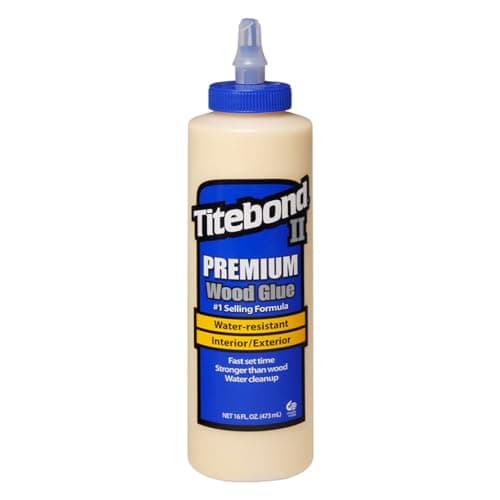
Titebond Titebond II Premium Wood Glue (16 oz)
Titebond II Premium Wood Glue (16 oz)

The one bottle most shops should keep if they only keep one. Water-resistant enough for anything that lives under a roof or on a covered porch, at almost the price of Original.

Best all-round
8.0
$7.57Amazon
02
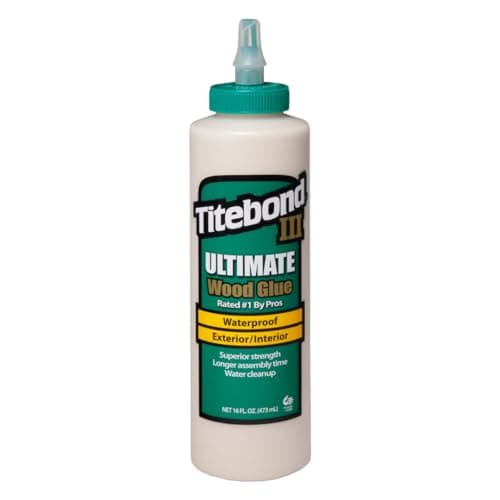
Titebond Titebond III Ultimate Wood Glue (16 oz)
Titebond III Ultimate Wood Glue (16 oz)

The waterproof one, and — less advertised but more useful — the one with the longest open time. Big glue-ups get calmer the moment you switch to it.

Best for outdoor and big glue-ups
8.6
$9.58Amazon
03
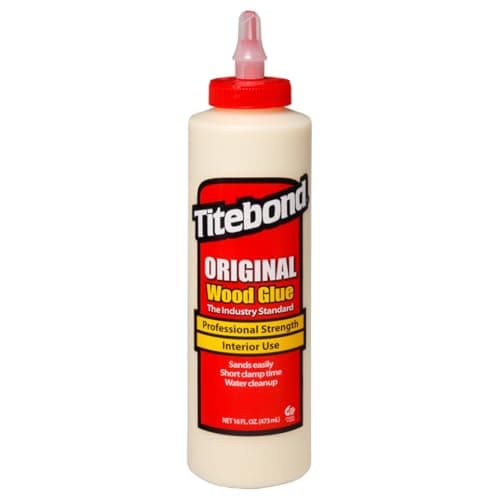
Titebond Titebond Original Wood Glue (16 oz)
Titebond Original Wood Glue (16 oz)

The shop-standard interior glue. Fast tack, a joint stronger than the wood around it, and it sands without gumming the paper — which is exactly why it is the default.

Best overall
7.4
$5.49Amazon
04
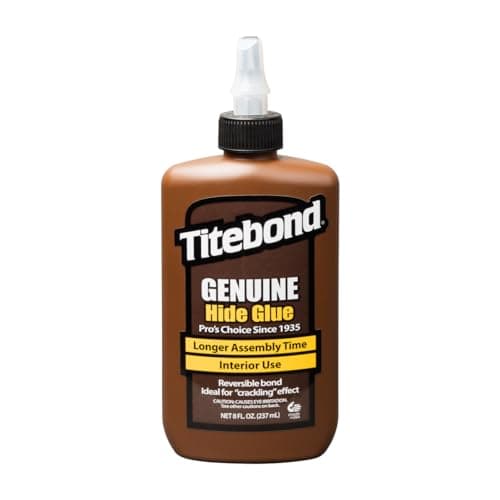
Titebond Titebond Liquid Hide Glue (8 oz)
Titebond Liquid Hide Glue (8 oz)

The reversible one. Heat and moisture release it, so a chair repaired with hide glue can be taken apart and repaired again in twenty years — which PVA makes impossible.

Best for repairs and antiques
6.6
$8.39Amazon

#ad · Live prices from the Amazon Product API, as of October 5, 2026. Where we have no verified live price, we show none — we would rather leave a gap than print a number that has rotted.

In detail

The picks, in full

01
Titebond Titebond II Premium Wood Glue (16 oz)

Best all-round

Titebond II Premium Wood Glue (16 oz)

16 ozANSI Type II water-resistantInterior/exteriorCream color
8.0/10

The one bottle most shops should keep if they only keep one. Water-resistant enough for anything that lives under a roof or on a covered porch, at almost the price of Original.

Strength
9
Open time
6
Water resistance
7
Sandability
9
Value
9

Pros

  • Type II water resistance covers garden furniture, planters and anything that gets wiped down
  • Costs barely more than the interior-only Original
  • Same fast tack and clean sanding as the rest of the line

Cons

  • Not the fully waterproof rating of Titebond III
  • Open time is still short for a large carcass glue-up

Don't buy this if…

…you are gluing a cutting board or anything soaked regularly — that is a III job.

$7.57View on Amazon

Price as of October 5, 2026. Prices change — Amazon's is the one that counts.

#ad · we may earn a commission from this link to Titebond II Premium Wood Glue (16 oz)

02
Titebond Titebond III Ultimate Wood Glue (16 oz)

Best for outdoor and big glue-ups

Titebond III Ultimate Wood Glue (16 oz)

16 ozANSI Type I waterproofLonger open timeDark glue line
8.6/10

The waterproof one, and — less advertised but more useful — the one with the longest open time. Big glue-ups get calmer the moment you switch to it.

Strength
9
Open time
8
Water resistance
10
Sandability
8
Value
8

Pros

  • ANSI Type I waterproof rating covers outdoor furniture and cutting boards
  • Longer open time is the real reason to keep a bottle — complicated assemblies stop being a race
  • Rated by the manufacturer for indirect food contact

Cons

  • Dries to a darker line than Original or II, which shows in pale woods
  • Most expensive of the three Titebonds

Don't buy this if…

…you glue pale hardwoods and hate a visible line. Original or II leave a lighter joint.

$9.58View on Amazon

Price as of October 5, 2026. Prices change — Amazon's is the one that counts.

#ad · we may earn a commission from this link to Titebond III Ultimate Wood Glue (16 oz)

03
Titebond Titebond Original Wood Glue (16 oz)

Best overall

Titebond Original Wood Glue (16 oz)

16 ozInterior useAliphatic resinSands cleanly
7.4/10

The shop-standard interior glue. Fast tack, a joint stronger than the wood around it, and it sands without gumming the paper — which is exactly why it is the default.

Strength
9
Open time
6
Water resistance
3
Sandability
9
Value
10

Pros

  • Grabs quickly, so a rubbed joint holds while you fetch the clamps
  • Sands and machines without the gummy smear that softer glues leave
  • Cheapest per ounce of the Titebond line

Cons

  • Not water resistant — interior work only
  • Short open time makes big, complicated glue-ups stressful

Don't buy this if…

…the piece will ever live outdoors or see standing water. Step up to II or III.

$5.49View on Amazon

Price as of October 5, 2026. Prices change — Amazon's is the one that counts.

#ad · we may earn a commission from this link to Titebond Original Wood Glue (16 oz)

04
Titebond Titebond Liquid Hide Glue (8 oz)

Best for repairs and antiques

Titebond Liquid Hide Glue (8 oz)

8 ozReversible with heat/moistureLong open timeNo mixing or heating
6.6/10

The reversible one. Heat and moisture release it, so a chair repaired with hide glue can be taken apart and repaired again in twenty years — which PVA makes impossible.

Strength
7
Open time
9
Water resistance
2
Sandability
8
Value
7

Pros

  • Reversible, which is the whole argument for using it on anything you might repair again
  • Long open time suits fussy assemblies and rubbed joints
  • Liquid formula needs no glue pot, unlike traditional hot hide glue

Cons

  • Not water resistant at all
  • Shelf life is shorter than PVA — check the date before a critical glue-up

Don't buy this if…

…you are building new furniture that will never be repaired. PVA is stronger and cheaper.

$8.39View on Amazon

Price as of October 5, 2026. Prices change — Amazon's is the one that counts.

#ad · we may earn a commission from this link to Titebond Liquid Hide Glue (8 oz)

The four grades, side by side

Published listing specifications for the four Titebond grades ranked above. The water resistance column is the ANSI/HPVA rating the maker publishes, not our judgment.

GradeWater resistanceGlue linePublished specifications
Titebond OriginalInterior use onlyPale16 oz, aliphatic resin, sands cleanly
Titebond II PremiumANSI Type II water-resistantCream16 oz, interior/exterior
Titebond III UltimateANSI Type I waterproofDark16 oz, longer open time
Titebond Liquid HideNot water resistantAmber8 oz, reversible with heat/moisture, long open time, no mixing or heating

Reading the ANSI ratings properly

ANSI/HPVA Type I and Type II are soak-and-boil test classifications for the adhesive bond, not a claim about the finished object. Type I is the more severe of the two. A glue that passes it will hold a bond through water exposure that destroys a Type II bond — and in both cases the wood around the joint is swelling and shrinking while that happens.

So the rating tells you which failure you have removed, not that you have removed failure. For a cutting board, Type I plus a finish regime plus not leaving it in standing water is the whole answer. Type I on its own is one third of it.

Clamp time, cure time and the mistake in between

Clamp time and cure time are different numbers and confusing them ruins joints. Clamp time is how long the clamps stay on; cure time is how long before the joint reaches full strength and can be stressed, machined or put into service. PVA glues reach handling strength long before full cure.

The practical rule that keeps you out of trouble: leave it clamped longer than you think on anything load-bearing, and do not machine a fresh glue line the same hour you made it. A planer or a drum sander taking a pass over a glue line that has not cured will load the abrasive with soft glue and leave a depression you only see under finish.

Temperature is the specification people ignore

Every PVA has a minimum application temperature, and a cold shop is the most common reason a joint that should have held did not. Glue applied below the published minimum does not cure properly — it chalks. If your shop is unheated, bring the glue, the clamps and the wood indoors for a day before a glue-up rather than trusting the joint.

The same goes the other way in summer. A hot, dry shop shortens open time dramatically, which is exactly when Titebond III's longer working window stops being a nice-to-have.

How much glue to put on

Enough to get a thin, continuous squeeze-out line along the whole joint. Less than that and you have a starved joint, which is the failure mode that looks fine and breaks later. Much more than that and you are just making cleanup work, because the excess does not add strength — the bond lives in a film thinner than a sheet of paper.

Wipe squeeze-out with a damp cloth before it sets, or let it go rubbery and pare it off with a chisel. Do not sand it wet: you grind glue into the pores and it shows up as a pale patch when the finish goes on.

Where these numbers come from

The bottle sizes, ANSI water resistance classifications, open time comparisons and glue line colors above are Titebond's own published product information as it appears on the current listings, cited per product in Sources. We have not run soak-and-boil tests, shear tests or open time measurements — we do not have a lab, and our methodology page says so in those words. Prices come from the live price feed.
How we picked

We do not run a testing lab

We researched published manufacturer specifications, manuals and spec sheets, ran the arithmetic those specs support, and read owner reviews at volume, then scored each tool against a published rubric. The scores are judgments from documented research — they are not measurements we took, because we do not have a lab and we are not going to pretend we do. Where a number came from a manufacturer's document, we name it and link it in Sources.

Questions

Frequently asked

Is Titebond III stronger than Titebond II?
Not in a way you will ever notice. Both make a long-grain joint in well-fitted wood that is stronger than the wood itself, which means the board breaks before the glue line does. The reasons to choose between them are water resistance, open time and glue line color — not strength.
Which Titebond should I use for a cutting board?
Titebond III. It carries the ANSI Type I waterproof rating, and a cutting board is washed. The dark glue line is a real cost on maple and the right trade to make anyway — and note that waterproof glue does not make the board dishwasher safe. Wood movement, not glue failure, is what destroys cutting boards.
Can I use Titebond II outdoors?
Under cover, yes. Exposed to rain and sun, no — that is Type I territory and you want III. The useful dividing line is whether water ever sits on the joint: wiped down is Type II work, rained on is Type I work.
Does Titebond III really have a longer open time?
Yes, and it is the most underrated reason to buy it. Titebond publishes a longer open time for III than for II, which on a wide panel or a case assembly with a dozen joints is the difference between an assembly you control and one that controls you.
What about hide glue — is it obsolete?
Not for repair work. Hide glue is reversible with heat and moisture, so a joint made with it can be taken apart and remade decades later. PVA cannot be undone, which means a chair glued with Titebond is a chair that gets broken rather than disassembled next time. Build with PVA; repair antiques with hide.

Keep reading

Receipts

Sources

We do not run a testing lab, and we do not pretend to. Our picks come from published manufacturer specifications and manuals, the arithmetic those specs support, and owner reviews read at volume. Where we could not verify something, we say so on the page rather than quietly leaving it out. Read our full method.