Skip to content
Dovetail & Dust

HUB 04 · Joinery & Jigs

Best Mortise Chisels

A mortise chisel is not a thicker bench chisel. It is a lever, and the geometry that makes it one is the whole purchase.

By Stephen V.Updated How we research
#ad

We earn a commission when you buy through our Amazon links, at no extra cost to you. It never changes our rankings, and we say so when the cheaper tool is the better buy. How this works.

For normal furniture mortises, buy the Narex four-piece set in 4, 6, 10 and 12 mm. If your layout is in inches, buy the Narex Imperial set instead and let the chisel width be the joint dimension. If you want one excellent chisel rather than a set, the Robert Sorby #331 sash pattern is the one, and Sorby publishes the number that matters: a 2-degree side relief on a 159 mm blade. The budget route is a single Narex chisel in the one width your next project needs, and the Narex three-piece set in 4, 5 and 8 mm is for shops whose work is small.

Prices beside each pick come from our live price layer rather than from this article, last checked November 23, 2026. One thing worth saying before the picks: the mortise-chisel aisle is dominated by one Czech maker, and four of the five entries below are Narex because that is what is actually on sale, not because we could not be bothered to look further. Where a second maker does something different — Sheffield-made, published side relief, boxwood handle — it is ranked for it.

Why a mortise chisel exists at all

A bench chisel is designed to pare. Its blade is thin, its sides are beveled so it can get into an acute corner, and its edge is ground at a low angle so it slices. Every one of those choices is wrong for a mortise.

Cutting a mortise by hand is not paring. You drive the chisel down across the grain, then lever the chip up and out, and then do it again a few hundred times. The levering is the whole job, and it puts a bending load on the blade and a prying load on the edge. A thin bevel-edge blade flexes under that; the thinner it is, the more it flexes, and a flexing chisel wanders out of the line you marked. A low bevel angle under the same load does not just dull — it rolls or chips.

So a mortise chisel is built the opposite way. The blade is a thick rectangle in section, often as deep front-to-back as it is wide, which makes it stiff in the direction you lever. The sides are parallel and square rather than beveled, so they ride the mortise walls and keep the chisel aligned — the tool steers itself once the first cut is in. The bevel is ground steeper, typically in the 30 to 35 degree range rather than 25, because a blunter wedge survives prying. And the handle is built to be struck: a hoop, a thick ferrule or a dense wood like boxwood, not a thin lacquered handle meant for palm pressure.

That is the entire argument for owning one. If you have ever cut a mortise with a bench chisel, wondered why the walls came out bellied and blamed your technique, this is why.

The three patterns, and which you are actually buying

Sash mortise chisels are the common pattern and the one four of the five picks here belong to: a stout rectangular blade, usually a little deeper than it is wide, sized for window sash and furniture-scale joints. This is the right default for anyone building tables, chairs, doors and casework.

Registered mortise chiselsare heavier again, with a shoulder and a hooped handle, intended for timber-scale work. If you are cutting mortises in 4x4 oak, this is the pattern — and it is also far rarer on the general market.

Japanese mortise chisels(mukomachi nomi) take a third approach: a thick laminated blade, hollow-ground back, hooped handle and very hard steel. They cut superbly and are a genuinely different tool to learn. Be careful shopping for them, because much of what is sold as a "Japanese mortise chisel set" is actually a set of oire nomi bench chisels, which is a different tool — our chisel roundup covers the bench chisel field properly, and best Japanese saws is the other half of hand-cut joinery.

The pattern that is noton this page is the hollow mortise chisel — the square bit with a drill inside it that fits a mortising machine. That is a machine consumable, not a hand tool, and if that is what you came for the right page is the benchtop mortiser roundup.

How we ranked them

1. Blade section before anything else. Stiffness under levering is the property the whole tool exists for, and it comes from thickness, not from steel. A thin chisel in excellent steel is still the wrong tool.

2. Side relief, if the maker publishes it.A mortise chisel that is exactly as wide at the back as at the edge will wedge in a deep cut. Makers solve it by tapering the blade slightly in width — Sorby publishes 2 degrees on the 331, which is the only numeric side-relief figure any maker here publishes, and it is why that chisel is ranked for single-chisel use.

3. Width coverage against real joints. Mortise width should be about a third of the stock thickness, which for 3/4 in. (19 mm) rails lands on 1/4 in. or 6 mm, and for a heavier leg on 3/8 to 1/2 in., 10 to 12 mm. A set that covers 6 to 12 mm covers most furniture. A set that stops at 8 mm does not cover a bench.

4. Handle and how it takes a strike.Mortising is hundreds of mallet blows per joint. Handle material and ferrule construction decide whether the tool is still whole in five years, and whether your wrist is comfortable at blow two hundred. Which mallet you pair it with matters as much — see the woodworking mallet roundup.

5. What is published, and what is not. Narex publishes no hardness figure for these mortise chisels on the listings we read, and Sorby publishes no steel grade for the 331. We print those as gaps rather than filling them in. There is no lab here, which the methodology page states plainly.

The four-piece Narex set is the one most shops should buy

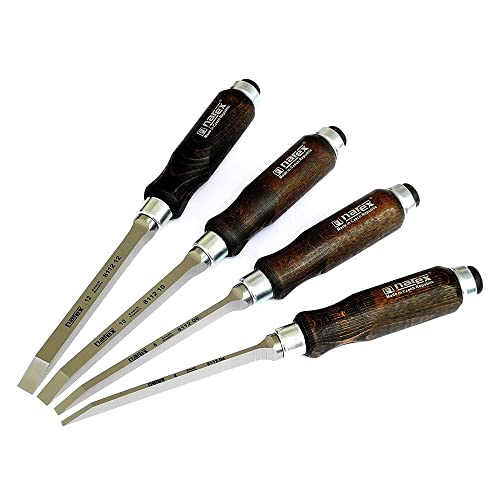
4, 6, 10 and 12 mm is a well-chosen spread. The 6 mm cuts rail and apron mortises in three-quarter stock; the 10 and 12 mm cut leg mortises in a table or a bench; the 4 mm is there for small work and for cleaning. Four chisels in those widths cost appreciably less than buying them one at a time, and the blades are the thick square-sided section this job wants.

Two honest caveats. The widths are metric, so your mortises are metric — which is perfectly fine on its own, and genuinely annoying if your router bits and your tenoning setup are imperial, because a mortise cut with a 10 mm chisel does not match a 3/8 in. tenon. And it arrives with a grinding bevel rather than a working edge. Put half an hour into it on a stone first: our sharpening stone roundup covers what to buy, and chisel sharpening angle explains why a mortise chisel wants a steeper bevel than the bench chisels beside it.

Work in inches? Buy the Imperial set instead

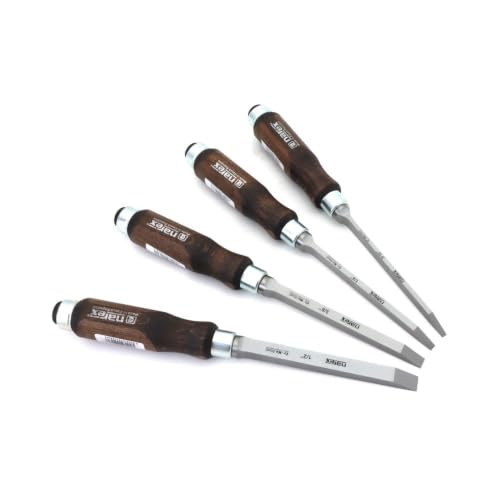
The Narex Imperial set covers 3/16, 1/4, 3/8 and 1/2 in. The reason this matters is not nationalism, it is arithmetic: in hand joinery the chisel width is the mortise width, and the mortise width has to match the tenon you are about to cut. If your rules, marking gauge and router bits are imperial, a set in inches removes a conversion from every joint, and conversions are where loose tenons come from.

The 1/2 in. chisel is the practical advantage over the metric set, which tops out at 12 mm; the 3/16 in. is the one most shops will leave in the roll. If you are working out which width a given joint wants, our tools needed for mortise and tenon guide walks the whole joint through, and the mortise and tenon joint covers proportions.

The Sorby 331 is the best single chisel here

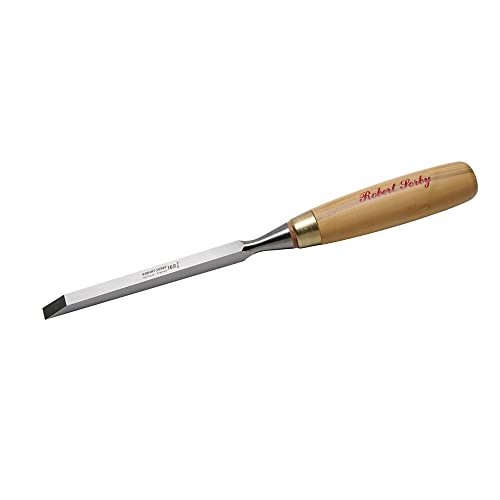
Sorby publishes a 159 mm (6-1/4 in.) blade, a 279 mm (11 in.) overall length, a boxwood handle and a 2-degree side relief angle across the 331 range. That side relief is the detail to understand: the blade is slightly narrower at the back than at the cutting edge, so as it goes deeper it is not trying to force itself into a slot the same width as itself. In a deep mortise in dry hardwood, that is the difference between a chisel you lift out and one you have to work out.

Boxwood is dense and takes a mallet well, and the sash pattern is comfortable to steer with one hand while striking with the other. What Sorby does not publish is the steel grade or a hardness figure for this chisel, so we are not going to claim edge retention we cannot source — the 331 is ranked on published geometry and on being Sheffield-made, not on a number nobody printed.

The limitation is obvious: it is one width. 3/8 in. is the most generally useful single mortise width in furniture work, and it still will not cut a drawer-rail mortise in thin stock.

The budget route: buy one chisel, in the width you need

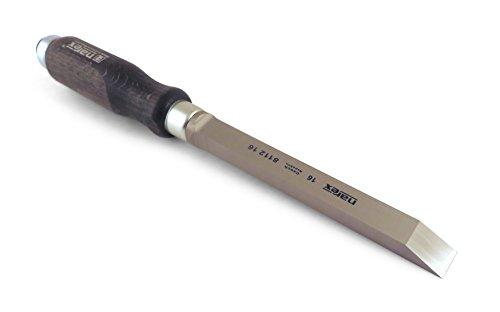
Narex sells these chisels individually from 4 mm up to 16 mm with a stained European beech handle, and one chisel costs roughly a third of the four-piece set. If you have one project and one joint size — a workbench with 12 mm mortises, a chair with 8 mm — this is the honest purchase, and it is also how you add the 16 mm the four-piece set does not contain.

Two warnings. Buying three widths this way costs more than the set, so if you already know you need three, buy the set. And it is a size-variant listing: check which width is selected before you order, because the link lands on one size and the box that arrives is whatever was in the dropdown.

Small work: the three-piece set in 4, 5 and 8 mm

If what you build is boxes, drawers, small cabinets and chairs, a 12 mm chisel is dead weight and 4, 5 and 8 mm is the useful range. The 5 mm is the unusual one and the reason to notice this set — it fills the gap between the standard 4 and 6 mm steps, and it suits the 15-16 mm thick rails that small casework uses.

Narrow blades are also the easiest to damage, because the same mallet blow concentrates on a quarter of the edge. Use a lighter mallet, take smaller bites, and do not try to lever a full-depth chip with a 4 mm chisel.

Side by side, as published

ChiselWidthsPublished blade geometryHandleBest for
Narex set of 44 / 6 / 10 / 12 mmSquare-sided mortise section; no hardness publishedBeechMost furniture work
Narex Imperial set of 43/16 / 1/4 / 3/8 / 1/2 in.Square-sided mortise section; no hardness publishedBeechInch-based layout
Robert Sorby #3313/8 in. (range 1/4 to 1/2 in.)159 mm blade, 279 mm overall, 2° side relief; no steel grade publishedBoxwoodOne excellent chisel
Narex individual4 to 16 mm, sold singlySame section as the set; no hardness publishedStained European beechBuying one width
Narex set of 34 / 5 / 8 mmSame section as the set; no hardness publishedBeechSmall joinery

Every figure above is the maker's own published number for the exact chisel we link, or the live listing where the maker publishes nothing. The blanks are blanks on purpose: Narex publishes no hardness for this line and Sorby publishes no steel grade for the 331, so we print neither.

What to buy with them

A mortise chisel is one of three purchases, and the other two are not optional. You need a mallet with enough head mass to drive the chisel without you swinging hard, and you need a sharpening setup, because a mortise chisel dulls on every joint and a dull one needs forcing. A marking gauge is the third: a mortise that was not gauged from a face side is a mortise that will not line up with its tenon. All three of those supporting purchases sit inside the bracket we rank on best woodworking tools under $100.

When you are ready to cut one, how to cut a mortise by hand is the method, and it is where the chisel width decides the joint. If you would rather the machine did it, compare the hand route against a benchtop mortiser or a jig-based approach before spending anything.
The short answer

Quick picks

#ProductBest forScorePrice
01
Narex Narex Mortise Chisel Set (4, 6, 10, 12 mm)
Narex Mortise Chisel Set (4, 6, 10, 12 mm)

The set that covers normal furniture mortises. Four widths, thick rectangular blades that take levering without flexing, and the only common way to buy a graduated mortise set without assembling it one chisel at a time.

Best overall
8.0
$83.16Amazon
02
Narex Narex Imperial Mortise Chisel Set (3/16, 1/4, 3/8, 1/2 in.)
Narex Imperial Mortise Chisel Set (3/16, 1/4, 3/8, 1/2 in.)

The same idea in inches. If your rules, router bits and tenon layout are imperial, this is the set that lets the chisel width be the joint dimension instead of a conversion.

Best for imperial layout
7.6
$84.99Amazon
03
Robert Sorby Robert Sorby #331 Sash Mortise Chisel (3/8 in.)
Robert Sorby #331 Sash Mortise Chisel (3/8 in.)

The English sash pattern, made in Sheffield. Sorby publishes a 2-degree side relief angle on a 159 mm blade, which is the detail that stops the chisel binding in a deep mortise rather than a marketing line.

Best single chisel
7.6
$69.94Amazon
04
Narex Narex Individual Mortise Chisel (811205-811216, 4-16 mm)
Narex Individual Mortise Chisel (811205-811216, 4-16 mm)

The cheapest honest way into mortise chisels: buy the one width your next project needs. Sold singly from 4 mm to 16 mm with a stained European beech handle.

Budget pick
7.4
$32.67Amazon
05
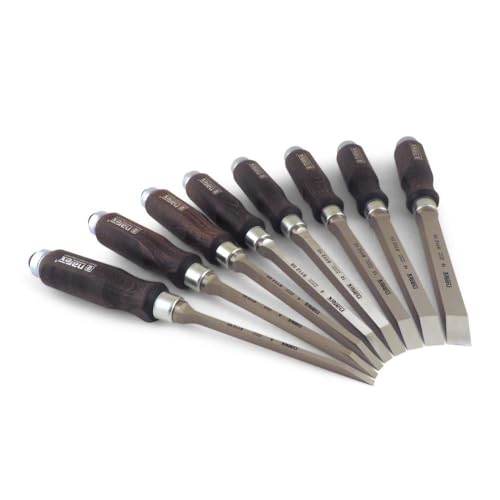
Narex Narex 3-Piece Mortise Chisel Set (4, 5, 8 mm)
Narex 3-Piece Mortise Chisel Set (4, 5, 8 mm)

Three narrow widths for small joinery — drawer rails, chair rungs, boxes and small casework — where a 12 mm chisel is simply too wide for the stock.

Best for small, fine mortises
7.0
$60.99Amazon

#ad · Live prices from the Amazon Product API, as of November 23, 2026. Where we have no verified live price, we show none — we would rather leave a gap than print a number that has rotted.

In detail

The picks, in full

01
Narex Narex Mortise Chisel Set (4, 6, 10, 12 mm)

Best overall

Narex Mortise Chisel Set (4, 6, 10, 12 mm)

4 / 6 / 10 / 12 mmSet of 4Beech handlesHardness not published
8.0/10

The set that covers normal furniture mortises. Four widths, thick rectangular blades that take levering without flexing, and the only common way to buy a graduated mortise set without assembling it one chisel at a time.

Blade stiffness
8
Size coverage
9
Handle
7
Out-of-box
7
Value
9

Pros

  • Four widths cover the mortise sizes most furniture actually uses — 6 mm for rails, 10 and 12 mm for legs and heavy aprons
  • Thick, square-sided blades resist the twist a bevel-edge bench chisel develops when you lever waste out of a deep mortise
  • Cheaper per chisel than buying the same four widths individually

Cons

  • Metric widths mean metric mortises — fine on its own, awkward if your tenon layout and router bits are imperial
  • Narex publishes no hardness figure for this line, so edge retention is an unknown rather than a claim
  • Arrives with a grinding bevel, not a working edge: budget time on a stone before the first joint

Don't buy this if…

…you work in inches and want the chisel width to set the tenon thickness directly — the Imperial set exists for exactly that reason.

$83.16View on Amazon

Price as of November 23, 2026. Prices change — Amazon's is the one that counts.

#ad · we may earn a commission from this link to Narex Mortise Chisel Set (4, 6, 10, 12 mm)

02
Narex Narex Imperial Mortise Chisel Set (3/16, 1/4, 3/8, 1/2 in.)

Best for imperial layout

Narex Imperial Mortise Chisel Set (3/16, 1/4, 3/8, 1/2 in.)

3/16 / 1/4 / 3/8 / 1/2 in.Set of 4Beech handlesHardness not published
7.6/10

The same idea in inches. If your rules, router bits and tenon layout are imperial, this is the set that lets the chisel width be the joint dimension instead of a conversion.

Blade stiffness
8
Size coverage
8
Handle
7
Out-of-box
7
Value
8

Pros

  • Widths match imperial mortise-and-tenon practice, so a 1/4 in. chisel cuts a 1/4 in. mortise with no arithmetic
  • 1/2 in. is wide enough for bench and table legs, which the metric set only reaches at 12 mm
  • Same thick rectangular section as the metric set — built to be levered, not just pared

Cons

  • 3/16 in. is a specialist width most shops will rarely reach for
  • No hardness or steel grade published for the line on the listings we read
  • Needs the same initial sharpening as any chisel at this price

Don't buy this if…

…your shop is metric. Converting a 10 mm mortise to the nearest imperial chisel is how joints end up loose.

$84.99View on Amazon

Price as of November 23, 2026. Prices change — Amazon's is the one that counts.

#ad · we may earn a commission from this link to Narex Imperial Mortise Chisel Set (3/16, 1/4, 3/8, 1/2 in.)

03
Robert Sorby Robert Sorby #331 Sash Mortise Chisel (3/8 in.)

Best single chisel

Robert Sorby #331 Sash Mortise Chisel (3/8 in.)

3/8 in. width159 mm blade2° side reliefBoxwood handle
7.6/10

The English sash pattern, made in Sheffield. Sorby publishes a 2-degree side relief angle on a 159 mm blade, which is the detail that stops the chisel binding in a deep mortise rather than a marketing line.

Blade stiffness
9
Size coverage
5
Handle
9
Out-of-box
8
Value
7

Pros

  • Published 2-degree side relief tapers the blade in width towards the back, so it clears its own cut instead of wedging
  • 159 mm blade and 279 mm overall length give the reach for a through mortise in thick stock
  • Boxwood handle takes a mallet and is comfortable to steer with one hand while striking with the other

Cons

  • Sorby publishes no steel grade or hardness figure for the 331, so edge retention is not a stated specification
  • One width per purchase, and 3/8 in. will not cut a narrow drawer-rail mortise
  • Costs more than a four-chisel Narex set, for a single chisel

Don't buy this if…

…you need a range of widths today. One excellent 3/8 in. chisel does not cover a project that also needs 1/4 in. mortises.

$69.94View on Amazon

Price as of November 23, 2026. Prices change — Amazon's is the one that counts.

#ad · we may earn a commission from this link to Robert Sorby #331 Sash Mortise Chisel (3/8 in.)

04
Narex Narex Individual Mortise Chisel (811205-811216, 4-16 mm)

Budget pick

Narex Individual Mortise Chisel (811205-811216, 4-16 mm)

Sold singly4-16 mm availableEuropean beech handleHardness not published
7.4/10

The cheapest honest way into mortise chisels: buy the one width your next project needs. Sold singly from 4 mm to 16 mm with a stained European beech handle.

Blade stiffness
8
Size coverage
6
Handle
7
Out-of-box
7
Value
9

Pros

  • One chisel for roughly a third of the price of a four-piece set — the right first purchase if you have one joint to cut
  • 16 mm is wider than anything in the four-piece metric set, which tops out at 12 mm
  • Same blade section and handle as the set, so widths added later match what you already own

Cons

  • Buying three widths one at a time costs more than the set does
  • This is a size-variant listing: check the selected width before ordering, because the link lands on one size
  • No published hardness, same as the rest of the line

Don't buy this if…

…you already know you need three or four widths — the set is cheaper per chisel and arrives together.

$32.67View on Amazon

Price as of November 23, 2026. Prices change — Amazon's is the one that counts.

#ad · we may earn a commission from this link to Narex Individual Mortise Chisel (811205-811216, 4-16 mm)

05
Narex Narex 3-Piece Mortise Chisel Set (4, 5, 8 mm)

Best for small, fine mortises

Narex 3-Piece Mortise Chisel Set (4, 5, 8 mm)

4 / 5 / 8 mmSet of 3Beech handlesHardness not published
7.0/10

Three narrow widths for small joinery — drawer rails, chair rungs, boxes and small casework — where a 12 mm chisel is simply too wide for the stock.

Blade stiffness
7
Size coverage
6
Handle
7
Out-of-box
7
Value
8

Pros

  • 4 and 5 mm are the widths thin stock actually needs, and almost nothing else on the market sells them as a set
  • Includes 5 mm, which sits between the usual 4 and 6 mm steps and suits 15-16 mm thick rails
  • Cheaper than the four-piece set because it skips the wide chisels a small-work shop never uses

Cons

  • Nothing here cuts a leg mortise — 8 mm is the ceiling
  • Narrow blades are the easiest to over-lever and chip; they want a lighter mallet
  • No published hardness figure

Don't buy this if…

…your next project is a workbench or a table. Those legs want 10 mm and up, which means the four-piece set or a single wide chisel.

$60.99View on Amazon

Price as of November 23, 2026. Prices change — Amazon's is the one that counts.

#ad · we may earn a commission from this link to Narex 3-Piece Mortise Chisel Set (4, 5, 8 mm)

Size the chisel to the joint, not to the set. The old rule is that a mortise is about one third of the thickness of the stock it is cut into: 6 mm or 1/4 in. for 19 mm (3/4 in.) rails, 10 to 12 mm or 3/8 to 1/2 in. for a table or bench leg. Buy the widths your work actually uses and skip the rest.

Grind steeper than your bench chisels. A mortise chisel is prying, not slicing, and a 25-degree bevel will chip at the corners within a joint or two. The usual working range is 30 to 35 degrees. Keeping the two tool types at different angles is easier if you use a honing guide, which is what the honing guide roundup is for.

Chop from the middle outwards, and stop short of the ends. Work from the center of the mortise towards each end, leave the last millimetre at both ends for a final paring cut with the chisel held vertically against the gauged line, and the ends come out crisp instead of crushed.

Let the sides do the steering.Once the first cut is on the line, the parallel sides of the blade ride the mortise walls. Do not fight the chisel sideways to correct it — reset, and let the tool follow its own slot. That is the property you paid for.

A hand mortise is slower than a machine and often better. One mortise takes a few minutes once you have the rhythm. For a dozen identical joints a mortiser earns its bench space; for four legs on a side table, the chisel is faster than setting the machine up.

How we picked

We do not run a testing lab

We researched published manufacturer specifications, manuals and spec sheets, ran the arithmetic those specs support, and read owner reviews at volume, then scored each tool against a published rubric. The scores are judgments from documented research — they are not measurements we took, because we do not have a lab and we are not going to pretend we do. Where a number came from a manufacturer's document, we name it and link it in Sources.

Questions

Frequently asked

What is the best mortise chisel set?
For metric work, the Narex four-piece in 4, 6, 10 and 12 mm — that spread covers rail, apron and leg mortises in furniture-scale stock. For imperial layout, the Narex Imperial set in 3/16, 1/4, 3/8 and 1/2 in. If you want one chisel rather than a set, the Robert Sorby 331 publishes a 2-degree side relief on a 159 mm blade.
Can I use a regular bench chisel to cut a mortise?
You can, and it works badly. A bench chisel's blade is thin and beveled on the sides, so it flexes when you lever a chip out and it does not ride the mortise walls, which is how you end up with bellied sides and a joint that will not close. Its lower bevel angle also chips under prying. For one shallow mortise it will do; for a project, buy the right tool.
What size mortise chisel do I need?
Match the chisel to the stock: roughly one third of the thickness. For 3/4 in. (19 mm) rails that means 1/4 in. or 6 mm; for a table or bench leg, 3/8 to 1/2 in. or 10 to 12 mm. Because the chisel width sets the mortise width in hand joinery, buy the widths your actual projects use rather than the biggest set.
What angle should a mortise chisel be sharpened to?
Steeper than a bench chisel — 30 to 35 degrees is the usual working range, against 25 for paring. The reason is the load: a mortise chisel is used to pry waste out, and a thin 25-degree edge rolls or chips under that. The blunter wedge cuts slightly harder and survives the job.
What is the difference between a sash and a registered mortise chisel?
Both are mortise chisels; the registered pattern is heavier, with a shoulder and usually a hooped handle, and it is built for timber-scale joints. A sash mortise chisel is the furniture-scale version and the pattern most of this page covers. For table, chair and casework mortises the sash pattern is the right default.
Do I need mortise chisels if I own a mortiser?
You will still want one. A benchtop mortiser uses hollow chisel bits and does the bulk removal, but the ends and corners of a machine mortise usually need paring, and a hand mortise chisel is what squares them. It is also the only route when a joint is bigger than the machine's capacity or on a part you cannot clamp under it.
Are Japanese mortise chisels better?
They are different rather than strictly better: a thick laminated blade with very hard steel, a hollow back and a hooped handle, and they cut beautifully in the hands of someone who sharpens them well. The practical warning when shopping is that many sets advertised for mortise and tenon work are oire nomi bench chisels, which are not mortise chisels at all — read the width and the blade section, not the keywords.

Keep reading

Receipts

Sources

We do not run a testing lab, and we do not pretend to. Our picks come from published manufacturer specifications and manuals, the arithmetic those specs support, and owner reviews read at volume. Where we could not verify something, we say so on the page rather than quietly leaving it out. Read our full method.