The uncomfortable truth about sanders: the difference between the cheapest sander here and the most expensive one is smaller than the difference between skipping a grit and not skipping it. Every sander here will leave a good finish if you work through the grits properly. Where they differ is how tired your arm is, how much dust ends up in the room, and how fine a scratch pattern the best of them can reach.
A random orbital sander spins its pad and oscillates it at the same time, so no abrasive grain follows the same path twice. That is what stops the swirl marks a fixed orbital sander leaves, and it is why this is the one power sander a woodworking shop genuinely needs. Belt sanders remove stock fast and ruin surfaces just as fast; detail sanders get into corners; the random orbit is what actually finishes a panel.
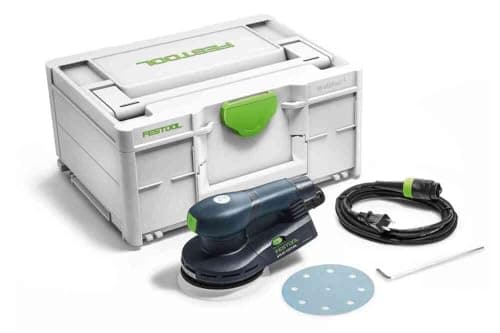
The specification that separates them is stroke— how far the pad moves in its orbit. Most sanders here use a 5 mm stroke, which removes stock briskly. The Festool ETS EC 125/3 uses a 3 mm stroke, which cuts slower and leaves a finer scratch pattern — a finishing sander rather than a leveling one. That single number explains most of the price difference and most of the disagreement about which sander is "best".
Dust is the other axis. An onboard canister or bag captures the coarse stuff and lets the fine dust escape into the room, which is exactly the fraction you do not want in your lungs. Every sander here has a port; connect it to a shop vac or extractorand the difference is dramatic. If you sand indoors and do only one thing from this article, do that one — and wear a respirator regardless.
Two jobs change the answer on this page. If you are stripping an old finish rather than sanding new stock, the criteria invert and we rank them separately in best sander for refinishing furniture. And if the sander you already own is leaving marks, that is usually technique rather than hardware — see how to use a random orbital sander and why your sander leaves swirl marks.
The grit sequence that decides your finish
This matters more than the sander, so it goes first. A workable sequence for furniture is 80 → 120 → 180 → 220, and the rule is that each grit must remove the scratches left by the one before it. That is the whole method. If you jump from 80 to 220, the 220 grit polishes the 80-grit scratches instead of removing them, and they appear the instant you apply finish — usually after you have run out of patience to start again.
How to know a grit is done
Sand until the surface looks uniform under a raking light — a lamp low and to one side, which throws every remaining scratch into shadow. Wipe the dust off first; dust hides exactly what you are looking for. Some people pencil light squiggles across the surface before each grit and sand until they are gone, which is a reliable way to learn what "done" looks like.
Where to stop
For most film finishes, 180 or 220 grit is the sensible stopping point. Going finer burnishes the surface and can make it accept stain unevenly. For oil finishes, 220 is plenty. Sanding to 400 on furniture is almost always wasted effort.
Choosing a sander
Stroke: 5 mm or 3 mm?
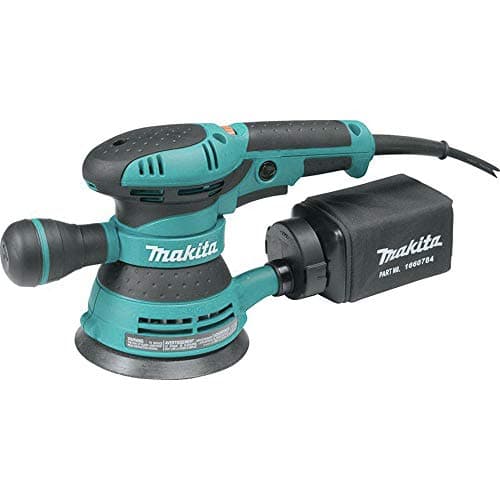
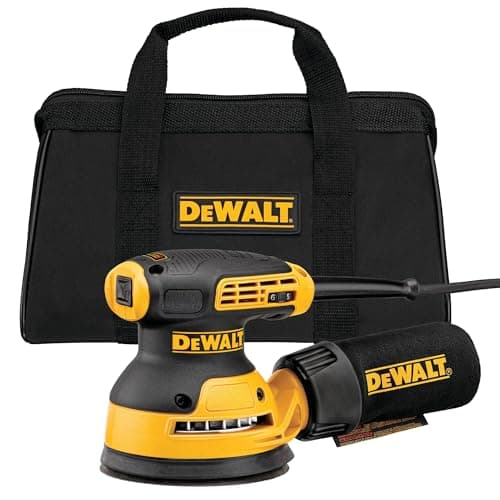
A 5 mm stroke — the Bosch, Makita, DeWalt, SKIL and Black+Decker here — is the general-purpose choice: brisk enough to level a glue-up, fine enough to finish. A 3 mm stroke, like the Festool, is a specialist finisher; it is slower at removing stock and better at the last two grits. Most shops want a 5 mm sander. Shops that already own one and want better final surfaces are the ones who buy a 3 mm.
Corded or cordless?
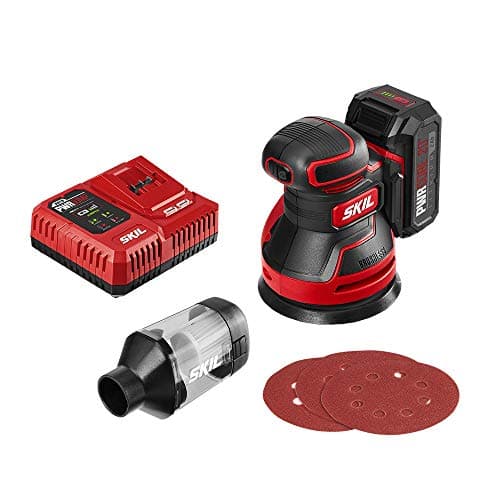
A cord on a sander is more annoying than on almost any other tool — it drags across the surface you just sanded. That makes the case for cordless stronger here than elsewhere. The counterargument is runtime: sanding is a continuous-load job, so a 2.0 Ah pack is a session rather than a day. If your sanding happens at one bench next to an outlet, corded is lighter, cheaper and never stops.
Pad size and disc cost
Every sander here takes 5-inch hook-and-loop discs, which is the size to buy: they are cheap, universally stocked and available in every grit. Check the hole pattern (8-hole is the common one) matches your sander so the dust extraction actually works. Discs are a consumable and a genuinely significant running cost — buy them in bulk packs, not in threes.
By budget
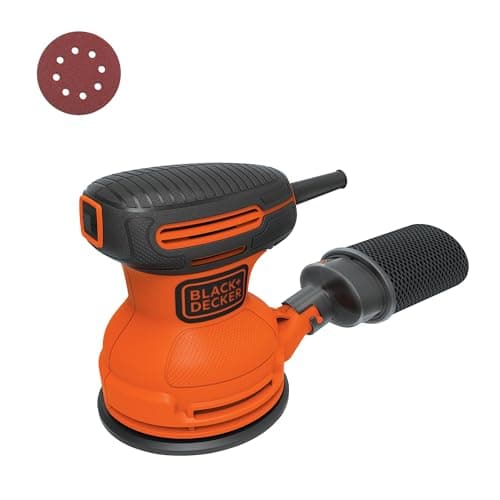
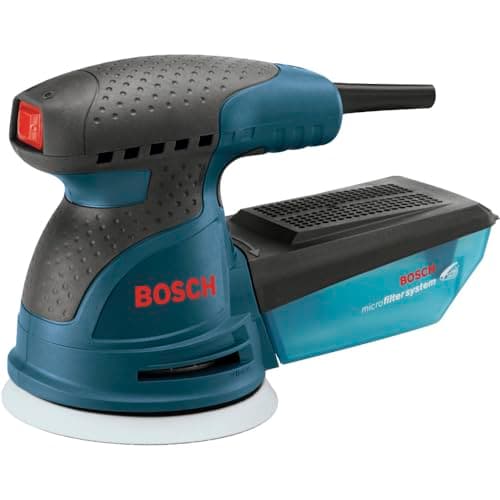
Cheapest useful sander:the Black+Decker BDERO100 — single speed, small bag, genuinely enough to finish a first project. The bracket most people should buy in: the Bosch ROS20VSC is the best all-round value in the category, with the DeWalt DWE6423 and the Makita BO5041 as equally sound picks if you prefer their grip. Cordless: the SKIL PWRCore 20. Premium finishing sander: the Festool, and only if final surface quality is the thing you are buying. Live prices for all six are in the table above.
What we could not verify
We have not measured surface roughness after sanding with these six. Amperages, pad sizes, orbit strokes and OPM figures above are the manufacturers' published specifications. Comfort and dust-capture judgments come from design differences and owner reviews read at volume.
Which grits, and where to stop
A sander is only half the job; the sequence is the other half. Start at the coarsest grit the defect actually needs, never skip more than one grade, and stop at 180 before stain — sanding finer burnishes the surface so it can no longer hold pigment, which is how blotchy stain jobs happen in the last ten minutes. The full ladder, with a grit chart, is in the sanding grit progression guide.