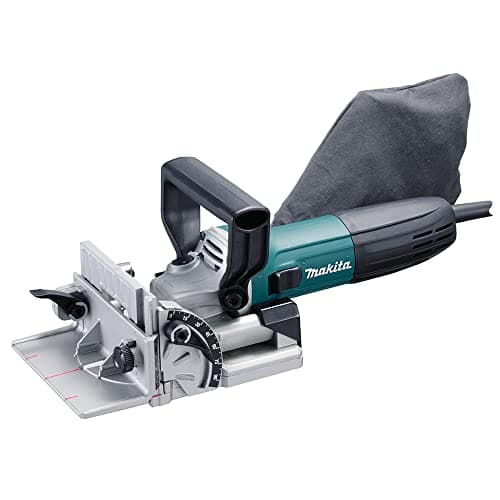
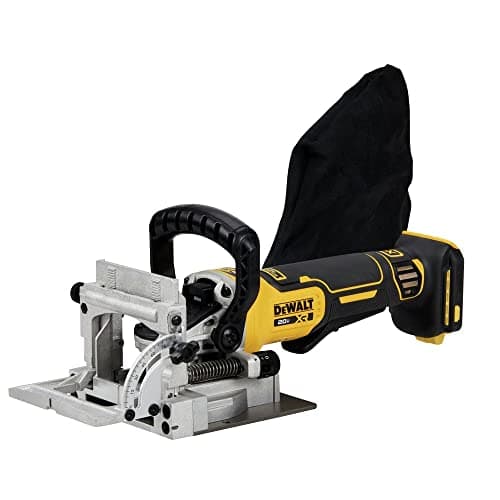
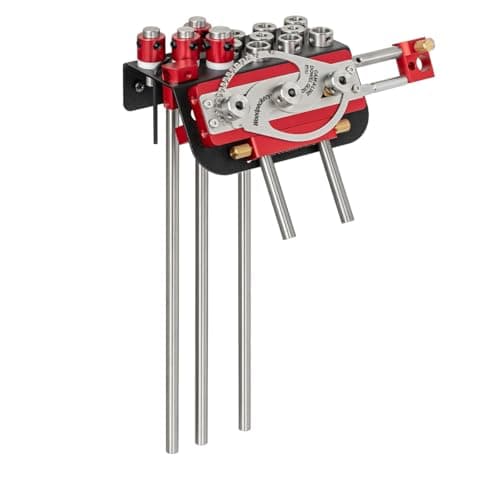
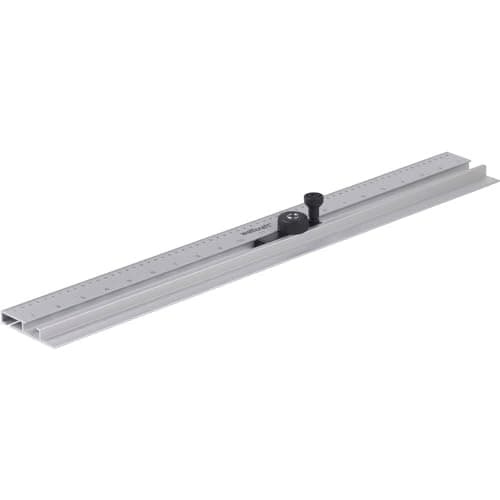
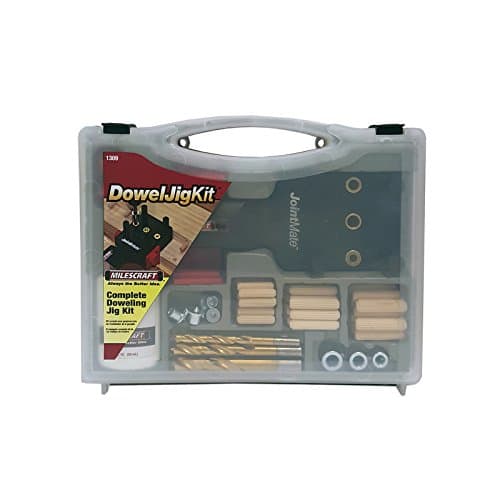
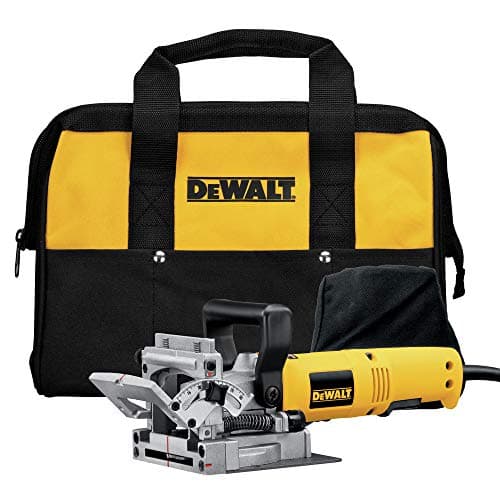
Buy the DeWalt DW682K plate joiner. It reproduces the part of a Domino that most buyers actually use — plunge a slot in two mating faces, drop in a floating spline, clamp — at a small fraction of the price, and it is the one in this field with both anti-slip pins and a dual rack-and-pinion fence, which are the two features that decide whether the slots line up. The budget pick is the Milescraft 1309 DowelJigKit, which puts jig, bits and dowels in one box for less than the price of a bottle of finish. If structural strength rather than alignment is why you were looking at a Domino, the Woodpeckers Cam-A-Line dowel jig is the better answer. The Makita PJ7000 is the refined plate joiner, the DeWalt DCW682B the cordless one, and the wolfcraft 4650000 the dowel jig that also drills shelf-pin rows.
Prices shown against each pick come from our live price layer, last checked November 21, 2026, not from this article.
What the Domino is, and what it is known for
Being precise about this is the point of the page, because each alternative below replaces part of it and not all of it, and the honest version of “alternative” depends on which part you wanted.
The Festool DF 500is a handheld mortiser. Festool publishes a 420 W motor, 25,500 RPM, a weight of 7.72 lb and a 27 mm dust port. It takes cutters of 4, 5, 6, 8 and 10 mm, has depth stops at 12, 15, 20, 25 and 28 mm, adjusts its routing height from 5 to 30 mm, and bevels from 0 to 90 degrees. It cuts mortises for proprietary beech tenons from 4 × 20 mm up to 10 × 50 mm, and Festool notes it will join stock as thin as 12 mm. The RQ-Set ships with a 5 mm cutter, a support bracket, a trim stop, a cross stop, a spanner, the plug-it cord and a Systainer.
Around those published numbers sits the reason people want one. The cutter does not simply drill — it oscillates side to side as it plunges, so the mortise comes out wider than the cutter. That lets Festool offer the same mortise in a tight width and a wider width, so one hole in a joint locks the part and the next holes allow a few millimeters of slide. The practical effect is that a cabinet goes together square, fast, with the parts self-aligning, and the joint is a real floating mortise and tenon rather than a locating device. It is a genuinely excellent tool and we are not going to pretend otherwise.
The two reasons people buy one — and they want different alternatives
Almost every “what can I use instead of a Domino” question is really one of these two, and the answers diverge completely.
Reason one: alignment.You are building cabinets, bookcases, face frames, drawer boxes and mitered boxes, and the parts are already strong enough because they are glued face-to-face or housed in a groove. What you want is for the two parts to land exactly flush, without sliding, while the clamps go on. For this job, biscuits are excellent — they do the same thing the Domino's wide mortise does, and a plate joiner cuts the slot in about the same motion.
Reason two: structure.You are making a chair, a table base, a door frame or anything else where a narrow rail meets a leg end-grain-to-long-grain and nothing but the joint is holding it. Here a biscuit is the wrong answer — a compressed beech wafer 4 mm thick has very little cross-section to resist racking. Dowels are the right answer, because a dowel is a round floating tenon, and two 3/8 in. dowels in a rail end put a real amount of long-grain glue surface and real shear area into the joint.
If you cannot tell which reason is yours, ask what fails if the joint fails. If the answer is “the panel shows a step”, it is alignment. If the answer is “someone falls off the chair”, it is structure.
Route one: a plate joiner (biscuits)
A plate joiner plunges a small circular blade into the face or edge of a board, cutting a shallow crescent slot. A compressed beech biscuit goes in with glue, swells as it takes up the moisture, and locks the two slots together. The standard sizes are #0, #10 and #20, and the machine cuts all three by changing a depth stop.
Why it is the closest alternative in workflow: it is a one-handed plunge against a fence, registered off the face of the board, with no layout beyond a pencil tick across the joint. Nothing else on this page is that fast. Three of the picks below are plate joiners, and what separates them is boringly specific:
The fence. A dual rack-and-pinion fence drives both ends together so it cannot go out of parallel as it moves. A single-point fence can rack, and a racked fence puts the slot at a slight angle, which shows up as a step in the assembled panel. The DeWalt and the Makita both publish rack-and-pinion fences, which is the main reason they are ranked above the cheaper machines.
Anti-slip pins. The classic failure is the machine creeping sideways a millimeter as the blade bites, putting the slot off the mark. The DW682K has retractable pins that bite the work to stop exactly that. The trade is real and worth knowing: those pins can leave small marks, so on pre-finished material you retract them and hold the tool instead.
Biscuits are a consumable. Factor in a bulk pack across the three sizes; the machine is useless without them, and buying retail sleeves of twenty is how biscuit joinery gets an undeserved reputation for being expensive.
Route two: a doweling jig (dowels)
A dowel is the oldest floating tenon there is. The jig's only job is to put two holes in two parts such that they are collinear when the parts are brought together, which means it has to register the same way off both faces — self-centering, or indexed off a reference face.
What dowels give you over biscuits is cross-section and glue area, which is what carries a racking load. What they cost you is time and tolerance: two holes must line up in two axes, not one, and a dowel has no slide at all once it is in. That is why a good jig is not a luxury here — the Woodpeckers Cam-A-Line sets three guide bushings to even spacing with a sliding cam and indexes off engraved centerlines, which is the mechanical answer to exactly this problem. The wolfcraft is self-centering and also drills shelf-pin rows, which is a genuinely separate second use. The Milescraft kit is the cheap way to find out whether dowel joinery suits you at all.
One honest note on all of them: dowel accuracy is a function of the jig and of drilling straight and to depth. Set a stop collar on the bit. The full field is ranked on best doweling jig.
Route three: pocket screws, and the honest case for a router
Two more routes exist and neither needed a pick of its own on this page.
Pocket screws solve the alignment problem differently: the screw clamps the joint as it drives, so you need no clamps at all and the parts cannot slide. They leave a visible oval hole, which rules them out on show surfaces and makes them ideal everywhere else. The comparison that matters is laid out on pocket holes vs dowels, and if a jig is what you are shopping for, Kreg jig alternatives covers that field.
A router and a shop-made loose tenon.This is the closest thing to what the Domino actually does: rout a mortise in both parts with an upcut spiral bit in a simple jig, then plane a strip of hardwood to fit and round its edges. It is the cheapest route of all if you already own a router, and it produces a stronger joint than either biscuits or dowels because you choose the tenon's dimensions. What it is not is fast, and it needs a jig you build. If that appeals, the bit to use is discussed on best router bits and the joint itself on the mortise and tenon guide.
What you cannot buy cheaply
The honest list. Speed — nothing here matches a Domino for joints per hour on a carcase. The engineered loose/tight tenon pairing, which is what makes Domino assembly self-squaring. Dust extraction that works as designed with a matched extractor. The system of accessories, cutters and tenons that all fit together. And resale value, which on Festool is unlike anything else in the category. If you build for money and the tool pays for itself in a season, buy the original; that is a rational decision and this page is not an argument against it.
Side by side
| Tool | Joint it makes | Best at | Fence / registration | Published note |
|---|
| Festool DF 500 (the original) | Loose mortise and tenon | Both, fastest | Bevel 0–90°, height 5–30 mm | 420 W, 25,500 RPM, 7.72 lb |
| DeWalt DW682K | Biscuit (#0/#10/#20) | Alignment | Dual rack-and-pinion + anti-slip pins | 6.5 A, 10,000 RPM |
| Makita PJ7000 | Biscuit (#0/#10/#20) | Alignment | Rack-and-pinion fence | 5.6 A, cast aluminum base |
| DeWalt DCW682B | Biscuit (#0/#10/#20) | Alignment, cordless | Dual rack-and-pinion, bevel 0–90° | 20V MAX brushless, 5.97 lb, bare tool |
| Woodpeckers Cam-A-Line | Dowel | Structure | Self-centering cam, engraved centerlines | 1/4, 5/16, 3/8, 1/2 in. guides |
| wolfcraft 4650000 | Dowel (and shelf pins) | Structure, plus shelf-pin rows | Self-centering, edge clamp | Multiple bushing sizes |
| Milescraft 1309 kit | Dowel | Trying dowel joinery | Self-centering | Jig, bits and dowel pins included |
The Festool row is quoted from Festool's own published product specification for the DF 500; every other row is the maker's published specification for the exact listing we link. We have not run any of these against a Domino and do not claim to have — there is no lab here, which the methodology page says in those words. Where a maker does not publish a figure, the cell says what it does publish rather than carrying a guess.
What to buy, in order
Cabinets, casework and panels, where alignment is the problem: the DeWalt DW682K. The same job with the nicest tool in the hand: the Makita PJ7000. The same job without a cord, if your shop is already on 20V MAX: the DeWalt DCW682B. Chairs, tables and frames, where the joint itself carries load: the Woodpeckers Cam-A-Line. Dowels plus a shelf-pin jig in one purchase: the wolfcraft 4650000. Finding out whether dowel joinery is for you: the Milescraft 1309 kit.
If you want the categories ranked on their own terms rather than against Festool, those pages exist: best biscuit joiner and best doweling jig.