Skip to content
Dovetail & Dust

HUB 04 · Joinery & Jigs

Best Wood Glue for Outdoor Furniture

There is one published specification that separates an outdoor glue from an indoor one, and almost nobody reads it. Everything else on the bottle is marketing.

By Stephen V.Updated How we research
#ad

We earn a commission when you buy through our Amazon links, at no extra cost to you. It never changes our rankings, and we say so when the cheaper tool is the better buy. How this works.

Buy Titebond III for anything that lives outside. It is the only glue on this page whose manufacturer publishes an ANSI/HPVA Type I water-resistance rating, and the longer 8–10 minute open assembly time is what gets a garden bench together before the glue skins. That is the answer for a planter, a bench, an Adirondack chair, a gate or a potting table.

Titebond IIis the pick if the piece is covered — a porch swing, a shed bench, anything under a roof — and you want to spend less. Gorilla Wood Glue is the pick when you want one bottle for everything and the project is small. The real point of this page, though, is that on outdoor furniture the glue is rarely what fails. Design and water management are. We will get to that.

Type I and Type II: the only rating that matters

ANSI/HPVA is the American National Standards Institute standard the hardwood plywood industry uses for bond durability, and glue manufacturers publish against it. In plain terms:

  • Type Iis the more demanding of the two and is what manufacturers point at for exterior use. Franklin International publishes that Titebond III "passes ANSI/HPVA Type I water-resistance specification".
  • Type IIis water-resistant rather than waterproof. Franklin publishes Titebond II as the "first one-part wood glue to pass ANSI Type II water-resistance" and describes it as designed for exterior use.

Both statements are the manufacturer's own and are linked in Sources. Neither is a claim we tested; we do not have a lab, and our methodology pagesays so. What the ratings give you is a published, comparable basis for a decision instead of the word "waterproof" on a label.

Open time is the outdoor spec nobody thinks about

Outdoor furniture tends to be assembled in big, awkward sub-assemblies — a chair side with four joints, a bench frame with six — often outdoors, in sun and wind, which is exactly the condition that makes glue skin fastest. Franklin publishes 8–10 minutes of open assembly time for Titebond III at 70°F and 50% relative humidity, against 3–5 minutes for Titebond II.

That difference is the one you feel. Five minutes is enough for two joints and not enough for six. If a joint goes together after the glue has skinned, the bond is compromised whatever the bottle is rated for, and nothing about that failure looks like a glue problem later.

Temperature is the other one

Glue is applied outdoors more often than indoors, which puts the published minimum application temperature in play. Franklin lists Titebond III as applicable above 47°F, with the limitations section giving 45°F for glue, air and materials; Titebond II is listed above 55°F. On a spring morning, that ten-degree difference decides whether you can glue up today or have to wait.

What each glue on this page is for

  • Uncovered outdoor furniture: Titebond III. Published Type I, longest open time here, lowest application temperature here. Dries to a dark glue line, which hides on walnut and shows on maple.
  • Covered outdoor furniture: Titebond II. Published Type II, cream colour, cheaper, and the one most shops already have on the shelf.
  • Small outdoor projects and one-bottle shops:Gorilla Wood Glue, a water-resistant PVA whose listing publishes a 20–30 minute clamp time and a natural dried colour.
  • Work that will be stained:Elmer's Carpenter's Wood Glue Max, which is wood-fibre filled and listed as stainable — the squeeze-out problem solved at the glue rather than at the sander.

Prices below come from our live price feed and carry the date they were pulled.

The short answer

Quick picks

#ProductBest forScorePrice
01
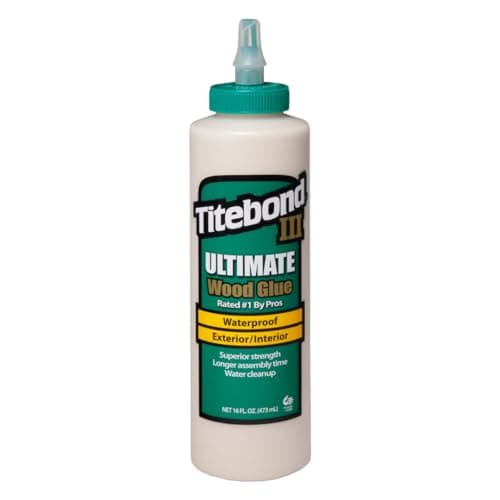
Titebond Titebond III Ultimate Wood Glue (16 oz)
Titebond III Ultimate Wood Glue (16 oz)

The waterproof one, and — less advertised but more useful — the one with the longest open time. Big glue-ups get calmer the moment you switch to it.

Best for outdoor and big glue-ups
8.6
$7.95Amazon
02
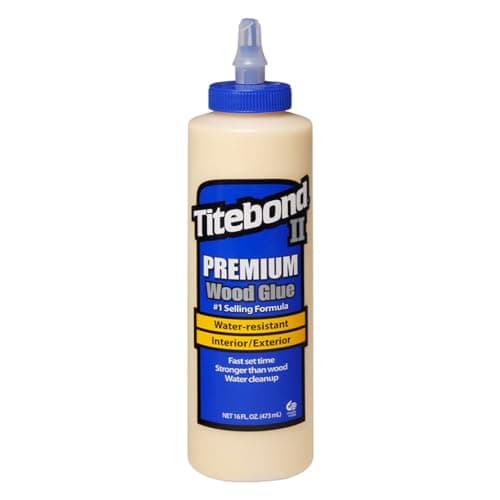
Titebond Titebond II Premium Wood Glue (16 oz)
Titebond II Premium Wood Glue (16 oz)

The one bottle most shops should keep if they only keep one. Water-resistant enough for anything that lives under a roof or on a covered porch, at almost the price of Original.

Best all-round
8.0
$7.57Amazon
03
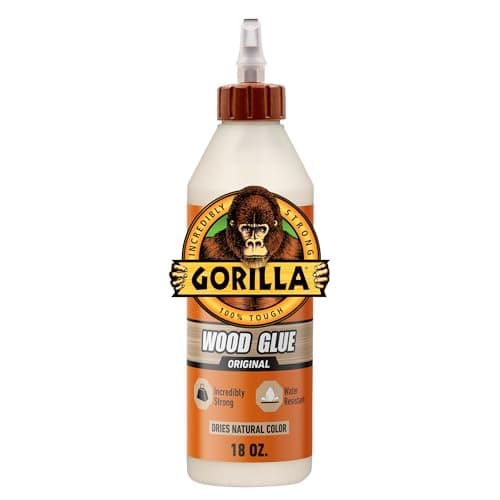
Gorilla Gorilla Wood Glue (18 oz)
Gorilla Wood Glue (18 oz)

A water-resistant PVA in a bigger bottle for less money. It is the supermarket answer, and for shelves, jigs and shop furniture it is a perfectly honest one.

Best value bottle
7.4
$5.99Amazon
04
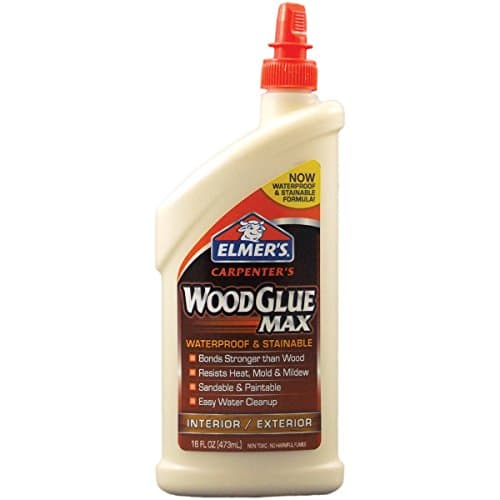
Elmer's Elmer's Carpenter's Wood Glue Max (16 oz)
Elmer's Carpenter's Wood Glue Max (16 oz)

The stainable one. It takes stain closer to the surrounding wood than a standard PVA, which matters on any joint where squeeze-out was missed.

Best for stained work
7.6
Check price →

#ad · Live prices from the Amazon Product API, as of October 17, 2026. Where we have no verified live price, we show none — we would rather leave a gap than print a number that has rotted.

In detail

The picks, in full

01
Titebond Titebond III Ultimate Wood Glue (16 oz)

Best for outdoor and big glue-ups

Titebond III Ultimate Wood Glue (16 oz)

16 ozANSI Type I waterproofLonger open timeDark glue line
8.6/10

The waterproof one, and — less advertised but more useful — the one with the longest open time. Big glue-ups get calmer the moment you switch to it.

Strength
9
Open time
8
Water resistance
10
Sandability
8
Value
8

Pros

  • ANSI Type I waterproof rating covers outdoor furniture and cutting boards
  • Longer open time is the real reason to keep a bottle — complicated assemblies stop being a race
  • Rated by the manufacturer for indirect food contact

Cons

  • Dries to a darker line than Original or II, which shows in pale woods
  • Most expensive of the three Titebonds

Don't buy this if…

…you glue pale hardwoods and hate a visible line. Original or II leave a lighter joint.

$7.95View on Amazon

$9.9920% off

Price as of October 17, 2026. Prices change — Amazon's is the one that counts.

#ad · we may earn a commission from this link to Titebond III Ultimate Wood Glue (16 oz)

02
Titebond Titebond II Premium Wood Glue (16 oz)

Best all-round

Titebond II Premium Wood Glue (16 oz)

16 ozANSI Type II water-resistantInterior/exteriorCream color
8.0/10

The one bottle most shops should keep if they only keep one. Water-resistant enough for anything that lives under a roof or on a covered porch, at almost the price of Original.

Strength
9
Open time
6
Water resistance
7
Sandability
9
Value
9

Pros

  • Type II water resistance covers garden furniture, planters and anything that gets wiped down
  • Costs barely more than the interior-only Original
  • Same fast tack and clean sanding as the rest of the line

Cons

  • Not the fully waterproof rating of Titebond III
  • Open time is still short for a large carcass glue-up

Don't buy this if…

…you are gluing a cutting board or anything soaked regularly — that is a III job.

$7.57View on Amazon

Price as of October 17, 2026. Prices change — Amazon's is the one that counts.

#ad · we may earn a commission from this link to Titebond II Premium Wood Glue (16 oz)

03
Gorilla Gorilla Wood Glue (18 oz)

Best value bottle

Gorilla Wood Glue (18 oz)

18 ozWater-resistant PVADries natural color20–30 min clamp
7.4/10

A water-resistant PVA in a bigger bottle for less money. It is the supermarket answer, and for shelves, jigs and shop furniture it is a perfectly honest one.

Strength
8
Open time
6
Water resistance
7
Sandability
7
Value
9

Pros

  • Two extra ounces over the standard 16 oz bottles for less money
  • Water resistant, so it covers the same jobs as Titebond II for casual work
  • Available in every hardware aisle when you run out mid-glue-up

Cons

  • Squeeze-out is a little rubberier to scrape than Titebond
  • Not a certified Type I waterproof glue

Don't buy this if…

…you are gluing a piece that will be scraped and finished to a fine surface. Titebond cleans up more predictably.

$5.99View on Amazon

$7.4920% off

Price as of October 17, 2026. Prices change — Amazon's is the one that counts.

#ad · we may earn a commission from this link to Gorilla Wood Glue (18 oz)

04
Elmer's Elmer's Carpenter's Wood Glue Max (16 oz)

Best for stained work

Elmer's Carpenter's Wood Glue Max (16 oz)

16 ozInterior and exteriorStainableWood-fiber filled
7.6/10

The stainable one. It takes stain closer to the surrounding wood than a standard PVA, which matters on any joint where squeeze-out was missed.

Strength
8
Open time
7
Water resistance
7
Sandability
8
Value
8

Pros

  • Accepts stain better than plain PVA, so a missed smear is less visible
  • Rated by the manufacturer for interior and exterior use
  • Fills small gaps better than a thin glue

Cons

  • Still not invisible under stain — clean squeeze-off properly regardless
  • Thicker body makes it messier to spread on long edges

Don't buy this if…

…you paint everything. The stainability is the whole premium and you would not use it.

Check price on Amazon →

No buyable offer at the last price check (October 17, 2026). We show nothing rather than a stale number.

#ad · we may earn a commission from this link to Elmer's Carpenter's Wood Glue Max (16 oz)

The four side by side

Published figures only. Where a manufacturer does not publish a number, the cell says so rather than guessing at one.

GluePublished water ratingOpen assembly timeApplication temperature
Titebond III Ultimate (16 oz)ANSI/HPVA Type I8–10 min (70°F / 50% RH)Above 47°F
Titebond II Premium (16 oz)ANSI Type II3–5 min (70°F / 50% RH)Above 55°F
Gorilla Wood Glue (18 oz)Water-resistant PVA (listing)Not publishedNot published
Elmer's Wood Glue Max (16 oz)Interior and exterior (listing)Not publishedNot published

The glue is not usually what fails outdoors

Outdoor joints come apart for reasons that sit upstream of the bottle, and buying the best glue on the shelf fixes none of them:

  • Movement.Wood outdoors swings through a far wider moisture range than wood indoors, and it moves across the grain while a glue line does not. A wide panel glued rigidly into a frame will crack itself apart or tear the joint — the glue was never the problem.
  • Standing water. Any horizontal surface that holds a puddle, and any end-grain foot standing in one, will soak. End grain wicks water the way a straw does.
  • Unprotected end grain. The ends of rails and legs absorb many times what a face does. Seal them, chamfer them so water runs off, and keep them off the ground.

Design for those three and a Type II glue will outlive the finish. Ignore them and Type I buys you a season.

Joint choice does more than glue choice

A glue line is strongest long-grain to long-grain and weakest end-grain to end-grain, which is why outdoor furniture is traditionally built with joints that put long grain against long grain and add a mechanical interlock: mortise and tenon, bridle joints, through-wedged tenons. A pocket screw holds while the glue cures and keeps holding if the glue lets go, which is why it is so common on garden benches.

If you are choosing a joint for an outdoor piece, our wood joint types explained covers the trade-offs and tools needed for mortise and tenon joints covers what it takes to cut the strongest one.

Clamp time, cure time and rain

Titebond's general guidance is to clamp an unstressed joint for thirty minutes to an hour, to clamp a stressed joint for 24 hours, and not to stress a new joint for at least 24 hours. For outdoor work, add one rule: the piece does not go out in the weather until it is fully cured and finished. A joint that gets rained on at the six-hour mark is a joint that never reached full strength.

We go through the whole timing question — open time, clamp time, cure time and the difference between them — on how long to clamp wood glue.

Where these numbers come from

The water-resistance ratings, open assembly times, application temperatures and clamping guidance for Titebond II and III are Franklin International's own published technical data, linked in Sources. The Gorilla and Elmer's figures are from their live retail listings, also linked, and where those listings do not publish a number the table says "not published" rather than filling the gap. We have not tested bond strength or water resistance ourselves.
How we picked

We do not run a testing lab

We researched published manufacturer specifications, manuals and spec sheets, ran the arithmetic those specs support, and read owner reviews at volume, then scored each tool against a published rubric. The scores are judgments from documented research — they are not measurements we took, because we do not have a lab and we are not going to pretend we do. Where a number came from a manufacturer's document, we name it and link it in Sources.

Questions

Frequently asked

What is the best wood glue for outdoor furniture?
Titebond III, on the published specifications. It is the one glue here that Franklin International publishes as passing ANSI/HPVA Type I water resistance, and its 8–10 minute open assembly time and 47°F minimum application temperature both suit outdoor assembly better than the alternatives.
Is Titebond II good enough for outdoor use?
For covered outdoor furniture, yes. Franklin publishes it as the first one-part wood glue to pass ANSI Type II water resistance and describes it as designed for exterior use. For a piece that sits in the rain, Type I is the rating to buy, and the difference in price per bottle is pennies against the work in a bench.
Is waterproof wood glue really waterproof?
It is rated, not magic. A Type I glue line survives soaking far better than a Type II one, but it does not stop the wood either side of it swelling, shrinking and splitting. Outdoor joints usually fail from wood movement, trapped water and unsealed end grain rather than from the glue dissolving.
Do I need epoxy for outdoor furniture?
Rarely. Epoxy earns its keep where the joint is loose, where there is a gap to fill, or in genuinely marine conditions — it is a gap-filling adhesive, which PVA is not. For well-fitted joints in garden furniture, a Type I PVA is easier to use, cheaper and sufficient.
How long before outdoor furniture can get wet?
Not until it is fully cured and finished. Titebond's general guidance is not to stress a new joint for at least 24 hours; for a piece going outside, wait out the cure, apply the finish, and let that cure too. Rain at hour six is the most common way a good glue-up turns into a failed one.

Keep reading

Receipts

Sources

We do not run a testing lab, and we do not pretend to. Our picks come from published manufacturer specifications and manuals, the arithmetic those specs support, and owner reviews read at volume. Where we could not verify something, we say so on the page rather than quietly leaving it out. Read our full method.