Skip to content
Dovetail & Dust

HUB 02 · Power Tools

The Best CNC Machines for Woodworking

A hobby inside a hobby. Here are the desktop CNC routers worth owning, sorted by what they can actually cut — and what nobody tells you about the first month.

By Stephen V.Updated How we research
#ad

We earn a commission when you buy through our Amazon links, at no extra cost to you. It never changes our rankings, and we say so when the cheaper tool is the better buy. How this works.

A CNC router does not make you faster at woodworking. It makes you capable of work you could not do by hand — inlay, repeated identical parts, three-dimensional carving — at the cost of learning an entirely separate craft. Anyone who tells you a hobby CNC is plug-and-play has not set one up.

Two specifications decide everything. Work area sets what you can cut without tiling a job across multiple setups: a 300 x 180 mm bed handles coasters, inlay and small signs; 400 x 400 mm handles drawer fronts and cabinet parts. Frame rigidity sets surface finish. A flexing gantry chatters, and chatter shows up as ripples in the cut that no amount of sanding fully removes.

Everything else — spindle versus trim router, offline controller versus laptop, limit switches — is a convenience question. Important, but secondary to a bed that fits your work and a frame that does not flex.

Be clear-eyed about the third cost: software. Every machine here needs a CAD step (drawing the part), a CAM step (turning the drawing into toolpaths), and a sender (streaming the file to the machine). Free options exist for all three and they are perfectly good. Learning them is the real barrier, and it takes weeks, not an afternoon.

The short answer

Quick picks

#ProductBest forScorePrice
01
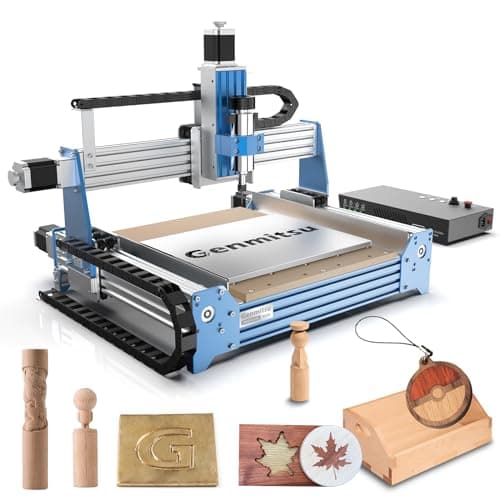
Genmitsu Genmitsu PROVerXL 4030 CNC Router
Genmitsu PROVerXL 4030 CNC Router

The first CNC size that makes sense for furniture parts rather than coasters. A 400 x 300 mm bed on a rigid aluminum frame, at a price a hobby shop can actually justify.

Best overall for a wood shop
7.4
$659.00Amazon
02
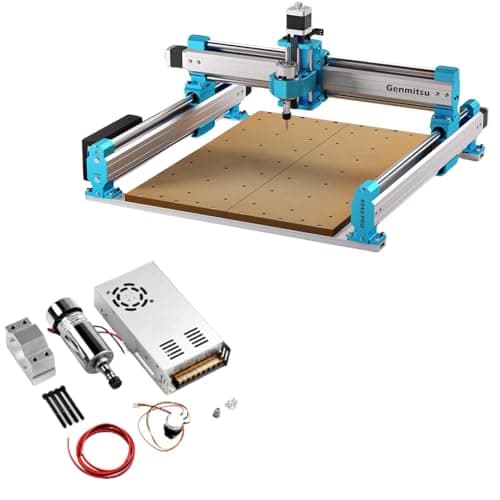
Genmitsu Genmitsu 4040-PRO CNC Router with 300W Air-Cooled Spindle
Genmitsu 4040-PRO CNC Router with 300W Air-Cooled Spindle

A square 400 x 400 mm bed and a real spindle instead of a trim router. The spindle is the upgrade that matters at this price: quieter, speed set by the job file, and no separate router to source.

Best spindle at the price
7.4
$559.00Amazon
03
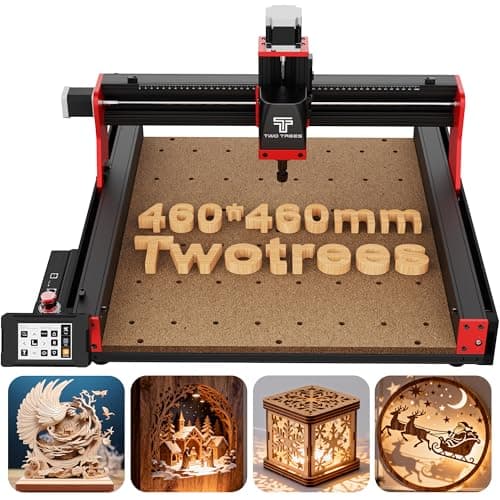
TwoTrees TwoTrees TTC450 Pro All-Metal CNC Router
TwoTrees TTC450 Pro All-Metal CNC Router

An all-metal frame with NEMA 57 steppers — more motor and more mass than the price normally buys. Rigidity is what separates a CNC that cuts cleanly from one that chatters.

Best value frame
7.4
$490.50Amazon
04
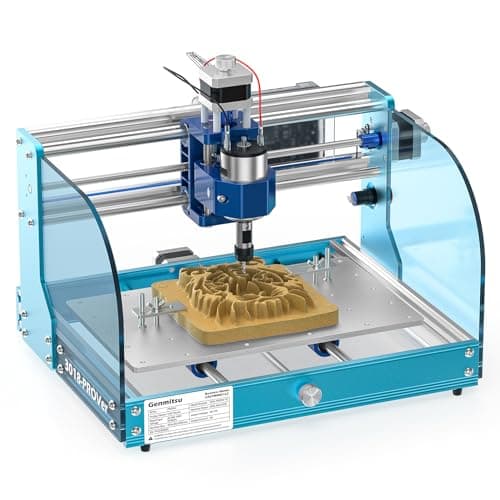
SainSmart SainSmart Genmitsu 3018-PROVer V2 CNC Router
SainSmart Genmitsu 3018-PROVer V2 CNC Router

The cheapest honest way to find out whether you like CNC work. Small, and it teaches the whole toolchain — CAD, CAM, workholding, feeds and speeds — on inexpensive parts.

Best for learning
6.8
$249.00Amazon
05
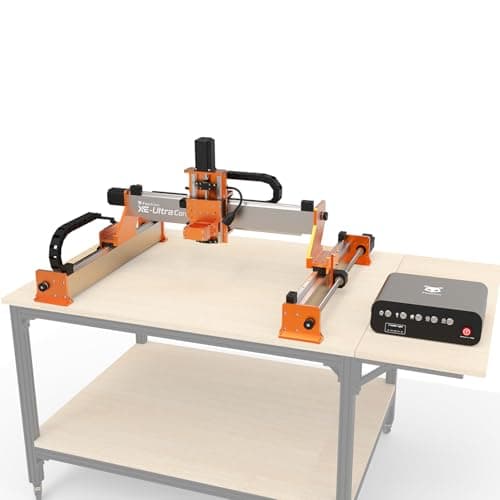
FoxAlien FoxAlien XE-Ultra Core Desktop CNC Router (17 x 17 in.)
FoxAlien XE-Ultra Core Desktop CNC Router (17 x 17 in.)

The heaviest, stiffest option here and the one that behaves most like a small industrial machine. You pay for that in money and in bench space.

Best rigidity
7.4
$1,199.00Amazon

#ad · Live prices from the Amazon Product API, as of Sep 1, 2026. Where we have no verified live price, we show none — we would rather leave a gap than print a number that has rotted.

In detail

The picks, in full

01
Genmitsu Genmitsu PROVerXL 4030 CNC Router

Best overall for a wood shop

Genmitsu PROVerXL 4030 CNC Router

400 x 300 mm work areaAluminum frameWood and metal ratedAssembly kit
7.4/10

The first CNC size that makes sense for furniture parts rather than coasters. A 400 x 300 mm bed on a rigid aluminum frame, at a price a hobby shop can actually justify.

Work area
8
Rigidity
8
Ease of setup
6
Software path
7
Value
8

Pros

  • Work area big enough for drawer fronts, inlay and sign work without tiling every job
  • Stiff enough to cut aluminum occasionally, which means it is very stiff in wood
  • Large user community, so the setup problems you hit are already answered somewhere

Cons

  • Arrives as a kit — budget an afternoon for assembly and squaring
  • Dust collection and an enclosure are extra, and a bare CNC makes an enormous mess

Don't buy this if…

you want a machine that works out of the box with no tuning. A CNC is a hobby inside a hobby, and the learning curve is real.

$659.00View on Amazon

$949.0031% off

Price as of Sep 1, 2026. Prices change — Amazon's is the one that counts.

#ad · we may earn a commission from this link to Genmitsu PROVerXL 4030 CNC Router

02
Genmitsu Genmitsu 4040-PRO CNC Router with 300W Air-Cooled Spindle

Best spindle at the price

Genmitsu 4040-PRO CNC Router with 300W Air-Cooled Spindle

400 x 400 mm work area300W air-cooled spindleLead-screw drivenWoodworking-oriented
7.4/10

A square 400 x 400 mm bed and a real spindle instead of a trim router. The spindle is the upgrade that matters at this price: quieter, speed set by the job file, and no separate router to source.

Work area
8
Rigidity
8
Ease of setup
6
Software path
7
Value
8

Pros

  • A real spindle runs quieter than a trim router, and the air-cooled motor needs no pump or water loop
  • Square bed simplifies tiling large jobs — you flip rather than re-fixture
  • Spindle speed is set by the job file, not by a dial you forget to change

Cons

  • 300W is a modest spindle — deep passes in hardwood need to be taken slowly, and the 710W machines exist for a reason
  • Still a kit build with the usual squaring and lead-screw fussing

Don't buy this if…

noise is not a concern and you already own a trim router. A router-mounted machine costs less and cuts wood just as well.

$559.00View on Amazon

$597.196% off

Price as of Sep 1, 2026. Prices change — Amazon's is the one that counts.

#ad · we may earn a commission from this link to Genmitsu 4040-PRO CNC Router with 300W Air-Cooled Spindle

03
TwoTrees TwoTrees TTC450 Pro All-Metal CNC Router

Best value frame

TwoTrees TTC450 Pro All-Metal CNC Router

All-metal frameNEMA 57 stepper motors450 mm class work areaAssembly kit
7.4/10

An all-metal frame with NEMA 57 steppers — more motor and more mass than the price normally buys. Rigidity is what separates a CNC that cuts cleanly from one that chatters.

Work area
8
Rigidity
9
Ease of setup
5
Software path
6
Value
9

Pros

  • Larger steppers hold position better in deeper cuts than the usual smaller motors
  • All-metal construction resists the flex that ruins surface finish on long cuts
  • Priced below the established brands at a similar work area

Cons

  • Smaller community than Genmitsu, so troubleshooting means more of your own reading
  • Documentation is thinner — expect to work some setup out yourself

Don't buy this if…

you want the most-documented path into CNC. Buying the machine everyone else owns is a real advantage when you are stuck.

$490.50View on Amazon

$545.0010% off

Price as of Sep 1, 2026. Prices change — Amazon's is the one that counts.

#ad · we may earn a commission from this link to TwoTrees TTC450 Pro All-Metal CNC Router

04
SainSmart SainSmart Genmitsu 3018-PROVer V2 CNC Router

Best for learning

SainSmart Genmitsu 3018-PROVer V2 CNC Router

300 x 180 mm work areaBeginner-oriented kitOffline controllerDesktop scale
6.8/10

The cheapest honest way to find out whether you like CNC work. Small, and it teaches the whole toolchain — CAD, CAM, workholding, feeds and speeds — on inexpensive parts.

Work area
4
Rigidity
6
Ease of setup
8
Software path
7
Value
9

Pros

  • Costs a fraction of a furniture-scale machine while teaching identical skills
  • Small enough to live on a shelf and be pulled out for a job
  • Offline controller means it runs without a laptop tied up beside it

Cons

  • Work area is too small for most furniture parts — this is inlay and small-sign territory
  • Light frame limits depth of cut, so jobs take more passes

Don't buy this if…

you already know you want to cut cabinet parts. You will outgrow this in a month and pay twice.

$249.00View on Amazon

$269.007% off

Price as of Sep 1, 2026. Prices change — Amazon's is the one that counts.

#ad · we may earn a commission from this link to SainSmart Genmitsu 3018-PROVer V2 CNC Router

05
FoxAlien FoxAlien XE-Ultra Core Desktop CNC Router (17 x 17 in.)

Best rigidity

FoxAlien XE-Ultra Core Desktop CNC Router (17 x 17 in.)

17.3 x 17.3 in. active areaNEMA 23 closed-loop65 mm spindle clampCutting motor not included
7.4/10

The heaviest, stiffest option here and the one that behaves most like a small industrial machine. You pay for that in money and in bench space.

Work area
8
Rigidity
10
Ease of setup
6
Software path
7
Value
6

Pros

  • Frame mass is the single best predictor of surface finish, and this has it
  • Closed-loop NEMA 23 motors report position back to the controller, so a missed step is caught rather than silently ruining the job
  • Aluminum-capable, which in practice means it never struggles in hardwood

Cons

  • The cutting motor is not in the box — budget a 65 mm router or FoxAlien's spindle on top of an already high price
  • Weight makes it a permanent fixture, not something you stow between jobs

Don't buy this if…

this is your first CNC. Learn the toolchain on a cheap machine first — the skills transfer completely, the money does not.

$1,199.00View on Amazon

$1,399.0014% off

Price as of Sep 1, 2026. Prices change — Amazon's is the one that counts.

#ad · we may earn a commission from this link to FoxAlien XE-Ultra Core Desktop CNC Router (17 x 17 in.)

How to choose a CNC for wood

Work area: measure the part, not the sheet

The common mistake is sizing for a full sheet of plywood, which no desktop CNC can take. Size for the largest single part you want to cut in one setup. A drawer front is around 500 x 150 mm; a cabinet door rail is 600 mm long. Once you know that number, everything else follows — and if your parts genuinely exceed 400 mm, you are looking at a different class of machine than anything on this page.

Rigidity: mass and material, in that order

A CNC cuts by dragging a spinning bit sideways through wood, and that side load tries to deflect the gantry. Steel and thick aluminum extrusion resist it; thin extrusion and printed brackets do not. This is why the heaviest machine here also produces the best surface finish, and why an all-metal frame at a mid price is a better buy than a lighter frame with a fancier controller.

Spindle or trim router?

A trim router is loud, has a narrow useful speed range, and has to be switched on by hand. A spindle is quieter, holds speed under load, and is controlled by the job file — which matters because different bits want genuinely different RPM. If two machines are otherwise close, the one with a spindle is the better long-term buy. If you already own a compact router, a router-mount machine saves real money up front.

The costs nobody quotes you

Bits. CNC bits are not handheld router bits. You want single-flute upcut and downcut end mills, a V-bit for lettering, and a ball-nose for 3D work. Budget for breaking several while you learn feeds and speeds.

Workholding. A CNC cannot hold the work for you. Most people end up with a sacrificial MDF spoilboard, threaded inserts and cam clamps, or double-sided tape for small parts. Plan this before the machine arrives.

Dust. A bare CNC throws chips across the whole shop. A dust shoe around the cutter connected to a shop vac is close to mandatory, and an enclosure is a real quality-of-life upgrade.

Does a CNC fit a hand-tool shop?

More comfortably than people expect. A CNC is very good at exactly the jobs hand tools are bad at — cutting twelve identical curved parts, routing an inlay pocket to a tenth of a millimeter, engraving a maker's mark. It is poor at the things hand tools excel at, like fitting a joint to the part in front of you. Plenty of shops run a hand-cut dovetail drawer with a CNC-inlaid front and see no contradiction.

What we could not verify

We have not cut parts on these machines. Work areas, motor sizes and frame materials are taken from the manufacturers' current listings; the reasoning about deflection, chatter and finish is mechanics rather than a test we ran.
How we picked

We do not run a testing lab

We researched published manufacturer specifications, manuals and spec sheets, ran the arithmetic those specs support, and read owner reviews at volume, then scored each tool against a published rubric. The scores are judgments from documented research — they are not measurements we took, because we do not have a lab and we are not going to pretend we do. Where a number came from a manufacturer's document, we name it and link it in Sources.

Questions

Frequently asked

What is the best CNC machine for a beginner woodworker?
A small desktop machine, because the skills transfer completely and the mistakes are cheap. Everything you learn about CAD, CAM, feeds, speeds and workholding on a 3018-class machine applies unchanged to a bigger one. If you already know you want to cut furniture parts, skip straight to a 400 mm class machine.
Can a hobby CNC cut hardwood?
Yes — every machine here cuts hardwood. The difference is how fast. A light frame takes shallower passes, so a job that a rigid machine finishes in ten minutes might take twenty-five. Nothing about hardwood is off-limits; it just costs time.
Do I need a spindle instead of a router?
Not to get started. A trim router cuts wood perfectly well. A spindle buys you quiet running, better speed control from the job file, and longer bearing life. It is a genuine upgrade, not a requirement.
How long before I can cut a real project?
Expect a day for assembly and squaring, then a few evenings learning the software chain before your first successful part. Most people cut something usable within a fortnight and something they are proud of within a couple of months.

Keep reading

Receipts

Sources

We do not run a testing lab, and we do not pretend to. Our picks come from published manufacturer specifications and manuals, the arithmetic those specs support, and owner reviews read at volume. Where we could not verify something, we say so on the page rather than quietly leaving it out. Read our full method.