Skip to content
Dovetail & Dust

HUB 01 · Hand Tools

Lie-Nielsen Alternatives

A Lie-Nielsen plane sells three separate things in one casting. Work out which of the three you need and the cheaper field stops looking like a compromise.

By Stephen V.Updated How we research
#ad

We earn a commission when you buy through our Amazon links, at no extra cost to you. It never changes our rankings, and we say so when the cheaper tool is the better buy. How this works.

If you want a Lie-Nielsen bench plane and not the price, buy the WoodRiver #4 V3. It is the one plane on this page built on the same Bedrock-pattern frog idea, with a thick iron in a ductile body, and it is the closest thing in the catalog to the tool you were looking at. If you would rather own one plane that does most of the work, the Taytools #5 Bedrock-style jack is a 14 in. sole and a 2 in. cryogenically treated O1 blade for roughly half the money. The budget pick is the Taytools 469614 #4, whose listing publishes a ductile cast body, lapped sides and sole and a blade at RHC 55–60. And if the Lie-Nielsen you actually keep picking up is the block plane, the WoodRiver low-angle block and the Jorgensen No. 60-1/2 answer that question at two very different prices.

Prices beside each pick come from our live price layer rather than from this article, last checked November 21, 2026. Lie-Nielsen sells direct rather than through the retailer our links point at, so there is no price for the original on this page at all — we would rather say that than quote a number we cannot date.

What Lie-Nielsen is known for

It is worth being precise here, because “it is just the name” is lazy and wrong. Lie-Nielsen publishes what it builds, and the No. 4 Smooth Plane page states it plainly: a 9-1/2 in. sole “surface ground flat and square to a tolerance of .0015””, a blade “2” wide x .125” thick” in “A2 cryogenically treated Tool Steel, hardened to Rockwell 60-62 and double tempered”, a body the company makes in manganese bronze or ductile iron, a frog with a “fully machined fit between frog and body, adjustable from the rear” on designs “based on the Stanley Bedrock-type planes”, blades bedded at 45° bevel down, cherry knob and handle, and “materials and workmanship… guaranteed for the life of your tool”.

Read that list again and notice that it is really three products:

One: the Bedrock-pattern frog. On a standard Bailey-pattern plane, adjusting the mouth opening means loosening screws under the frog, which means taking the blade assembly out. On a Bedrock pattern the frog seats on machined mating surfaces and is adjusted from the rear with the iron in place. It is a workflow difference rather than a cut-quality difference, and it is the feature the better clones copy first.

Two: the iron. An eighth of an inch of hardened A2 is roughly twice the thickness of a vintage Stanley iron. Thickness is what stops the chatter that makes a plane skip and leave tracks, so a thick iron in a mediocre body often out-performs a thin iron in a good one. This is the specification that does the most work on the bench.

Three: arriving ready.The sole is flat, the back of the iron is flat, and the tool cuts out of the box. That is not a small thing — it is a couple of evenings of work you do not do, and for a woodworker who has never tuned a plane it is the difference between a tool and a puzzle.

The cheaper field covers those three unevenly, and that is the whole shape of this decision. Nothing below gives you all three. Pick the one you care about.

Route one: the same pattern, built to a price

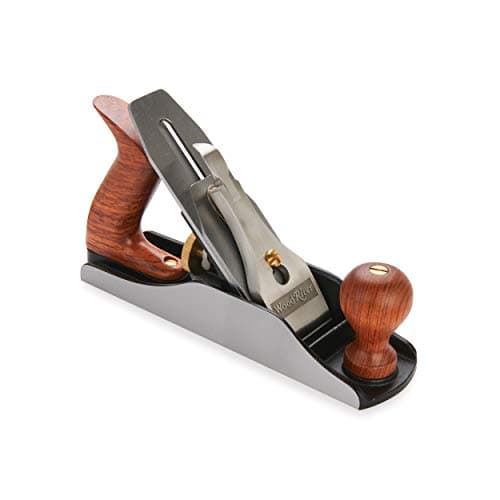
The WoodRiver #4 V3is the plane people mean when they say “Lie-Nielsen alternative”. It is a No. 4 smoother on the Bedrock-pattern frog idea, in a ductile cast body, with an iron thick enough that the plane behaves like a premium tool rather than a hardware-store one. It is also the most expensive alternative here by a clear margin, which is the honest trade: you are not saving most of the money, you are saving some of it.

What you give up against the original is the published tolerance and the lifetime guarantee, and in practice a little setup. Expect to flatten the back of the iron and hone it before the first shaving, and to check the sole. Our guide to tuning a hand plane is the sequence, and it is an hour, not a weekend.

Buy this one if a smoothing plane is a tool you will use weekly for decades and the price was the only thing standing between you and the original.

Route two: one plane instead of three

This is the route most people should take and almost nobody searches for.

A No. 4 is a smoother — a short sole for the last passes on a surface. A No. 5 jack is 14 in. long, which is long enough to flatten a board and short enough to smooth one. It is the plane that does the most jobs adequately, which in a shop that owns one plane beats a plane that does one job beautifully.

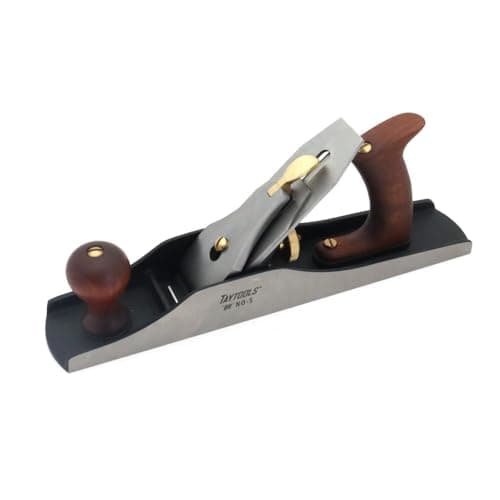
The Taytools #5 Bedrock-style jackpublishes exactly the two specifications that matter here: a 14 in. sole and a 2 in. blade in cryogenically treated O1 steel, on a Bedrock-style frog. O1 is simpler steel than A2 — it takes a keener edge with less work and loses it sooner, which many hand-tool woodworkers actively prefer, because sharpening is a two-minute job once you have a routine. At its current price it costs a fraction of a premium jack plane.

If the reason you want a jack plane is flattening rough stock, read how to flatten a board without a jointer first — and if that job is really a machine job in your shop, our DW735 alternatives page covers the thicknessing end of it.

Route three: the cheapest route that still works

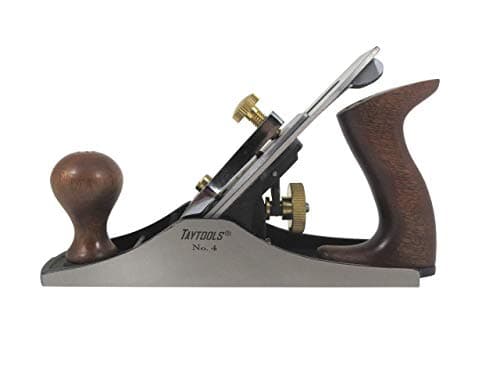
The Taytools 469614 #4is the lowest-priced bench plane here whose listing publishes the things that decide whether a cheap plane is usable: a 9-3/4 in. sole, a ductile cast body, lapped sides and bottom, a blade at RHC 55–60, and a sapele handle and tote. It is not a premium tool and it does not pretend to be. It is a plane that will take a shaving after you sharpen it, which is more than can be said for the bottom of the market.

Two honest notes. First, the lower the price, the more of the tuning is yours: flattening the back of the iron on a cheap plane can genuinely take an hour the first time. Second, the route we cannot sell you is often the best one at this price — a vintage Stanley Bailey No. 4 or No. 5 from the first half of the twentieth century, bought at a flea market or an online auction, is a better casting than anything new at this money. It needs the same hour of work plus derusting, and we earn nothing if you buy one. Our hand plane roundup ranks the new field in full, including the Stanley Handyman, which is the cheapest new plane we are willing to list and the one with the thinnest iron here.

Route four: the plane you will actually pick up most

Ask a cabinetmaker which plane leaves the bench most often and the answer is usually the block plane. It trims end grain, eases an edge, fits a hand, and does not need a workbench. If the Lie-Nielsen in your basket is a low-angle block plane, this is the cheapest part of this page to replicate.

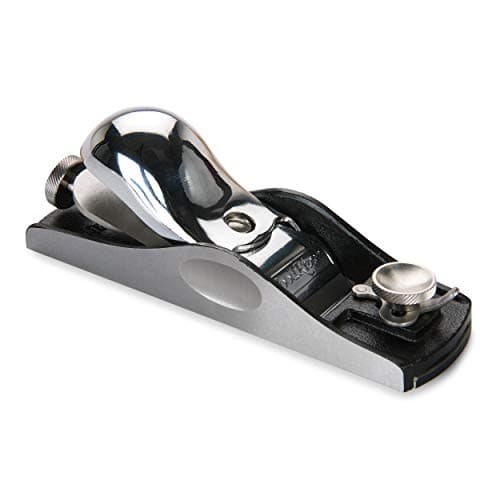
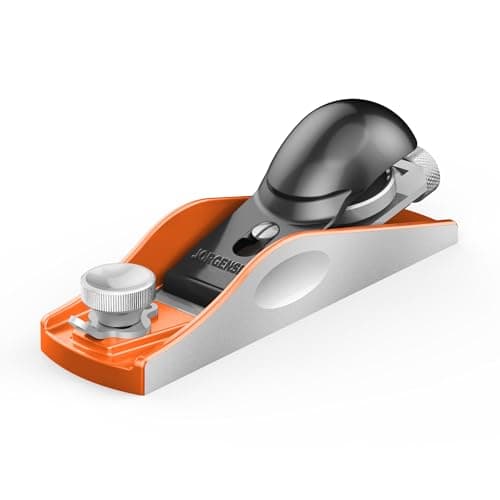
The WoodRiver low-angle block planepublishes a 12° bed angle, an adjustable mouth, a knuckle-style lever cap and a 2 in. by 7 in. body — the classic pattern, in the premium-clone bracket. The Jorgensen No. 60-1/2publishes a 6-1/4 in. length, a blade bedded at 13.5°, a 3 mm O1 iron and an adjustable mouth for a third of that, which makes it the best first plane on the whole site.

Why the low bed angle and the adjustable mouth matter, briefly: end grain is a bundle of tube ends rather than long fibers, so the blade has to sever them cleanly instead of lifting them. A low bed presents the edge at a shallower angle of attack, and closing the mouth down to a sliver supports the fibers right at the cut. Those two features together are why a block plane trims a miter cleanly and a bench plane tears it.

Route five: the honing guide question

“Lie-Nielsen honing guide alternative” is a search in its own right, and it deserves a straight answer: a honing guide is a clamp and a wheel, the premium ones are beautifully made, and the cheap ones hold an angle. What varies is the range of blade widths they will grip without slipping.

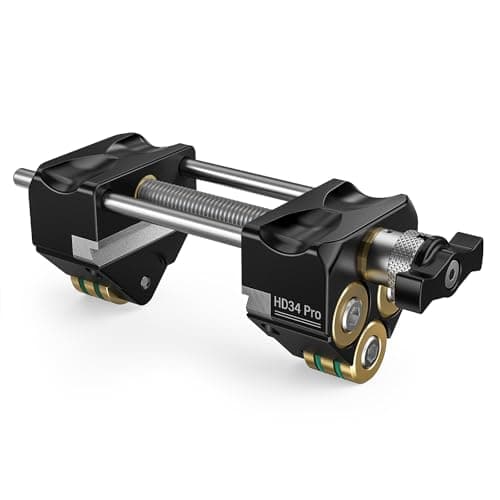
The Hongdui HD34is the wide-range answer — its listing publishes a 0.1 in. to 3.2 in. blade capacity with brass rollers and a case, which covers a 1/8 in. mortise chisel and a 2 in. jack-plane iron in one jig. That span is the reason to pay more than the basic guides, which lose their grip at both ends of the range. The full field is ranked on best honing guide, and the abrasive half of the decision is on best sharpening stones.

Spend here before you spend on the plane. A premium plane with a dull iron is worse than a cheap plane with a sharp one, and that is not a figure of speech — it is the single most common reason a new plane owner concludes that hand tools are not for them. The sharpening angle guide has the numbers for both.

Side by side, as published

PlaneSoleBladeFrog / bedBody
Lie-Nielsen No. 4 (the original)9-1/2 in., ground flat and square to .0015 in.2 in. x .125 in., A2 cryo, Rockwell 60-62Bedrock-type, machined fit, rear-adjustable; 45°Manganese bronze (4-1/2 lb) or ductile iron
WoodRiver #4 V3No. 4 size; tolerance not published on the listingThickness and steel not published on the listingBedrock-pattern frogDuctile cast
Taytools #5 jack14 in.2 in., cryogenically treated O1Bedrock-style frogNot published on the listing
Taytools 469614 #49-3/4 in., lapped sides and bottomRHC 55–60; thickness not publishedNot published on the listingDuctile cast
WoodRiver low-angle block7 in. long x 2 in. wideThickness not published on the listing12° bed, adjustable mouthNot published on the listing
Jorgensen No. 60-1/2 block6-1/4 in. long3 mm O113.5° bed, adjustable mouthNot published on the listing

The Lie-Nielsen row is quoted from Lie-Nielsen's own No. 4 Smooth Plane page, in its words, on the bronze-bodied version. The alternatives are described from the live listings for the exact SKUs we link, read on 15 November 2026, and the blanks are where those listings publish nothing. Woodcraft's own product pages for the two WoodRiver planes were not reachable from our build machine on the day this page was written, so no figure is quoted for them beyond what their listings state — which is why two of the most interesting cells in the table, the iron thicknesses, say so rather than carrying a guess. We did not measure a sole, test a hardness or time an edge; there is no lab here, which the methodology page says plainly.

What to buy, in order

One bench plane bought once, as close to the original as the catalog gets: the WoodRiver #4 V3. One plane to own if you are only owning one: the Taytools #5 jack. The least money that still buys a working bench plane: the Taytools 469614 #4. The plane that will get used daily either way: a low-angle block, the WoodRiver if you want the premium pattern and the Jorgensen if you want to spend the difference on sharpening. And the jig that makes any of them work: the Hongdui HD34, or anything on the honing guide page.

One last thing, said plainly because it is the most useful sentence here. Lie-Nielsen's reputation is not marketing — a published .0015 in. sole tolerance and a .125 in. A2 iron at Rockwell 60-62 are real specifications, and the lifetime guarantee is real too. If you can afford the tool and you will use it for thirty years, buy the tool. This page exists for the much more common case: the woodworker who wants a plane that takes a clean shaving this month, and who would rather put the difference into a sharpening setup, a second plane, or wood.
The short answer

Quick picks

#ProductBest forScorePrice
01
WoodRiver WoodRiver No. 4 Bench Plane (V3)
WoodRiver No. 4 Bench Plane (V3)

The plane that made the premium-clone category. A heavy, well-machined No. 4 smoother with a thick iron — it arrives close to ready and takes a shaving on the first afternoon.

Best overall
8.6
$233.98Amazon
02
Taytools Taytools #5 Bedrock-Style Jack Plane
Taytools #5 Bedrock-Style Jack Plane

The one plane to own if you only own one. A 14-inch jack with a 2-inch cryo O1 iron is long enough to straighten an edge and short enough to smooth a face.

Best all-rounder
8.0
$139.99Amazon
03
Taytools Taytools 469614 No. 4 Smoothing Plane
Taytools 469614 No. 4 Smoothing Plane

The value smoother. A ductile cast body with lapped sides and sole and a blade the maker rates at 55–60 HRC, at about a third of the premium price.

Best value
7.4
$89.99Amazon
04
WoodRiver WoodRiver Low-Angle Block Plane
WoodRiver Low-Angle Block Plane

The plane that lives in your apron. Low-angle bed and an adjustable mouth make it the right tool for end grain, chamfers and fitting a drawer that is a hair proud.

Best block plane
8.2
$128.98Amazon
05
Jorgensen Jorgensen No. 60-1/2 Low-Angle Block Plane
Jorgensen No. 60-1/2 Low-Angle Block Plane

The one hand plane a beginner actually uses. A block plane trims end grain, eases edges and fits a pocket — and this one arrives with an adjustable mouth and a 3 mm O1 iron for the price of a router bit.

Best first plane
7.8
$28.03Amazon
06
Hongdui Hongdui HD34 Honing Guide (0.1–3.2 in)
Hongdui HD34 Honing Guide (0.1–3.2 in)

The wide-capacity option. It takes everything from a 1/8-inch chisel to a wide jack-plane iron, which the basic guides cannot honestly claim.

Best blade range
8.6
$47.99Amazon

#ad · Live prices from the Amazon Product API, as of November 21, 2026. Where we have no verified live price, we show none — we would rather leave a gap than print a number that has rotted.

In detail

The picks, in full

01
WoodRiver WoodRiver No. 4 Bench Plane (V3)

Best overall

WoodRiver No. 4 Bench Plane (V3)

No. 4 smootherBedrock-pattern frogThick ironDuctile cast body
8.6/10

The plane that made the premium-clone category. A heavy, well-machined No. 4 smoother with a thick iron — it arrives close to ready and takes a shaving on the first afternoon.

Out-of-box
9
Iron quality
9
Adjustment
9
Build
9
Value
7

Pros

  • Thick iron resists chatter, which is the single biggest difference from a budget plane
  • Machining is close enough out of the box that lapping is a short job, not a project
  • Heavy enough to keep momentum through a difficult patch of grain

Cons

  • Costs roughly three times a budget No. 4
  • Still needs honing before first use — no bench plane ships sharp enough

Don't buy this if…

…you have never used a hand plane. Learn the motion on a cheap plane first; the skill transfers, the money does not come back.

$233.98View on Amazon

Price as of November 21, 2026. Prices change — Amazon's is the one that counts.

#ad · we may earn a commission from this link to WoodRiver No. 4 Bench Plane (V3)

02
Taytools Taytools #5 Bedrock-Style Jack Plane

Best all-rounder

Taytools #5 Bedrock-Style Jack Plane

14 in sole2 in bladeCryo O1 steelBedrock-style frog
8.0/10

The one plane to own if you only own one. A 14-inch jack with a 2-inch cryo O1 iron is long enough to straighten an edge and short enough to smooth a face.

Out-of-box
8
Iron quality
8
Adjustment
8
Build
8
Value
8

Pros

  • Jack length is the genuine do-everything size — edge jointing, flattening and smoothing
  • Cryo-treated O1 iron takes a keener edge than generic import steel
  • Bedrock-style frog seats the iron more solidly than a standard Bailey frog

Cons

  • Longer sole makes it clumsier than a No. 4 on small parts
  • Costs more than the No. 4 smoother, as jack planes generally do

Don't buy this if…

…your work is small boxes and drawer parts. A No. 4 is easier to steer on short stock.

$139.99View on Amazon

Price as of November 21, 2026. Prices change — Amazon's is the one that counts.

#ad · we may earn a commission from this link to Taytools #5 Bedrock-Style Jack Plane

03
Taytools Taytools 469614 No. 4 Smoothing Plane

Best value

Taytools 469614 No. 4 Smoothing Plane

9-3/4 in soleDuctile cast bodyBlade 55–60 HRCSapele tote
7.4/10

The value smoother. A ductile cast body with lapped sides and sole and a blade the maker rates at 55–60 HRC, at about a third of the premium price.

Out-of-box
7
Iron quality
7
Adjustment
7
Build
7
Value
9

Pros

  • Sides and sole are lapped at the factory — most planes in this bracket are not
  • Published 55–60 HRC blade hardness is respectable for the money
  • Sapele handle and tote feel like a tool you keep, not a starter you replace

Cons

  • Frog and lever cap are not as refined as the premium clones
  • Expect to flatten the back of the iron before first use

Don't buy this if…

…you want to open the box and take a full-width shaving in five minutes. Budget an hour of setup.

$89.99View on Amazon

Price as of November 21, 2026. Prices change — Amazon's is the one that counts.

#ad · we may earn a commission from this link to Taytools 469614 No. 4 Smoothing Plane

04
WoodRiver WoodRiver Low-Angle Block Plane

Best block plane

WoodRiver Low-Angle Block Plane

Low-angle bedAdjustable mouthOne-hand sizeCast body
8.2/10

The plane that lives in your apron. Low-angle bed and an adjustable mouth make it the right tool for end grain, chamfers and fitting a drawer that is a hair proud.

Out-of-box
8
Iron quality
8
Adjustment
9
Build
8
Value
8

Pros

  • Low bed angle slices end grain where a bench plane tears it
  • Adjustable mouth lets you close it right down for fine work
  • Small enough to use one-handed on a part held in the other

Cons

  • Not a substitute for a bench plane on long edges or wide faces
  • Costs as much as a budget No. 4, which surprises people

Don't buy this if…

…you are buying your first plane to flatten panels. That is a jack plane's job.

$128.98View on Amazon

Price as of November 21, 2026. Prices change — Amazon's is the one that counts.

#ad · we may earn a commission from this link to WoodRiver Low-Angle Block Plane

05
Jorgensen Jorgensen No. 60-1/2 Low-Angle Block Plane

Best first plane

Jorgensen No. 60-1/2 Low-Angle Block Plane

6-1/4 in. lengthBlade bedded at 13.5°3 mm O1 ironAdjustable mouth
7.8/10

The one hand plane a beginner actually uses. A block plane trims end grain, eases edges and fits a pocket — and this one arrives with an adjustable mouth and a 3 mm O1 iron for the price of a router bit.

Versatility
8
Build
7
Out-of-box
7
Value
9

Pros

  • Small, versatile and forgiving to learn on — the plane that gets picked up most often
  • Adjustable mouth plus a low 13.5-degree bed is the right combination for end grain
  • A published 3 mm O1 iron is thicker than the budget planes it competes with, so it chatters less

Cons

  • Still wants honing and a check of the sole before it does its best work
  • Not a substitute for a bench plane on long edges

Don't buy this if…

…you are set on flattening panels by hand — that is a job for a longer bench plane, not a block plane.

$28.03View on Amazon

$42.9835% off

Price as of November 21, 2026. Prices change — Amazon's is the one that counts.

#ad · we may earn a commission from this link to Jorgensen No. 60-1/2 Low-Angle Block Plane

06
Hongdui Hongdui HD34 Honing Guide (0.1–3.2 in)

Best blade range

Hongdui HD34 Honing Guide (0.1–3.2 in)

0.1–3.2 in blade widthMachined bodyAdjustable jawsBrass rollers + case
8.6/10

The wide-capacity option. It takes everything from a 1/8-inch chisel to a wide jack-plane iron, which the basic guides cannot honestly claim.

Angle repeatability
9
Grip
9
Blade range
10
Build
9
Value
6

Pros

  • Genuinely handles narrow chisels and wide plane irons in the same jig
  • Machined rather than cast, so the jaws close parallel and the blade sits square
  • Adjustment is positive enough to reset the same angle after a blade change

Cons

  • The most expensive guide here, in a category where a cheap one works
  • More parts to set means slightly slower for a quick touch-up

Don't buy this if…

…you sharpen three bench chisels and one plane iron. The basic guide covers that entirely.

$47.99View on Amazon

$59.9920% off

Price as of November 21, 2026. Prices change — Amazon's is the one that counts.

#ad · we may earn a commission from this link to Hongdui HD34 Honing Guide (0.1–3.2 in)

How we picked

We do not run a testing lab

We researched published manufacturer specifications, manuals and spec sheets, ran the arithmetic those specs support, and read owner reviews at volume, then scored each tool against a published rubric. The scores are judgments from documented research — they are not measurements we took, because we do not have a lab and we are not going to pretend we do. Where a number came from a manufacturer's document, we name it and link it in Sources.

Questions

Frequently asked

What is the best Lie-Nielsen alternative?
The WoodRiver #4 V3 for a bench plane — it is built on the same Bedrock-pattern frog idea in a ductile body with a thick iron, and it is the closest match in the catalog. If you want one plane rather than a smoother, the Taytools #5 Bedrock-style jack gives you a 14 in. sole and a 2 in. cryo O1 blade for considerably less.
Is a WoodRiver plane as good as a Lie-Nielsen?
Not quite, and the difference is mostly in what each maker publishes and promises. Lie-Nielsen states a .0015 in. sole tolerance, a .125 in. A2 iron at Rockwell 60-62, and a lifetime guarantee on materials and workmanship. The WoodRiver listing publishes none of those figures. In use, expect to flatten the iron's back and hone it before the first shaving, and to check the sole — an hour of work the original does not ask for.
What is a Bedrock frog and does it matter?
It is the frog pattern Lie-Nielsen bases its bench planes on, and its practical benefit is that the mouth opening can be adjusted from the rear with the blade in place, instead of disassembling the plane. It is a convenience rather than a cut-quality feature. Blade thickness and sharpness affect the cut far more.
A2 or O1 steel for a plane iron?
O1 sharpens faster and takes a slightly keener edge; A2 holds its edge longer and is more work to bring back. Lie-Nielsen publishes A2 cryogenically treated at Rockwell 60-62 for the No. 4, and the Taytools #5 publishes cryogenically treated O1. If you sharpen often and enjoy it, O1 is no compromise at all.
Should I buy a vintage Stanley instead?
For the lowest cost per working plane, often yes. A pre-war Stanley Bailey No. 4 or No. 5 is a good casting and the parts are everywhere; you supply derusting, flattening and a new iron if the old one is short. We earn nothing on that route and still recommend it to anyone who enjoys the work. If you want to plane wood this weekend rather than restore a tool, buy new.
Which single hand plane should a beginner buy?
A low-angle block plane. It trims end grain, chamfers edges, fits one hand and needs no workbench, and the Jorgensen No. 60-1/2 does all of that for the price of a router bit. The second plane is a No. 5 jack; the smoother comes third, whatever the catalogs imply.

Keep reading

Receipts

Sources

We do not run a testing lab, and we do not pretend to. Our picks come from published manufacturer specifications and manuals, the arithmetic those specs support, and owner reviews read at volume. Where we could not verify something, we say so on the page rather than quietly leaving it out. Read our full method.