A workbench has two jobs: stay still while you push against it, and hold the work so both your hands are free. Mass does the first; a vise and dog holes do the second. Everything else on a bench is storage.
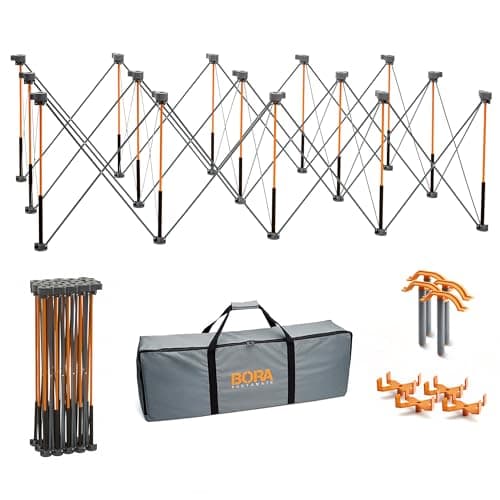
This is why so much workbench advice sounds contradictory — people are answering different questions. If your work is hand-tool joinery, a light folding bench is genuinely useless: push a hand plane against it and the bench moves instead of the shaving. If your work is breaking down sheet goods with a track saw, a heavy joiner's bench is the wrong shape entirely and a folding support grid is exactly right. Both camps are correct about their own shop.
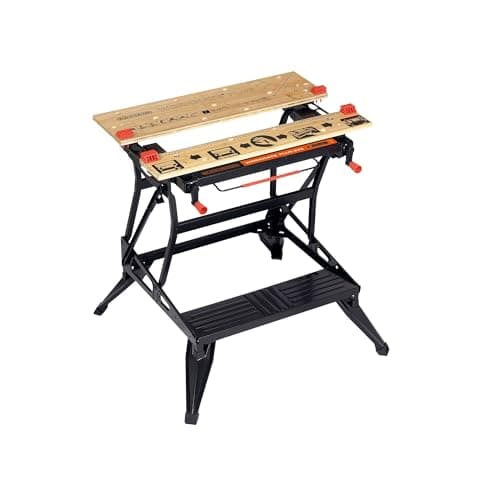
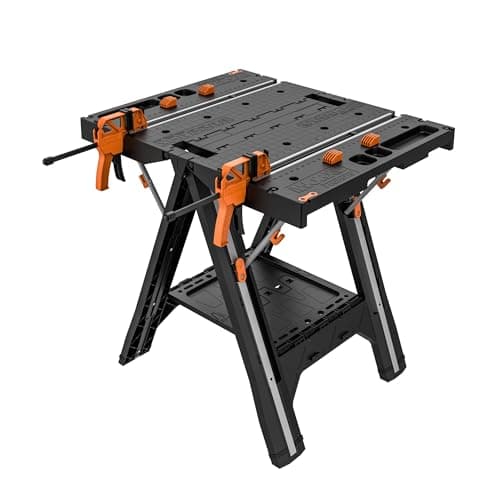
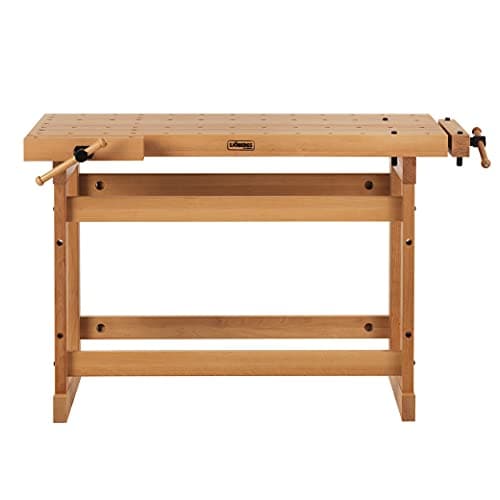
So the ranking below leads with the real bench, then covers the practical alternatives for shops that cannot house one, with each pick's actual use case on its card. The Sjöbergs Nordic Pro is what a workbench is; the Workmate, the Centipede and the Pegasus are what you buy when a permanent bench is not possible yet.
The other honest answer is: build one. A workbench is the classic first project for exactly this reason — it teaches milling, joinery and flattening, the materials cost a fraction of a bought bench, and the result is sized to your shop and your height. A simple laminated-top bench on a sturdy base, with a bought vise bolted on, beats every folding option here and costs less than the Sjöbergs. If you have the tools and a weekend, that is the recommendation.
One dimension worth getting right whichever route you take: height. The common starting point for a hand-tool bench is around wrist height when standing — low enough to get your body weight over a plane. A bench used mainly for assembly and power tools is usually more comfortable a few inches higher. Getting this wrong is the most common regret with a bought bench, because you cannot easily change it.
Whichever bench you end up with, its top is a consumable surface: it dents, it picks up glue and it moves with the seasons. Flattening one is an hour with a jack plane rather than a rebuild, and how to flatten a workbench top is the method.
What makes a bench work
Mass, and why it is not negotiable for hand tools
Planing pushes the bench away from you with real force. A heavy bench absorbs that; a light one skids. This is the single reason traditional benches are built from thick hardwood — it is not tradition for its own sake, it is the physics of the job. If your bench moves, the usual fixes are to add weight low down (a shelf loaded with offcuts works), or to put it against a wall so it can only move one way.
Workholding
A vise holds work vertically for sawing joints. Dog holes plus a vise with a pop-up dog hold work flat on the top for planing. Holdfasts drop into dog holes and pin a workpiece down with a tap. Together these mean both hands are free, which is the actual difference between a bench and a table. Any bench without at least a vise is a table, however nice it looks.
Flatness
The top is a reference surface for assembly — a glue-up done on a twisted bench is a twisted glue-up. Solid timber tops need flattening occasionally with a plane; that is normal maintenance, not a defect. Torsion-box and MDF tops stay flat but do not take a beating the same way.
Buy or build, honestly
Build if: you own a saw and a means of flattening stock, you have a weekend, and you want a bench sized to your shop and your height. It will cost less than half a comparable bought bench and it is the best first project in woodworking.
Buy if: you do not yet own the tools to build one (the chicken-and-egg problem is real), you rent and may move, or your time is worth more than the saving. A bought bench also arrives flat and finished, which is not nothing.
The hybrid nobody mentions
A very common middle path: build a simple base from construction lumber, buy a solid-core door or a laminated worktop for the top, and bolt on a good vise. That gets you 80% of a real bench for a fraction of the price, and it is what a great many working shops actually have.
Sizing for a small shop
Longer is better for handwork, but a bench that blocks the shop is worse than a short one. A 5-foot bench handles most furniture parts; anything longer is a luxury in a garage. Depth of 20 to 24 inches is plenty — deeper and you cannot reach the back, which becomes a shelf for clutter. And leave access to at least three sides if you can: a bench pushed into a corner can only be worked from one direction.
By shop
Permanent shop, hand tools matter: the Sjöbergs Nordic Pro 1400, or build one. Shared garage, need workholding:the Black+Decker Workmate 825 — the whole top is a vise, which is more useful than it sounds. Sheet goods and a track saw: the Bora Centipede, which is the right shape for the job and stores against a wall. Tightest budget, most flexibility: the WORX Pegasus, table one minute and sawhorse the next.
What we could not verify
We have not load-tested these benches or measured deflection. Materials, dimensions, capacities and included components above are the manufacturers' published specifications. Judgments about rigidity under hand-tool use follow from mass and construction, and from owner reviews read at volume.
Height, and the things that matter more than the bench
There is no universal correct bench height. Stand straight, let your arms hang, and measure to the crease of your wrist — then go lower if you plane by hand and higher if you mostly assemble. How tall should a workbench be works it out properly, including the trick of setting the bench just under your table saw so it doubles as outfeed.
Workholding beats both height and mass once the bench is stiff, so mounting a vise properly is the next job after buying one, and the best tool storage is what keeps the top clear enough to use. If you are arriving from site work rather than furniture, carpentry tools vs woodworking tools sets out what changes.