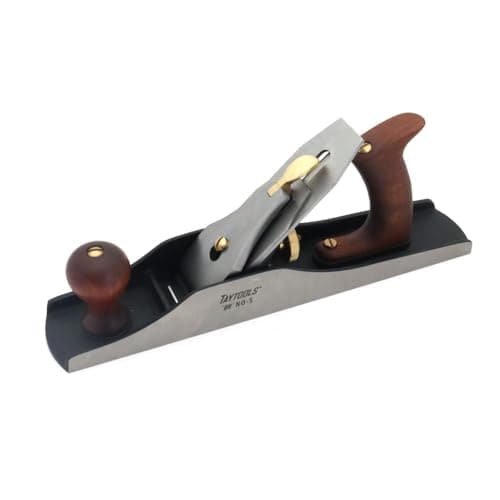
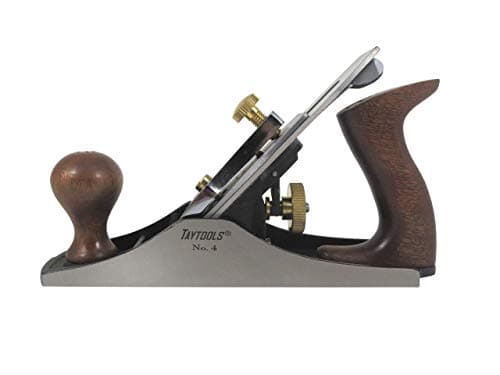
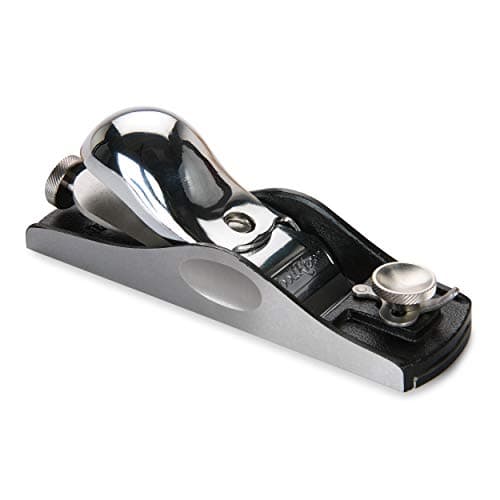
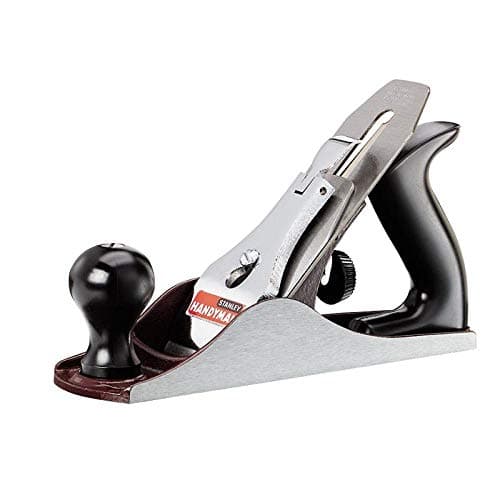
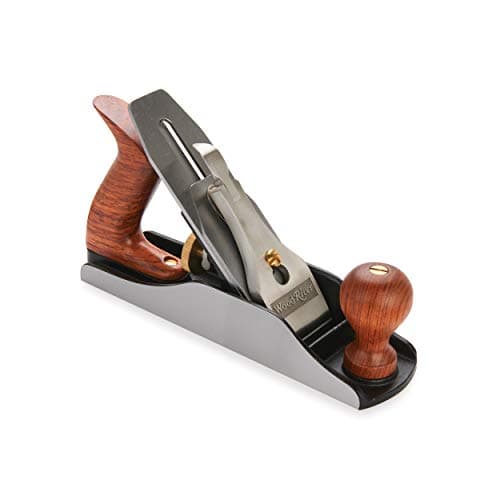
The two things that decide whether a hand plane works are how thick its iron is and how flat its sole is. Everything else — the brand on the lever cap, the pattern of the frog, the wood in the tote — is a distant third. A thick iron resists chatter. A flat sole references the work. Get both and a plane takes shavings; miss either and you will spend your evenings tuning instead of building.
Start with which plane, not which brand. The numbering system is old and unhelpfully opaque, so here it is plainly: a No. 4 is a smoothing plane, about 9 inches long, for the final surface. A No. 5is a jack plane, about 14 inches, and it is the genuine do-everything size — long enough to straighten an edge, short enough to smooth a face. A block plane is small, held in one hand, bedded at a low angle, and it is for end grain, chamfers and fitting parts.
If you own no planes, the honest recommendation is a block plane first and a jack plane second. The block plane gets used constantly and costs least; the jack plane is the one that does real work on a board. A No. 4 smoother is lovely and is usually the third plane, not the first, because a jack plane will smooth adequately and a smoother will not straighten an edge.
The other thing worth saying before the ranking: no plane cuts well until it is sharpened, and none of these arrive sharp enough. That is not a criticism of any of them; it is how planes are sold. Budget for a sharpening setup in the same order, because a premium plane with a dull iron is worse than a budget plane with a keen one. The method is the same one in our chisel sharpening guide.
What the money buys, concretely: a thicker iron, a better-machined sole and frog, and less setup time. The Stanley Handyman at the bottom of this list and the WoodRiver at the top will both take a shaving. The WoodRiver will do it in twenty minutes out of the box; the Stanley might take an afternoon of flattening and honing first. Whether that afternoon is a cost or a pleasure is genuinely a matter of temperament.
What actually separates a good plane from a bad one
Iron thickness — the number that matters most
A plane iron is a cantilever: it sticks out past its support and the wood pushes back. A thin iron flexes and vibrates, which is the "chatter" that leaves a rippled surface and makes people think they cannot plane. A thick iron simply does not do this to the same degree. This is the single biggest mechanical difference between premium planes and budget ones, and it is also the cheapest upgrade you can make to a cheap plane — a replacement thick iron transforms an old Stanley.
Sole flatness
The sole references the wood. If it is hollow behind the mouth, the plane rides on its ends and stops cutting near the middle of a board. Premium planes are machined flat at the factory; budget planes often are not. Checking takes a straightedge and five minutes; fixing means lapping the sole on sandpaper stuck to something flat, which takes an hour and is a genuinely useful skill.
Frog seating and mouth adjustment
The frog is the wedge-shaped casting the iron sits on, and how solidly it seats decides how well the iron is supported right up to the edge. Bedrock-pattern frogs — used by WoodRiver and the Taytools No. 5 here — seat on a larger machined surface than the older Bailey pattern and can be adjusted without removing the iron. It is a real improvement, and it is part of what you are paying for.
Which plane for which job
Block plane — the one you use most
Low bed angle, one hand, small enough to live in an apron pocket. It trims end grain (where a bench plane tears), eases sharp arrises, fits a drawer that binds by a hair, and trims a proud plug or dowel flush. If you buy one plane, buy this.
Jack plane (No. 5) — the workhorse
Fourteen inches of sole is long enough to bridge the hollows in a board and produce a genuinely straight edge, and short enough to be manageable on a face. Set with a slightly cambered iron it removes stock fast; set fine it smooths acceptably. This is the plane to buy second and the one you will reach for on real work.
Smoothing plane (No. 4) — the finisher
Short sole, fine set, tight mouth. Its job is the last few passes before finish, where it leaves a surface no sandpaper matches — a planed surface reflects light differently because the fibers are severed rather than abraded. It is the plane that makes people fall in love with hand tools, and it is the least necessary of the three.
By budget
Cheapest way in:the Stanley Handyman No. 4 or the Taytools 469614 No. 4 — the Taytools costs a little more, arrives closer to ready, and is worth the small premium. The best single plane here: the Taytools #5 jack, one bracket up and the one to buy if you are building furniture. Mid-price, most used: the WoodRiver block plane, which almost everyone should own regardless of what else they buy. Premium: the WoodRiver No. 4 V3, for a plane that works properly out of the box and will still be working in thirty years. Live prices for all five are in the table above.
Buying used, honestly
An old Stanley Bailey plane from a flea market can be an excellent tool for very little, and many hand-tool woodworkers use nothing else. The catch is that you are buying a project: expect to remove rust, flatten the sole, possibly replace the iron, and definitely sharpen. If that appeals, it is genuinely the best value in hand tools. If it does not, buy new and spend the time woodworking instead. We have not scored used planes here because there is no such thing as a consistent used-plane product to rank.
What we could not verify
We have not taken shavings with these five side by side. Sole lengths, blade widths, body materials and the published blade hardness figures above come from the manufacturers' listings and spec sheets. Judgments about out-of-box readiness and adjustment come from documented design differences and from owner reviews read at volume.
The job that justifies a jack plane
Flattening a board with no jointer is the clearest argument for owning a No. 5. A 14 in. sole is long enough to bridge hollows and short enough to work diagonally across the grain, which is exactly the compromise a jack plane exists to make — how to flatten a board without a jointer sets out the method, including the winding sticks that tell you when to stop.
For the curves and hollows no plane sole can follow, the best wood rasps pick up where this page stops.