Skip to content
Dovetail & Dust

HUB 02 · Power Tools

Track Saw vs Circular Saw

Both cut a straight line through a sheet of plywood. Only one leaves an edge you can glue to without touching it again — and the gap in price is smaller than the gap in finish.

By Stephen V.Updated How we research
#ad

We earn a commission when you buy through our Amazon links, at no extra cost to you. It never changes our rankings, and we say so when the cheaper tool is the better buy. How this works.

Buy a track saw if the cut you make is the final edge; buy a circular saw if something later is going to clean that edge up. If you only read one line, that is the decision. The Makita SP6000J is the track saw to buy for a small shop breaking down sheet goods into cabinet parts, and the Makita 5007MG is the circular saw to buy if your cuts are rough-to-size and a table saw, jointer or router does the finishing.

That sounds like a small distinction and it is not. It changes the order of every operation after the cut, and in a one-car garage it can remove a machine from the shopping list entirely.

They are the same tool with the fence moved

Mechanically these are close relatives: a round blade on an arbor, a shoe that rides the work, a depth and a bevel adjustment. Two differences do all the work.

The first is where the straight line comes from. A circular saw gets its straight line from you — from a pencil line you follow, or from a straight edge you clamp down and run the shoe against. A track saw gets it from an extruded aluminium rail with a rubber grip strip underneath, and the saw is captive in that rail. You are not steering. The practical consequence is repeatability: the second cut matches the first because the rail is the same rail.

The second is how the blade enters the wood.A track saw plunges — the blade drops into the cut through a spring-loaded housing, and the rail's splinter guard sits on the good side of the line while it does. A circular saw's blade is already spinning and exposed when the shoe meets the wood, and the teeth climb out of the top face of the sheet on the way through. That upward exit is what tears veneer. A rail suppresses it on the show side; nothing suppresses it on a circular saw except a scoring pass, tape, or a blade with far more teeth than most people fit.

What each one is genuinely better at

The track saw wins on edge quality and on space

A rail-guided plunge cut in good plywood comes off the saw straight, square and clean enough to glue. That is the whole argument, and for anyone building cabinets or built-ins it is worth a great deal: you are not dragging a 4 × 8 sheet across a table saw on your own, and you do not need an outfeed table, a crosscut sled or six feet of clearance behind the blade. A sheet on a pair of sawhorses and a sacrificial foam board is the entire setup.

We say more about where that leaves the table saw in table saw vs track saw, which is a different and genuinely harder question than this one.

The circular saw wins on cost, reach and brute force

A good circular saw costs a fraction of a track saw with a rail, cuts deeper, and does not care what it is cutting or where. Wet framing lumber, a door already hung, a joist, a sheet of OSB on a muddy driveway — a circular saw is indifferent to all of it, and a track saw is not, because the rail has to sit flat on something. If your woodworking is also your house-repair tool, this is not a close contest.

It is also the saw that does not make you buy a second thing. Every track saw price you see is the price before the rail, unless the kit says otherwise — and on this page one of them does.

The decision in four questions

  1. Is the cut the finished edge? Yes → track saw. No → circular saw.
  2. Do you own a table saw with real outfeed support? Yes → a circular saw for rough breakdown is plenty. No → a track saw replaces most of what the table saw was going to do for sheet goods.
  3. Will the saw also cut framing, decking or anything wet? Yes → you want a circular saw regardless of what else you buy.
  4. Do you need the same cut more than twice? Yes → a rail, or a guided system, pays for itself in setup time alone.

Plenty of shops end up with both, and that is not a failure of planning. A circular saw lives in the truck and a track saw lives in the shop, and they overlap less in practice than they do on paper.

The short answer

Quick picks

#ProductBest forScorePrice
01
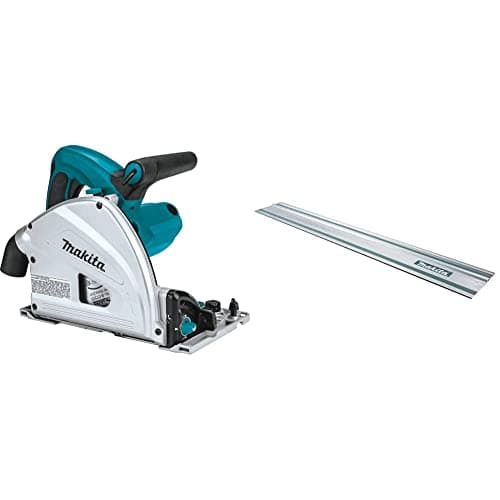
Makita Makita SP6000J Plunge Track Saw
Makita SP6000J Plunge Track Saw

The track saw most small shops buy instead of a table saw. Straight, splinter-free cuts in sheet goods without wrestling a full sheet across a table.

Best overall track saw
8.6
$629.58Amazon
02
Kreg Adaptive Cutting System Plunge Saw

The track saw built around a system rather than a rail. Bought with the ACS project table it becomes a repeatable crosscut station, which is a different tool from a bare saw and a length of track.

Best system buy
8.2
Check price →
03
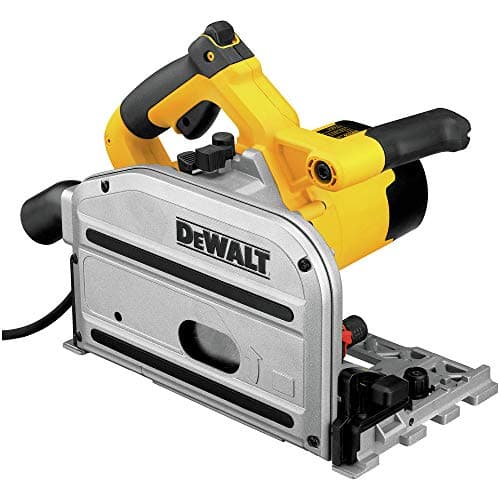
DeWalt DeWalt DWS520K 6-1/2-in TrackSaw Kit
DeWalt DWS520K 6-1/2-in TrackSaw Kit

The track saw for a shop already on DeWalt. Corded, well balanced, and on the same rail platform as DeWalt's cordless track saws — so a later battery upgrade does not orphan your track.

Best for a DeWalt shop
7.8
$506.77Amazon
04
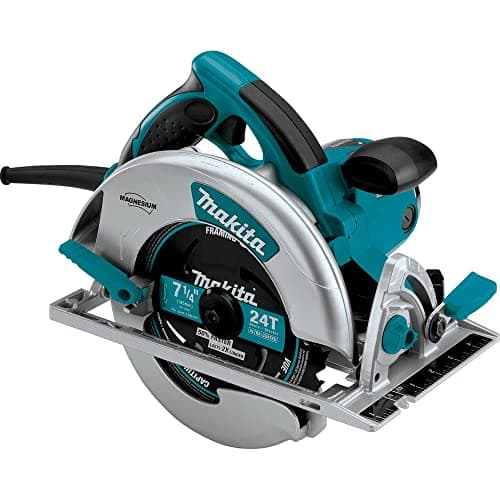
Makita Makita 5007MG Magnesium 7-1/4-Inch Circular Saw
Makita 5007MG Magnesium 7-1/4-Inch Circular Saw

Magnesium castings instead of stamped steel, which makes it light without making it flexible. For breaking down sheet goods on sawhorses, that combination is the whole game.

Best overall circular saw
8.6
Check price →
05
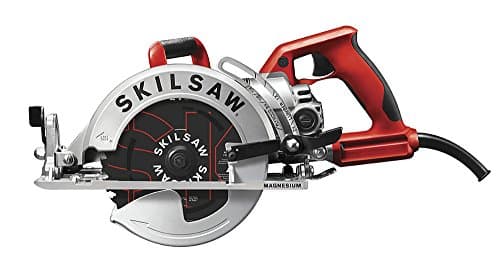
SKILSAW SKILSAW SPT77WML-01 Lightweight Worm Drive Circular Saw
SKILSAW SPT77WML-01 Lightweight Worm Drive Circular Saw

A worm drive puts the motor behind the blade and gears it down for torque. In wet, thick or knotty stock it simply does not slow, which is why framers have used the layout for decades.

Best for thick stock
8.4
$199.99Amazon
06
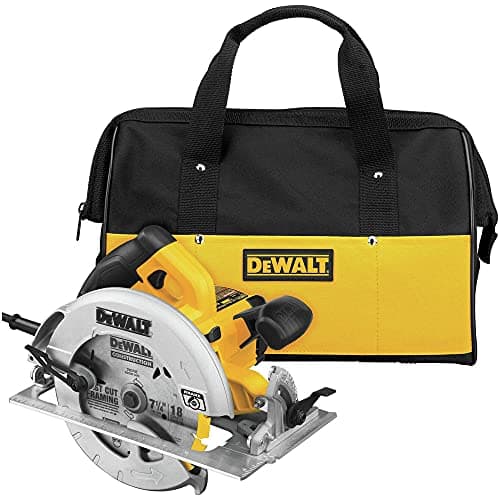
DEWALT DEWALT DWE575SB 7-1/4-Inch Circular Saw with Electric Brake
DEWALT DWE575SB 7-1/4-Inch Circular Saw with Electric Brake

One of the lightest full-size circular saws made, with an electric brake. On repetitive cuts the brake is a safety feature you feel every single time you release the trigger.

Best lightweight
8.0
$141.59Amazon

#ad · Live prices from the Amazon Product API, as of October 5, 2026. Where we have no verified live price, we show none — we would rather leave a gap than print a number that has rotted.

In detail

The picks, in full

01
Makita Makita SP6000J Plunge Track Saw

Best overall track saw

Makita SP6000J Plunge Track Saw

6-1/2 in bladePlunge cut55 in rail incl.12 A
8.6/10

The track saw most small shops buy instead of a table saw. Straight, splinter-free cuts in sheet goods without wrestling a full sheet across a table.

Cut quality
9
Portability
9
Sheet goods
10
Build
8
Value
7

Pros

  • Breaks down full sheets accurately with no outfeed table
  • Near-splinter-free cuts on both faces with the rail
  • Kit includes a guide rail to start cutting immediately

Cons

  • Slower than a table saw for repeated narrow rips
  • Rails and accessories add up

Don't buy this if…

…you mostly rip solid stock to width all day — a table saw is faster and more repeatable for that.

$629.58View on Amazon

Price as of October 5, 2026. Prices change — Amazon's is the one that counts.

#ad · we may earn a commission from this link to Makita SP6000J Plunge Track Saw

02

Best system buy

Kreg Adaptive Cutting System Plunge Saw

Plunge-cut sawACS track systemCordedDust port
8.2/10

The track saw built around a system rather than a rail. Bought with the ACS project table it becomes a repeatable crosscut station, which is a different tool from a bare saw and a length of track.

Cut quality
8
Dust handling
8
Build
8
Ecosystem
9
Value
8

Pros

  • Grows into a guided crosscut station with the ACS table — repeat cuts without measuring twice
  • Track connection is stiff and repeatable, which is exactly where cheap rails give up
  • Sits well below the European saws while cutting in the same league

Cons

  • The saw alone is the smaller half of the value — the system costs more again
  • Newer platform, so third-party accessory support is thinner

Don't buy this if…

…you only want a saw and a rail. You would be paying into a system you never build out.

Check price on Amazon →

We don't have a verified live price for this right now, so we aren't showing one.

#ad · we may earn a commission from this link to Kreg Adaptive Cutting System Plunge Saw

03
DeWalt DeWalt DWS520K 6-1/2-in TrackSaw Kit

Best for a DeWalt shop

DeWalt DWS520K 6-1/2-in TrackSaw Kit

6-1/2 in bladePlunge cutKit with caseCorded
7.8/10

The track saw for a shop already on DeWalt. Corded, well balanced, and on the same rail platform as DeWalt's cordless track saws — so a later battery upgrade does not orphan your track.

Cut quality
8
Dust handling
8
Build
8
Ecosystem
8
Value
7

Pros

  • Anti-kickback and riving knife are built in, not optional
  • Shares a rail platform with DeWalt's cordless saws — buy rails once
  • Widely stocked blades and service parts

Cons

  • Rails are an extra purchase on top of an already mid-high price
  • Needs a real extractor to keep the cut line clear

Don't buy this if…

…you are brand-agnostic and price-sensitive — the Triton cuts nearly as well for meaningfully less.

$506.77View on Amazon

Price as of October 5, 2026. Prices change — Amazon's is the one that counts.

#ad · we may earn a commission from this link to DeWalt DWS520K 6-1/2-in TrackSaw Kit

04
Makita Makita 5007MG Magnesium 7-1/4-Inch Circular Saw

Best overall circular saw

Makita 5007MG Magnesium 7-1/4-Inch Circular Saw

7-1/4 in. bladeMagnesium base and guardsCordedSidewinder
8.6/10

Magnesium castings instead of stamped steel, which makes it light without making it flexible. For breaking down sheet goods on sawhorses, that combination is the whole game.

Cut quality
8
Power
9
Control
9
Build
9
Value
8

Pros

  • Light enough to control at the end of a long rip across a full sheet
  • The magnesium base stays flat, so the shoe does not rock on the cut line
  • Built-in light and dust blower genuinely help you follow a line

Cons

  • Costs more than a builder-grade saw that cuts the same depth
  • Corded, which on a driveway sheet breakdown means an extension lead

Don't buy this if…

…you already own a track saw. A circular saw and a track saw overlap almost entirely for sheet work.

Check price on Amazon →

No buyable offer at the last price check (October 5, 2026). We show nothing rather than a stale number.

#ad · we may earn a commission from this link to Makita 5007MG Magnesium 7-1/4-Inch Circular Saw

05
SKILSAW SKILSAW SPT77WML-01 Lightweight Worm Drive Circular Saw

Best for thick stock

SKILSAW SPT77WML-01 Lightweight Worm Drive Circular Saw

15 A motor7-1/4 in. bladeWorm driveMagnesium construction
8.4/10

A worm drive puts the motor behind the blade and gears it down for torque. In wet, thick or knotty stock it simply does not slow, which is why framers have used the layout for decades.

Cut quality
8
Power
10
Control
7
Build
9
Value
8

Pros

  • Gear reduction trades speed for torque — it powers through wet timber
  • Blade-left layout gives a right-handed user a clear view of the cut line
  • Magnesium body keeps a worm drive down to a weight you can hold up

Cons

  • Still heavier than a sidewinder, and the balance is nose-heavy
  • Worm drives need occasional oil changes, which sidewinders do not

Don't buy this if…

…your work is plywood and MDF. All that torque is answering a question sheet goods never ask.

$199.99View on Amazon

$219.999% off

Price as of October 5, 2026. Prices change — Amazon's is the one that counts.

#ad · we may earn a commission from this link to SKILSAW SPT77WML-01 Lightweight Worm Drive Circular Saw

06
DEWALT DEWALT DWE575SB 7-1/4-Inch Circular Saw with Electric Brake

Best lightweight

DEWALT DWE575SB 7-1/4-Inch Circular Saw with Electric Brake

7-1/4 in. bladeElectric brake57 degree bevel capacityCorded
8.0/10

One of the lightest full-size circular saws made, with an electric brake. On repetitive cuts the brake is a safety feature you feel every single time you release the trigger.

Cut quality
7
Power
8
Control
9
Build
7
Value
9

Pros

  • Genuinely light, which reduces the fatigue that causes wandering cuts
  • The electric brake stops the blade in a fraction of the coast-down time
  • 57 degree bevel goes further than most saws, useful for compound work

Cons

  • A lighter build flexes more than a magnesium saw on a hard cut
  • Bevel detents are less positive than on the premium saws

Don't buy this if…

…you cut wet framing lumber all day. Choose torque over weight for that work.

$141.59View on Amazon

Price as of October 5, 2026. Prices change — Amazon's is the one that counts.

#ad · we may earn a commission from this link to DEWALT DWE575SB 7-1/4-Inch Circular Saw with Electric Brake

The two families side by side

Published listing specifications for the six saws ranked above. The blade diameter is the single most useful number in this table: the track saws run 6-1/2 in. blades and the circular saws run 7-1/4 in., which is why the circular saws cut deeper and the track saws do not need to.

SawFamilyBladePublished specifications
Makita SP6000JTrack saw6-1/2 in.Plunge cut, 12 A, 55 in. guide rail included in the kit
Kreg Adaptive Cutting System sawTrack sawPlunge-cut sawCorded, ACS track system, dust port
DeWalt DWS520KTrack saw6-1/2 in.Plunge cut, corded, kit with case (rail sold separately)
Makita 5007MGCircular saw7-1/4 in.Sidewinder, magnesium base and guards, corded
SKILSAW SPT77WML-01Circular saw7-1/4 in.15 A, worm drive, magnesium construction
DEWALT DWE575SBCircular saw7-1/4 in.Electric brake, 57° bevel capacity, corded

Read the price before you compare the price

This is where track saw shopping goes wrong. A track saw without a rail cuts a crooked line, so the honest comparison is saw-plus-rail against saw-alone. Of the three track saws above, the Makita SP6000J kit is the one that publishes a 55 in. rail as part of what you receive; the DeWalt is a saw and a case; the Kreg is the entry point to a larger system that costs more again and does more in return.

Live prices sit in the table at the top of this page with the date they were pulled, so you can do that arithmetic against today's numbers rather than ours.

Sidewinder or worm drive, if you go circular

A sidewinder puts the motor beside the blade and spins it directly: lighter, faster, cheaper, and the right answer for sheet goods. A worm drive puts the motor behind the blade and gears it down, trading blade speed for torque — which is why the SKILSAW above does not slow in wet or knotty stock and why framers have used the layout for decades. For plywood and MDF that torque is answering a question the material never asks.

Blade side matters more than people expect. A blade-left saw gives a right-handed user a clear view of the cut line, which is most of what “this saw is accurate” means in practice when the saw has no rail to follow.

The cheap way to get most of a track saw

Clamp a straight edge to the sheet, set your circular saw's shoe against it, and you have a guided cut. It is genuinely good, and it is how a great deal of fine work got done before track saws were affordable. What it does not give you is the splinter guard on the show face, zero-clearance support under the blade, or a cut line that lands in the same place every time without measuring the offset from the shoe edge to the blade.

If you want the guided cut without the rail, buy the best blade you can for the saw you own before you buy anything else. A high-tooth-count plywood blade changes the edge more than most upgrades at that price. Our table saw blade roundup covers the tooth geometry that drives this, and the reasoning carries straight across.

Dust, because it is not a side issue here

A track saw is a closed housing with a port designed to be connected, and it is one of the few woodworking tools that collects most of its own dust when you hook it up. A circular saw throws chips sideways and down. If you cut MDF indoors this is not a minor convenience difference, and we have written about why in wood dust health risks. Pair either saw with a shop vac or dust extractor rather than a bag.

Where these numbers come from

The blade diameters, amperages, drive types, brake and bevel figures above are the manufacturers' own published listing specifications, recorded when we researched each saw and cited per saw in Sources. We have not measured kerf width, cut speed or edge quality in a lab — we do not have one, and our methodology page says so plainly. Prices come from the live price feed and carry the date they were pulled.
How we picked

We do not run a testing lab

We researched published manufacturer specifications, manuals and spec sheets, ran the arithmetic those specs support, and read owner reviews at volume, then scored each tool against a published rubric. The scores are judgments from documented research — they are not measurements we took, because we do not have a lab and we are not going to pretend we do. Where a number came from a manufacturer's document, we name it and link it in Sources.

Questions

Frequently asked

Can a track saw replace a table saw?
For sheet goods, largely yes — and in a small shop that is the point. Where it cannot replace one is narrow repetitive ripping of solid stock, any cut that needs a dado or a non-through cut with a fence, and anything involving a crosscut sled. Most shops that go track-saw-first eventually add a small table saw for narrow rips rather than the other way round.
Is a circular saw with a clamped straight edge as good as a track saw?
Close on straightness, not close on edge quality. You get the straight line; you do not get the splinter guard sitting on the show face, the zero-clearance support under the blade, or a repeatable offset you do not have to measure every time. If your cuts get cleaned up later, a straight edge is genuinely enough.
Do I have to buy the rail separately?
It depends on the saw, and it is the number one reason track saw budgets slip. Of the three here, the Makita SP6000J kit publishes a 55 in. guide rail as part of the kit contents. Read the kit contents, not the headline price — a saw with no rail is not yet a track saw.
Which cuts deeper?
The circular saws, by a clear margin — they run 7-1/4 in. blades against the track saws' 6-1/2 in. If you need to cut through a 4x post or a stack of two-by material in one pass, that difference decides it. For 3/4 in. sheet goods, both have depth to spare.
Worm drive or sidewinder for woodworking?
Sidewinder, for almost all of it. Worm drive buys torque you need in wet, thick or knotty construction stock and pays for it in weight and in oil changes. If your material is plywood, MDF and dry hardwood, a light magnesium sidewinder is the better tool and the cheaper one.

Keep reading

Receipts

Sources

We do not run a testing lab, and we do not pretend to. Our picks come from published manufacturer specifications and manuals, the arithmetic those specs support, and owner reviews read at volume. Where we could not verify something, we say so on the page rather than quietly leaving it out. Read our full method.