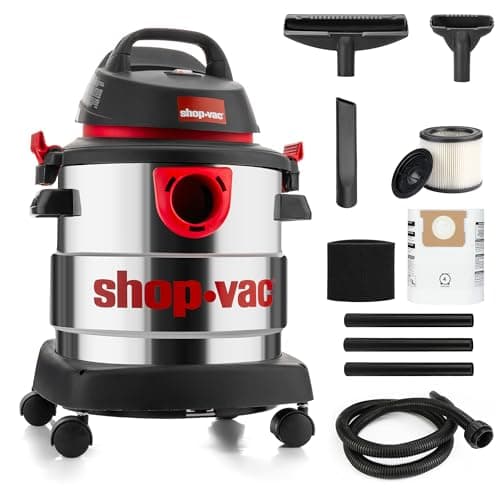
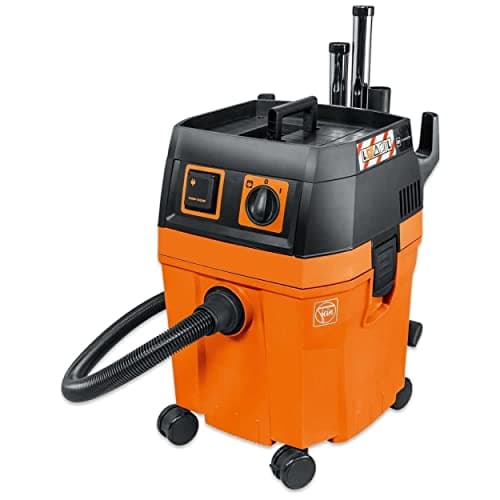
A standard shop vac with a standard filter captures the sawdust you can see and passes a good deal of the dust you cannot straight back into the room. The fine fraction is the part that reaches your lungs, so filtration — not suction — is the first spec to look at.
That is also the actual difference between a shop vac and a dust extractor. Both move air. An extractor is built around a fine filter (often HEPA-rated), runs quieter, and usually has a tool-triggered outlet so it starts when your sander does. A shop vac is built around a big drum and a low price. Neither is wrong; they answer different questions. Which is why this roundup ranks them together and says clearly on every card which kind of machine it is.
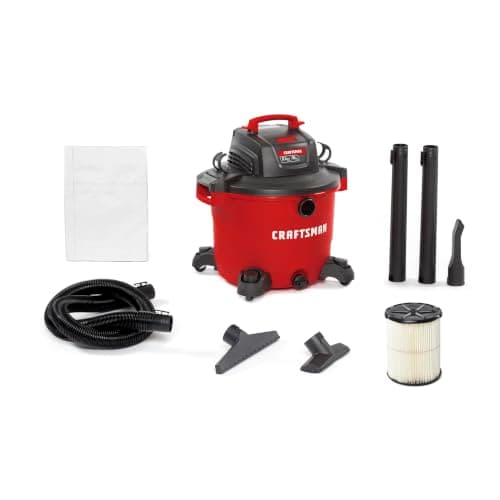
Here is the reasoning behind the ranking. If your vac spends its life sucking up floor sweepings, offcuts and the occasional spilled coffee, buy capacity and save the money: the Craftsman 16-gallon does that job for a fifth of an extractor's price. If your vac spends its life connected to a random orbital sander or a track saw while you stand next to it breathing, buy filtration and quiet: that is what the Fein and the Bosch are for.
The upgrade that changes everything, whichever you buy: a cyclone separator ahead of the vac. A separator drops the great majority of debris into a bucket before it reaches the filter, which means suction stays high through a whole session instead of fading as the filter loads, and the filter itself lasts far longer. For a small shop it is arguably a better first purchase than a more expensive vac. See our shop vac vs dust collector guide for where a vac stops being the right answer entirely.
And the limit worth stating plainly: no shop vac keeps up with a thickness planer, a jointer or a table saw's under-blade port. Those machines throw chips at a volume that needs a dust collector— high airflow at low pressure — not a vac's high pressure at low airflow. The arithmetic is in our CFM guide.
Filtration: the spec that actually matters
Wood dust is a mixture of particle sizes, and the health concern is the fine fraction — particles small enough to stay airborne for hours and reach deep into the lungs. A standard pleated cartridge filter captures coarse debris well and fine dust poorly. A HEPA-rated filter is defined by its efficiency against very small particles, which is precisely the fraction a standard filter passes.
What to do if you buy a standard shop vac
Two things, and together they close most of the gap for a fraction of an extractor's price. First, fit a fine-dust or HEPA-grade cartridge filter — every major vac brand sells one for its own machines. Second, use a collection bag inside the drum. The bag catches the bulk before it reaches the filter, which keeps the filter clean and the suction up. Filter plus bag on a mid-price vac is a genuinely effective setup.
Suction, airflow and why "peak HP" means little
Peak horsepower is a marketing figure measured at motor stall, not a description of how the vac performs in use. The two figures that matter are water lift (sealed suction pressure, which is what pulls dust through a small tool port) and CFM (airflow volume, which is what carries it along the hose). A shop vac is a high-pressure, low-flow machine, which is exactly right for the small ports on a sander or a track saw and exactly wrong for a 4-inch planer port.
Hose diameter matters more than the motor
Airflow resistance climbs steeply as a hose narrows. A 1-1/4-inch hose on a vac rated for 2-1/2 inch will strangle it. Use the largest hose the tool port accepts, keep the run as short as you can, and remember that every reducer and elbow costs you flow. This is the same physics that governs a full dust collection system.
Noise, and why it decides whether you use the thing
A standard shop vac is genuinely loud — loud enough that people switch it off between cuts, which defeats the point. Dust extractors run markedly quieter (the Fein publishes 66 dB), which sounds like a luxury until you realize it is the difference between a vac that runs all session and one that does not. If you work in an attached garage or share a wall, weigh this heavily.
By what you are doing
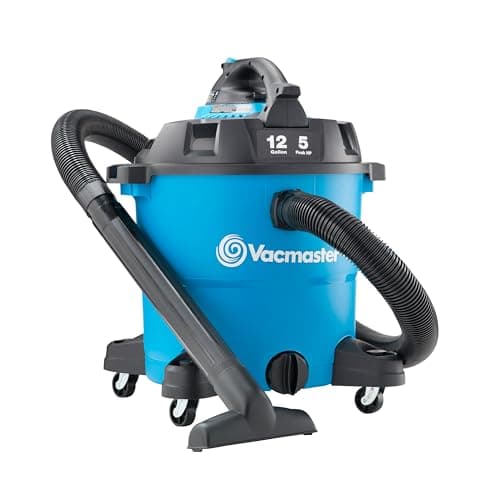
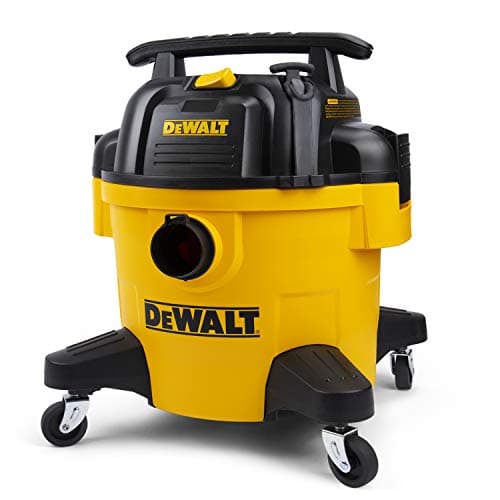
Cleanup, spills and offcuts: the Craftsman 16-gallon or the Vacmaster VBV1210. Buy capacity, fit a fine filter, move on. Connected to a sander for hours: the Fein Turbo II, for the filtration and the noise level. Filter clogging is your problem: the Bosch VAC090AH, whose auto filter clean keeps suction from fading. Carrying it to the work: the DeWalt DXV06P or the compact Shop-Vac.
What we could not verify
We have not measured suction, airflow or noise on these six machines. Capacities, CFM figures, filter ratings, peak HP claims and the published decibel figure are the manufacturers' own specifications. The filtration reasoning is standard particle-size physics, not a test we ran.