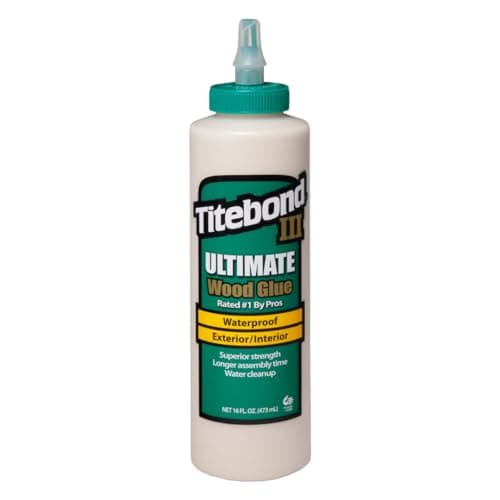
Buy four clamps and a bottle of Titebond III and you can make a cutting board this weekend — the Jorgensen Cabinet Master is the clamp we rank first for this, and the glue is the one Franklin International publishes as FDA-approved for indirect food contact, with cutting boards named as the example. That is the whole non-negotiable list for a first board: a way to hold strips together while glue cures, and a glue that belongs in a kitchen.
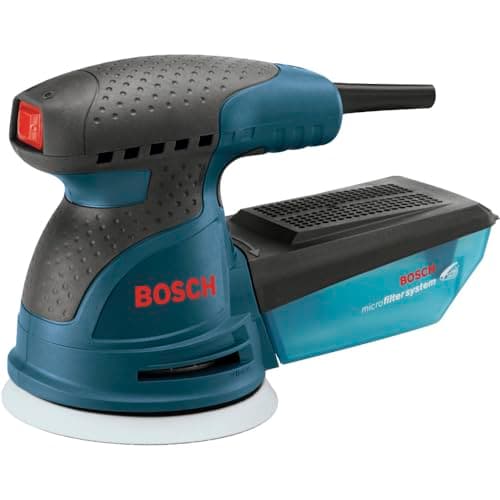
Everything after that is about making the board flat, square and smooth, and there is more than one route to each. A table saw with a decent blade rips the strips; a track saw or even a circular saw and a straightedge will do it. A thickness planer flattens the glued-up slab in minutes; a belt sander, a drum sander or a router sled gets there slower. The Bosch ROS20VSC is the pick for the finish, because end grain needs a lot of sanding and a sander with real speed control is the one that makes that bearable.
The two questions everybody actually has
Do I need a planer?
No — and for an end-grain board you should think twice before using one. A thickness planer takes a flat slab and makes it parallel, which is genuinely the fastest way to clean up a long-grain board after glue-up. On an end-grain board, where every square inch of the face is exposed end grain, the knives can lift and tear chunks out of the surface, and a tear-out on end grain is deep.
The alternatives are a drum sander, which abrades rather than cuts and is the tool most serious board-makers reach for, or a router sled, or patience with a random orbit sander. We rank the machines in best benchtop planer and best drum sander, and the honest comparison for this exact job is drum sander vs planer.
Which glue is safe?
Franklin International publishes that Titebond III is "U.S. FDA approved for indirect food contact (cutting boards)" and that it passes the ANSI/HPVA Type I water-resistance specification — the top of that published scale. Titebond II is published as passing ANSI Type II, a step down. Both are cited in Sources below. A cured PVA glue line in a board that gets wiped rather than soaked is not the part of a cutting board that fails; the joint that was clamped dry in one spot is.
What each tool on this page is for
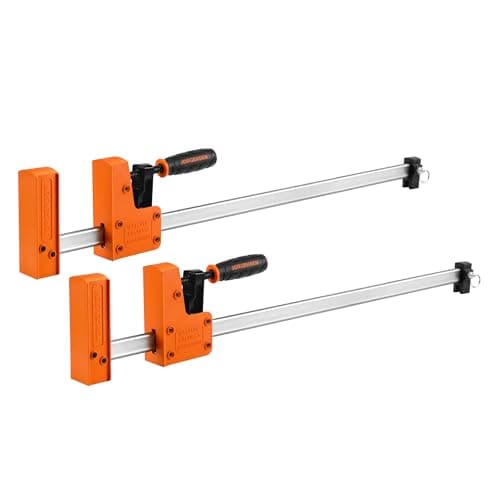
- The clamps: Jorgensen Cabinet Master parallel clamps. Four of them, jaws parallel so the strips stay in one plane instead of stair-stepping.
- The glue:Titebond III, for the published Type I rating and the longer 8–10 minute open assembly time — which matters when you have fourteen strips to spread before any of them skins over.
- The sander: the Bosch ROS20VSC, with variable speed and a 5 in. pad. End grain drinks abrasive; speed control is what keeps you from burnishing it.
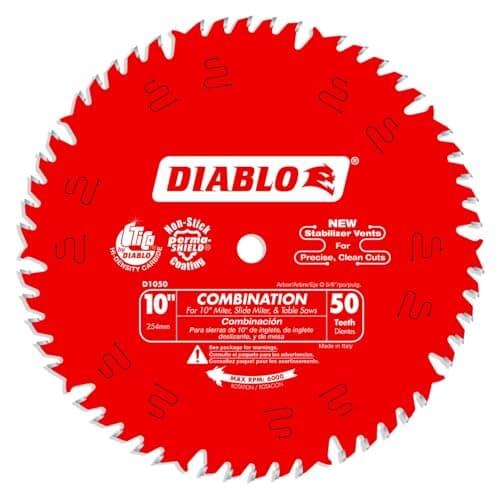
- The blade: the Diablo D1050X 50-tooth combination blade, because strips that come off the saw square and smooth need almost no jointing before glue-up.
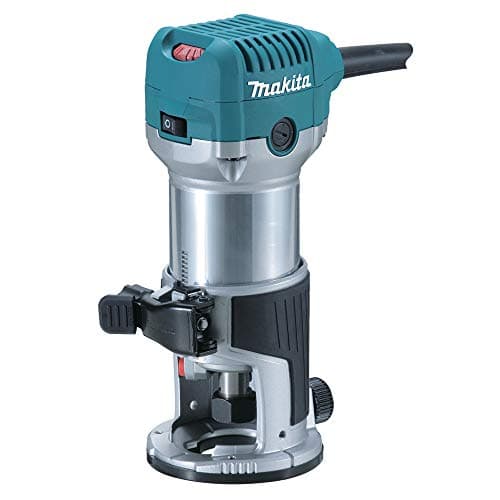
- The router: the Makita RT0701C compact router, for the round-over on the edges and the finger grooves if you want them.
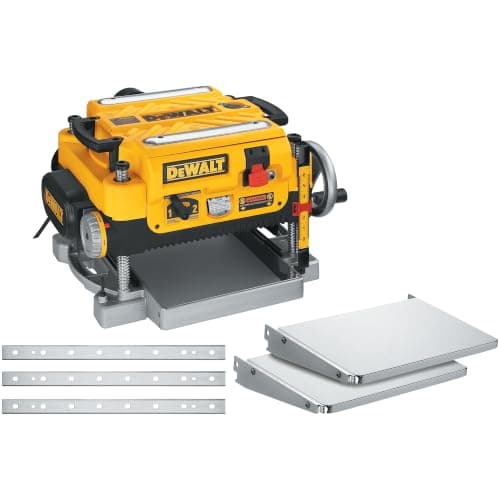
- The flattener:the DeWalt DW735X planer — the fastest route for a long-grain board, and the one to use carefully or not at all on end grain.
Prices below come from our live price feed and carry the date they were pulled.
The six side by side
Published listing specifications for the six picks above, with the stage of the build each one belongs to. Only the first two are genuinely required.
| Tool | Stage | Required? | Published specifications |
|---|
| Jorgensen Cabinet Master clamps | Glue-up | Yes — four of them | Parallel jaws, ~1,000 lb force, 90° self-squaring |
| Titebond III (16 oz) | Glue-up | Yes | ANSI/HPVA Type I, open assembly 8–10 min, FDA indirect food contact |
| Bosch ROS20VSC | Finishing | Effectively yes | 5 in. pad, 2.5 A, variable speed, dust canister |
| Diablo D1050X | Ripping strips | If you own a table saw | 10 in. / 50T ATB, 0.098 in. kerf, 6,000 max RPM |
| Makita RT0701C | Edges and grooves | No | 1.25 HP, 10,000–30,000 RPM, 1/4 in. collet |
| DeWalt DW735X | Flattening | No — and not for end grain | 13 in. width, two speeds (96/179 CPI), 3-knife head |
The glue-up is the whole project
Strips go together face to face, which means a long-grain-to-long-grain joint — the strongest glue joint in woodworking and, in a well-made board, stronger than the wood either side of it. Three things decide whether you get one:
- Full coverage. Spread glue edge to edge on every mating face. A dry patch is a future delamination, and you cannot see it once the board is closed.
- Alternating clamps. Two clamps under the board, one or two over the top. All-under bows the board upward, and you then have to sand the crown away.
- Even, moderate pressure.Titebond publishes clamping pressures of 100–150 psi for softwoods and 175–250 psi for hardwoods. In practice: firm, with a continuous thin bead of squeeze-out along the joint, not a flood.
Spreading fourteen strips takes longer than you think, and this is the real argument for Titebond III on a board over Titebond II: 8–10 minutes of published open assembly time against 3–5. Work in halves if the board is wide — glue up two sub-panels, let them cure, then join those — and the time pressure disappears.
End grain versus long grain, before you buy anything
A long-grain board is strips glued face to face, one glue-up, and the surface you cut on is the side of the board. An end-grain board is that panel cross-cut into slices, rotated and glued again, so the knife meets the fibre ends. End grain is kinder to a knife edge and harder to make: twice the glue-ups, twice the flattening, and a surface that soaks up finish.
For a first board, make a long-grain one. The tool list is identical, the failure modes are fewer, and you will learn the glue-up on a piece you are not about to cross-cut. If you do go end grain, read how to sand end grainbefore you start — it is a different job from sanding a face, and a planer is the wrong tool for it.
What you can safely skip
A jointer. Strips cut on a table saw with a sharp 50-tooth blade and a decent fence are square enough to glue, and any small variation gets clamped out. A jointer earns its keep on wide boards and twisted stock, not on 1-1/2 in. strips — see jointer vs planer for what each machine is really for.
A drum sander, unless you are making boards in batches. A router table, unless you want profiled edges. And a moisture meter, unless you are buying rough lumber from a yard rather than dimensioned stock — though if you are, the moisture meter is the tool that stops a board cupping two weeks after you give it away.
Where these numbers come from
The clamping forces, pad sizes, tooth counts, collet sizes and planer specifications above are the manufacturers' own published listing specifications, cited per product in Sources. The glue figures — ANSI/HPVA Type I, the 8–10 minute open assembly time, the clamping pressures and the FDA indirect-food-contact statement — are Franklin International's own published technical data for Titebond III, also linked in Sources. We have not tested glue strength or food safety in a lab; we do not have one, and our methodology page says so plainly.