Skip to content
Dovetail & Dust

HUB 04 · Joinery & Jigs

Dovetail Jig vs Hand-Cut Dovetails

One is faster once it is set up; the other is faster for one drawer and costs a fraction. Here is how to choose without the romance.

By Stephen V.Updated How we research
#ad

We earn a commission when you buy through our Amazon links, at no extra cost to you. It never changes our rankings, and we say so when the cheaper tool is the better buy. How this works.

A router jig is faster than hand tools only after it is set up — and setting one up for the first time on an unfamiliar stock thickness can take longer than sawing a drawer's worth of tails by hand. That single fact reframes the whole argument. The jig is a production tool. If you are making eight drawers, it will beat you comfortably. If you are making one, it very possibly will not.

Cost tells a similar story. A capable dovetail jig plus the bits and guide bushes to run it is a significant purchase. A dovetail saw, a marking gauge and three chisels you probably already own cost a fraction of that, and the saw and chisels do a hundred other jobs. Hand tools are the cheaper route into the joint by a wide margin.

Appearance is where people have opinions, and there is an honest technical point underneath them. A router-cut dovetail has rounded socket corners, because a spinning bit cannot cut a sharp internal corner, and on the fixed-template jigs the pins and tails are evenly spaced because the template says so. Hand-cut dovetails have crisp corners and whatever spacing you marked — narrow pins, varied rhythm, the things people recognize as hand work. Adjustable jigs close much of that gap on spacing but not on the corner radius.

So the real question is not which is better. It is: how many drawers, how much do you want to spend, and does the joint need to look hand-cut? Answer those three and the decision makes itself.

The short answer

Quick picks

#ProductBest forScorePrice
01
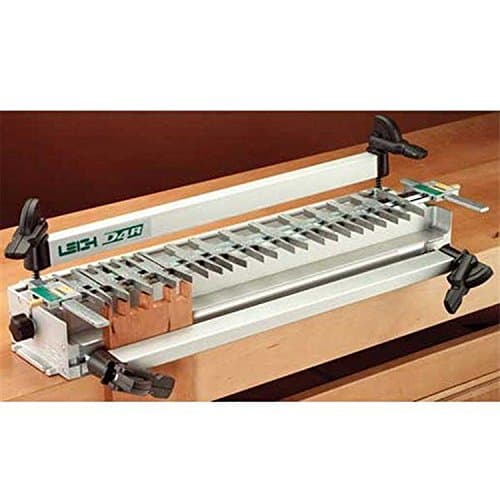
Leigh Leigh D4R Pro Dovetail Jig
Leigh D4R Pro Dovetail Jig

The dovetail jig for people who are serious about dovetails. Fully variable spacing cuts through, half-blind and sliding joints — the most capable jig here.

Best overall
8.4
$769.00Amazon
02
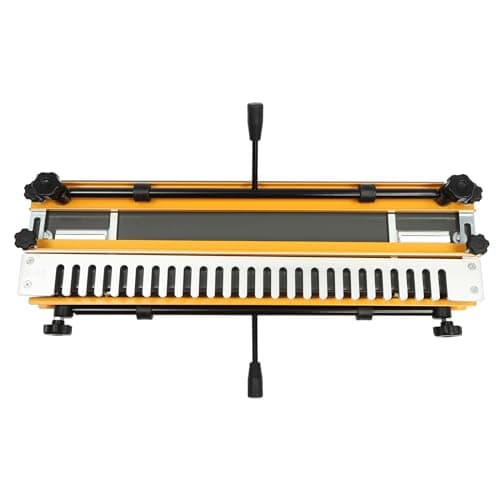
General Aluminum Half-Blind Dovetail Jig
Aluminum Half-Blind Dovetail Jig

The budget way to try dovetails. A simple fixed-template aluminum jig that cuts half-blind drawer joints for very little money.

Best budget
6.2
$111.89Amazon
03
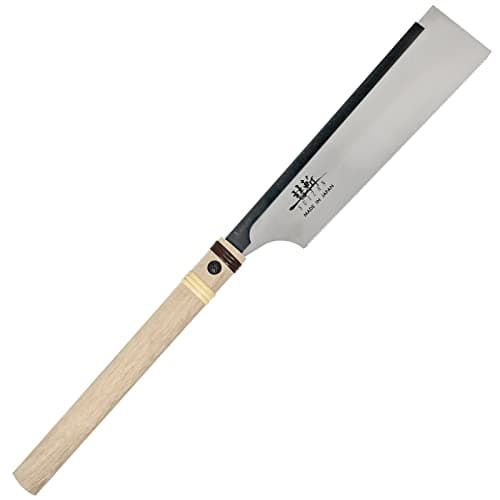
Suizan Suizan Dozuki Dovetail Saw (9.5 in)
Suizan Dozuki Dovetail Saw (9.5 in)

The saw that makes hand-cut dovetails click for most people. A thin, stiffened-back Japanese pull saw leaves a kerf narrow enough that your first joints actually close.

Best overall
8.6
$58.80Amazon
04
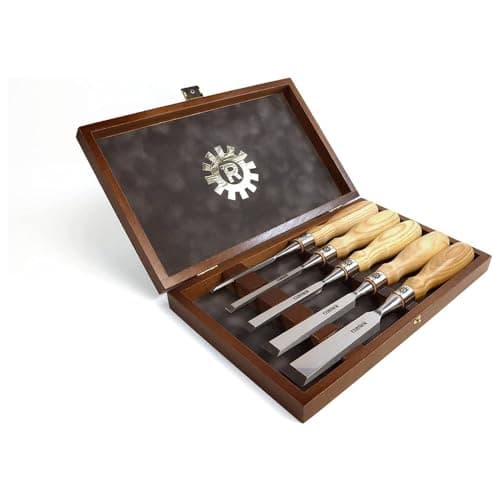
Narex Narex Richter Bevel-Edge Chisel Set (5)
Narex Richter Bevel-Edge Chisel Set (5)

The most edge you can buy at this price. Cryo-treated Cr-V hardened to a claimed 62 HRC holds a keen edge far longer than the mid-price field.

Best overall
8.4
$229.99Amazon

#ad · Live prices from the Amazon Product API, as of Sep 1, 2026. Where we have no verified live price, we show none — we would rather leave a gap than print a number that has rotted.

In detail

The picks, in full

01
Leigh Leigh D4R Pro Dovetail Jig

Best overall

Leigh D4R Pro Dovetail Jig

24 in widthThrough + half-blindVariable spacingRouter-based
8.4/10

The dovetail jig for people who are serious about dovetails. Fully variable spacing cuts through, half-blind and sliding joints — the most capable jig here.

Joint quality
10
Versatility
10
Ease of setup
6
Build
9
Value
7

Pros

  • Variable spacing means your dovetails don't look machine-made
  • Cuts through, half-blind, and more from one jig
  • Excellent manual and support — a jig you grow into, not out of

Cons

  • Expensive, and there is a real learning curve to setup
  • Overkill if you only ever need one drawer spacing

Don't buy this if…

you want to cut a few half-blind drawers and be done — a fixed-template jig does that faster and for a fraction of the price.

$769.00View on Amazon

Price as of Sep 1, 2026. Prices change — Amazon's is the one that counts.

#ad · we may earn a commission from this link to Leigh D4R Pro Dovetail Jig

02
General Aluminum Half-Blind Dovetail Jig

Best budget

Aluminum Half-Blind Dovetail Jig

Fixed 1/2 in templateHalf-blindAluminumClamp-on
6.2/10

The budget way to try dovetails. A simple fixed-template aluminum jig that cuts half-blind drawer joints for very little money.

Joint quality
6
Versatility
5
Ease of setup
6
Build
6
Value
8

Pros

  • Cheapest way to find out whether jig-cut dovetails are for you
  • Simple, few parts to fuss with
  • Fine for basic half-blind drawer boxes

Cons

  • One fixed spacing and joint type — limited as you improve
  • Basic build; setup can be finicky to dial in

Don't buy this if…

you already know you'll want through dovetails or variable spacing — buy a more capable jig once and skip the upgrade.

$111.89View on Amazon

Price as of Sep 1, 2026. Prices change — Amazon's is the one that counts.

#ad · we may earn a commission from this link to Aluminum Half-Blind Dovetail Jig

03
Suizan Suizan Dozuki Dovetail Saw (9.5 in)

Best overall

Suizan Dozuki Dovetail Saw (9.5 in)

9.5 in bladeCross-cut teethPull strokeRigid back
8.6/10

The saw that makes hand-cut dovetails click for most people. A thin, stiffened-back Japanese pull saw leaves a kerf narrow enough that your first joints actually close.

Cut quality
9
Ease of starting
9
Kerf
9
Build
8
Value
8

Pros

  • Cuts on the pull stroke, so the blade is in tension and cannot buckle — much easier to start
  • Very thin kerf removes less material, which forgives a slightly wandering line
  • Rigid back keeps the cut vertical without you fighting it

Cons

  • Thin blades are fragile — twist one in a kerf and it kinks permanently
  • Depth of cut is limited by the back, like every dovetail saw

Don't buy this if…

you were taught on Western saws and prefer a push stroke. Muscle memory is worth more than kerf width.

$58.80View on Amazon

Price as of Sep 1, 2026. Prices change — Amazon's is the one that counts.

#ad · we may earn a commission from this link to Suizan Dozuki Dovetail Saw (9.5 in)

04
Narex Narex Richter Bevel-Edge Chisel Set (5)

Best overall

Narex Richter Bevel-Edge Chisel Set (5)

Cr-V steelClaimed 62 HRCSet of 5Ash handles
8.4/10

The most edge you can buy at this price. Cryo-treated Cr-V hardened to a claimed 62 HRC holds a keen edge far longer than the mid-price field.

Edge retention
9
Steel quality
9
Ergonomics
8
Out-of-box
8
Value
8

Pros

  • Manufacturer rates the steel at HRC 62 — high for a bench chisel, and it shows in edge retention
  • Backs and bevels arrive flatter and closer to ready than most sets in the range
  • Fine bevel-edge sides get into dovetail corners cleanly

Cons

  • Costs meaningfully more than a serviceable beginner set
  • Harder steel is a little more work to bring back on a stone once it does dull

Don't buy this if…

you are cutting your first joint and not sure the hobby will stick — a cheaper set will teach you everything, and you can graduate to these later without regret.

$229.99View on Amazon

Price as of Sep 1, 2026. Prices change — Amazon's is the one that counts.

#ad · we may earn a commission from this link to Narex Richter Bevel-Edge Chisel Set (5)

The case for a jig

Repetition. Once a jig is dialed in for a given stock thickness and joint, every subsequent joint is minutes of work and they are all identical. For a chest of drawers, a run of boxes, or anything you make more than once, that is decisive.

Consistency without skill. A jig does not have a bad day. Hand-cut joinery improves with practice and varies with fatigue; a jig's output is the same on the first joint and the fortieth.

Half-blind dovetails are easy. The half-blind joint used on traditional drawer fronts is fiddly by hand and straightforward on almost any jig, which is why so many people buy one specifically for drawers.

The costs: a real purchase price, a learning curve on setup that is genuinely steeper than people expect, a router and bits, and template-dictated spacing on the cheaper fixed jigs. Our dovetail jig roundup covers which jigs make that setup least painful.

The case for hand-cutting

No setup. Mark the baseline, saw the tails, transfer, chop the waste. There is nothing to dial in, which is why for a single drawer hand tools genuinely are faster.

Cost and versatility. A dovetail saw, a marking gauge, a square and three sharp chisels are useful for everything else you build. A dovetail jig cuts dovetails.

Any spacing, any stock. Narrow London-style pins, deliberately irregular rhythm, a drawer side that is 11 millimeters thick because that is what you resawed — none of that requires a template that fits.

Quiet. Not a trivial point in an attached garage on a Sunday morning, and no dust extraction required.

The costs: a real skill that takes a dozen joints to become respectable, a genuine dependence on sharp tools (see how to sharpen chisels), and it is slower once quantity enters the picture. Our how to cut dovetails guide walks through the sequence.

What each route actually costs to start

Hand tools: a dovetail saw, a marking gauge, a square you already own, and chisels you already own. If you are starting from nothing, the saw and a basic chisel set is the whole outlay — and the chisels serve every other joint you will ever cut.

Jig route: the jig, a router capable of taking the guide bush, a dovetail bit, a straight bit for half-blinds, and dust extraction because routers make an extraordinary mess. Budget jigs bring that entry cost down substantially, at the price of fixed spacing.

The answer for most people

Learn to cut them by hand first, even if you intend to buy a jig. A dozen practice joints in scrap pine costs nothing, teaches you what the joint actually is, and means that when you do buy a jig you understand what it is doing and why a setting is wrong. It also means you can cut a dovetail in a size or spacing the jig cannot, which happens more often than jig marketing suggests.

Then buy a jig if and when the quantity justifies it — typically when you are building something with more than three or four drawers, or when you find yourself making the same box repeatedly. Plenty of good shops own both and choose per project, which is not a compromise so much as the correct answer.

What we could not verify

We have not timed the two methods against a stopwatch, and any figure we published would depend entirely on the person holding the saw. The comparison above is about what each method structurally requires — setup time, tooling, spacing constraints, corner geometry — rather than a performance claim. Our methodology page explains how we work.
How we picked

We do not run a testing lab

We researched published manufacturer specifications, manuals and spec sheets, ran the arithmetic those specs support, and read owner reviews at volume, then scored each tool against a published rubric. The scores are judgments from documented research — they are not measurements we took, because we do not have a lab and we are not going to pretend we do. Where a number came from a manufacturer's document, we name it and link it in Sources.

Questions

Frequently asked

Is a dovetail jig faster than cutting by hand?
For quantity, yes, decisively — once set up, each joint takes minutes and they are all identical. For a single drawer, hand tools are often faster, because a jig's setup for an unfamiliar stock thickness can take longer than sawing the joint.
Can you tell a routed dovetail from a hand-cut one?
Usually. A router bit cannot cut a sharp internal corner, so routed sockets have a small radius at the base, and fixed-template jigs produce evenly spaced pins and tails. Hand-cut joints have crisp corners and whatever spacing you marked, including narrow pins that no template offers.
Should a beginner buy a dovetail jig?
Cut a few by hand in scrap first. It costs nothing, teaches you what the joint is, and makes a jig's settings comprehensible when you do buy one. Buy the jig when quantity justifies it — several drawers, or a box you make repeatedly.
What do I need to cut dovetails by hand?
A dovetail saw, a marking gauge, a square, a sharp chisel or three and a mallet. That is the whole kit, and everything on it except the saw earns its keep on every other joint you cut. A sharpening setup matters more than any of it — a dull chisel will not pare to a line.

Keep reading

Receipts

Sources

We do not run a testing lab, and we do not pretend to. Our picks come from published manufacturer specifications and manuals, the arithmetic those specs support, and owner reviews read at volume. Where we could not verify something, we say so on the page rather than quietly leaving it out. Read our full method.