Skip to content
Dovetail & Dust

HUB 02 · Power Tools

The Best Table Saw Blades

The cheapest upgrade any table saw can have. Ranked by what the grind actually does, with the honest answer on how many blades you need.

By Stephen V.Updated How we research
#ad

We earn a commission when you buy through our Amazon links, at no extra cost to you. It never changes our rankings, and we say so when the cheaper tool is the better buy. How this works.

A good blade in a modest saw cuts better than a mediocre blade in an expensive one. It is the highest-return hundred dollars in the whole power tool category, and the one most people put off. The blade that shipped with your saw was chosen to make the saw look cheap enough to buy, not to cut well.

Three things describe a blade and between them they explain everything. Tooth count: fewer, larger teeth with big gullets between them clear waste from a deep rip; more, smaller teeth leave a cleaner crosscut but cannot carry the waste out of a long cut. Grind: the shape of each tooth's cutting edge, which decides whether the blade shears fibers cleanly or chops through them. Kerf: how much material the blade removes, which decides how much motor it takes to push it.

From that, the practical guidance follows. A 24-tooth flat-ish grind rips fast and cool. An 80-tooth alternate-bevel grind crosscuts veneered plywood without chipping the face. A 40–50-tooth combination grind splits the difference and is what most single-blade shops should own. And a thin-kerf blade takes less power, which matters a great deal on a jobsite saw and rather less on a cabinet saw.

One more thing, because it is the most common false economy in this category: a dull blade is not just slow, it is dangerous. It burns, it wanders, and it increases the force you have to push with, which is exactly when hands end up somewhere they should not be. If your cuts have started burning and you have ruled out feed rate and alignment, the blade is telling you something.

The short answer

Quick picks

#ProductBest forScorePrice
01
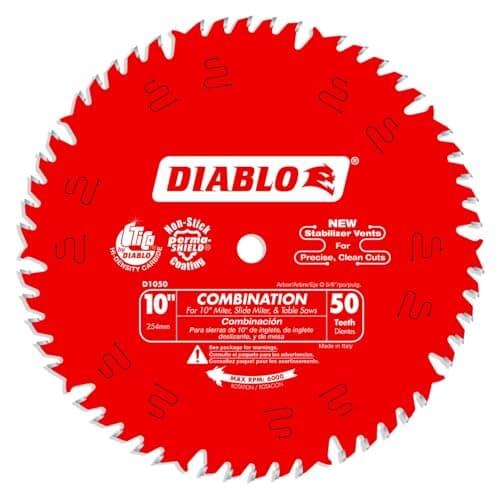
Diablo (Freud) Diablo D1050X 10-in Combination Blade (50T)
Diablo D1050X 10-in Combination Blade (50T)

The blade to leave on the saw. A 50-tooth combination grind rips acceptably and crosscuts cleanly, which is what a one-blade shop actually needs.

Best overall
9.0
$41.75Amazon
02
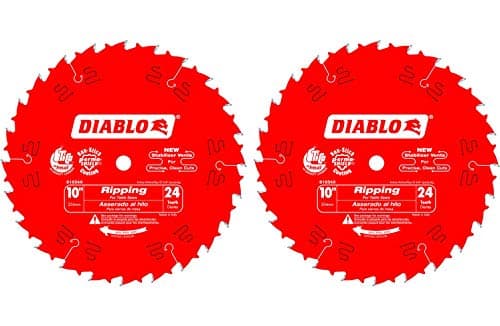
Diablo (Freud) Diablo D1024X 10-in Ripping Blade (24T, 2-pack)
Diablo D1024X 10-in Ripping Blade (24T, 2-pack)

Fewer, bigger teeth with more gullet between them — the geometry that clears sawdust out of a deep rip instead of cooking it.

Best for ripping
8.6
$76.36Amazon
03
Diablo (Freud) Diablo D1080X 10-in Fine Finish Blade (80T)
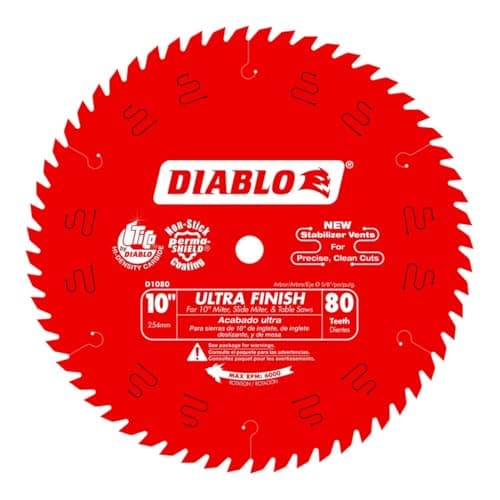
Diablo D1080X 10-in Fine Finish Blade (80T)

Eighty teeth is what you fit when the cut edge is the finished edge — veneered ply, melamine and crosscuts you do not want to sand.

Best for clean crosscuts
7.6
$60.02Amazon
04
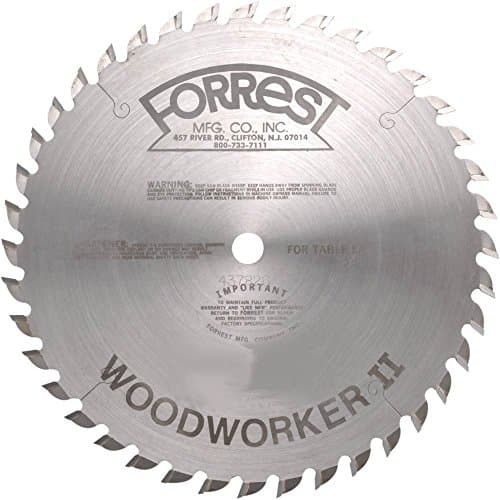
Forrest Forrest WW10407125 Woodworker II 10-in Blade (40T)
Forrest WW10407125 Woodworker II 10-in Blade (40T)

The blade woodworkers talk about. A 40-tooth full-kerf grind that rips and crosscuts well enough that many shops genuinely never take it off.

Best premium
8.2
$172.50Amazon
05
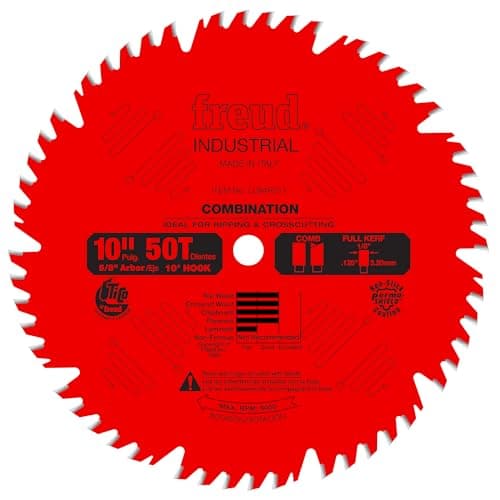
Freud Freud LU84R011 10-in Industrial Combination Blade (50T)
Freud LU84R011 10-in Industrial Combination Blade (50T)

Freud's industrial-line combination blade — the same 50-tooth idea as the Diablo with denser carbide, aimed at a saw that runs every day.

Best industrial combination
8.6
$88.29Amazon
06
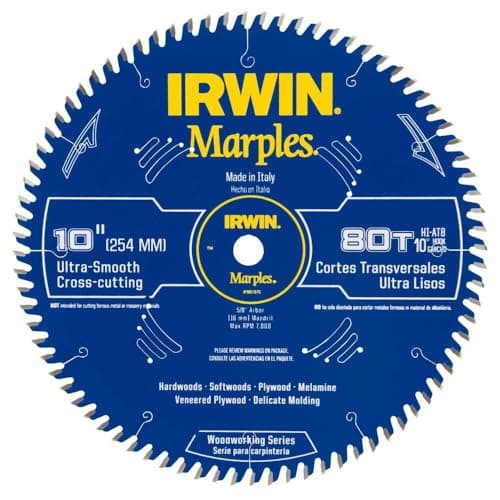
Irwin Irwin Marples 10-in Hi-ATB Blade (80T)
Irwin Marples 10-in Hi-ATB Blade (80T)

A high-alternate-bevel 80-tooth blade at a price that makes keeping a dedicated crosscut blade an easy decision rather than a luxury.

Best value crosscut blade
7.2
$50.61Amazon

#ad · Live prices from the Amazon Product API, as of Sep 1, 2026. Where we have no verified live price, we show none — we would rather leave a gap than print a number that has rotted.

In detail

The picks, in full

01
Diablo (Freud) Diablo D1050X 10-in Combination Blade (50T)

Best overall

Diablo D1050X 10-in Combination Blade (50T)

10 in / 50T ATB5/8 in arbor0.098 in kerf6,000 max RPM
9.0/10

The blade to leave on the saw. A 50-tooth combination grind rips acceptably and crosscuts cleanly, which is what a one-blade shop actually needs.

Cut quality
9
Versatility
10
Carbide
8
Power draw
9
Value
9

Pros

  • Genuinely competent at both jobs, so you stop swapping blades for every operation
  • Thin-ish kerf takes less power, which matters on a jobsite or contractor saw
  • Anti-stick coating keeps pitch off the plate, and pitch is what makes a blade burn

Cons

  • A dedicated rip blade will rip faster and cooler in thick hardwood
  • A dedicated 80-tooth blade leaves a cleaner edge in veneered ply

Don't buy this if…

you rip rough hardwood all day — a 24-tooth rip blade will cut faster and load the motor less.

$41.75View on Amazon

Price as of Sep 1, 2026. Prices change — Amazon's is the one that counts.

#ad · we may earn a commission from this link to Diablo D1050X 10-in Combination Blade (50T)

02
Diablo (Freud) Diablo D1024X 10-in Ripping Blade (24T, 2-pack)

Best for ripping

Diablo D1024X 10-in Ripping Blade (24T, 2-pack)

10 in / 24T ATB5/8 in arborDeep gulletsPermaShield coating
8.6/10

Fewer, bigger teeth with more gullet between them — the geometry that clears sawdust out of a deep rip instead of cooking it.

Rip speed
10
Cut quality
6
Carbide
8
Power draw
10
Value
9

Pros

  • Rips thick hardwood noticeably faster and cooler than a combination blade
  • Large gullets carry chips out of the cut, which is what stops burning in a deep rip
  • Sold as a pair, so the spare goes on the saw the day the first one dulls

Cons

  • Leaves a coarse edge — you would not crosscut plywood with it
  • Buying a rip blade only makes sense if you also own a crosscut or combination blade

Don't buy this if…

you own one blade and one saw. A 50-tooth combination blade is the better single choice.

$76.36View on Amazon

Price as of Sep 1, 2026. Prices change — Amazon's is the one that counts.

#ad · we may earn a commission from this link to Diablo D1024X 10-in Ripping Blade (24T, 2-pack)

03
Diablo (Freud) Diablo D1080X 10-in Fine Finish Blade (80T)

Best for clean crosscuts

Diablo D1080X 10-in Fine Finish Blade (80T)

10 in / 80T ATB5/8 in arborPermaShield coatingFine finish grind
7.6/10

Eighty teeth is what you fit when the cut edge is the finished edge — veneered ply, melamine and crosscuts you do not want to sand.

Cut quality
10
Versatility
6
Carbide
8
Power draw
6
Value
8

Pros

  • Leaves veneer and melamine edges essentially chip-free with a decent zero-clearance insert
  • Turns a crosscut sled into a genuinely finish-quality tool
  • Makes miters close visibly better than a 40- or 50-tooth blade

Cons

  • Slow and hot in a rip cut — the small gullets cannot clear that much waste
  • More teeth means more carbide to dull if you hit a staple

Don't buy this if…

you rip more than you crosscut. This blade will frustrate you and load your motor.

$60.02View on Amazon

$62.975% off

Price as of Sep 1, 2026. Prices change — Amazon's is the one that counts.

#ad · we may earn a commission from this link to Diablo D1080X 10-in Fine Finish Blade (80T)

04
Forrest Forrest WW10407125 Woodworker II 10-in Blade (40T)

Best premium

Forrest WW10407125 Woodworker II 10-in Blade (40T)

10 in / 40T ATB0.125 in full kerf5/8 in arborResharpenable
8.2/10

The blade woodworkers talk about. A 40-tooth full-kerf grind that rips and crosscuts well enough that many shops genuinely never take it off.

Cut quality
10
Versatility
9
Carbide
10
Power draw
6
Value
6

Pros

  • Cut quality good enough that many users glue up straight from the saw
  • Thick, resharpenable carbide — this is a blade you send away and get back, not replace
  • Full kerf runs steadier in a cabinet saw than a thin-kerf plate

Cons

  • Full kerf removes more material and asks more of the motor — not ideal on a small jobsite saw
  • Costs several times a good Diablo, and the difference is real but not dramatic

Don't buy this if…

your saw is a compact jobsite model. A thin-kerf blade suits its motor much better.

$172.50View on Amazon

Price as of Sep 1, 2026. Prices change — Amazon's is the one that counts.

#ad · we may earn a commission from this link to Forrest WW10407125 Woodworker II 10-in Blade (40T)

05
Freud Freud LU84R011 10-in Industrial Combination Blade (50T)

Best industrial combination

Freud LU84R011 10-in Industrial Combination Blade (50T)

10 in / 50TCombination grindHi-density carbide5/8 in arbor
8.6/10

Freud's industrial-line combination blade — the same 50-tooth idea as the Diablo with denser carbide, aimed at a saw that runs every day.

Cut quality
9
Versatility
10
Carbide
9
Power draw
8
Value
7

Pros

  • Denser carbide than the consumer line, so it stays sharp longer between sharpenings
  • Combination grind keeps it on the saw for both rips and crosscuts
  • Body damping and the industrial plate keep it running quiet and flat

Cons

  • Noticeably dearer than the Diablo equivalent for a difference most hobby shops will not notice
  • Still a compromise grind — beaten by dedicated rip and crosscut blades at their own jobs

Don't buy this if…

you cut a few weekends a month. The consumer combination blade will outlast your patience for sharpening it.

$88.29View on Amazon

Price as of Sep 1, 2026. Prices change — Amazon's is the one that counts.

#ad · we may earn a commission from this link to Freud LU84R011 10-in Industrial Combination Blade (50T)

06
Irwin Irwin Marples 10-in Hi-ATB Blade (80T)

Best value crosscut blade

Irwin Marples 10-in Hi-ATB Blade (80T)

10 in / 80THi-ATB grind5/8 in arborCarbide tipped
7.2/10

A high-alternate-bevel 80-tooth blade at a price that makes keeping a dedicated crosscut blade an easy decision rather than a luxury.

Cut quality
9
Versatility
5
Carbide
7
Power draw
6
Value
9

Pros

  • The steep alternate bevel is the geometry that shears veneer cleanly instead of tearing it
  • Cheap enough to own alongside a combination blade rather than instead of one
  • Handles melamine and pre-finished ply far better than a general-purpose blade

Cons

  • Fine-toothed blades dull faster on abrasive sheet goods, and this one is no exception
  • Not a blade to rip with under any circumstances

Don't buy this if…

you mostly cut solid stock to rough size. The tooth count buys you nothing there and costs you feed rate.

$50.61View on Amazon

Price as of Sep 1, 2026. Prices change — Amazon's is the one that counts.

#ad · we may earn a commission from this link to Irwin Marples 10-in Hi-ATB Blade (80T)

How to choose a table saw blade

How many blades do you actually need?

One, if you are honest about how you work — a 40 to 50-tooth combination blade handles both jobs acceptably and stays on the saw. Two is the sensible upgrade: a combination blade for everyday work and an 80-tooth for sheet goods and finish crosscuts. Three, if you rip a lot of thick hardwood: add a 24-tooth ripper and stop fighting the combination blade in eight-quarter stock.

Tooth count, plainly

Think of the gullet — the gap in front of each tooth — as the waste carrier. A deep rip generates a long ribbon of waste that has to be carried out of the cut, so it needs few teeth and big gullets. A crosscut generates little waste per tooth but every fiber has to be severed cleanly, so it wants many teeth and a shearing grind. That is the whole trade-off, and it is why an 80-tooth blade burns in a rip and a 24-tooth blade splinters a crosscut.

Grind types worth knowing

ATB (alternate top bevel) angles each tooth alternately left and right, so the points sever fibers before the body of the tooth removes waste. It is the standard general grind. Hi-ATB exaggerates the angle for very clean cuts in veneer and melamine, at the cost of edge life. Combination grinds group flat-topped rakers with ATB teeth so one blade can rip and crosscut. Flat top is a ripping and joinery grind that leaves a genuinely flat-bottomed kerf, which matters for tenons and box joints.

Thin kerf or full kerf?

Thin-kerf blades remove less material, so they need less power and waste less wood. On a jobsite or contractor saw they can be the difference between a smooth cut and a bogging motor. The trade is stiffness: a thinner plate is more prone to deflect in a heavy cut, which is why cabinet saws with power to spare usually run full kerf. Match the blade to the saw, not to the internet's preference.

The things that are not the blade

Before you blame a blade, check three things. Alignment: if the blade is not parallel to the miter slot and the fence is not parallel to the blade, you will get burning and wandering no matter what you fit. A zero-clearance insert: the single biggest improvement to tear-out on the underside of a cut, and it costs almost nothing to make. Cleanliness: pitch build-up on the carbide behaves exactly like dullness, and a soak in blade cleaner brings a blade back from what feels like the end of its life.

Dust matters here too. A table saw throws a great deal of fine dust, much of it below the table, which is why our collector roundup exists. Capturing it at the saw is far more effective than filtering it afterwards.

Segmenting by saw and budget

Jobsite or compact saw: a thin-kerf 40–50-tooth combination blade. Your motor will thank you, and the cut quality jump over the supplied blade is the largest single improvement available to that saw.

Contractor or hybrid saw: a combination blade plus an 80-tooth for sheet goods. That pair covers essentially everything a furniture shop cuts.

Cabinet saw: full-kerf blades, a dedicated ripper for thick stock, and a resharpenable premium blade if you cut every day. At that point sharpening service, not replacement, is the economics.

How we ranked these

These rankings come from published manufacturer specifications — diameter, tooth count, grind, kerf, arbor and stated maximum RPM — alongside the makers' documentation and the consistent pattern in owner feedback read at volume. We have not measured cut quality or blade life; we do not run a lab, and our methodology page states that plainly. Live prices come from the price feed, never from a number typed into this page.
How we picked

We do not run a testing lab

We researched published manufacturer specifications, manuals and spec sheets, ran the arithmetic those specs support, and read owner reviews at volume, then scored each tool against a published rubric. The scores are judgments from documented research — they are not measurements we took, because we do not have a lab and we are not going to pretend we do. Where a number came from a manufacturer's document, we name it and link it in Sources.

Questions

Frequently asked

What is the best all-round table saw blade?
A 40 to 50-tooth combination blade. The combination grind mixes flat-topped rakers with alternate-bevel teeth so the blade rips acceptably and crosscuts cleanly, which is exactly what a shop that does not want to swap blades needs. Add an 80-tooth blade later for sheet goods.
How many teeth for ripping versus crosscutting?
Around 24 teeth for ripping and 60 to 80 for crosscutting. Ripping generates a lot of waste that has to be carried out of a deep cut, which needs big gullets and few teeth; crosscutting needs many small teeth to sever fibers cleanly with minimal chipping.
Is a thin-kerf blade better?
Better for underpowered saws, not better in general. A thin kerf removes less material so it needs less motor and wastes less wood, but the thinner plate can deflect in heavy cuts. Use thin kerf on jobsite and contractor saws, full kerf on a cabinet saw.
Why is my table saw burning the wood?
Usually one of four things: a dull or pitch-loaded blade, a fence that is not parallel to the blade, feeding too slowly, or too many teeth for the cut you are making. Clean the blade first — resin build-up mimics dullness — then check alignment before buying anything.

Keep reading

Receipts

Sources

We do not run a testing lab, and we do not pretend to. Our picks come from published manufacturer specifications and manuals, the arithmetic those specs support, and owner reviews read at volume. Where we could not verify something, we say so on the page rather than quietly leaving it out. Read our full method.