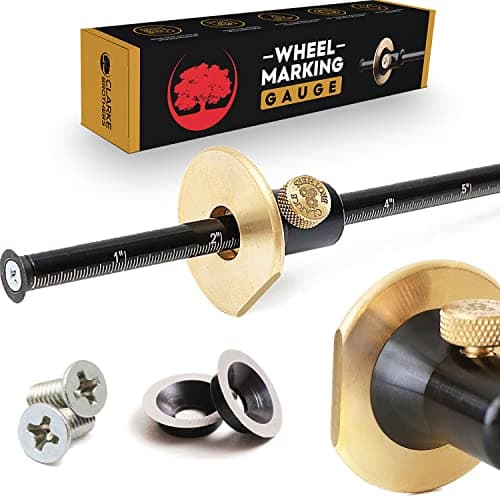
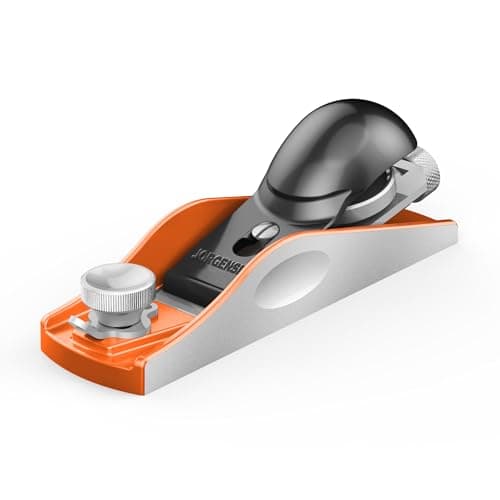
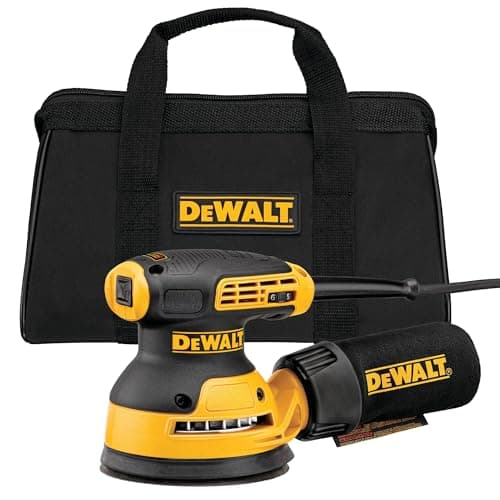
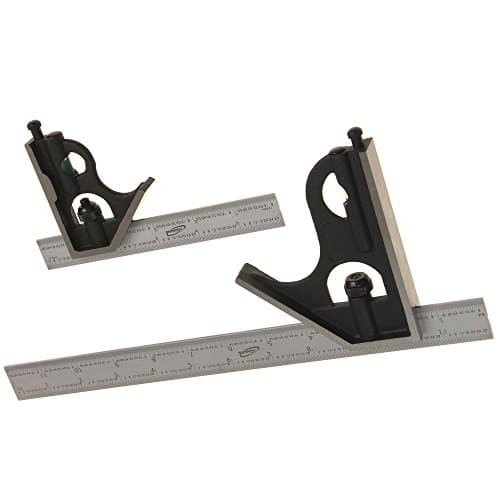
There is no single "essential" tool list — there is the list for the shop you have right now. A first shop on a budget, a hobbyist stepping up, and a fine-furniture bench need genuinely different kits, and buying the fine-furniture list on day one is how good money ends up on tools you are not ready to use. So this checklist is tiered, and it starts with the staples nearly every list skips: the accuracy and finish tools that make everything else you own cut better.
Before any machine, buy a way to measure and mark accurately. A combination square you can trust and a wheel marking gauge that scores a crisp line do more for joint quality than a price bump on a saw ever will — a scored line beats a pencil line every time. Add a block plane for trimming end grain and easing edges, and a random-orbit sander for finish, and you have the four staples that live in every tier below. The marking gauge, plane and sander picks here are the sensible defaults; the square is the one staple worth comparing, which is why we rank the options in our best woodworking squares guide.
Everything past those staples is a category with a real decision behind it, and we send you to the roundup where that decision lives. For chopping and paring, see our best woodworking chisels; for holding and glue-ups, the clamp guide. The first big power tool most shops should buy is a router, and the first machine that changes what you can build is a benchtop planer— which is also the point you will want real dust collection. Buy into those categories in the order your projects force the issue, not all at once.
Build the list in tiers, not all at once
The fastest way to waste money in a new shop is to buy the advanced list before you can use it. Each tier below is a working shop in its own right, not a shopping spree — work through them in order, and only cross into the next one when a project you actually want to build demands the tool. Set a rough budget per tier and fill it before you jump: a complete cheap tier builds more than a half-finished expensive one.
The first shop, on a budget
The goal here is to build something real without a machine in sight, and to spend as little as possible finding out whether the hobby sticks. Buy accuracy first: a combination square you can trust, a tape measure, a wheel marking gauge and a way to sharpen. Accuracy is cheaper than horsepower and matters more to how your work looks. Then add the tools that cut and assemble — a small set of chisels, a block plane, a hand saw, a cordless drill/driver, a few clamps and a random-orbit sander — and you can cut joints and finish a project start to finish. A shop apron belongs here too: it keeps sawdust and finish off your clothes and a pencil, rule and marking knife on you while you work, and our best woodworking aprons roundup ranks the ones worth wearing. If you buy one jig, make it a pocket-hole jig, the fastest route to a strong, hidden joint for a beginner.
The hobbyist stepping up
Now you are buying tools that expand what is possible, not just what is convenient. A router is the most versatile power tool you can add — edges, joinery, templates and, later, a whole router table built around it. A track saw or a jobsite table saw makes breaking sheet goods down to size accurate and repeatable. A better chisel set and a proper stable of clamps pay off on every glue-up. This is also where a benchtop planer starts to earn its space, because it lets you buy rough lumber and dimension it yourself instead of paying the premium for pre-surfaced stock. Keep the accuracy tools from the first tier on the bench the whole time; a bigger machine does not make a careless layout square.
The fine-furniture shop
At this tier the buys are about repeatability and the last ten percent of quality. A dovetail jig, or the hand-tool kit for cutting the joint by hand, gives you the joinery people admire. Harder chisels hold an edge longer between sharpenings. Parallel clamps keep wide panels dead flat under real pressure. A jointer paired with the planer lets you flatten a face and straighten an edge, which is what turns rough boards into furniture-grade stock. It is also the point where dust stops being optional — a collector at the machine and an air filter for the fine dust are a health decision, not a nicety. And every earlier tier still applies: you do not replace the square and the marking gauge, you just cut tighter joints with them.
How we picked
We do not run a testing lab
We researched published manufacturer specifications, manuals and spec sheets, ran the arithmetic those specs support, and read owner reviews at volume, then scored each tool against a published rubric. The scores are judgments from documented research — they are not measurements we took, because we do not have a lab and we are not going to pretend we do. Where a number came from a manufacturer's document, we name it and link it in Sources.