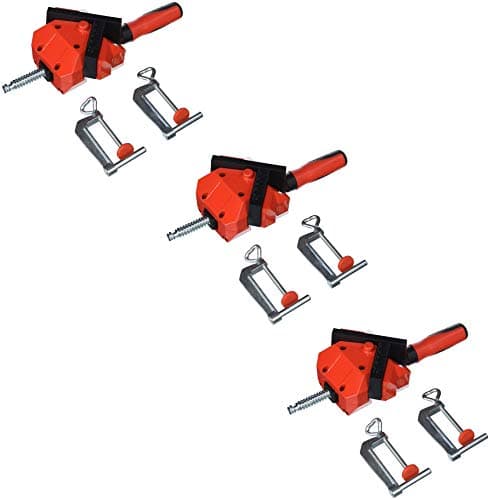
A corner clamp has one job: hold two parts at 90 degrees while the glue sets or the screw drives. The failure mode is that it flexes to whatever angle the parts want, which is exactly the angle you were trying to correct. Rigidity, not clamping force, is the specification that matters.
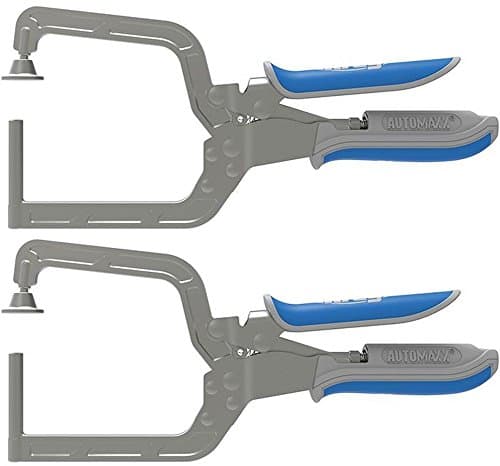
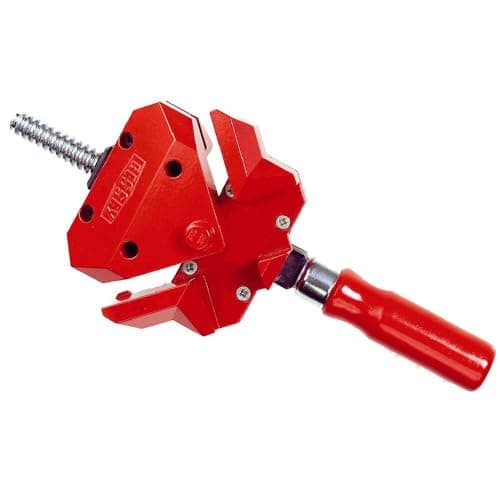
There are two designs here and they solve different problems. Jaw-type corner clamps— the Bessey and Kreg clamps — grip both parts and squeeze them together. They supply their own force, which is what you want for a butt joint or a mitre that needs pulling closed. Their limit is reach: the jaws only extend a few inches, so a deep cabinet carcass is out of range.
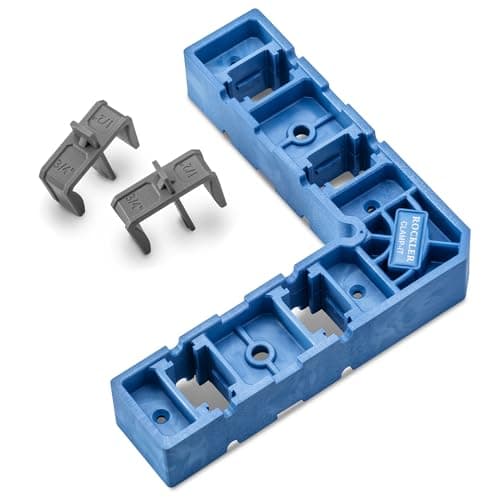
Assembly squares— the Rockler Clamp-It — are the opposite. They are a rigid 90-degree reference that you clamp your own bar clamps against. They supply no force at all, which means they scale to any size of workpiece your clamps can reach and cost a fraction as much. This is the design most cabinet shops actually use, and it is why it ranks second here despite being the cheapest serious option.
The practical answer for most shops is a mix: two good jaw clamps for the fiddly joints and a set of assembly squares for casework, backed by the bar clampsyou already own. Which is why we have not tried to pick a single winner for every job — the roundup is ranked for general woodworking, with each pick's real use case named on its card.
One habit worth more than any clamp: check the assembly with a square and by measuring both diagonals before the glue grabs. Equal diagonals means the box is square. A corner clamp makes that likely; measuring makes it certain, and you have about ten minutes to fix it.
Which type do you need?
Jaw-type corner clamps
Buy these if you assemble small boxes, drawer frames, picture frames or face frames, or if you drive pocket screws and need the joint held while you do. They are self-contained: one clamp, one corner, done. Their weakness is workpiece size — the throat depth limits how far from the edge they can reach, so a 12-inch-deep cabinet side is beyond them.
Assembly squares
Buy these if you build casework. They clamp inside a corner and hold it at 90 degrees while your bar clamps pull the joint together. They cost little, stack to hold multiple corners, and work on any size of panel. They are useless on their own, which is the entire catch.
Band and strap clamps, mentioned for completeness
For a four-sided mitred frame, a strap clamp that pulls all four corners simultaneously is often better than four corner clamps, because it equalizes the pressure around the frame. We have not ranked one here because the category overlaps only partially, but it is worth knowing it exists before you buy four corner clamps for picture frames.
How many do you need?
Fewer than you think for jaw clamps, more than you think for squares. A box has four corners, but you rarely need all four held rigidly at once — two opposite corners control the geometry and the other two follow. For assembly squares, four is the practical number because they cost so little and using all four takes the guesswork out.
Setting up a glue-up so the clamps can work
Corner clamps cannot fix a joint that does not fit. Two habits make the difference:
- Dry-fit everything first. Assemble with clamps and no glue. If it is not square dry, it will not be square wet, and you will have five minutes to discover that.
- Lay out the clamps before you open the glue.Every clamp adjusted, every cawl to hand, every rag wet. Glue open time is short — see wood gluefor which glues buy you more of it — and hunting for a clamp mid-glue-up is how joints go wrong.
Protecting the workpiece
Metal jaws mark wood. Cheap clamps come with plastic pads that eventually fall off; the fix is a scrap of thin ply or hardboard between jaw and work, which costs nothing and saves refinishing. Do this on anything that will be visible.
By budget
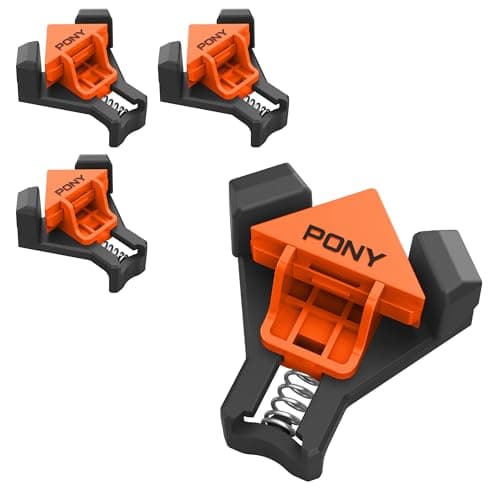
Cheapest useful set: the Pony 4-pack, understanding they position rather than force. Best value serious option: the Rockler Clamp-It assembly squares plus the bar clamps you own. Pocket-hole shop: the Kreg KHCRA Automaxx, which is designed around holding while you drive. Buy-once jaw clamps: the Bessey WS-3-2K set, which also handles T-joints.
What we could not verify
We have not load-tested these clamps for angular deflection. Materials, pack quantities and joint types above are the manufacturers' published specifications. The rigidity argument follows from body material and design, and from owner reviews read at volume.