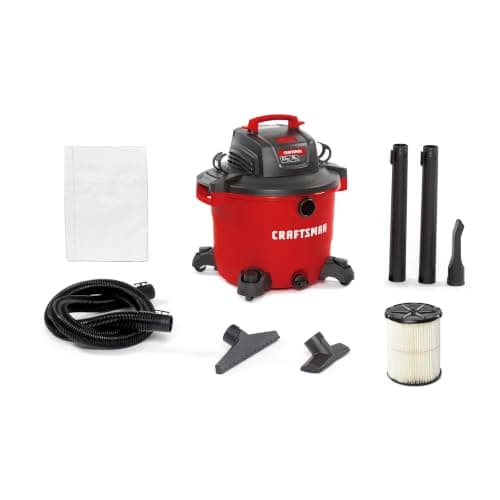
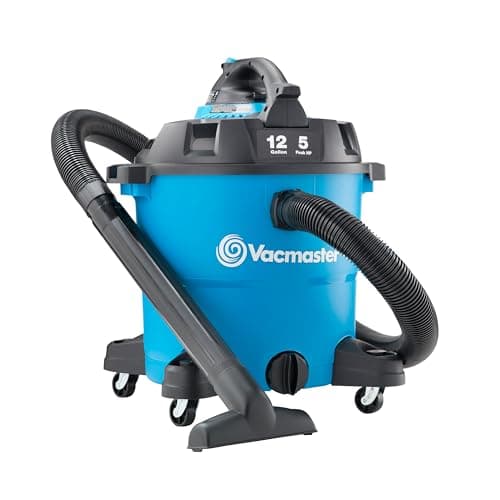
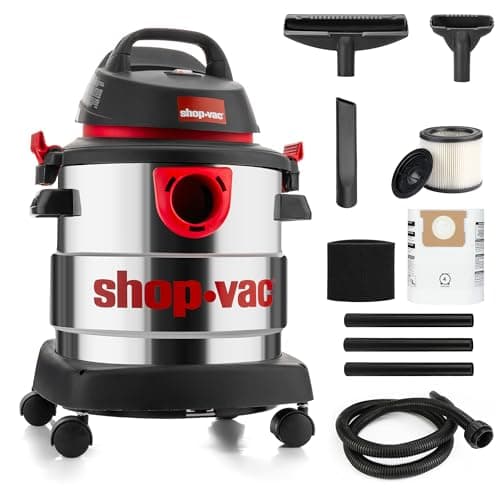
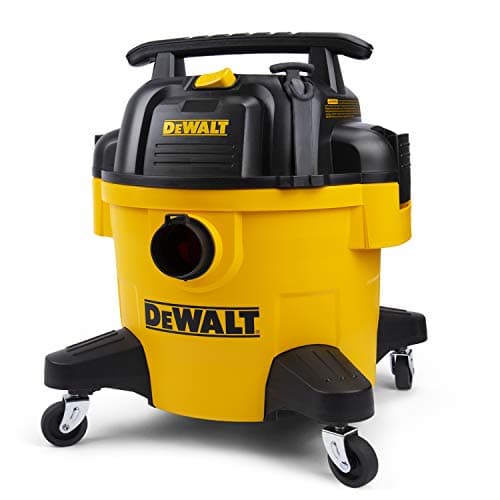
Buy the DEWALT DXV06P. Six gallons is the sweet spot for a woodworking shop — enough to run a sander or a track saw for a session, small enough to pick up and carry to whichever machine needs it — and it has a blower port for clearing the floor afterwards. The budget pick is the Shop-Vac 5989305, a 5-gallon stainless-tank vac that costs less than the filters for some of the others. Buy the CRAFTSMAN CMXEVBE17595 if the vac lives in a corner and never moves — 16 gallons means you empty it a quarter as often — and the Vacmaster VBV1210 if you want 12 gallons plus a detachable blower you can carry outside.
All four sat under the $200 cap at the last price check on November 21, 2026, read live from our price layer rather than typed into this page. The number next to each pick in the table is today's; if a vac has crossed the cap since we wrote this, you will see that rather than a stale claim.
A shop vac is not a dust collector, and that is the point
These are two different machines solving two different halves of the same problem, and buying the wrong one is the most common dust-collection mistake in a small shop.
A dust collector moves a very large volume of air at low pressure through a 4 in. duct. That is what a table saw cabinet, a planer or a jointer needs, because those machines produce chips in bulk and the air has to carry them.
A shop vac moves a small volume of air at high pressure through a 1-1/4 to 2-1/2 in. hose. That is what a sander, a router, a track saw, a miter saw or a benchtop tool needs, because those produce fine dust at a single small port, and high suction through a small hose is exactly right for it.
Neither substitutes for the other. Hook a shop vac to a 4 in. dust collector port and almost nothing happens, because the hose cannot pass the air volume. Hook a dust collector to a sander and it will not pull enough vacuum at the port. The full comparison, with the arithmetic, is on shop vac vs dust collector.
Ignore peak horsepower
Every wet/dry vac is sold on a "peak HP" number, and it is the least useful figure on the box. Peak horsepower is measured at motor stall, for an instant, on a test the manufacturer runs — it is not the power the machine delivers while vacuuming, and a 6.5 peak HP motor does not draw 6.5 HP from a 15 A household circuit, because it physically cannot.
What actually predicts suction at the tool is sealed pressure (water lift) and airflow in CFM, and most manufacturers in this bracket publish neither. Since nobody here publishes them, we have not invented them: the comparison table below lists what the makers do publish and says nothing about what they do not.
The practical implication is simple. Within this price band, all four of these vacs have enough suction for a sander, a router or a track saw. Choose on capacity, portability, hose diameter and filtration, because those are the things that differ and the things you will live with.
Filtration is also the one place where the machines above this cap genuinely earn their money, and it is worth knowing what that costs before you decide the cap is the whole story: Festool dust extractor alternatives sets a real extractor's published filter area and automatic filter cleaning against the cyclone-and-fine-bag upgrade you can bolt to any vac on this page.
Tank size is a chore calculation
Tank size does not change how well a vac picks dust up. It changes how often you stop and empty it, and — because every tank is a tall drum — how awkward that is.
5 to 6 gallons is light enough to lift with one hand and move to the tool. That portability is worth more in a small shop than capacity is, because the alternative is dragging a long hose around and losing suction to it.
12 to 16 gallons is a corner machine on casters with a long hose. You empty it every few weeks instead of every few sessions, and you never carry it anywhere. If the vac is going to be permanently plumbed to a bench tool or a miter station, this is the right size.
A separator changes this arithmetic completely and is the upgrade we recommend most often for anybody here. A cyclone lid on a bucket in front of the vac drops the great majority of the chips into the bucket, so the vac tank fills slowly and the filter stays clean for months instead of days. That is an inexpensive accessory, and it makes a 6-gallon vac behave like a far bigger one — the options are ranked on best cyclone separator.
The filter is the part that matters for your lungs
Standard cartridge filters are designed for debris, not for the fine fraction of wood dust that stays airborne, and a vac with a coarse filter will happily collect chips while pumping the dangerous part of the dust straight back into the room through the exhaust.
Two cheap fixes, both of which apply to every vac on this page. Fit a fine-dust or HEPA-rated cartridge if the maker offers one for your model, and use a collection bag inside the tank, which keeps dust off the filter pleats and means emptying does not create a cloud. The second one costs almost nothing and is the single thing most owners skip.
Why it matters is not an opinion: wood dust is a classified carcinogen and the particles that do the damage are the ones you cannot see. The evidence, with sources, is on wood dust health risks, and the mask that goes with it is on best woodworking safety gear.
Side by side
| Vac | Tank | Published peak HP | Tank material | Blower |
|---|
| DEWALT DXV06P | 6 gal | 4 peak HP | Polypropylene | Blower port |
| CRAFTSMAN CMXEVBE17595 | 16 gal | 6.5 peak HP | Not published | Not published |
| Vacmaster VBV1210 | 12 gal | 5 peak HP | Not published | Detachable blower |
| Shop-Vac 5989305 | 5 gal | 4.5 peak HP | Stainless steel | Blower port |
Those are the makers' published figures for the exact listings we link, and "peak HP" is reproduced as published rather than endorsed — see the section above for why it predicts very little. None of these numbers were measured by us; there is no lab here, as the methodology page says.
What to buy, in order
A single vac that follows you to the sander, the track saw and the miter saw: the DXV06P. Tightest budget: the Shop-Vac 5989305. A vac that lives bolted to a bench or a miter station and never moves: the CRAFTSMAN 16-gallon. Something in between, with a blower you can carry to the driveway: the Vacmaster VBV1210.
Whichever you buy, spend the next twenty dollars on a cyclone separator lid and a tank bag. Those two accessories do more for the machine than the next price bracket up would. If the bigger machine is what you actually need, that is best dust collector for a small shop, and the whole field without a cap is on best shop vac for woodworking.