Tearout happens when a cutter lifts wood fibres instead of slicing them, and the three things that cause it are cutting against the grain direction, a dull or wrong-geometry cutter, and fibres with no support behind them at the exit. Fix those in that order. The equipment upgrades — a spiral cutterhead, a higher tooth count, a zero-clearance insert — are all versions of the same three fixes.
It helps to picture the surface as a stack of fibres lying at a slight angle rather than flat. Cut "downhill", with the fibre ends sloping away from the cutter, and each fibre is supported by the one under it as it is severed. Cut "uphill" and the cutter gets under the fibres and lifts a splinter out below the surface you wanted.
1. Read the grain, and feed accordingly
On the edge of a board, look at the grain lines running along the face. They slope. Feed the board so the slope runs down and awayfrom the direction of cut — and when the direction reverses halfway along the board, as it does on any figured or curly stock, plan to take the second half from the other end or to switch methods entirely.
This single habit prevents more tearout than every accessory on this page. It is also the reason a hand plane sometimes succeeds where a machine fails: you can change direction mid board, and a machine cannot.
2. Take lighter cuts
Depth of cut is the dial you control. A 1/32 in. pass through a planer lifts far less than a 1/16 in. one; a router taking a rabbet in three passes tears far less than one taking it in a single bite. Lighter cuts mean each fibre is severed with less leverage behind it, and leverage is what pries a splinter out.
Feed rate matters alongside it. On a planer, the slower feed speed exists precisely for this — the DeWalt DW735X publishes two speeds at 96 and 179 cuts per inch, and the 179 CPI setting is the finish setting, putting more cuts into every inch of travel.
3. Support the exit
Most visible tearout is blowout at the exit: the last fibres have nothing beyond them and break away instead of being cut. Everything that helps is a variation on putting something there:
- Backer board. A scrap clamped where the cutter exits, on a crosscut, a dado or a drilled hole. The splinter happens in the scrap.
- Zero-clearance insert. A table saw throat plate with a slot cut by the blade itself, so the fibres either side of the kerf are supported right up to the tooth. The single most effective accessory against tearout on a saw.
- Sacrificial fence. On a router table or a dado cut, a wooden face on the fence that the cutter is buried in.
- A scored line. A marking knife severs the surface fibres ahead of the cutter, so a splinter cannot run past the line.
4. Change the cutter geometry
When direction and support are handled and it still tears, the cutter itself is the remaining variable:
- Sawing: more teeth, and an ATB (alternate top bevel) grind. The bevels act like knife points scoring the surface before the gullet clears the waste, which is why an 80-tooth fine-finish blade crosscuts plywood so much more cleanly than a 24-tooth rip blade.
- Planing by machine: a spiral or helical cutterhead. Rows of small square inserts set at an angle shear the fibres rather than chopping straight down across the full width, which is the whole reason the upgrade exists.
- Routing: a solid carbide spiral bit, and the choice of upcut or downcut. A downcut bit presses the top fibres down and leaves a clean top edge; an upcut clears chips better and leaves the cleaner bottom.
- Hand planing: a tighter mouth, a higher effective cutting angle and a well-set chipbreaker. A chipbreaker set very close to the edge breaks the shaving before it can lever a splinter up.
5. Sharpness is not a tip, it is the baseline
A dull cutter does not cut fibres, it pushes them until they fail. Everything above is undone by a blunt blade, and most "my machine suddenly tears" problems are a cutting edge that went off without anyone noticing. Before you change technique, check whether the edge is still an edge.
What we rank for this
Four tools, one for each place tearout shows up: the blade, the planer head, the router bit and the hand plane that fixes what the machines could not.
The short answer
#ad · Live prices from the Amazon Product API, as of October 17, 2026. Where we have no verified live price, we show none — we would rather leave a gap than print a number that has rotted.
In detail
Best for clean crosscuts
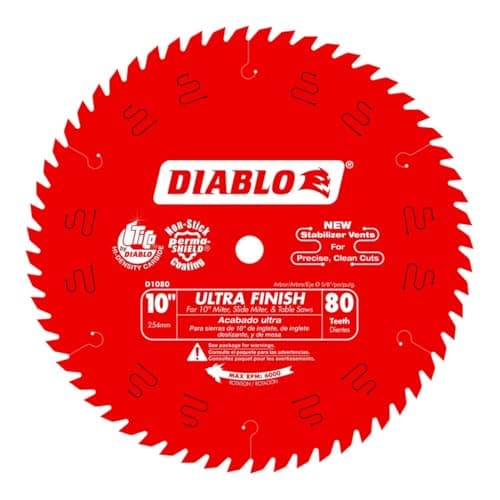
Diablo D1080X 10-in Fine Finish Blade (80T)
10 in / 80T ATB5/8 in arborPermaShield coatingFine finish grind
Eighty teeth is what you fit when the cut edge is the finished edge — veneered ply, melamine and crosscuts you do not want to sand.
- Cut quality
- 10
- Versatility
- 6
- Carbide
- 8
- Power draw
- 6
- Value
- 8
Pros
- +Leaves veneer and melamine edges essentially chip-free with a decent zero-clearance insert
- +Turns a crosscut sled into a genuinely finish-quality tool
- +Makes miters close visibly better than a 40- or 50-tooth blade
Cons
- −Slow and hot in a rip cut — the small gullets cannot clear that much waste
- −More teeth means more carbide to dull if you hit a staple
Don't buy this if…
…you rip more than you crosscut. This blade will frustrate you and load your motor.
Best spiral alternative
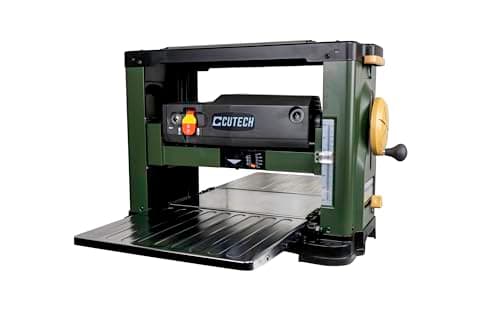
Cutech 13-in Spiral Planer
13 in widthSpiral headHSS insertsBenchtop
A dedicated spiral-head benchtop planer for the figured-wood crowd. Rows of carbide-style inserts give a clean, quiet cut on difficult grain.
- Cut quality
- 8
- Snipe control
- 7
- Dust handling
- 6
- Noise
- 7
- Value
- 8
Pros
- +Insert cutterhead excels on curly and figured stock
- +Quieter than a straight-knife planer
- +Rotate a nicked insert rather than replacing a knife set
Cons
- −Smaller support network than DeWalt or WEN
- −Fit and finish is functional, not premium
Don't buy this if…
…you want the best-supported, most widely serviced machine — the DeWalt line is easier to get parts and help for.
Best spiral bit
Whiteside RU5150 Spiral Upcut Bit (1/2 in, 1/2 in shank)
1/2 in cutting diameter1/2 in shank1-1/2 in cutting lengthSolid carbide, upcut
The single bit that most improves a shop's mortises. A solid-carbide upcut spiral shears the fibers and lifts chips clear instead of packing them in the slot.
- Cut quality
- 9
- Carbide
- 10
- Chip clearing
- 10
- Versatility
- 7
- Value
- 7
Pros
- +Clears chips upward, which is exactly what a deep mortise needs to stay cutting cleanly
- +Shearing helix leaves far less tear-out than a straight bit in figured stock
- +Solid carbide rather than a brazed tip, so the whole edge is the hard material
Cons
- −Upcut geometry can lift and fray fibers at the top surface of a visible cut
- −Costs as much as several straight bits for one profile
Don't buy this if…
…your cuts are shallow grooves in plywood with a visible top face — a down-cut or compression bit is the better choice there.
Best overall
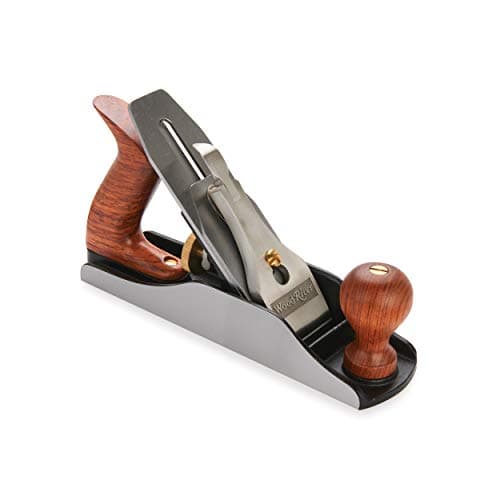
WoodRiver No. 4 Bench Plane (V3)
No. 4 smootherBedrock-pattern frogThick ironDuctile cast body
The plane that made the premium-clone category. A heavy, well-machined No. 4 smoother with a thick iron — it arrives close to ready and takes a shaving on the first afternoon.
- Out-of-box
- 9
- Iron quality
- 9
- Adjustment
- 9
- Build
- 9
- Value
- 7
Pros
- +Thick iron resists chatter, which is the single biggest difference from a budget plane
- +Machining is close enough out of the box that lapping is a short job, not a project
- +Heavy enough to keep momentum through a difficult patch of grain
Cons
- −Costs roughly three times a budget No. 4
- −Still needs honing before first use — no bench plane ships sharp enough
Don't buy this if…
…you have never used a hand plane. Learn the motion on a cheap plane first; the skill transfers, the money does not come back.
The four side by side
Published listing specifications for the four picks above.
| Tool | Where tearout happens | Published specifications |
|---|
| Diablo D1080X | Crosscuts, plywood, veneer | 10 in. / 80T ATB, 5/8 in. arbor, fine finish grind, PermaShield coating |
| Cutech 13 in. spiral planer | Figured stock through a planer | 13 in. width, spiral head, HSS inserts, benchtop |
| Whiteside RU5150 | Router grooves and dados | 1/2 in. cutting diameter, 1/2 in. shank, 1-1/2 in. cutting length, solid carbide upcut |
| WoodRiver No. 4 (V3) | Fixing it afterwards | No. 4 smoother, Bedrock-pattern frog, thick iron, ductile cast body |
Spiral and helical heads: what they actually change
A straight-knife head has two or three full-width knives striking the board across its whole width at once, square to the grain. A spiral or helical head replaces them with rows of small inserts arranged in a helix, each taking a narrow shearing cut at an angle. The shear angle is what reduces tearout on figured stock, and the small inserts are why a nick costs you one rotated cutter rather than a set of knives.
It is a real improvement and not a cure. Severely figured timber still tears, which is why the traditional answer — a scraper or a finely set smoothing plane — survives. Our helical vs straight cutterhead page weighs the upgrade properly, and best benchtop planer ranks the machines.
Zero-clearance inserts, the cheapest fix on this page
A factory throat plate has a wide slot so the blade can tilt. That gap is unsupported space directly under the cut, and the bottom-face fibres of a sheet of plywood splinter straight into it. A zero-clearance insert — a blank plate you raise the running blade through to cut its own slot — removes the gap.
It costs very little, takes a few minutes, and improves the underside of every crosscut you make thereafter. Pair it with a blade that scores as it cuts and plywood stops being a problem. We cover blade choice in best table saw blade.
Fixing tearout that has already happened
Sanding a tearout out is usually the wrong move: the torn area is below the surrounding surface, so sanding it flush means taking the whole face down to its depth, which on a thicknessed board or a veneer you cannot afford.
Better options, in order: a finely set smoothing plane taking whisper shavings in the correct grain direction; a card scraper, which has no direction and cannot tear; or, when the torn patch is deep and local, lifting the fibres with a drop of water, letting them swell back up, and paring the remainder with a chisel. For hand-plane setup, see how to tune a hand plane.
A note on climb cutting
Feeding a router against the normal direction — climb cutting — cuts figured grain more cleanly, because the cutter enters each fibre from the supported side. It also makes the tool want to run away from you. The defensible use is a very light final pass on a show edge with the work firmly held; never as a roughing cut, never with a large bit, and never on a router table with a small workpiece.
Where these numbers come from
The tooth counts, grinds, cutterhead types, bit dimensions and plane specifications above are the manufacturers' own published listing specifications, cited per product in Sources, and the 96/179 cuts-per-inch figure is DeWalt's published specification for the DW735X. The techniques are standard shop practice rather than tested results: we have not measured surface quality in a lab, we do not have one, and our methodology page says so plainly. Prices come from the live price feed and carry the date they were pulled.
How we picked
We do not run a testing lab
We researched published manufacturer specifications, manuals and spec sheets, ran the arithmetic those specs support, and read owner reviews at volume, then scored each tool against a published rubric. The scores are judgments from documented research — they are not measurements we took, because we do not have a lab and we are not going to pretend we do. Where a number came from a manufacturer's document, we name it and link it in Sources.
Questions
What causes tearout in wood?+
A cutter lifting fibres instead of severing them. That happens when you cut against the grain slope, when the cutting edge is dull, or when the fibres at the exit have nothing supporting them. Figured, curly and interlocked grain makes all three worse because the direction reverses within a single board.
How do I stop tearout when planing?+
Feed the board so the grain slopes away from the cut, take lighter passes, use the slower finish feed speed if your planer has one, and keep the knives sharp. On genuinely figured stock, a spiral or helical head shears rather than chops and helps materially — and a finely set smoothing plane or a card scraper finishes what it cannot.
How do I stop tearout when routing?+
Several shallow passes instead of one deep one, a sharp solid-carbide bit, and a sacrificial fence or backer at the exit. Choose the bit for the surface that matters: a downcut leaves the top edge clean, an upcut leaves the bottom clean and clears chips better.
Why does plywood splinter when I cut it?+
The face veneer is very thin and the bottom face has no support over the throat slot. Use a high-tooth-count ATB blade, fit a zero-clearance insert, score the cut line, and where it matters most, put the good face where the teeth enter rather than exit.
Can you sand out tearout?+
Rarely worth it. The torn patch sits below the surrounding surface, so sanding it flush means lowering the whole face to that depth. A smoothing plane, a card scraper, or swelling the fibres with water and paring them back are all better answers.
Receipts
- Diablo D1080X 10-in Fine Finish Blade — published listing specification: 80T ATB, 5/8 in. arbor, fine finish grind, PermaShield coating
- Cutech 13-in Spiral Planer — published listing specification: 13 in. width, spiral cutterhead, HSS inserts, benchtop
- Whiteside RU5150 Spiral Upcut Bit — published listing specification: 1/2 in. cutting diameter, 1/2 in. shank, 1-1/2 in. cutting length, solid carbide upcut
- WoodRiver No. 4 Bench Plane (V3) — published listing specification: No. 4 smoother, Bedrock-pattern frog, thick iron, ductile cast body
- DeWalt DW735X 13-in Thickness Planer — published listing specification: two speeds at 96 and 179 cuts per inch, three-knife head, 13 in. width
We do not run a testing lab, and we do not pretend to. Our picks come from published manufacturer specifications and manuals, the arithmetic those specs support, and owner reviews read at volume. Where we could not verify something, we say so on the page rather than quietly leaving it out. Read our full method.