Skip to content
Dovetail & Dust

HUB 02 · Power Tools

Best Oscillating Multi-Tool for Woodworking

A multi-tool is the worst version of almost every tool it replaces, and that is not the point. It is the only tool that can cut something already fastened in place, flush to a surface, without touching the surface.

By Stephen V.Updated How we research
#ad

We earn a commission when you buy through our Amazon links, at no extra cost to you. It never changes our rankings, and we say so when the cheaper tool is the better buy. How this works.

Buy the Dremel MM50-01 if you own no cordless platform, and the DEWALT DCS354B if you own 20V MAX batteries. Then spend the money you saved on blades, because the blades are the tool. The Fein MultiMaster MM 500 Start is the one to buy if you will use it weekly and the Milwaukee 2526-20 is the one you can run one-handed. The WEN MT3537 is the right answer if the truthful number of jobs per year is two.

The honest gate: you probably do not need one

Nearly every job a multi-tool does, some other tool in a woodworking shop does better. A jigsaw cuts a curve faster. A random orbital sander sands flatter. A chisel pares a mortise cleaner. If you are choosing between a multi-tool and any of those as a first purchase, buy the other one.

What a multi-tool owns is a specific and narrow set of cuts, defined by a single property: the blade vibrates through a tiny arc instead of spinning, so it cuts only what it is pressed against and stops at anything it is not. There are four jobs in a woodworking shop where that is the only thing that works.

Flush-cutting something already attached. A dowel or a plug standing proud of an assembled carcase, a tenon horn, a protruding shim behind a fitted cabinet. A flush-cut saw does this beautifully when there is room for one; a multi-tool does it when there is not.

Cutting into the middle of a surface. A hinge mortise in a hung door, a notch in an installed shelf, an opening in a fitted panel. There is no way to start a circular blade in the middle of a surface without plunging it, and a jigsaw needs a hole drilled first.

Sanding and scraping into an inside corner. A delta pad reaches the actual apex of a corner, which no round pad can. On a glued-up frame, in the rebate of a window sash, or against the inside of a carcase, that is the difference between hand sanding and thirty seconds.

Cutting next to something you must not cut. Trimming a scribe against a plastered wall, cutting a fixing out of a repair, removing old caulk or glue from a surface you are keeping. The blade stops at what it is not touching.

If none of those is in your work, skip this page and spend the money on clamps.

Oscillation angle is the specification nobody reads

The number that predicts how fast one of these tools cuts is not amps, volts or OPM. It is the oscillation angle — the total arc the blade swings through, usually between about 2.8 and 4 degrees. Every stroke moves the teeth through that arc, so a wider angle means a longer cut per stroke.

Milwaukee publishes 3.9 degrees for the 2526-20 and says plainly that this is "for faster cutting". Dremel publishes 3.2 degrees for the MM50. In practice that difference is obvious: the Milwaukee gets through a 2x faster and buzzes your hand noticeably harder doing it, and the Dremel leaves a slightly cleaner edge and is easier to control on a delicate cut. Neither is better. A wide angle is a cutting tool; a narrow angle is a finishing tool.

It is worth knowing that most makers do not publish this figure at all. Of the six tools here, exactly two do — Milwaukee and Dremel. DEWALT, Fein, SKIL and WEN publish nothing, and we have said so on each product rather than guessing.

The blade mount decides what the tool costs to own

The tool is a one-time purchase. The blades are forever, and a decent wood-cutting blade lasts a handful of cuts in anything with a nail near it. So the mount matters more than the motor.

Universal / OIS mountstake the industry-standard starburst fitting, which means a ten-pack of generic blades costs less than one branded blade. DEWALT publishes a universal accessory adapter on the DCS354B specifically so it accepts "most oscillating tool accessory brands", and that is worth real money over the life of the tool.

Starlock, StarlockPlus and StarlockMaxare Fein and Bosch's three-dimensional cup-shaped mount. It is genuinely better engineering: the accessory seats in three dimensions rather than clamping flat against a face, so it cannot creep, slip or chew its own mounting hole under load. The MM 500 Start is a StarlockPlus tool and fits all Starlock and StarlockPlus accessories. The trade is that Starlock accessories cost more and the choice is narrower.

Proprietary quick-changesystems sit in between — Dremel's MM50 changes accessories wrench-free, and most such tools accept universal blades with the adapter in the box.

Whatever the mount, buy the blade for the material. A bi-metal blade survives a nail; a wood-only blade is faster and cheaper in clean timber; a carbide blade is for abrasive material and costs several times either. For furniture work, bi-metal is the sane default, because the whole reason you reached for this tool is usually that you cannot see what is behind the cut.

Corded or cordless, and the honest arithmetic

A multi-tool is the definition of an intermittent-duty tool. It runs for ten seconds, you look at the cut, it runs for ten more. That makes cordless unusually attractive — the tool is wanted at a doorway, under a cabinet or in a corner far from an outlet, and it is never wanted for long enough to flatten a battery.

It also makes the arithmetic brutal if you own no batteries. The DEWALT and the Milwaukee here are bare tools: add a pack and a charger and a cordless multi-tool becomes the most expensive way to make a cut you make four times a year. The SKIL kit exists precisely for that case — it is the only cordless tool on this page that includes a battery, a charger, blades, a sanding pad and a case — and the Dremel and WEN sidestep the question by having a cord.

The rule is simple. Already on a platform: buy the bare tool. Not on a platform: buy corded, or buy the complete kit, but do not buy into a battery system for this tool alone.

Variable speed matters, for the jobs that are not cutting

Full speed is right for cutting and wrong for everything else. Sanding at 20,000 OPM burns the surface and loads the paper; scraping old finish or adhesive at full speed skates and smears instead of lifting. The scraping and sanding jobs — half of what this tool is actually good for in a furniture shop — want the dial down.

Milwaukee's 12-setting dial is the most usable implementation here. Everything on this page has some form of variable speed; a tool that does not is a tool that can only cut.

Vibration is the specification you feel and nobody publishes

This is a tool whose entire operating principle is vibration, and the difference between a well-balanced one and a cheap one is enormous and completely absent from spec sheets. Fein has built this tool longer than anyone and the MM 500 is the quietest in the hand by a wide margin; budget tools transmit a buzz that is genuinely unpleasant after a few minutes and leaves your fingers numb after twenty.

If the honest answer is "a few cuts a year", that is a cost you can accept and the WEN is a sensible purchase. If you are renovating a house, it is the reason to buy the Fein.

Prices below come from our live price feed and carry the date they were pulled.

The short answer

Quick picks

#ProductBest forScorePrice
01
Dremel Dremel MM50-01 Multi-Max Oscillating Tool Kit
Dremel MM50-01 Multi-Max Oscillating Tool Kit

A complete corded kit at a price that matches how often a woodworker actually reaches for a multi-tool. No battery platform to commit to, and the accessories a first job needs are already in the bag.

Best overall
7.4
$94.99Amazon
02
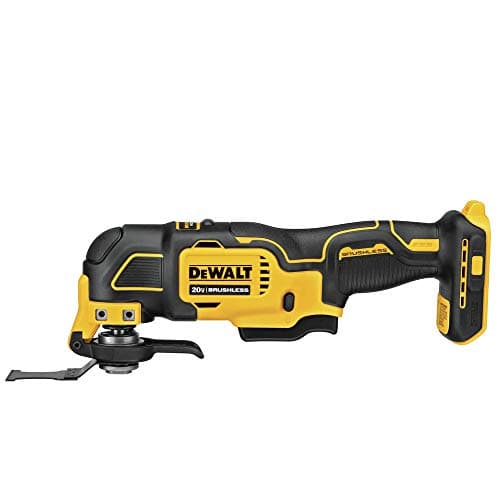
DEWALT DEWALT ATOMIC 20V MAX Oscillating Multi-Tool (DCS354B, Tool Only)
DEWALT ATOMIC 20V MAX Oscillating Multi-Tool (DCS354B, Tool Only)

The one to buy if there are already 20V MAX batteries on the shelf. DEWALT publishes it at 2-1/3 lb and 11-1/5 in. long, which is small enough to get a blade into a corner a full-size tool cannot reach.

Best cordless
8.0
$114.95Amazon
03
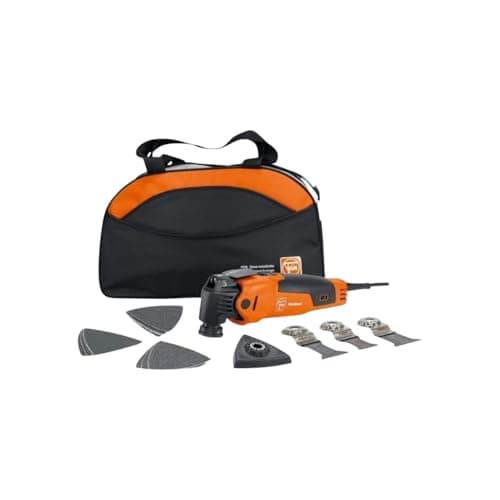
Fein Fein MultiMaster MM 500 Start Oscillating Kit
Fein MultiMaster MM 500 Start Oscillating Kit

Fein invented this tool and still builds the one that feels least like a vibrating toy. At 350 W and a published 3.09 lb it is the tool to buy if the multi-tool is going to be used every week rather than every season.

Best built
8.6
$269.95Amazon
04
Milwaukee Milwaukee 2526-20 M12 FUEL Oscillating Multi-Tool (Tool Only)
Milwaukee 2526-20 M12 FUEL Oscillating Multi-Tool (Tool Only)

The fastest-cutting tool here on published figures — Milwaukee gives it a 3.9 degree oscillation angle and 10,000 to 20,000 OPM — in the smallest body, because M12 is a 12V platform.

Best one-handed
7.8
$119.13Amazon
05
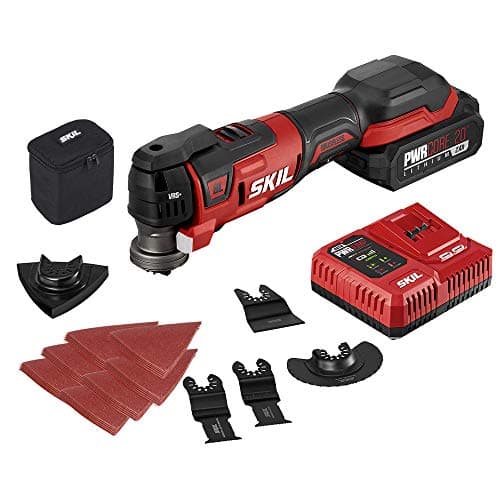
SKIL SKIL PWR CORE 20 Brushless Oscillating Tool Kit (OS5937-10)
SKIL PWR CORE 20 Brushless Oscillating Tool Kit (OS5937-10)

The only cordless tool here that arrives complete. Battery, charger, blades, sanding pad, 35 sheets and a case, which makes it the cheapest honest route to a cordless multi-tool if you own no batteries at all.

Best cordless kit
7.2
$149.00Amazon
06
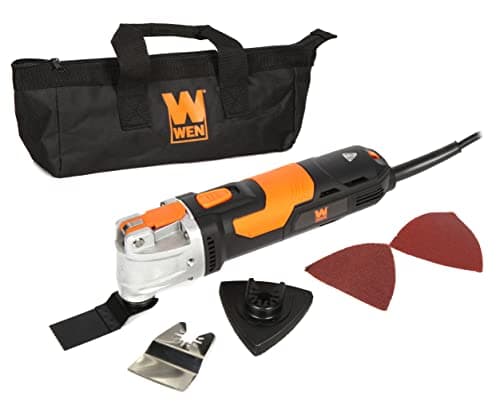
WEN WEN MT3537 Oscillating Multi-Tool Kit (3.5 A)
WEN MT3537 Oscillating Multi-Tool Kit (3.5 A)

The honest answer if you need this tool twice a year. It makes the same flush cut as the expensive ones, with more vibration and a shorter life, for a fraction of the money.

Best budget
6.0
$44.99Amazon

#ad · Live prices from the Amazon Product API, as of November 5, 2026. Where we have no verified live price, we show none — we would rather leave a gap than print a number that has rotted.

In detail

The picks, in full

01
Dremel Dremel MM50-01 Multi-Max Oscillating Tool Kit

Best overall

Dremel MM50-01 Multi-Max Oscillating Tool Kit

5.0 A, 120V corded3.2 degree oscillation angle10,000-23,000 OPM30 accessories included
7.4/10

A complete corded kit at a price that matches how often a woodworker actually reaches for a multi-tool. No battery platform to commit to, and the accessories a first job needs are already in the bag.

Cut speed
7
Blade system
7
Vibration
7
Build
7
Value
9

Pros

  • Corded, so it is at full power the day you remember you own it — which is the normal state of a multi-tool in a furniture shop
  • Arrives as a working kit: Dremel lists 30 accessories, covering the blades and sanding sheets a first job needs
  • Wrench-free accessory change, and a 3.2 degree oscillation angle that is gentler on a workpiece than the aggressive wide-angle tools

Cons

  • A cord is a nuisance at the exact moment a multi-tool is most useful — flush-cutting something already installed
  • Published top speed disagrees across sources: Dremel's own page says 23,000 OPM, several retailers say 21,000
  • A narrower oscillation angle cuts more slowly through anything thick

Don't buy this if…

…you already own 20V MAX or M12 batteries. The cordless tools here cost about the same as a bare tool and are far more useful at a doorway.

$94.99View on Amazon

Price as of November 5, 2026. Prices change — Amazon's is the one that counts.

#ad · we may earn a commission from this link to Dremel MM50-01 Multi-Max Oscillating Tool Kit

02
DEWALT DEWALT ATOMIC 20V MAX Oscillating Multi-Tool (DCS354B, Tool Only)

Best cordless

DEWALT ATOMIC 20V MAX Oscillating Multi-Tool (DCS354B, Tool Only)

0-18,000 OPM2-1/3 lb11-1/5 in. longUniversal accessory adapter
8.0/10

The one to buy if there are already 20V MAX batteries on the shelf. DEWALT publishes it at 2-1/3 lb and 11-1/5 in. long, which is small enough to get a blade into a corner a full-size tool cannot reach.

Cut speed
8
Blade system
9
Vibration
7
Build
8
Value
8

Pros

  • No cord, which is what this tool is for — trimming a shim behind a fitted cabinet or a dowel in an assembled carcase
  • DEWALT publishes a universal accessory adapter, so cheap generic blades fit and the blade bill stays sane
  • Short and light by published figures, and the Quick-Change system swaps a blade without a wrench

Cons

  • Bare tool: no battery, no charger, no blades and no case, so the real price depends on what you already own
  • DEWALT does not publish an oscillation angle for it, which is the figure that actually predicts cutting speed
  • A 20V pack on the back makes it the most tail-heavy tool here when you are working above shoulder height

Don't buy this if…

…you own no 20V MAX batteries. Buying into a platform for an occasional tool is how a one-hundred-dollar purchase becomes a three-hundred-dollar one.

$114.95View on Amazon

Price as of November 5, 2026. Prices change — Amazon's is the one that counts.

#ad · we may earn a commission from this link to DEWALT ATOMIC 20V MAX Oscillating Multi-Tool (DCS354B, Tool Only)

03
Fein Fein MultiMaster MM 500 Start Oscillating Kit

Best built

Fein MultiMaster MM 500 Start Oscillating Kit

350 W cordedStarlockPlus tool mount3.09 lbBacking pad, three blades, 12 sanding sheets, bag
8.6/10

Fein invented this tool and still builds the one that feels least like a vibrating toy. At 350 W and a published 3.09 lb it is the tool to buy if the multi-tool is going to be used every week rather than every season.

Cut speed
9
Blade system
9
Vibration
10
Build
10
Value
5

Pros

  • The lowest vibration here by design and by reputation, which is the difference between a two-minute job and a two-minute job that leaves your hand numb
  • StarlockPlus is a three-dimensional mount rather than a flat clamp, so the accessory cannot creep or slip under load
  • Fein publishes the kit contents precisely: a backing pad, twelve sanding sheets across four grits, three E-Cut blades and a nylon bag

Cons

  • Two to three times the price of a tool that makes the same cut — hard to justify for the handful of cuts a furniture shop needs
  • Starlock accessories cost more than generic blades, and a Starlock mount does not accept universal blades the way the DEWALT does
  • Fein publishes neither an oscillation rate nor an oscillation angle for this model — the technical table on its own page is blank for both

Don't buy this if…

…the tool will live in a drawer between jobs. The premium here buys endurance and comfort over hours of use, and an occasional user never collects it.

$269.95View on Amazon

Price as of November 5, 2026. Prices change — Amazon's is the one that counts.

#ad · we may earn a commission from this link to Fein MultiMaster MM 500 Start Oscillating Kit

04
Milwaukee Milwaukee 2526-20 M12 FUEL Oscillating Multi-Tool (Tool Only)

Best one-handed

Milwaukee 2526-20 M12 FUEL Oscillating Multi-Tool (Tool Only)

10,000-20,000 OPM3.9 degree oscillation angle12-setting speed dialTool-free blade change
7.8/10

The fastest-cutting tool here on published figures — Milwaukee gives it a 3.9 degree oscillation angle and 10,000 to 20,000 OPM — in the smallest body, because M12 is a 12V platform.

Cut speed
9
Blade system
8
Vibration
6
Build
9
Value
7

Pros

  • A 3.9 degree angle is near the top of what these tools offer, and angle predicts cutting speed better than amps or volts do
  • A 12V tool is small enough to hold and steer with one hand while the other holds the work
  • A 12-setting dial, which matters because sanding and scraping want a fraction of the speed cutting does

Cons

  • Bare tool again — no battery, no charger, no blades
  • A wide oscillation angle is faster but harsher: more vibration and a rougher cut edge than the 3.2 degree tools
  • Milwaukee publishes neither a weight nor a length for it, and M12 runtime in hardwood is short

Don't buy this if…

…you are not already on M12. It is an excellent tool and a poor reason to start a second battery platform.

$119.13View on Amazon

Price as of November 5, 2026. Prices change — Amazon's is the one that counts.

#ad · we may earn a commission from this link to Milwaukee 2526-20 M12 FUEL Oscillating Multi-Tool (Tool Only)

05
SKIL SKIL PWR CORE 20 Brushless Oscillating Tool Kit (OS5937-10)

Best cordless kit

SKIL PWR CORE 20 Brushless Oscillating Tool Kit (OS5937-10)

20V brushless2.0 Ah battery and charger included3 blades, sanding pad, 35 sheetsRigid scraper and case
7.2/10

The only cordless tool here that arrives complete. Battery, charger, blades, sanding pad, 35 sheets and a case, which makes it the cheapest honest route to a cordless multi-tool if you own no batteries at all.

Cut speed
7
Blade system
7
Vibration
6
Build
7
Value
9

Pros

  • Nothing else to buy: the listing includes the battery, the PWR JUMP charger, blades, a sanding pad and a case
  • Brushless, which on an intermittent-duty tool mostly means it does not mind being stalled in a cut
  • Cheaper than a bare premium tool once you count the battery you would otherwise have to buy

Cons

  • PWR CORE 20 is a smaller battery ecosystem than DEWALT or Milwaukee, so the pack is useful across fewer tools
  • SKIL publishes no oscillation angle and no OPM range for this kit in the listing specification
  • A 2.0 Ah pack is a starter battery; expect modest runtime in anything thick

Don't buy this if…

…you already own 20V MAX or M12 packs. Paying again for a battery you do not need is the most common way to overspend on this tool.

$149.00View on Amazon

Price as of November 5, 2026. Prices change — Amazon's is the one that counts.

#ad · we may earn a commission from this link to SKIL PWR CORE 20 Brushless Oscillating Tool Kit (OS5937-10)

06
WEN WEN MT3537 Oscillating Multi-Tool Kit (3.5 A)

Best budget

WEN MT3537 Oscillating Multi-Tool Kit (3.5 A)

3.5 A cordedVariable speedAccessories includedCarrying case
6.0/10

The honest answer if you need this tool twice a year. It makes the same flush cut as the expensive ones, with more vibration and a shorter life, for a fraction of the money.

Cut speed
6
Blade system
5
Vibration
4
Build
5
Value
10

Pros

  • Cheap enough that a multi-tool stops being a purchase decision and becomes a thing you own
  • Corded and 3.5 A, so it has real power for the money — amps are the one specification a budget tool can genuinely buy
  • Accessories and a case in the box, so the first job does not need a second order

Cons

  • Vibration is where budget tools give the money back; long sessions are genuinely unpleasant
  • WEN publishes no oscillation angle and no OPM range in the listing specification
  • The included blades are the first thing to replace — budget kits fill the case rather than the cut

Don't buy this if…

…you will use it for hours at a time. The cheap tool is cheap in the hand as well as at the till, and vibration is cumulative.

$44.99View on Amazon

Price as of November 5, 2026. Prices change — Amazon's is the one that counts.

#ad · we may earn a commission from this link to WEN MT3537 Oscillating Multi-Tool Kit (3.5 A)

The six side by side

Makers' published figures for the six tools ranked above. Blank cells are blank because the manufacturer publishes nothing for that figure, not because we could not be bothered to look.

ToolPowerOscillation angleSpeed
Dremel MM50-015.0 A, 120V corded3.2 degrees10,000-23,000 OPM
DEWALT DCS354B20V MAX, bare toolNot published0-18,000 OPM
Fein MultiMaster MM 500 Start350 W cordedNot publishedNot published
Milwaukee 2526-20M12, bare tool3.9 degrees10,000-20,000 OPM
SKIL PWR CORE 20 OS5937-1020V brushless, kitNot publishedNot published
WEN MT35373.5 A cordedNot publishedNot published

Where these numbers come from

Dremel's own product page publishes 5.0 amps, 120V, a 3.2 degree oscillating angle and 30 accessories for the MM50-01, and gives the speed range as 10,000-23,000 OPM; several retailers publish the top figure as 21,000 instead, so the page reports Dremel's own number and flags the disagreement rather than averaging them. DEWALT publishes 0-18,000 OPM, 2-1/3 lb, 11-1/5 in. and a universal accessory adapter for the DCS354B but no oscillation angle. Milwaukee publishes 10,000-20,000 OPM, a 3.9 degree oscillation angle and a 12-setting speed dial for the 2526-20, and publishes neither a weight nor a length.

Fein publishes 350 W, a 3.09 lb weight, a StarlockPlus mount and an exact kit contents list for the MM 500 Start — a backing pad, twelve sanding sheets in grits 60, 80, 120 and 180, three E-Cut blades and a nylon bag — and its technical table is blank for both oscillation rate and oscillation angle. SKIL and WEN publish kit contents in their listings but no oscillation figures at all. Everything above is a published manufacturer or listing specification; we have not tested any of these tools and do not run a lab.

Which blades to buy, and how many

The kits here arrive with between three and thirty accessories, and the sanding sheets are usually the bulk of the count. For woodworking the useful set is small and worth buying deliberately.

Two or three bi-metal plunge blades around 1-1/4 to 1-3/4 in. wide do almost everything — flush cuts, hinge mortises, trimming dowels and plugs. A wider blade is faster in a long straight cut and harder to steer in a tight one. One wood-only blade is noticeably faster in clean timber and is worth having for dowels and plugs where you know there is no metal. A rigid scraper blade is the single most useful non-cutting accessory, because scraping dried glue squeeze-out or old finish out of a molding at low speed is a job with no other good tool. A delta sanding pad with a few sheets handles inside corners.

That is four accessory types and about twenty dollars of consumables. Buy blades in multipacks and treat them as disposable, because they are: the cut that justifies owning this tool is usually the cut where you cannot see what is behind the blade.

Two safety notes specific to this tool

A multi-tool feels harmless, which is the problem. The blade is moving through a tiny arc but it is still a toothed edge at 18,000 strokes a minute, and it will open a fingertip that steadies a workpiece too close to the cut. It also heats the blade and the workpiece far more than a rotating tool does, because most of the energy goes into friction rather than chip removal. Blades come off a long cut hot enough to burn.

Second: the dust. A multi-tool throws a fine, directional spray of dust straight at your face on a plunge cut, and almost none of these tools has useful dust extraction. Wear a respirator and eye protectionfor anything more than one cut — this applies with real force when the cut is into an old painted surface, where the dust may be something worse than wood.
How we picked

We do not run a testing lab

We researched published manufacturer specifications, manuals and spec sheets, ran the arithmetic those specs support, and read owner reviews at volume, then scored each tool against a published rubric. The scores are judgments from documented research — they are not measurements we took, because we do not have a lab and we are not going to pretend we do. Where a number came from a manufacturer's document, we name it and link it in Sources.

Questions

Frequently asked

What is the best oscillating multi-tool for woodworking?
The Dremel MM50-01 for most woodworkers, because it is a complete corded kit at a price that matches how rarely a furniture shop needs this tool, and Dremel publishes a 3.2 degree oscillation angle that is gentle enough for delicate work. If you already own 20V MAX batteries, buy the bare DEWALT DCS354B instead and spend the difference on blades.
Do I actually need an oscillating multi-tool?
Probably not, as a first or fifth tool. It is worse than a jigsaw at curves, worse than a random orbital sander at sanding and worse than a chisel at paring. Buy it for four specific jobs: flush-cutting something already fastened in place, starting a cut in the middle of a surface, sanding or scraping into an inside corner, and cutting right up against something you must not cut.
What does oscillation angle mean and what is a good number?
It is the total arc the blade swings through each stroke, usually 2.8 to 4 degrees, and it predicts cutting speed better than amps or volts. Wider cuts faster and vibrates more: Milwaukee publishes 3.9 degrees for the 2526-20 and calls it "for faster cutting", Dremel publishes 3.2 degrees for the MM50. Most makers publish no figure at all.
Are Starlock blades worth it over universal blades?
The mount is better engineering — Starlock seats the accessory in three dimensions rather than clamping it flat, so it cannot creep or chew out its own mounting hole under load. Whether that is worth it depends on use: for occasional woodworking cuts, a universal mount and cheap multipack blades cost far less to own. For daily use, Starlock is the reason Fein tools stay tight.
Corded or cordless multi-tool?
Cordless, if you already own the batteries — the tool is wanted at doorways and under cabinets, and it runs in ten-second bursts that no battery notices. Corded, if you do not, because buying into a battery platform for an occasional tool roughly triples its price. The middle option is a complete cordless kit such as the SKIL, which includes the battery and charger.
Can an oscillating tool cut a hinge mortise?
Yes, and it is one of the jobs it genuinely owns — particularly in a door that is already hung, where no router or chisel setup is practical. Score the outline with a knife, plunge the waste out with a bi-metal blade held flat, and pare the floor flat with a chisel. A router and a template is still more accurate when the door is off its hinges and on a bench.
Why is my multi-tool blade dulling so fast?
Usually speed and pressure. These tools cut by friction far more than a rotating blade does, so running at full speed and leaning on the tool overheats the teeth and takes the temper out of them. Let the blade cut at its own rate, lift it occasionally to let it cool, and drop the speed for anything other than cutting. A blade that has turned blue is finished.

Keep reading

Receipts

Sources

We do not run a testing lab, and we do not pretend to. Our picks come from published manufacturer specifications and manuals, the arithmetic those specs support, and owner reviews read at volume. Where we could not verify something, we say so on the page rather than quietly leaving it out. Read our full method.